

MNCs are adjusting strategies to align with China's evolving growth model and inland opportunities
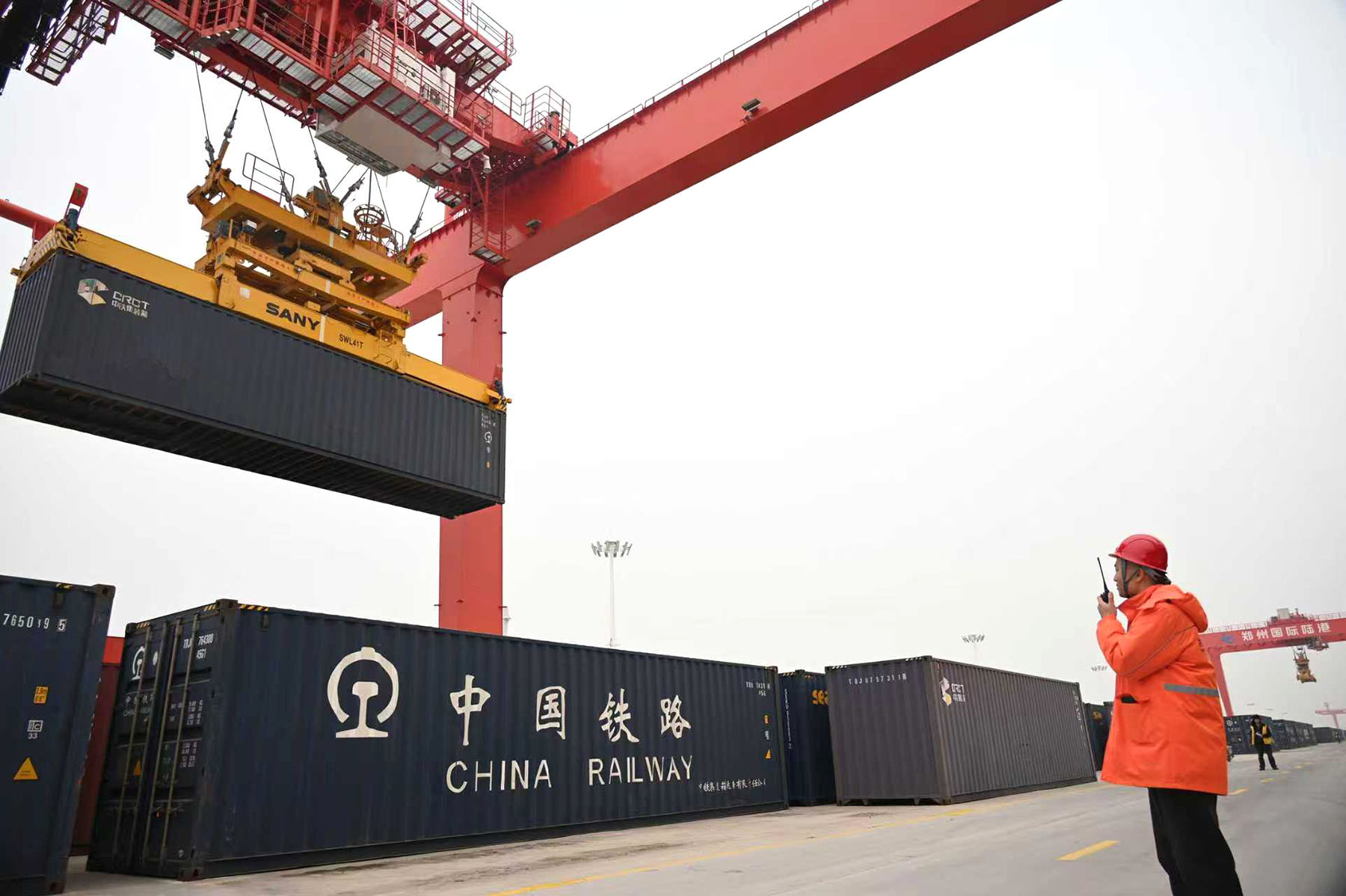
With a sharp blast of a whistle, a China-Europe freight train slowly pulled out of Putian railway station in Zhengzhou, capital of Central China's Henan province, in late March, its carriages packed with auto parts and electronics bound for Hamburg, Germany.
Under the glow of floodlights, cranes moved in rhythm and workers signaled across the yard, as containers were hoisted and secured in a tightly choreographed operation.
Nearby, another set of containers had just arrived, carrying milk and juice from Germany and Poland. Forklifts weaved through the unloading zone as the goods were quickly sorted and dispatched to cities across China, offering a snapshot of increasingly seamless two-way trade flows.
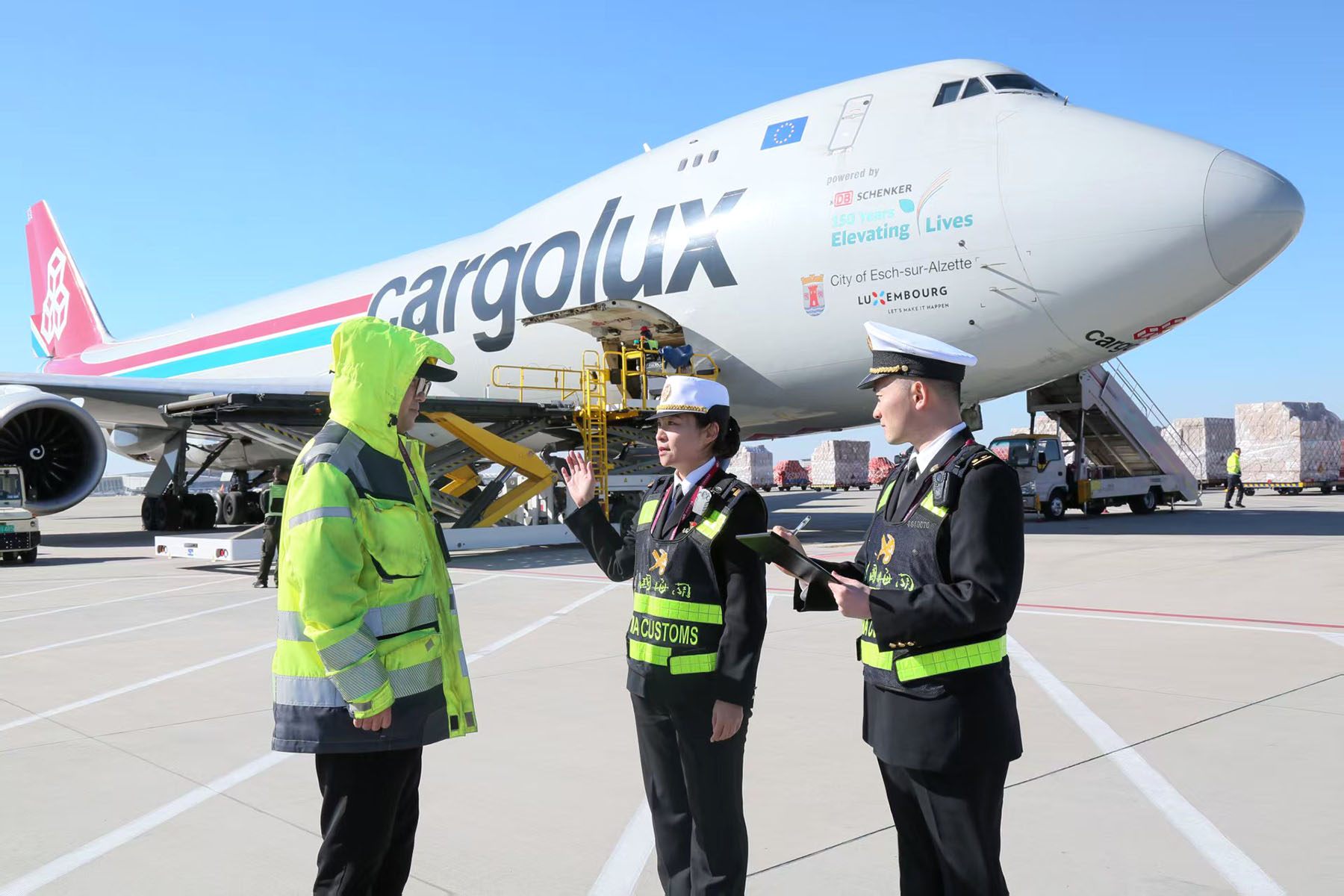
In another part of the city, Du Qiang, an inspection officer from Zhengzhou Customs' airport branch, was checking a shipment of electronic components that had just arrived from Europe. The entire batch will be transported by trucks to an auto factory in Hefei in East China's Anhui province. Under the "air-land intermodal transport" model, the time from arrival in Zhengzhou to delivery at the next destination can be kept within 10 hours, said Du.
READ MORE: Key inland port turns into global trade artery
Despite having no coastline or border crossing, Henan, supported by favorable policies brought by the development of China (Henan) Pilot Free Trade Zone, is expanding the province's role in building a modern logistics hub with global reach by leveraging the dual engines of being an air cargo hub and China-Europe freight train services.
Zhang Jianping, deputy director of the academic committee at the Chinese Academy of International Trade and Economic Cooperation, said that through the coordinated development of the "Air Silk Road" that connects economies participating in the Belt and Road Initiative and the overland rail network, Henan is accelerating the flow of goods between China's inland provinces and overseas markets.
That view is in line with the latest data, as air cargo routes centered on Zhengzhou have expanded rapidly since China began supporting the development of a bidirectional "Air Silk Road" between Zhengzhou and Luxembourg in 2017, linking 18 destinations in Europe, 23 in Asia and nine in the Americas as of the end of 2025, said Zhengzhou Customs.
Total cargo and mail throughput at Zhengzhou Xinzheng International Airport reached 1.03 million metric tons in 2025, up 25.25 percent year-on-year, placing it among the world's million-ton cargo hubs. Within the total, international cargo volumes amounted to 661,500 tons, a surge of 40.25 percent on a yearly basis.
In 2025, China-Europe freight train services from Zhengzhou operated 3,417 trips, up 36.7 percent year-on-year, according to customs statistics. The cargo mix has expanded from a single category to 53 major categories, including automobiles and parts, furniture, chemical products and machinery, with the "new trio" — electric vehicles, lithium batteries and photovoltaic products — now also being shipped to foreign markets via the service.
Liu Jiannan, vice-chairman of the Beijing-based China Council for the Promotion of International Trade, said that after years of development, Zhengzhou has moved beyond its traditional role as a logistics hub to become an industrial hub, attracting high-end manufacturing and supply chain operations.
Henan offers a vivid example of how China's inland provinces are using aviation connectivity and multimodal logistics to expand opening-up and drive economic transformation, said Liu.
That transformation is also being felt at the company level. Huang Huali, president of Henan Shunshui International Trade Co, a Zhengzhou-based foreign trade firm, said that since the launch of a cargo route linking Kuala Lumpur, Malaysia, with Zhengzhou in 2024, her company has significantly expanded imports of fresh produce from Southeast Asia.
"Around 7 to 8 tons of fresh durians now arrive in Zhengzhou from Malaysia every day. Thanks to Zhengzhou Xinzheng International Airport's 'air-to-air transfer' service model, they can be quickly shipped to cities across China," said Huang.
Wan Zhe, a professor specializing in regional economic development at Beijing Normal University, said that Zhengzhou's advantages as an international logistics hub have not only driven the upgrading of traditional industries, but also provided fertile ground for the growth of emerging sectors.
Echoing that view, Tian Haitao, director of the Zhengzhou Airport Economy Zone's administrative committee, said once just an inland city, Zhengzhou is now emerging as a key gateway for undertaking the transfer of global high-tech industries and advancing the development of modern logistics.
For instance, the zone has become one of the world's largest smartphone manufacturing bases, with annual output exceeding 86 million units and attracting more than 200 supporting enterprises.
In the new energy vehicle sector, Chinese automaker BYD's Zhengzhou production base produced more than 1 million vehicles between 2023 and 2025. The project has attracted more than 100 auto parts manufacturers from both China and abroad, ranging from engine modules to small metal stamping components, to set up operations in the zone.
Today, the local sourcing rate for BYD within the province has exceeded 50 percent, effectively driving the coordinated development of related industries across Henan, according to the zone's administrative committee.
"The EVs can be shipped from Zhengzhou via China-Europe freight train services, reaching destinations across Europe in about 15 days. The inland hub is fast becoming a key gateway for Henan-made vehicles to enter foreign markets," Tian added.
Highlighting that China-Europe freight train services are reshaping the geography of trade by turning inland regions into outward-facing gateways, Yang Jie, deputy head of Zhengzhou Customs, said they provide landlocked companies with reliable access to global markets while supporting an industrial network across Eurasia spanning advanced manufacturing, modern agriculture and high-end equipment.
"Regional logistics hubs are no longer just transit points for goods. They are becoming strategic nodes in a globally integrated system that combines intelligent supply chains, greener transport solutions and digital innovation," said Chen Jianwei, a researcher at the University of International Business and Economics in Beijing.
Alongside air and rail cargo services, international road transport operations have notably expanded in both scale and quality in Henan, with 22 routes linking Zhengzhou to nine countries, including Russia and Uzbekistan, in 2025, said Henan's provincial government.
International road transport is a global customs transit system that China joined in 2016, helping to save time and cut costs for cross-border transport.
Wu Dongming, CEO for China at DHL Express, said the German courier services provider has in recent years established service centers in multiple inland provinces, including Henan and Jiangxi, to support local import and export activities.
ALSO READ: E-commerce drives China's air cargo market
As consumption upgrades accelerate in China's lower-tier cities and county-level economies, a growing number of consumers in smaller cities now have access to international goods and services of the same quality as those available in major metropolitan areas, said Wu.
"At the same time, manufacturers in these smaller cities are increasingly able to participate directly in global trade," he added.
These shifts are also reflected in foreign investment patterns, as multinational companies adjust strategies to align with China's evolving growth model and expanding inland opportunities.
China's green transition, innovation capabilities and policy continuity are creating fresh opportunities during the 15th Five-Year Plan (2026-30), said Lorenzo Riccardi, chairman of the Italian Chamber of Commerce in China, who added that foreign investment is moving beyond coastal regions and becoming more deeply integrated into the country's innovation-driven supply chains.
Reflecting these trends, Henan's total foreign trade reached 935.67 billion yuan ($135.47 billion) in 2025, up 14.1 percent year-on-year, said Zhengzhou Customs.
Contact the writers at zhongnan@chinadaily.com.cn
