

Competitive pricing, improved tech and faster delivery cycles helping Chinese manufacturers secure orders across emerging markets
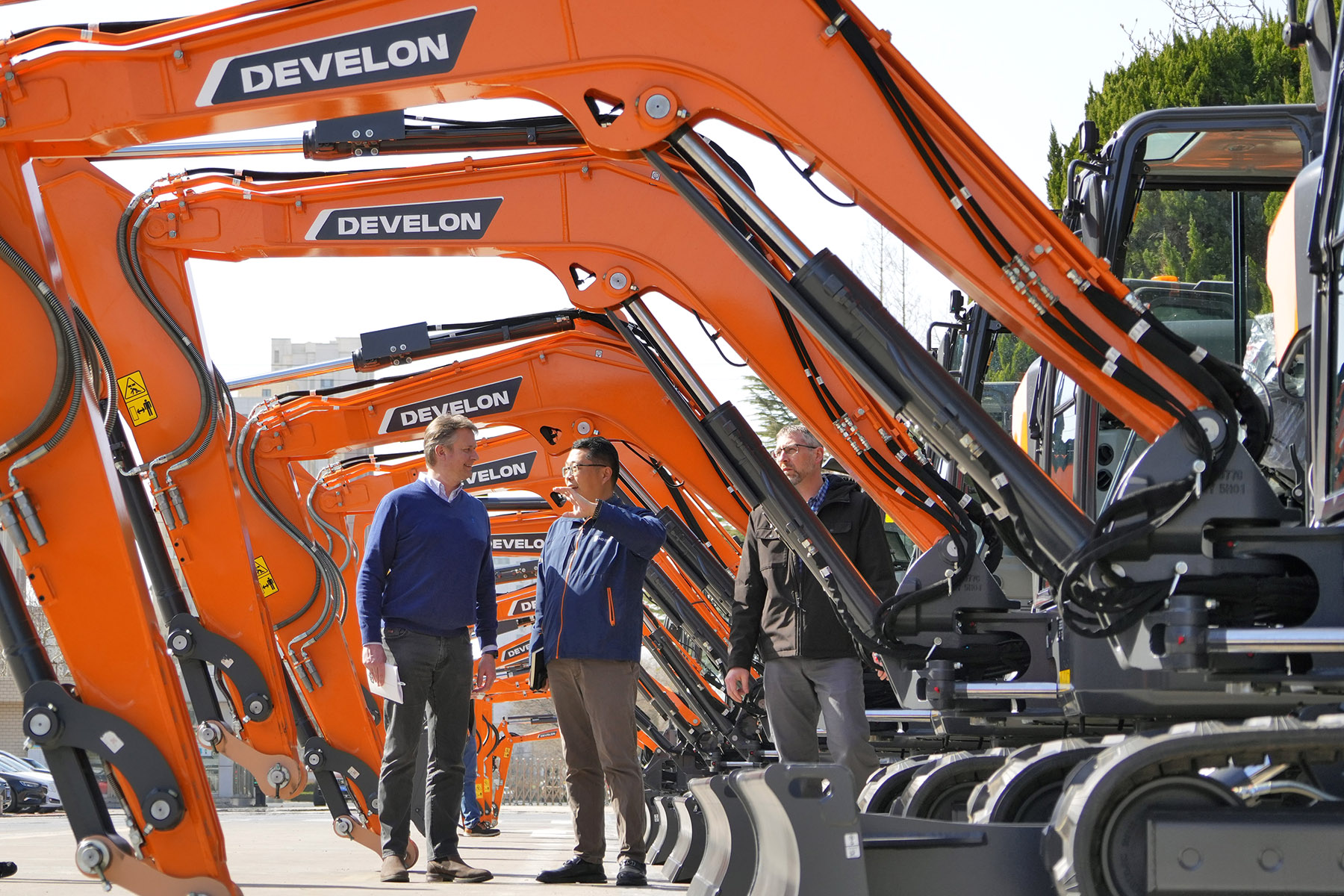
Rising orders from overseas buyers are offering an early glimpse into the momentum of China's export sector in the Year of the Horse.
At Zhejiang Sharbo Electric Appliance Co, an air conditioner manufacturer in Ningbo, East China's Zhejiang province, production lines restarted on the first working day after the Spring Festival holiday to fulfill a 15,000-unit order for wall-mounted and window air conditioners from a client in the United Arab Emirates, with shipments scheduled for completion by the end of April.
The rush to deliver the first batch of 3,000 units by mid-March underscores how competitive pricing, improving technology and faster delivery cycles are helping Chinese manufacturers secure orders across emerging markets, from the Middle East to Southeast Asia and Africa.
READ MORE: China's economic growth plans seen as beneficial to entire region
The Chinese manufacturer, which focuses on the research, development and production of wall-mounted, floor-standing, ceiling-mounted and portable air conditioners, has in recent years stepped up its global expansion strategy, introducing new models that are energy-efficient and equipped with smart technologies.
Gao Feiji, Zhejiang Sharbo's foreign trade director, said the company has been expanding distribution networks in emerging markets, especially in the Middle East and Africa, to secure long-term growth beyond single bulk orders. "Although tensions in the Middle East have added uncertainty for shipments to the region, we remain committed to expanding our presence in the region over the longer term," said Gao.
Not far away in the same city in Zhejiang, another exporter also echoed this trend, saying strong overseas demand is keeping factories running at full capacity and boosting hiring.
"Since the start of 2026, demand driven by the global energy transition has continued to gather pace, with orders from the European market proving particularly strong. To seize this opportunity, we have ramped up production and accelerated deliveries," said Shu Xiaoyu, president of Ningbo Deye ESS Technology Co, an energy storage equipment manufacturer based in Ningbo.
"Even during the Spring Festival holiday, our smart workshops, with only a few on-duty workers, operated efficiently. On the first working day after the Chinese New Year holiday, our factory utilization rate reached 85 percent, and we have now moved to full-capacity operations," said Shu.
China signaled stronger policy support for foreign trade during the two sessions. According to the draft Government Work Report submitted to the fourth session of the 14th National People's Congress for deliberation, the country will work to stabilize the scale of foreign trade while improving its structure by expanding trade in intermediate goods, advancing digital and green trade, and boosting border trade.
In 2025, exports of mechanical and electrical products through Ningbo port reached 1.09 trillion yuan ($159 billion), up 10.6 percent year-on-year. Among these, exports of electric vehicles and lithium-ion batteries surged by 305.8 percent and 129.1 percent, respectively, on a yearly basis, data from Ningbo Customs showed.
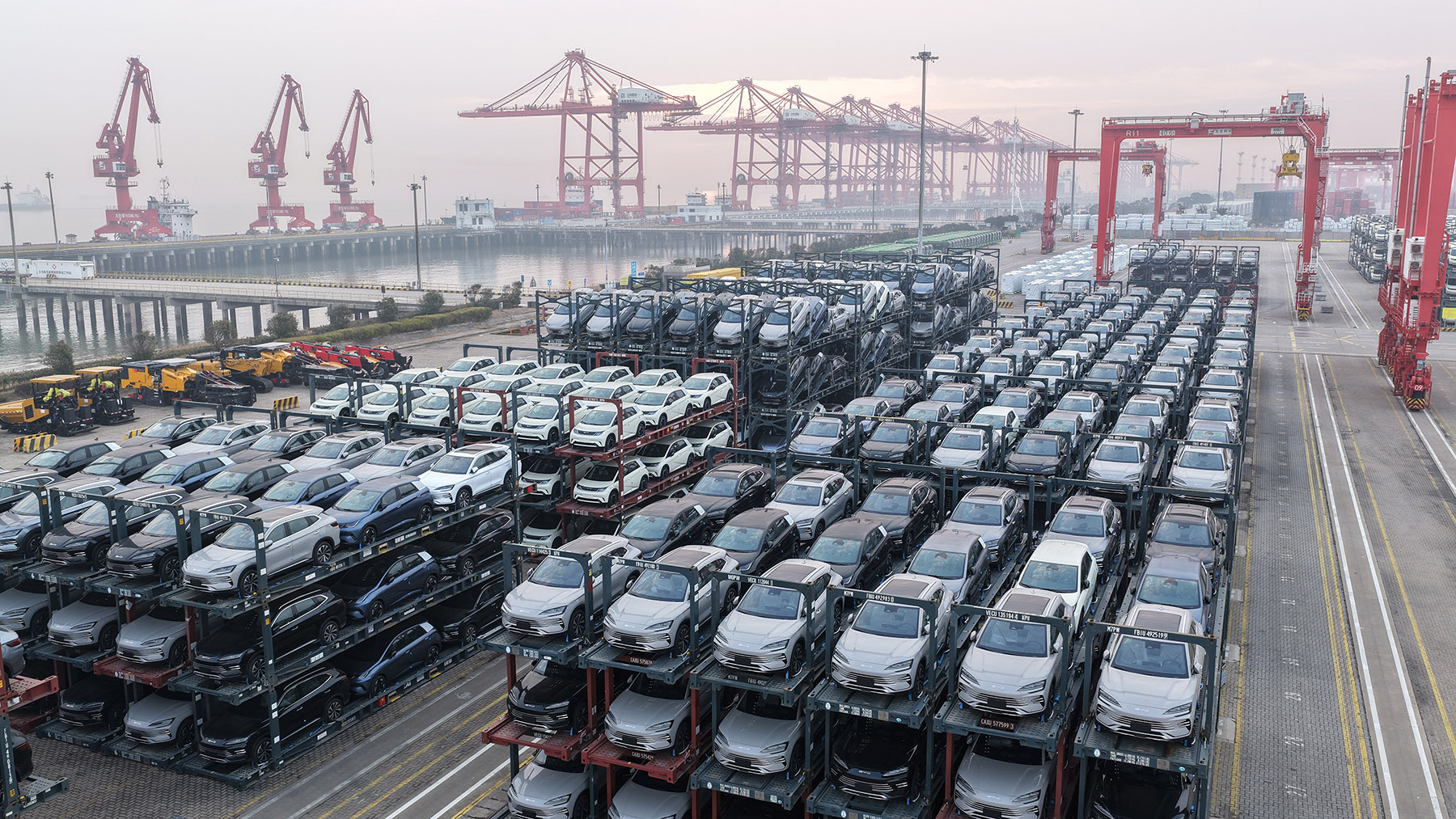
Li Jun, a researcher at the Beijing-based Chinese Academy of International Trade and Economic Cooperation, said China's foreign trade is set to maintain its scale advantage in imports and exports in the 15th Five-Year Plan (2026-30) period, while placing greater emphasis on improving quality, efficiency and the transition to new growth drivers.
"The country's position as the world's largest trader in goods is expected to be further consolidated, with high-quality development — characterized by innovation, green and low-carbon practices and deeper industrial integration — becoming more pronounced," said Li.
Lyu Daliang, director-general of the department of statistics and analysis at the General Administration of Customs, shared a similar view. "China's high-tech, high value-added products — including intermediate goods, key components, machinery and artificial intelligence equipment — are poised to become the main engines of export growth," he said.
China's foreign trade expanded 3.8 percent year-on-year to 45.47 trillion yuan in 2025. The country saw its exports of high-tech products surge 13.2 percent on a yearly basis to 5.25 trillion yuan, data from the GAC showed.
In the meantime, the nation's "new trio" of green exports — electric vehicles, lithium-ion batteries and photovoltaic products — collectively rose 27.1 percent year-on-year. Wind turbine exports also grew sharply, climbing 48.7 percent from the previous year.
Zhao Ping, head of the academy of the Beijing-based China Council for the Promotion of International Trade, said China's foreign trade will continue to consolidate its presence in traditional markets while accelerating efforts to expand into and deepen engagement with emerging markets. This shift is expected to bring systemic and strategic improvements in the diversification of its trading partners.
"This approach represents not only a proactive response to external market uncertainties and a method of strengthening the resilience of foreign trade, but also a necessary step toward deeper integration into Global South cooperation networks and the promotion of a more inclusive and balanced global trading system," she noted.
China's trade network continued to expand, covering more than 240 countries and regions worldwide in 2025, with import and export value registering growth in over 190 of these markets, said the GAC.
Notably, trade with economies participating in the Belt and Road Initiative became a key growth engine. China's trade with BRI partner countries reached 23.6 trillion yuan last year, increasing 6.3 percent year-on-year and accounting for 51.9 percent of the country's total foreign trade value.
Guo Xueyan, director-general of the GAC's department of international cooperation, said that Chinese exporters are expected to gain more efficient and accessible channels to explore and develop emerging markets, due to support from platforms such as the New International Land-Sea Trade Corridor, Silk Road e-commerce initiatives and overseas economic and trade cooperation zones.
Propelled by China's soaring trade value with emerging markets, Agco (Changzhou) Agricultural Machinery Co, a tractor and generator manufacturer in Changzhou, East China's Jiangsu province, shipped a batch of tractors to Brazil and Ecuador in late February, after seeing its export value grow by nearly 20 percent year-on-year last year, according to Nanjing Customs.
The open-cab versions, destined for tropical regions in South America, are designed to meet basic functional needs while helping local customers reduce costs, said Xiao Jingjin, an executive responsible for the company's manufacturing operations.
"More than 90 percent of our products are exported, and we tailor their design to local conditions, taking into account differences in terrain, usage habits and levels of economic development," said Xiao.
Demand also varies widely across regions.
In African markets, buyers prioritize simple operation, with a preference for tractors that are easy to use and maintain. In Australia, however, customers place greater emphasis on comfort. These differences highlight the need for country-specific product strategies, he added.
Wang Xiaoqian, an official at Changzhou Customs, a branch of Nanjing Customs in Jiangsu, said leading agricultural machinery manufacturers with strong core competitiveness are driving continuous optimization of product structures and greater integration across the industry chain in Jiangsu and other parts of China.
"By mastering key technologies in core components and coordinating upstream and downstream suppliers — including hydraulic systems and high-end sensors — the sector has strengthened supporting capacity and supply chain resilience, helping reduce logistics costs and shorten delivery cycles," said Wang.
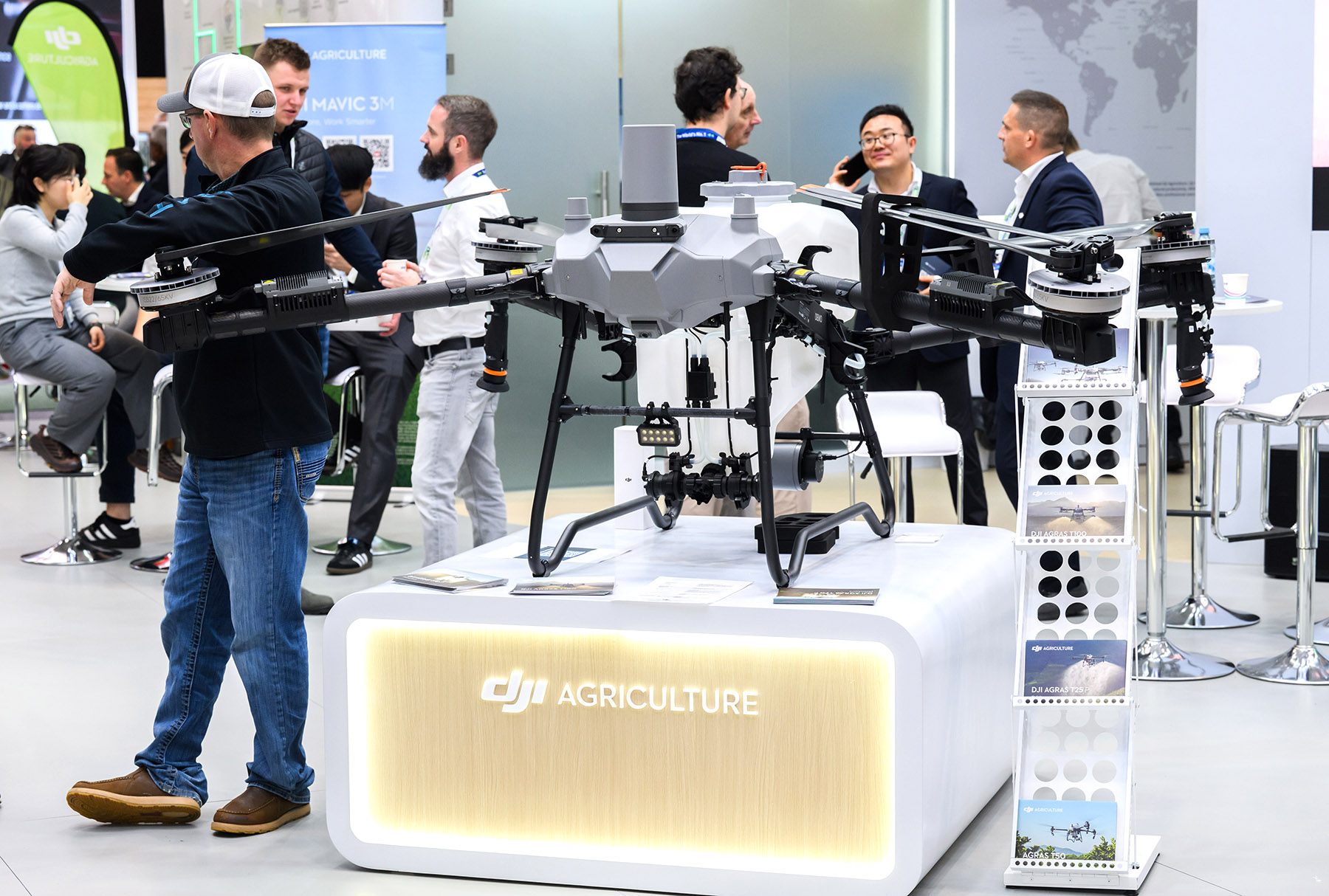
Beyond traditional products such as tractors and seeders, Chinese agricultural machinery exports are now flourishing across a broader spectrum. China-made agricultural drones are also accelerating their expansion into global markets. From vineyards in Australia to orange groves in Brazil, these drones are increasingly visible in field operations.
Shen Xiaojun, head of the global marketing department at DJI Agriculture, a unit of Shenzhen, Guangdong province-headquartered drone maker DJI, said the company's latest models feature higher payload capacity and can spray 20 to 30 liters per minute, meeting the irrigation and crop protection needs of a wider range of fruit trees.
"Our agricultural drones have been exported to more than 100 countries and regions," said Shen.
ALSO READ: DJI sues FCC as US drone pilots condemn import ban
Chen Jianwei, a researcher at the University of International Business and Economics' academy of China open economy studies in Beijing, said foreign trade will remain a stabilizing force for China's growth this year, while closer ties among emerging markets are expected to gain traction as economies broaden their trade networks and China continues to see gains in productivity.
"Overseas demand is unlikely to pose a significant drag in 2026, given the absence of clear signs of a downturn in major economies," Chen said.
Surging global investment in artificial intelligence, coupled with anticipated fiscal support in key markets, is likely to reinforce China's export performance, especially in technology-intensive sectors, he added.
Contact the writers at zhongnan@chinadaily.com.cn
