

Younger generations follow their hearts to celebrate CNY, even if it means breaking from tradition
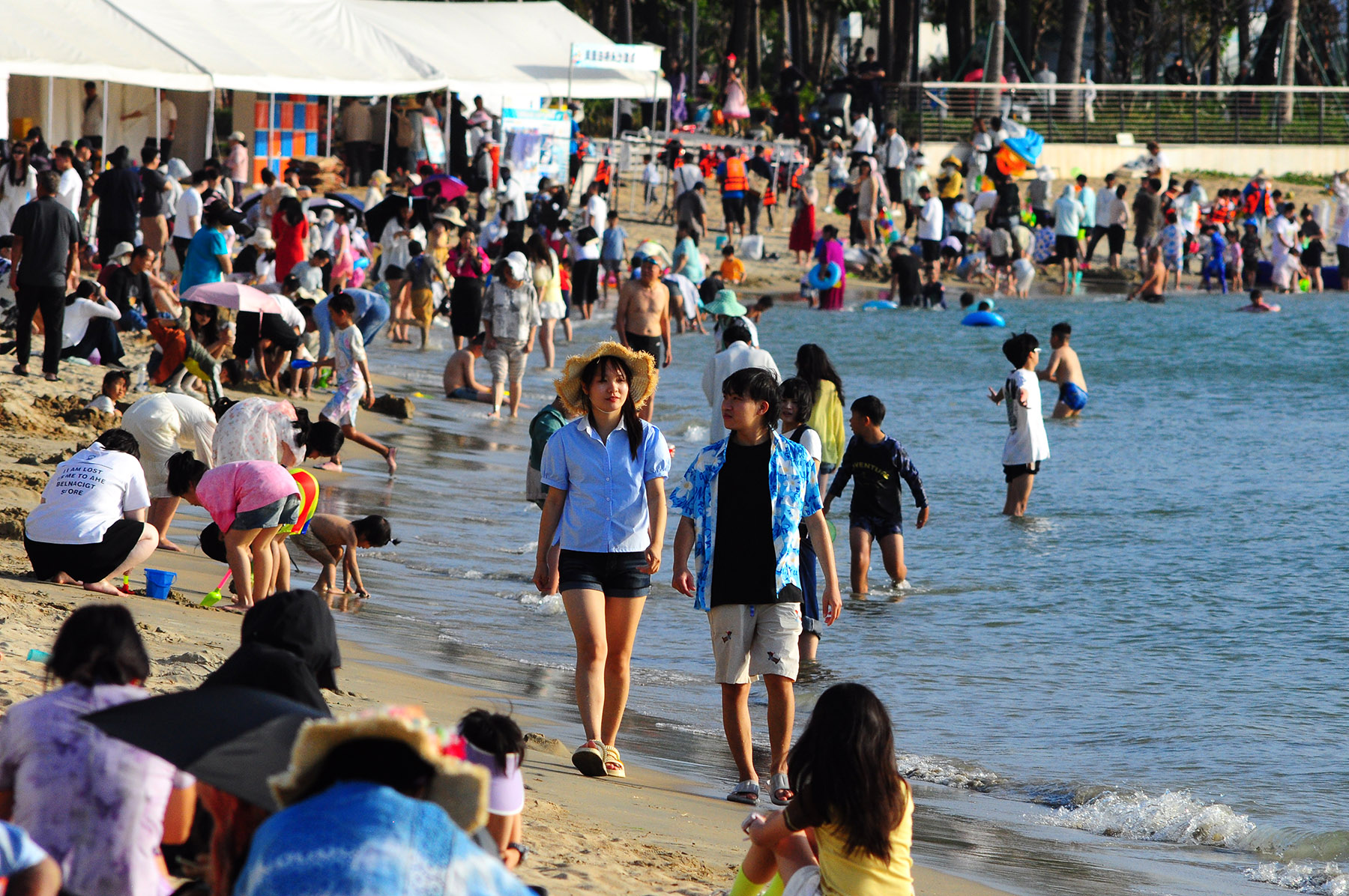
Traditionally, Chinese New Year follows a familiar script. Preparations begin days in advance: groceries are bought, homes are cleaned, and relatives slowly gather.
On New Year’s Eve, families crowd around a single table for a reunion dinner, fireworks light up the sky, and the annual Spring Festival Gala plays in the background.
Visits to relatives stretch on for days, sometimes until the Lantern Festival marks the official end of the holiday.
But traditions, however durable they may appear, are never entirely fixed.
As family structures and lifestyles change, many young Chinese are quietly rewriting what the holiday looks like and what it means.
Zhou Mincheng, 31, works at a bank in Xi’an, Shaanxi province. Originally from Jiangsu province, she moved to her husband’s hometown when they married five years ago.
Before marriage, they agreed to alternate New Year visits — one year with her parents, the next with his. In practice, the arrangement quickly fell apart.
Their first Spring Festival as a married couple ended in a heated argument over where to spend the holiday.
“Just thinking about not being with my parents made me feel deeply frustrated,” Zhou said.
That year, after spending New Year’s Eve with her husband’s family, she volunteered to work the remaining holiday, using her job as an excuse to avoid further gatherings.
When their child was born in 2023, the couple tried a second solution: celebrating with both sets of parents together. However, seven people under one roof proved no easier. Daily routines clashed. Eating habits differed. Privacy became a luxury.
“Everyone was properly dressed, sitting there, just staring at one another,” Zhou recalled. “The only moment of freedom was when you closed your bedroom door.”
Last year, they arrived at a third arrangement. Instead of staying home, the couple split up: each spouse traveled with their own parents. Their child stayed with Zhou.
It was, she said, the most relaxed Chinese New Year she had experienced since getting married.
On xiaonian (Little New Year) — a traditional prelude to the holiday — the extended family shared a reunion meal, then went their separate ways. Her husband traveled with his parents to Pingyao, Shanxi province, a historical city they had long wanted to visit. Zhou took her parents and child to Sanya, Hainan province, a warm coastal resort city in southern China.
The trip was far from effortless: icy rain delayed departures, their 2-year-old child struggled through a first flight, and disagreements over meals sparked fresh tensions.
However, on Chinese New Year’s Eve, standing on the beach, fireworks flickering in the distance while her mother and child played in the sand, Zhou felt it had been worth it.
The next morning, she rose early and jogged along the beach, hoping to catch the year’s first sunrise.
“For my parents’ generation, the Chinese New Year once meant finally being able to eat meat,” Zhou said. “But for me, having grown up in abundance, it’s about being together and also having a break from work.”
This year, she planned to spend Chinese New Year’s Eve and the first day back in Jiangsu with her parents, before traveling with her husband and child to Guangdong province.
“As long as everyone feels happy, that’s a good New Year,” Zhou added.
Xu Jia, who graduated from college two years ago, works at a media company in Shanghai. Last year, she finally rented an apartment with a separate living room — small, but to her, a sign that she was starting to settle into the city. She invited her mother to spend Chinese New Year with her.
Back home in Henan province, the holiday had always meant work for her mother: returning to extended family, cooking large meals, cleaning up long after everyone left the table.
When Xu offered the invitation, her mother accepted almost immediately.
Xu had repeatedly told her not to bring too much. When she finally saw her, her mother was carrying fruit, a chicken, a bracelet, and a seat cushion — because she worried her daughter might feel cold while writing. The new suitcase, weighed down by gifts, had lost a wheel.
“She brought everything she thought was good for me,” Xu said.
Her mother quickly adapted to city life, discovering neighborhood markets and modest restaurants Xu herself had overlooked, stocking her refrigerator with cooking essentials.
On Chinese New Year’s Eve, they wandered the streets until late afternoon, watching shops close one by one. The usually crowded avenues fell silent beneath rows of plane trees. Mother and daughter stood in the middle of the road, taking photos of each other.
“While everyone else was having a family reunion,” Xu said, “We were just two rebellious, slightly misfit girls.”
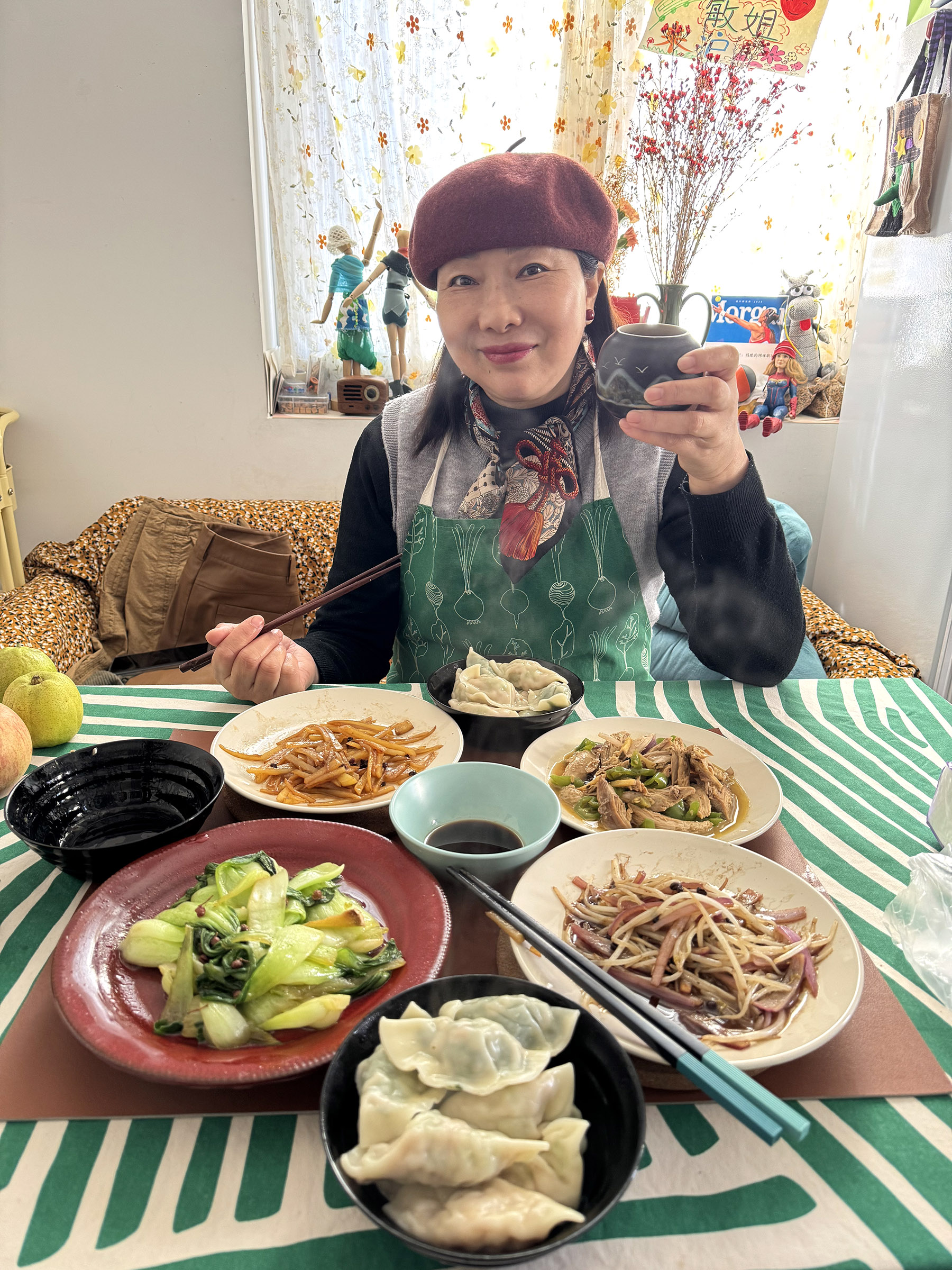
Dinner that night was simple — takeout and a few prepared dishes. The next morning, Xu slept in while her mother went to a nearby park and joined retirees singing and playing instruments.
“As an outsider in Shanghai, I pass that park every day,” Xu noted. “But that world always felt far away. Being there with my mother made the city feel closer.”
She still remembers the noisy Chinese New Year celebrations of her childhood. Family companionship, she admitted, is undeniably warm. But returning home as an adult often means slipping back into old roles.
“You lose a sense of the independent person you’ve become outside.”
Even so, she planned to head back this year to be with her grandmother. It feels easier now, she explained, because both she and her mother understand that they have choices.
For Huang Yaxuan, a 24-year-old photographer, one Chinese New Year unfolded far from home — inside a Buddhist temple.
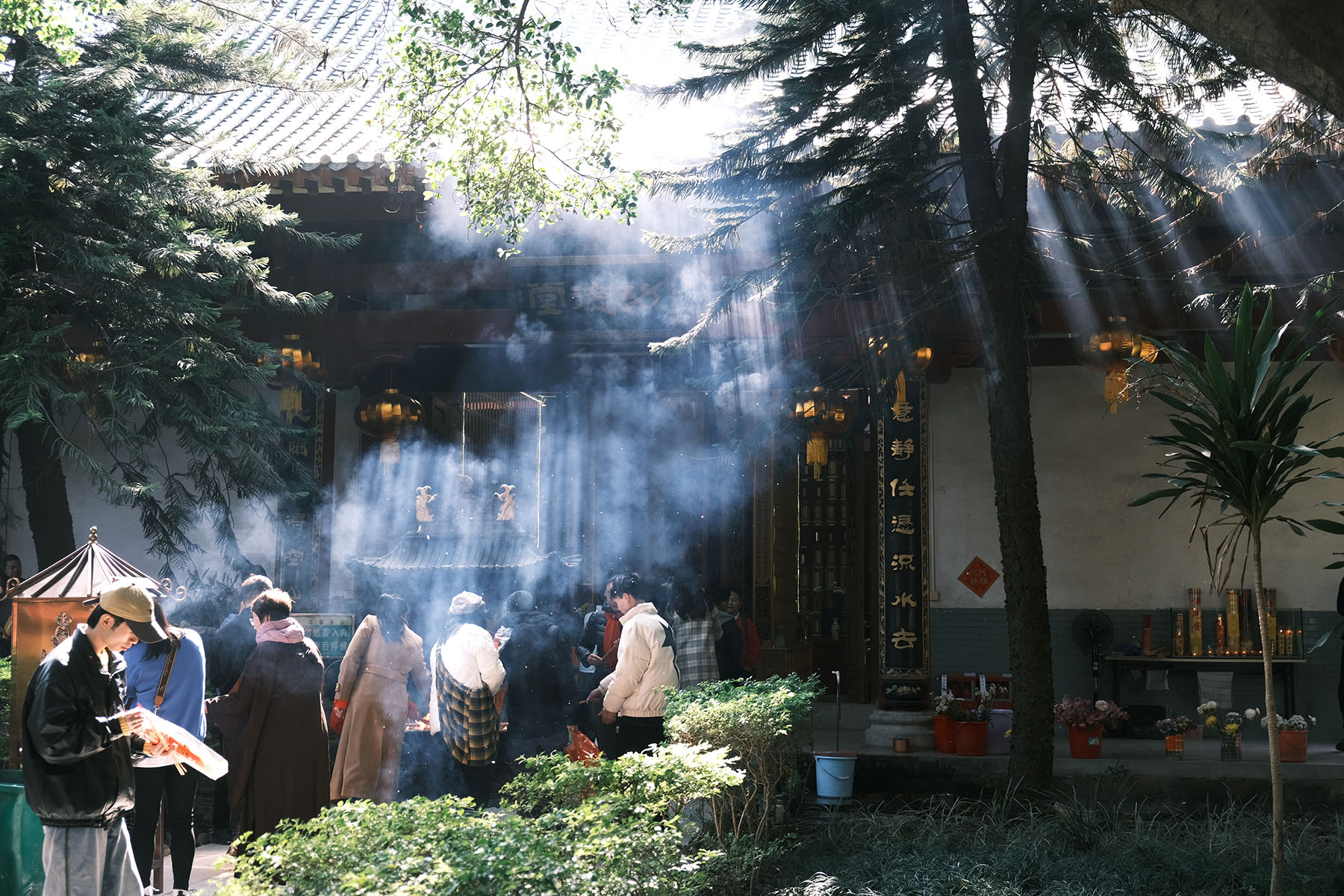
Two years ago, her grandmother passed away. Her father, who had cared for her for years, wanted something different. After seeing a notice for Spring Festival volunteers, the family traveled from Nanchang, Jiangxi province, to the Liuzu Temple in Zhaoqing, Guangdong province, where the Sixth Patriarch of Chinese Chan (Zen) Buddhism, Huineng, stayed. They stayed for nearly three weeks.
During the holiday, the temple hosted hundreds of visitors daily. More than 20 volunteers handled chores: cleaning rooms, sweeping floors, and washing dishes.
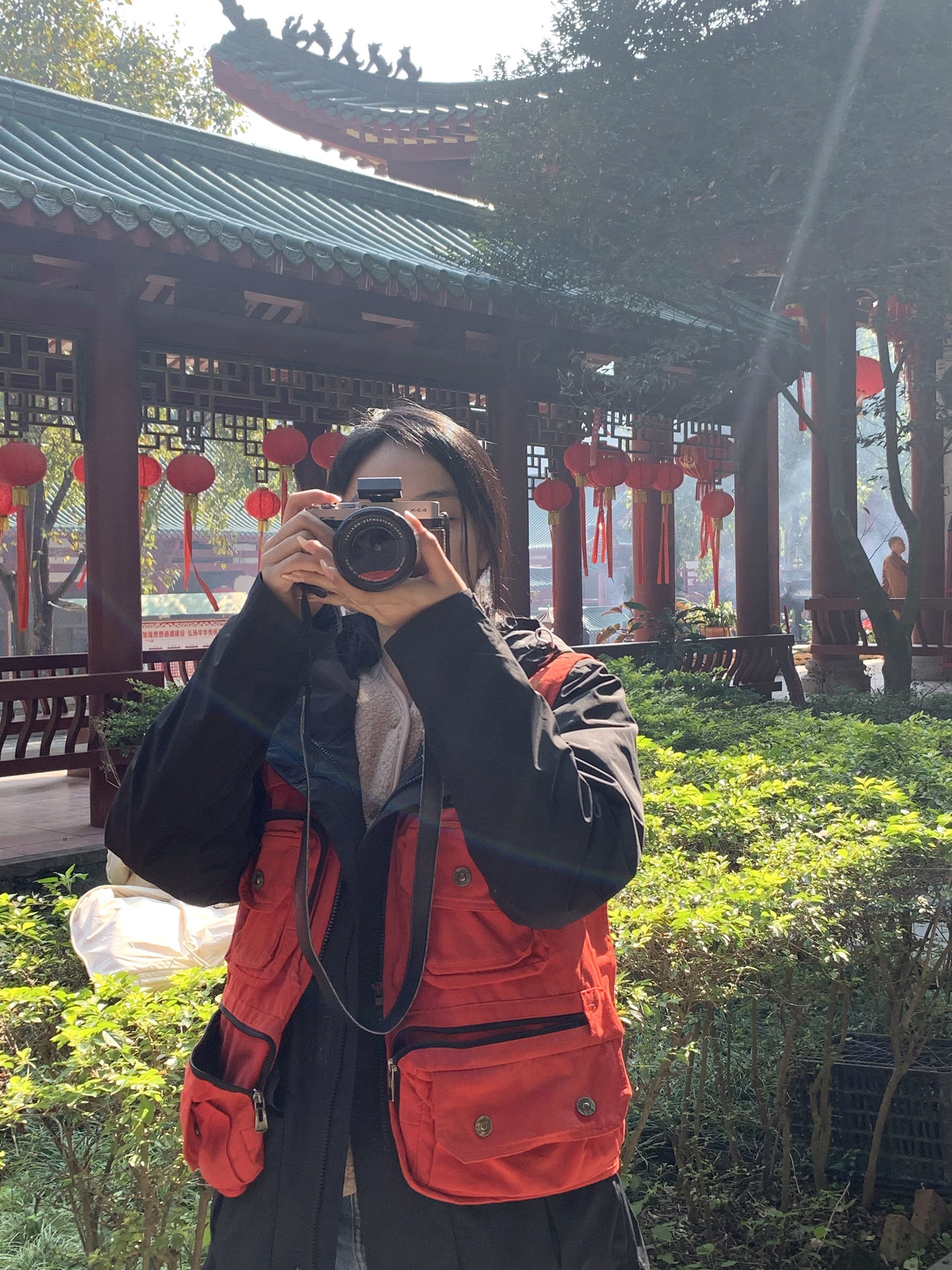
Huang, drawing on her professional skills, was responsible for photographing the temple’s activities. She also photographed her parents at work — moments she rarely captured at home.
“These simple, physical tasks calm you,” she said. In her spare time, she copied scriptures, practiced tai chi, or played with stray cats.
Days began before sunrise and ended early. Before bed, the family sat together, reflecting on the day — on moments when they might have chosen patience over anger.
On Spring Festival Eve, the temple gathered everyone to set off fireworks.
“It’s hard to say which day stood out,” Huang said. “Every day felt ordinary, but everyone wore smiles, and my family quietly enjoyed the sense of peace that comes with the New Year.”
Another volunteer, Zhou Danfeng, spent last Chinese New Year at a temple alone. After her parents divorced and formed new families, she struggled to find a place where she felt she belonged.
At the temple, she met others like herself — young people navigating family rifts or career uncertainty. They did not ask about one another’s past. They cleaned, made dumplings, and welcomed in Chinese New Year together.
“I didn’t expect to receive so much kindness,” she said.
The Chinese New Year of her childhood exists now only in memory. Yet, she still seeks ritual.
Perhaps this is what the holiday increasingly represents for younger generations: it is no longer about strictly adhering to custom or being in a specific place.
Instead, it is about finding those who matter most — to share the weight of the past year and the quiet hope of the one ahead, side by side.
Bai Shuhao contributed to this story.
