

Stephen Law says that with assured systems and a bold vision, the SAR’s brightest chapter awaits, and the time to act is now
 Hong Kong’s fiscal health is the bedrock of its economy. Amid global economic volatility, Hong Kong stands as a beacon of economic resilience. The Hong Kong Institute of Certified Public Accountants’ latest analysis projects a modest deficit of HK$1.4 billion ($180 million) for fiscal year 2025-26 — a figure dwarfed by the city’s fiscal reserves of HK$652.9 billion (equivalent to 10 months of government expenditure). Crucially, these reserves are buttressed by over HK$4 trillion in assets managed by the Hong Kong Monetary Authority. With a debt-to-GDP ratio of just 9 percent (far below the 100 percent-plus averages of the United States and Japan), inflation under control, and GDP growth forecast at 3.2 percent, Hong Kong’s fiscal fundamentals are enviably sound.
Yet resilience cannot be allowed to breed complacency. Structural pressures — an aging population, talent gaps, and overreliance on land revenues — demand proactive strategies. As a bridge between the Chinese mainland and global markets, Hong Kong must leverage its strengths while innovating boldly. The HKICPA has come up with proposals for the upcoming Budget, which aim not merely to sustain but to amplify the special administrative region’s role as China’s financial gateway to the world.
Four strategic levers for enhancing competitiveness
First, Hong Kong is magnetizing global capital and innovation. The city’s edge as an international financial hub hinges on attracting high-value enterprises. The HKICPA proposes:
Regional headquarters (RHQ) incentives: A 50 percent profits tax reduction (8.25 percent) for qualifying RHQs, plus two-year tax exemptions for mainland firms using Hong Kong to “go global”. To address executive concerns, we recommend rental subsidies and streamlined “2 + 3-year visas” with clear tax guidance.
Tech and small and medium-sized enterprises (SME) catalysts: Beyond expanding research and development tax deductions to cover outsourced innovation in the Guangdong-Hong Kong-Macao Greater Bay Area, we advocate establishing a HK$1 billion Quantum Computing Fund to draw global pioneers. For SMEs, digital transformation is critical — a tax super-deduction to hire IT specialists could accelerate this shift.
My perspective: Having led investments in disruptive tech across Asia (from quantum computing to tokenized assets), I urge aligning tax policy with emerging sectors like real-world assets, security token offerings and stablecoins. Hong Kong’s new virtual asset framework positions us to lead Web3 finance — but tax clarity is essential.
Second, Hong Kong aims to win the talent war. The city is competing with Singapore, Dubai, and Shanghai for global talent. Our solutions:
Deepening Greater Bay Area integration: Create a “Professional Internship Green Channel” for Greater Bay Area students and subsidize employers offering competitive salaries/accommodation.
Removing barriers: Launch a “Property Connect” pilot allowing mainland talent to purchase Hong Kong homes with renminbi — eliminating exchange risks. Extend private school allowances for expatriate children.
Unlocking the silver economy: Offer 125 percent tax deductions for employers hiring professionals aged 65-plus, alongside raising basic allowances for retirees. This addresses workforce shrinkage while valuing experience.
Third, Hong Kong should promote fiscal sustainability. While our tax system remains world-class, revenue diversification is overdue:
Broadening the base: Adjust salaries tax for high earners (those earning above HK$4 million) by raising the top-tier to 16.5 percent or lowering the threshold. Increase stamp duties on residential leases (unchanged for 20-plus years).
Smart revenue innovation: Introduce a “Boundary Facilities Fee” (HK$100-HK$200 per private vehicle) at Shenzhen Bay and other control points, funding infrastructure while easing congestion.
Compliance and certainty: A voluntary disclosure program for digital businesses/key opinion leaders (with penalty waivers) balances enforcement with pragmatism.
Fourth, Hong Kong needs to build an inclusive green future. Its financial health must serve society:
Immediate relief: A 100 percent salaries/profits tax rebate (capped at HK$5,000) and rates concessions for modest homeowners. Allow stamp duty instalments for first-time buyers.
Climate finance leadership: Extend EV charging subsidies, mandate green standards in new infrastructure, and — critically — permit tax deductions for carbon credits and certified renewable energy purchases. This supports Hong Kong’s “core climate” carbon marketplace while aiding corporate transitions.
Cultural-eco tourism: Partner with Greater Bay Area cities to create “experience trails” (for example, heritage-art-nature circuits), positioning Hong Kong as Asia’s sustainable tourism hub.
HK’s unique value: Serving national strategy
As a Chinese People’s Political Consultative Conference National Committee member and Ministry of Finance adviser, I see Hong Kong’s role through a dual lens: upholding our global competitiveness while advancing national priorities.
Gateway for RMB internationalization: Tax incentives for RMB-denominated insurance/annuities and exploring “IPO Connect” (allowing mainland institutions to subscribe to Hong Kong IPOs) can accelerate this mission.
Governance exemplar: Our independent Judiciary, regulatory transparency, and environmental, social and governance advocacy offer a trusted template for mainland enterprises expanding overseas.
Synergy with Greater Bay Area partner cities: From shared talent pools to integrated carbon markets, Hong Kong must function as the region’s financial brain — optimizing capital flows while mitigating risks.
Conclusion: The call for confident action
Hong Kong’s fiscal resilience is not accidental. It stems from decades of prudent management, rule of law, and market-driven dynamism. Yet as global capital evolves, so must we.
The HKICPA’s proposals are more than technical adjustments; they are a manifesto for sustained relevance. By embedding innovation into our tax code, incentivizing human capital, and greening our financial architecture, the SAR will remain indispensable to the nation’s rise — and a lodestar for global finance.
The time to act is now. With the certainty of our systems and the boldness of our vision, Hong Kong’s brightest chapter awaits.
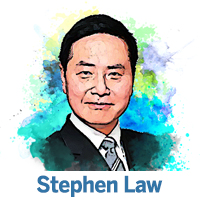
The author, a National Committee member of the Chinese People’s Political Consultative Conference National Committee, is president of the Hong Kong Institute of Certified Public Accountants and adviser to Ministry of Finance of the People’s Republic of China.
The views do not necessarily reflect those of China Daily.
