

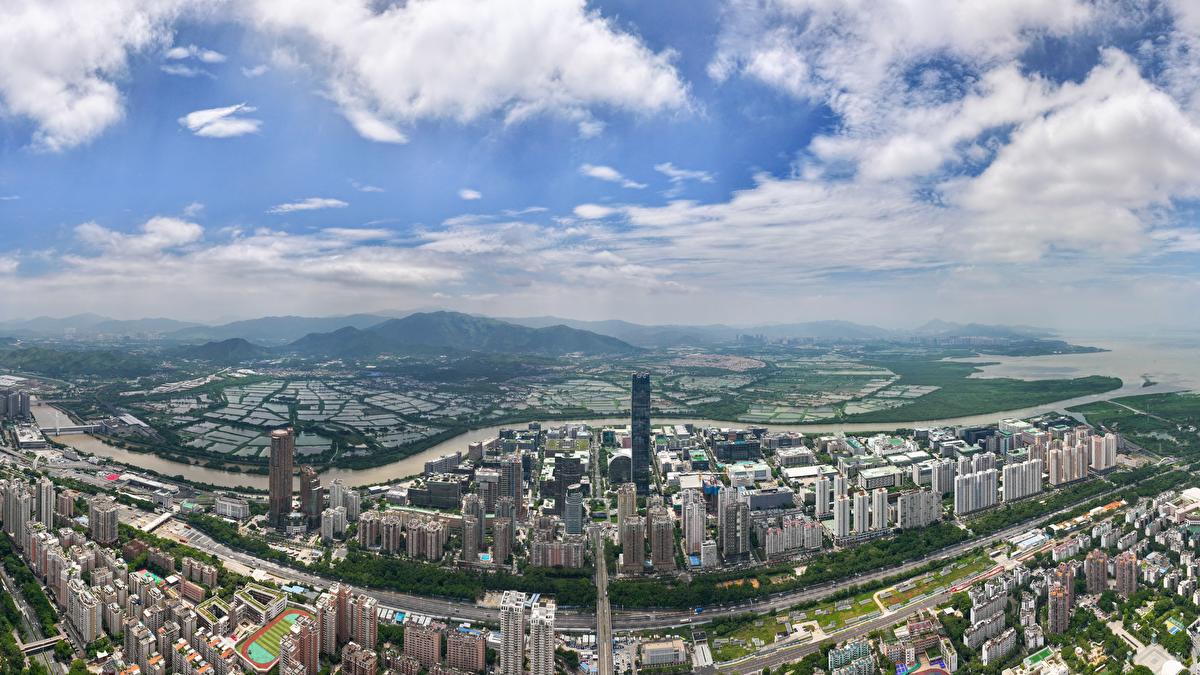
As Shenzhen prioritizes cross-boundary connectivity of the Hetao technology park and service trade cooperation in Qianhai as priorities for this year’s collaboration with Hong Kong, experts anticipate that upgraded infrastructure and deeper industrial integration will unlock greater potential for the partnership.
According to the Shenzhen government’s 2026 work report, delivered on Monday, the innovation hub vowed to deepen collaboration with nearby cities to further drive regional growth and national development.
Aiming for “closer and more pragmatic” collaboration with Hong Kong, Shenzhen plans to open the renovated Huanggang Port this year, featuring enhanced customs clearance services that will reduce the processing time for passengers from half an hour to just five minutes.
The new port is a 24-hour land-border crossing within the Shenzhen side of the Hong Kong-Shenzhen Innovation and Technology Park. It is designated as a passenger-only inspection port with an estimated peak daily throughput capacity of 300,000 travelers.
To facilitate cross-boundary travel for researchers and the transportation of scientific equipment, Shenzhen also pledged to accelerate the construction of a river-crossing bridge in the western part of Hetao, as well as the upgrading of the “No 1 Channel” — a streamlined immigration passage.
“The renovation of Huanggang Port not only enhances customs clearance efficiency; more importantly, it integrates port services with international science and technology innovation functions, achieving value re-creation of the significant border area,” said Zhang Guoping, associate researcher at the Shenzhen Academy of Social Sciences.
Once the renovation is complete, the port is expected to free up about 500,000 square meters of land for the development of the Hetao technology park.
He said he believes that all of these latest initiatives related to Hetao will help it establish a comprehensive technology transfer ecosystem and create a closed-loop innovation system between Shenzhen and Hong Kong.
Guo Wanda, executive vice-president of the Shenzhen-based think tank China Development Institute, said that in addition to Huanggang, the Luohu and Sha Tau Kok ports are also undergoing upgrades under Shenzhen’s push to develop port economy.
These areas will be transformed into new hubs for cross-boundary tourism and consumer collaboration, serving as key windows for Shenzhen to connect with Hong Kong's Northern Metropolis program. He emphasized that these initiatives must be pursued with utmost dedication during the period of the 15th Five-Year Plan (2026-30).
ALSO READ: Shenzhen leads major cities with 5.5% GDP growth on tech edge
In addition, the work report also highlights the need to comprehensively deepen Qianhai’s reform and opening-up and accelerate the development of the Shenzhen-Hong Kong International Service City, a benchmark project in the area aimed at promoting international economic and trade cooperation.
Zhang said that Qianhai's focus is shifting from serving Hong Kong to facilitating mutual cooperation between Hong Kong and the mainland. With the expansion of Qianhai in 2021, policy benefits have been extended to more areas in Shenzhen's Nanshan and Bao'an districts.
Additionally, with independent authority to manage economic affairs, Qianhai has gained greater flexibility to promote the integration of trade service industry with Hong Kong.
These measures will hasten Qianhai's development into a highly integrated and efficient cooperation platform, with talent, capital, technology, and legal frameworks all aligned with domestic and international markets, Zhang said.
Both Guo and Zhang believe that Shenzhen's hosting of the Asia-Pacific Economic Cooperation summit this year presents new opportunities for Shenzhen-Hong Kong collaboration to scale new heights.
As one of APEC's missions is to promote trade and investment liberalization, Guo said that by hosting this significant international conference, Shenzhen will make further progress in this area, which will be beneficial for various aspects of collaboration with Hong Kong.
Zhang encouraged Shenzhen to learn more from Hong Kong's experience in promoting service trade during this conference, and extend these practices to other Chinese mainland cities to facilitate mainland enterprises’ global foray. He added that China's foreign trade currently remains dominated by goods trade, with significant room for growth in the services trade.
Contact the writer at bingcun@chinadailyhk.com
