

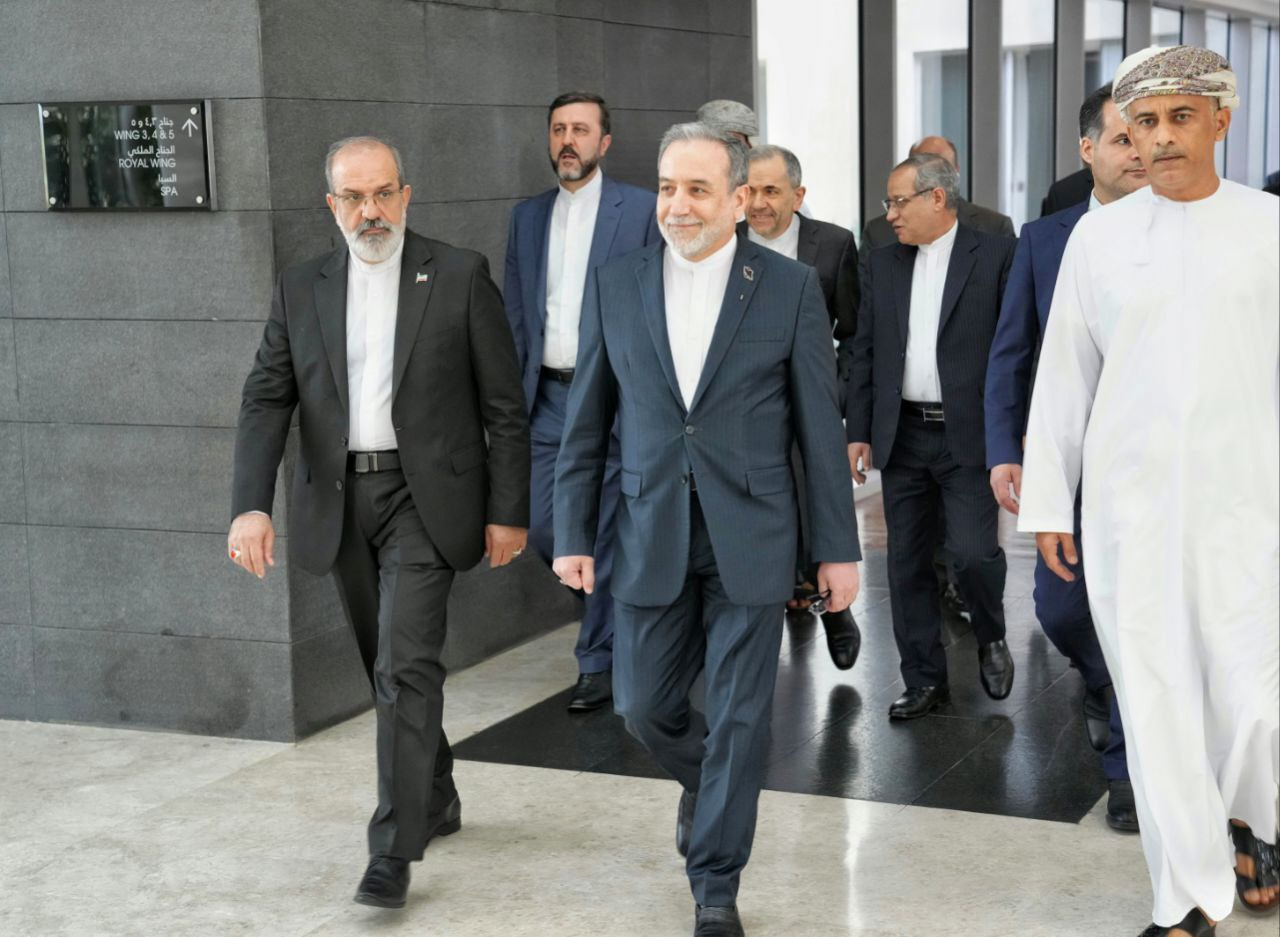
WASHINGTON/MUSCAT/UNITED NATIONS – US President Donald Trump said on Friday that his administration will hold more talks on Iran early next week, hours after having a "very good" indirect dialogue with Iran in Oman amid high tensions.
"We likewise had very good talks on Iran," he told reporters on board Air Force One en route to his Mar-a-Lago private club in Florida for the weekend.
"We have to see what that deal is. But I think Iran looks like they want to make a deal very badly," said Trump. "We're going to meet again early next week."
Warning that "the consequences are very steep" if Iran fails to make a deal over its nuclear program, he said: “We have a big armada, and we have a big fleet heading in that direction, gonna be there pretty soon. So, we'll see how that works out.”
US presidential special envoy Steve Witkoff, Trump's son-in-law Jared Kushner, and US Central Command Commander Admiral Brad Cooper joined the Oman talks on Iran on Friday, local media reported.
According to Iran's official news agency IRNA, Iranian Foreign Minister Seyed Abbas Araghchi said Friday’s talks focused solely on the nuclear issue, and that Tehran did not discuss any other topics with Washington.
RELATED ARTICLES
- Trump pushes Iran to reach nuclear deal amid US military buildup
- Iran deploys advanced missile at newly revealed underground site
- US-Iran drone encounter clouds prospects for talks
- Trump says another 'armada' sailing towards Iran
- Iran to consider any US military action as 'act of war'
He said that "very deep distrust" formed in past dealings between the two countries posed "a very big challenge" to the negotiations.
Noting that the talks took place in "a positive atmosphere," Araghchi, who headed the Iranian delegation, told reporters after the hours-long talks that the two sides will first hold consultations back in their capitals, and then decide how and when it will be regarding the next round of talks.
The Iranian delegation had pointed out in the talks that refraining from threat and pressure is the prerequisite for any dialogue, he said, adding that Iran expects that this point "definitely be observed to prepare the ground for the talks' continuation."
Also, Iran's state-run IRIB TV reported quoting Araghchi that Omani Foreign Minister Sayyid Badr bin Hamad Al Busaidi held several meetings with the Iranian and US delegations, helping the two sides exchange their viewpoints.
Following the talks, Al Busaidi, the Omani foreign minister, posted a statement on social media platform X, calling the talks "very serious" and "useful."
The latest round of talks came amid heightened regional tensions, especially between Washington and Tehran. The US has intensified its military presence in the Middle East in recent weeks, deploying a massive buildup of naval and air assets, including the aircraft carrier USS Abraham Lincoln and several guided-missile destroyers. Meanwhile, Iran is also ramping up its military preparations.
At the same time, both sides had gone through a hard time reaching an agreement over the venue, format and agenda of the talks, which laid bare their profound, seemingly irreconcilable negotiating positions.
They had initially agreed to meet in Istanbul, Türkiye, with some other Mideast countries participating as observers. Then, Iran reportedly proposed moving the talks to Oman and holding them in a bilateral format focused only on nuclear issues, a requirement the United States reportedly rejected. Washington had reportedly threatened to cancel the talks if Tehran did not stick to the original arrangement, but later okayed the new arrangement after being lobbied by at least nine Mideast countries.
UN Secretary-General Antonio Guterres welcomed the resumption of talks between Iran and the United States, his spokesman said on Friday.
The secretary-general hopes that the talks will help reduce regional tensions and prevent a broader crisis, said his spokesman in a note to correspondents.
New sanctions
The Trump administration on Friday announced new sanctions targeting 15 entities, two individuals and 14 so-called shadow fleet vessels linked to Iran's oil trade.
"The President is committed to driving down the Iranian regime's illicit oil and petrochemical exports under the Administration's maximum pressure campaign," the US Department of State said in a statement.
