

Momenta, Huawei secure 80% share of third-party urban navigate on autopilot
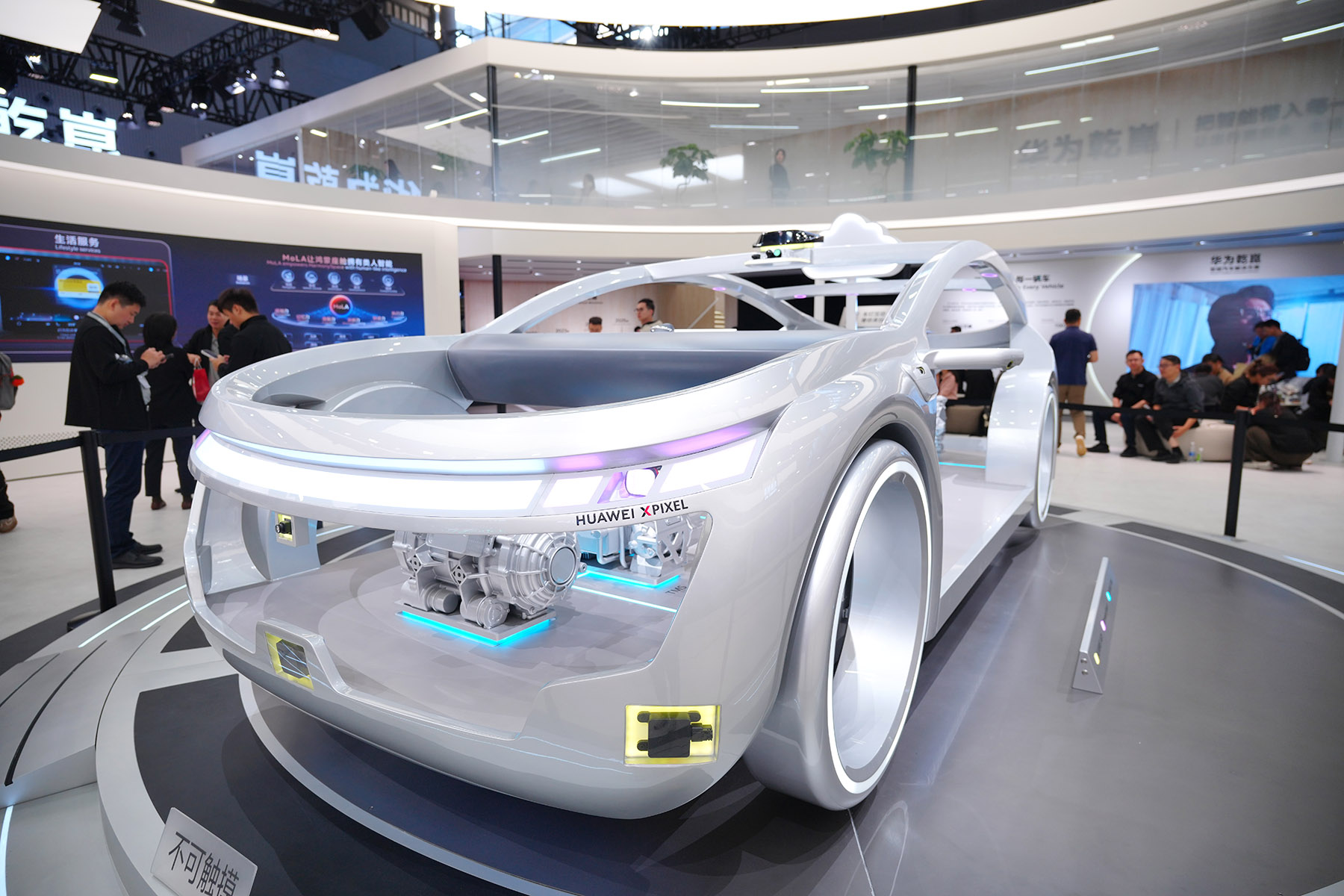
Domestic driving assistance system suppliers hold the majority share of the market, a structure that experts say is unlikely to change in the short and medium term. As top firms expand their share and offer more competitive pricing, new entrants have little room to grow — driven by intensified urban Navigate On Autopilot competition.
According to a report by the China Association of Automobile Manufacturers, from January to November 2025, cumulative domestic sales of passenger vehicles equipped with urban NOA reached 3.13 million units, accounting for 15.1 percent of passenger vehicle registrations and a 5.6 percentage point increase year-on-year.
"Urban NOA features are moving from high-end to mainstream models," said Zhu Kongyuan, deputy general manager of the China automotive industry economic and technical information research institute, an affiliate of the CAAM. He added that urban NOA is entering a phase of rapid and large-scale development.
READ MORE: China rises in NEV rulemaking
Automakers adopt two main approaches to deploying urban NOA: in-house R&D and third-party cooperation. Brands including BYD,Nio, Li Auto and Xiaomi have stuck to in-house development, but more opt for third-party partners.
The CAAM report shows that Momenta and Huawei jointly captured about 80 percent of the third-party urban NOA market in the first 11 months of 2025. The remaining share was held by other players such as QCraft and Horizon Robotics.
Yale Zhang, managing director of consultancy Automotive Foresight, said that the current highly concentrated market structure is unlikely to shift in the short and medium term.
"Most automakers lack software expertise and developing a full-stack intelligent driving solution in-house is not only technically challenging and costly, but also requires sustained investment in maintaining a large R&D team," Zhang explained.
Meanwhile, as leading companies benefit from economies of scale, their solutions become more price-competitive, while new entrants face the dual pressures of high R&D costs and limited customer acquisition, making them prone to losses, Zhang added.
In late November, Haomo. AI, the self-driving startup nurtured by Great Wall Motor, reportedly suspended all operations. An internal notice told employees to stop reporting to work from Nov 24 without explanation or clarity on plans.
Founded in 2019, the company once enjoyed strong investor support and achieved a peak valuation exceeding $1 billion.
Local media reported in late 2025 that Momenta secured a deal for two models from GWM, with mass production expected to begin in early 2026.
The CAAM data show Momenta's urban NOA installations reached 414,400 units in the first 11 months of 2025. Currently, eight of the world's top 10 automakers have partnered with Momenta. Its partners include German automakers Volkswagen, BMW and Mercedes-Benz, Japan's Toyota and the US-based General Motors, some of which are also shareholders of Momenta.
Across the industry, Momenta has collaborated on over 160 production models.
The company specializes in providing software solutions and lets automakers handle hardware and sensor integration.
This approach offers high flexibility, as it is not tied to specific chips or suppliers, enabling the company to meet diverse automaker needs and quickly implement its solutions across various models and brands.
Cao Xudong, CEO of Momenta, said that a 10-person team can complete the mass production adaptation of an intelligent driving solution for a car in less than three months. The solution for BMW was completed in just three months, significantly faster than the industry average of one year.
In contrast, Huawei offers a full-stack, self-developed solution spanning chips, operating systems and algorithms. Its tightly integrated hardware-software approach enables automakers to quickly join the top tier of intelligent driving, offering high efficiency and convenience.
However, the integrated solution comes at a higher cost, making it suitable mainly for mid-to-high-end models priced above 200,000 yuan ($28,780).
Huawei's Qiankun driving assistance system has been installed not only in models from Avatr and Voyah but also in all vehicles under the Harmony Intelligent Mobility Alliance. In 2025, the total number of vehicles equipped with the system exceeded 976,000 units.
Jin Yuzhi, CEO of Huawei's intelligent automotive solutions business unit, said in mid-January that by the end of 2026, more than 80 models are expected to be equipped with Huawei's Qiankun driving assistance system, with cumulative installations projected to reach 3 million units.
ALSO READ: Shift in intelligent EVs enthuses consumers
As of January, the system's total driving mileage has exceeded 7.28 billion kilometers, providing massive amounts of data for continuous algorithm optimization.
CAAM said that Huawei and Momenta are boosting China's influence in the global automotive value chain with competitive NOA solutions.
Zhang added that expanding urban NOA globally faces major challenges. These include differences in network and road scenarios, a lack of overseas road data, strict data regulations and the need for extensive local AI training.
Yang Zhongping, deputy secretary-general of CAAM, noted that NOA's high-quality development faces challenges such as insufficient core technology breakthroughs, inadequate data security and computing power, as well as the need for improved standards and regulations.
Contact the writers at caoyingying@chinadaily.com.cn
