

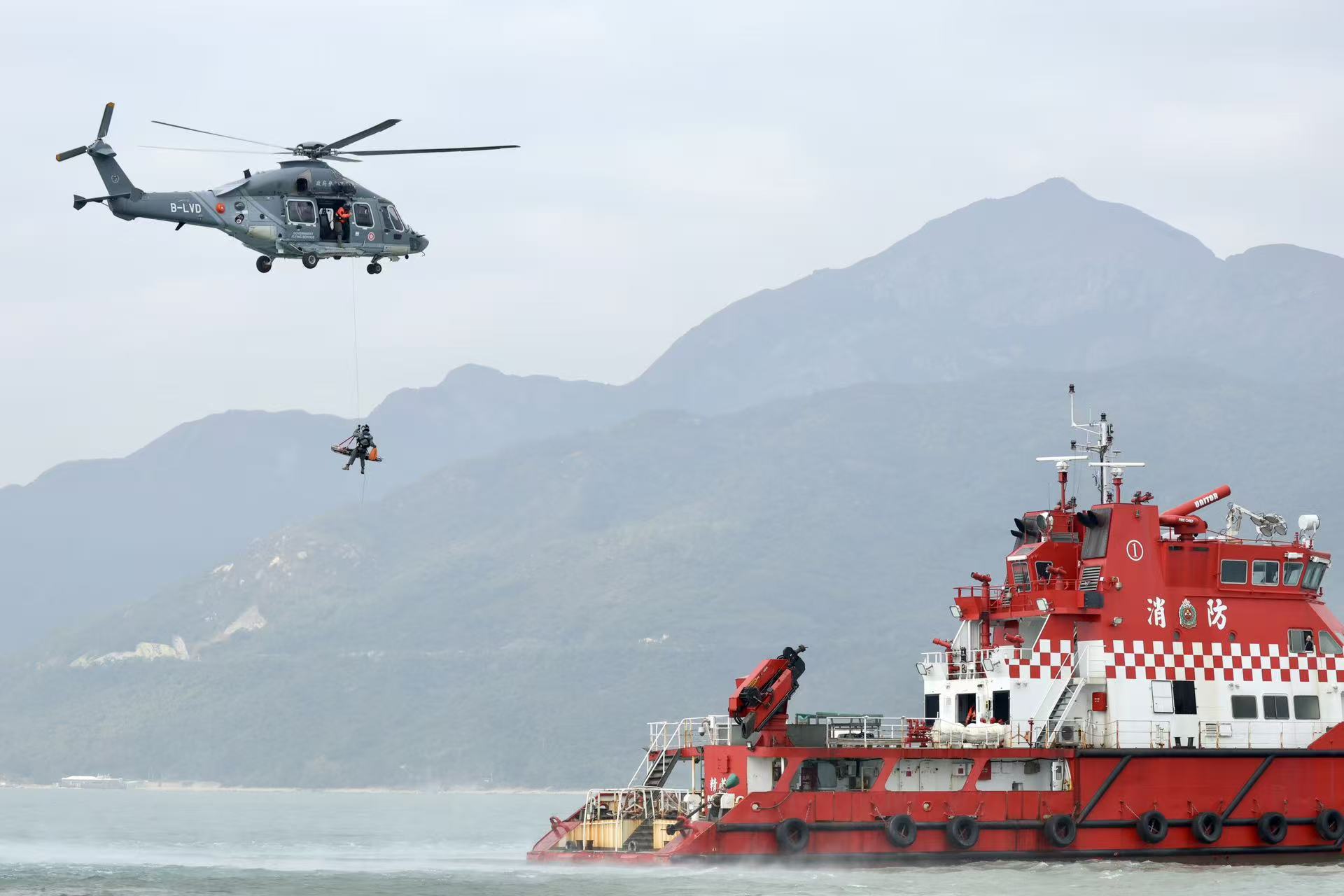
Hong Kong authorities deployed drones in a joint search and rescue exercise organized by the Civil Aviation Department (CAD) on Monday, aiming to provide a more flexible and effective search method in emergencies.
The drill involved nine search and rescue organizations such as the Government Flying Service, the Police Force, the Fire Services Department (FSD), the Hong Kong Observatory and the People’s Liberation Army Hong Kong Garrison.
The exercise scenario envisioned a helicopter carrying three crew losing contact with the control tower, and crashing into the sea near Mong Tung Wan on the Chi Ma Wan Peninsula on Lantau Island. CAD officials immediately initiated a search and rescue operation with all available units.
The FSD sent fireboats to the crash site, while deploying drones to search for survivors.
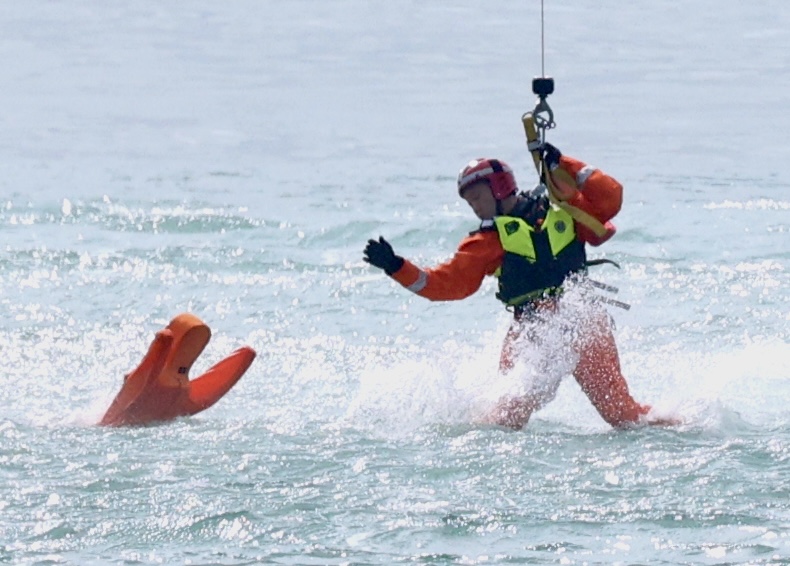
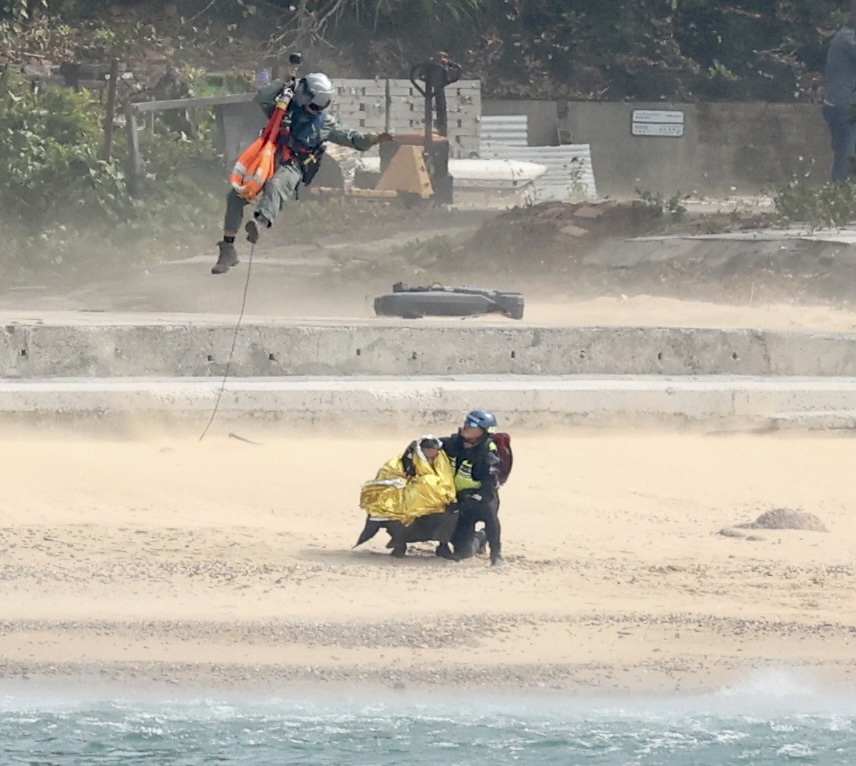
The location of the three survivors was confirmed in a few minutes. About 10 minutes later, a Hong Kong Garrison helicopter approached the site and transported the survivors to the hospital.
Over 100 members took part in the one-hour drill, said Terence Chan Kin-chung, a senior operations officer of CAD, at a press conference after the exercise.
He noted that the FSD deployed drones for the first time in the exercise. Compared to traditional surface search methods, drones offer greater agility. With an operator monitoring the location, it can cover a wide area within a short period of time, Chan said.
A three-hour long-range exercise will be launched on Tuesday in the South China Sea, about 50 nautical miles south of Hong Kong, in which Hong Kong search and rescue units will cooperate with Chinese mainland counterparts, including the Nanhai Rescue Bureau of the Ministry of Transport, and Guangdong Provincial Maritime Search and Rescue Centre, to rescue an aircraft in distress.
According to the International Civil Aviation Organization (ICAO), the Hong Kong Special Administrative Region is responsible for a search and rescue area covering 276,000 square kilometers – much larger than the SAR’s total land and sea area of 2755sq km.
Chan said when an accident occurs outside the city’s territory but within this search and rescue area, it is necessary to consider activating the CAD's rescue coordination center, coordinating various search and rescue units for rapid operations.
Asked in which situations the Hong Kong Garrison would assist the Hong Kong SAR in search and rescue operations, Chan said that according to Article 14 of the HKSAR Basic Law, the SAR government may request the central government for assistance from the garrison in disaster relief when necessary.
By carrying out such drills every two to three years under the ICAO’s guidelines, the Hong Kong SAR government hopes to streamline cross-departmental cooperation and coordination mechanisms in search and rescue operations between CAD, other search and rescue units of the HKSAR and the Hong Kong Garrison, Chan said.
Contact the writer at atlasshao@chinadailyhk.com
