

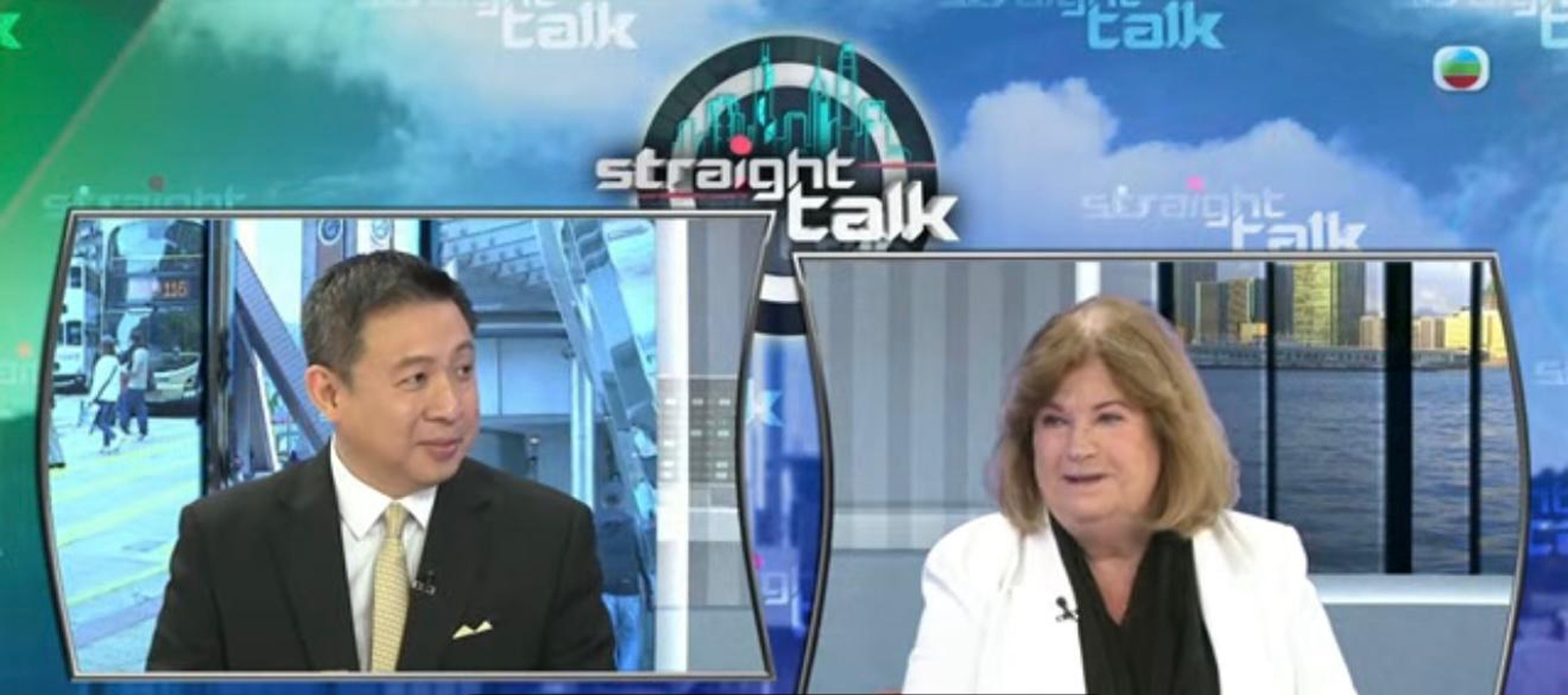
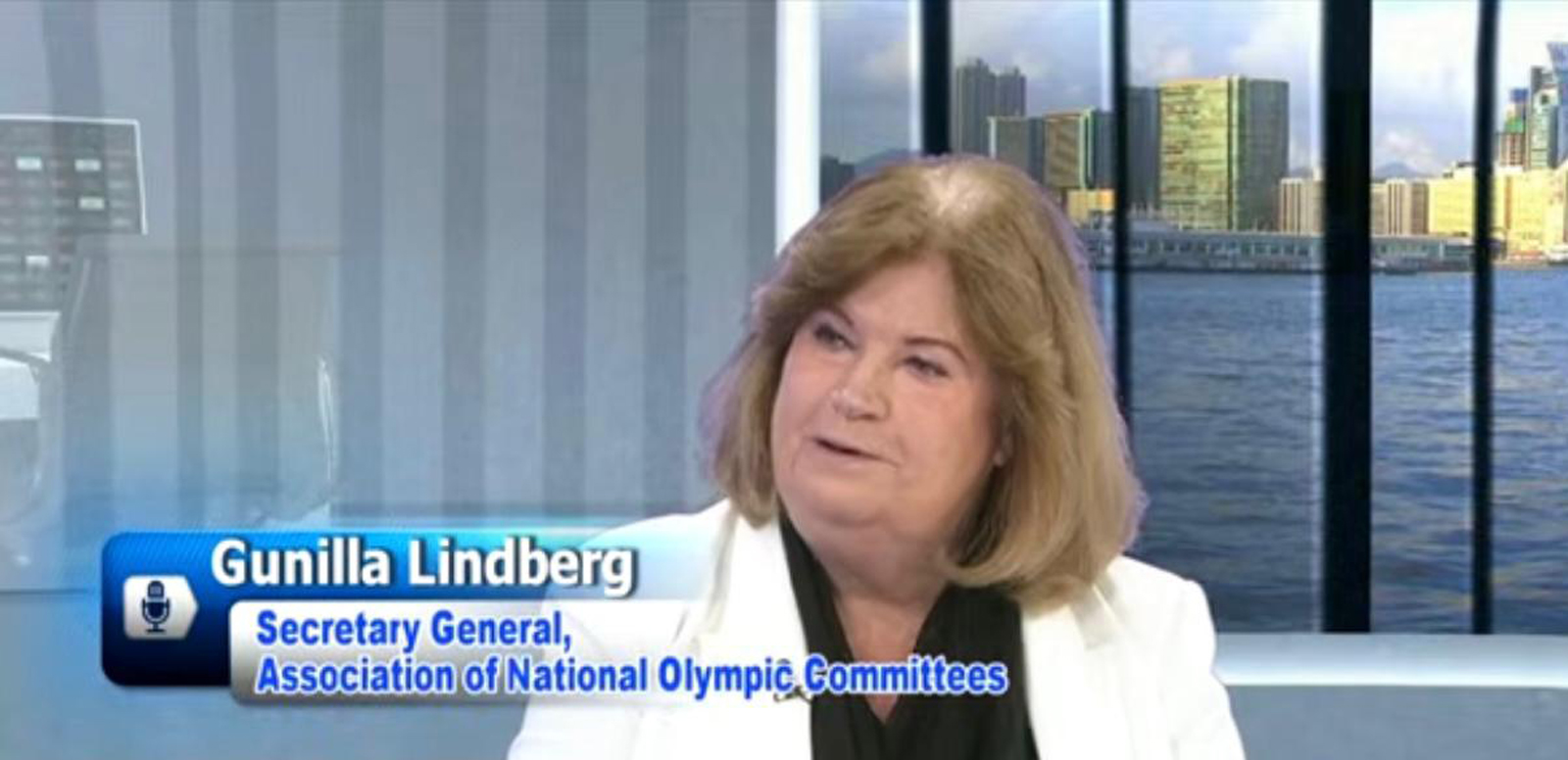
While Hong Kong will host the 28th General Assembly of the Association of National Olympic Committees (ANOC) near the end of 2025, ANOC Secretary General Gunilla Lindberg is on Straight Talk to talk about what this will mean for Hong Kong and its sporting movement.
Chan: Welcome to Straight Talk. I am Eugene Chan. Hong Kong has just marked the one-year countdown to hosting the 28th General Assembly of the Association of National Olympic Committees (ANOC). To explore what all this means for Hong Kong, we are joined by one of the most influential figures in the Olympic movement, ANOC Secretary General Gunilla Lindberg. Lindberg's career reflects a half-century of service to the Olympic movement, which includes being involved in 28 Winter and Summer Olympic Games. From her beginnings in the Swedish Sports Administration to her leadership in ANOC and the IOC, she has been a constant presence in shaping the Games, ensuring they remain a platform for athletes worldwide. Welcome to our show, Gunilla!
Lindberg: Thank you very much, very happy to be here.
Chan: Gunilla, what an impressive record of 28 presidents at all the Games. Before we start the show, how does that feel?
Lindberg: It feels ... I am quite impressed myself when you have talked about what I have done. I mean it is fantastic to work in the Olympic movement and to be a part in so many Games, not only in Games, but to be a part of people's life in sport because sport is positive.
Chan: Yes, just now we were saying that there are 206 countries you are working with. So, your name is familiar to 206 countries?
Lindberg: Not really, but maybe to one person in all those countries, yes.
HK hosting 2026 GA
Chan: Right. Anyway so for our viewers who may not be familiar with ANOC, what we call the Association of National Olympic Committees, actually what is it? And why is it so important of it being the international sporting system?
Lindberg: Every country that is participating in the Olympic Games and the Olympic movement must have a National Olympic Committee, and that National Olympic Committee is preparing their athletes and the sport in the country, and preparing the athletes to go to the Games. We have three parts. We have the IOC, and then we have the NOCs that are working with the athletes about their practical preparations, and then we have the international federations that are of course working with different world championships and competitions. But during the Games, they take care of the venues and see that everything is working.
Chan: Right. Okay, so, I mean we are going to have this general assembly going to be in December in 2026 at the Asia World Expo. I mean it is a major sports assembly where we are expecting over 1,200 sports leaders from the 206 nations that we have mentioned. So, I know that the last ANOC General Assembly took place in 2024 in Portugal. So, from your perspective, what makes any of the general assembly special or successful? And what sort of qualities are you anticipating from the Hong Kong general assembly that make it an ideal choice for hosting in Hong Kong?
Lindberg: You know to host the general assembly, it requires quite a lot of an organizer, because as you said, it is more than 1,000 people coming. So, first of all, you need a place to be.
Chan: Right.
Lindberg: You need to have a congress center that can host all those people. And you need to have hotel rooms that are convenient to move people from the hotel to the meetings. And then of course, you need to be a good organizer. And yeah, we have been working now for one year here in Hong Kong, and you are on the way to be one of the best organizers I have been working with.
Chan: Thank you for the encouragement, because some of our Hong Kong officials have described the event as one of the most important conferences in world sport. So, in your view, which you just said, Hong Kong will deliver, but do you think that we can even exceed the expectations?
Lindberg: I think you can.
Chan: Right.
Lindberg: I think we can do that together. And as I said, we have 206 countries coming and 206 countries is more than the United Nations. And all those 206 countries have something to offer.
Chan: Right.
Lindberg: And this is actually our General Assembly, so we are discussing a lot of things, taking the decisions, and most of all we are raising topics that is adequate for the time we are living in. We are discussing anti-doping, sustainability, technology, e-games, whatever. And also it is a lot of networking. Of course when you have a big conference, people meet, people look forward to meet, and people look forward to discuss with each other and learn from each other. So, I would say together is a very important word in the Olympic movement.
Chan: Right. I mean from your, I mean ANOC’s perspective, how does this conference strengthen Hong Kong's role in terms of as a hub for sports, tourism, MICE, or even sports tourism? How do you see that?
Lindberg: I say it has a big advantage to host such a meeting because firstly, all your national federations will be invited to the meeting and they will meet their international presidents, etc. But also it is a possibility to show, and we will have special programs that people can take part in and see your venues. And also for tourists because this is not only about top sport, it is about the community. So, we are also working with the tourism people to help us to put together some good things.
Chan: Just now you mentioned that this assembly, you have done this background preparation for nearly one year. So, what is the impression of Hong Kong to you so far? I am sure you have been here before.
Lindberg: Yes. But actually when you are organizing a general assembly, it is a different ballgame altogether so to speak.
Chan: Yes. So, what impresses you or what are the things that we can still do better?
Lindberg: I mean as you said, we started exactly one year ago, and that is why we had the one-year-to-go celebration here this week. And I think the most important thing is that we understand each other and what is going to happen because it is a very special conference. It is not a normal business meeting, here is the Olympic movement. The IOC president is coming, we will take a lot of decisions, and also we have all these different cultures. So, we have to understand each other in that way. And I really have been pushing and working with the people here, in the organizing committee, that we are one team, we work together, and then we produce something. And I mean as far as I have seen from Hong Kong, you are organized, you have a fantastic culture, the food is excellent, people like to work, people are very friendly, the hospitality. And I think everybody who will come here will really, really enjoy and come back because that is also part of it, that we will open Hong Kong maybe for more tourists and more sporting events.
Chan: Right. I mean Hong Kong has been doing quite well recently in recent years, especially with the Olympics. Having such a small population relatively, we have done very well. And also with the new Kai Tak Sports Park, the whole community is sort of thrilled.
Lindberg: Yeah. We mentioned, we discussed this briefly before the show that we know that the world sometimes, unfortunately there are conflicts, but sports seems to be the common language.
Chan: Yeah. So, how do you see these, with delegates coming to Hong Kong, with organizers maybe visiting the Guangdong-Hong Kong-Macao Greater Bay Area, how do you see sort of a deeper or stronger international sports cooperation, say, between China and the rest of the world? Do you see that happening?
Lindberg: Of course I see that happen. And I have just been visiting the World Tour of Table Tennis and it was fantastic. I mean I have never seen such a crowd, such a support, and such a well-organized event with so many people. We are very impressed, and the good thing is that the event will take place next year, also right after our general assembly. So, we have been starting on, we have been talking if we can combine some things and spread the message, and spread the good thing that can happen here. And I mean you had the National Games.
Chan: Right. That was quite successful, wasn't it?
Lindberg: Yeah. That is much bigger than the Olympic Games.
Chan: Right. I think the one thing that I am sure, all the viewers of Straight Talk who have sort of watched our program over the last few years would see that how Hong Kong has been through the COVID, most countries have, and they try to come back out strong. And we are seeing more and more people coming back. So, I am sure with this General Assembly, it gives people another reason to visit.
Lindberg: Absolutely. And we are also working with the athletes because the athletes are the most important for us. With your Athletes' Commission and we will have a celebration, a gala evening on the second day of the meeting where we celebrate the best athletes from the Olympic Winter Games in Milan Cortina.
Chan: Right.
Lindberg: So, that will be a big evening with awards and we will gather really the attention on the athletes' community.
Chan: Okay, Gunilla, time for a short break now, and we will be back with more Straight Talk.
HK’s sporting future
Chan: Thank you for staying with us. Gunilla Lindberg, one of the most influential figures in the Olympic movement, is with us today and we are exploring how hosting the 28th General Assembly of the Association of National Olympic Committees could make an impact on Hong Kong's sporting future. So, Gunilla, thank you for introducing to our viewers what ANOC is and what it can be done because we are bringing international organizers and athletes to Hong Kong, and you are doing press presentations, and I am sure meeting with a lot of leaders of different sports.
Let's talk about Hong Kong's sporting future. I am sure all of us want Hong Kong to excel in years to come. What sort of symbolic value do you see it care for Hong Kong to welcome this international sports community to the general assembly? And how do you see the city to carry this legacy so that we can unlock future opportunities for hosting major events and cultural events? How do you see that?
Lindberg: I think with so many people coming here from the sports movement, and those are the people who are organizing competitions all over the world, it is a really good example how you could combine a big meeting with also the legacy for the future, as you are saying. And I think you are a bit maybe, not shy, but Hong Kong has also organized good competitions in the past. But I know it is the late, I mean the last years, maybe not so many. But it is coming back and with all the possibilities you have. And I have seen which facilities you have, it is fantastic.
Chan: Right.
Lindberg: And you have to take it step by step, and you have to work with international context, and you have to invite, be part of the bid procedure for different events. That is how it works. And once they have been here, they will continue to come back, I am sure.
Chan: I think you are implying that we are sort of enriching the soil for any major events one day that can happen to Hong Kong and the mainland.
Lindberg: Yes, absolutely.
Chan: Especially the Greater Bay Area, after the National Games.
Lindberg: And I think that a specific interesting concept is the Greater Bay Area, where you have a great area, but still small enough to be compact because for the future, also in the Olympic movement, it is very difficult to gather an Olympic Games in one city. We have to spread out a little bit.
Chan: Yes, if you look at the Greater Bay Area. I went to a conference earlier today and they said that the population is similar to a country like France or even Germany, so we have quite a good location that is very strategic, isn't it?
Lindberg: Absolutely.
Chan: I mean, Kenneth Fok, our good friend, who has just been recently elected again as a Legislator, said the event will generate economic, social, and sporting impact on the global scale. So, in your view, what kind of legacy can Hong Kong realistically expect from hosting this Assembly?
Lindberg: As I said, it opens Hong Kong for the rest of the world. I mean Hong Kong is famous for a lot of things, and everybody knows Hong Kong, but not so many people have been here.
Chan: Right.
Lindberg: And you get the possibility to see with your own eyes, and also, as I said, to work together and to build a network, to build contacts, that is one of the most important things that such a meeting can do. And with the really very, very good support from your government, because they have been involved from the very beginning, and they understand what this is about and they take the opportunity to promote, so really I hope and I can almost promise that for the future you will have many, many sporting competitions coming here. Not only competitions, you can have seminars, you can have training camps, because you have the facilities.
Chan: Yes. I mean I must say that you said Hong Kong has been very famous for being an international finance center.
Lindberg: Yes.
Chan: It has been a great shopping paradise.
Lindberg: I didn't say that.
Chan: It is good for food. But nowadays I think sports is starting to come up, and not to mention, us being an education hub. So, you have been to many countries and seen that our government has been sort of really backing up the sporting organizations.
Lindberg: Yes.
Chan: How do you see this event sort of inspire our younger generation, even in a worldwide sense, to see sports as a pathway to international recognition, so to say? Do you see that?
Lindberg: I see that. And I think sports is the most important tool to have peace in the world. We have a world that is not very stable at the moment unfortunately, but we see when it comes to sport competitions, and even this general assembly, when the whole world is sitting together in a conference hall side by side, even if their countries are in war with each other, and discuss, I think human relations and context are the most important thing. And sport does that and sport also on the field of play, it is fantastic even if you fight against each other.
Chan: Right.
Lindberg: Sport is really something that is appreciated, that is good for the health also, and to see people moving, and sport is fantastic.
Chan: Right. Gunilla, I think before our show, we talked about how long you have been in this part of your administration work. And I am sure you see that having the heart and being able to connect with people, we can solve a lot of problems.
Lindberg: Absolutely.
Chan: You know in recent years, as I have just pointed out, Hong Kong has done some remarkable successes with the athletes.
Lindberg: Yeah.
Chan: So, how do you see that? How can we build on the successes, hopefully with the conference, in collaboration with ANOC, to further strengthen our role in nurturing our future sports talents? How can we do that?
Lindberg: I think you also have to involve the athletes because they are the role models. And the more success you have, the more attendance the sport movement is getting. And to see the athletes who might have finished their career to work together with the society, to work together to see their children coming to sport, I think that is very, very important. And I think also, as I said before, we are discussing also things like sustainability, and we can be our promoter and try to educate the organizers for sport events about sustainability and work together. That is also education for the young children and for the people also.
Chan: One thing in Hong Kong's community where there is a very strong culture in saying academia excellence is more important than everything else, and even getting a good a great job is right top of the list of agenda for many families. But with recent success in sports, you see that that is slowly changing, isn't it?
Lindberg: Yes.
Chan: Another area I want to ask you is it is so privileged to have the ANOC in Hong Kong General Assembly. How can we sort of take advantage of this conference and stimulate growth in Hong Kong's sports industry and its related businesses? Because you mentioned the word “sustainability”, able to train up some sportsmen and athletes does require a lot of resources.
Lindberg: Yeah.
Chan: How do we get more businesses or even sort of a more hard work in the industry, so to say? How would you suggest that?
Lindberg: I think that one thing gives the other.
Chan: Right.
Lindberg: I mean when you get involved and when you build your network and when you have the events and competitions coming, you are working with the sporting industry because without the sporting industry, we cannot hold competitions either. And also during our meeting, we will have some exhibitions outside the meeting room, where you can promote your sport, your business, whatever, to keep a closer contact maybe with the delegates.
Chan: Right.
Lindberg: Yeah.
Chan: In your past 20 odd years, have you seen any good examples of a nation or a country or a city that has done this general assembly, and then you see them thrive after that? Have you seen that happening?
Lindberg: As you said from the beginning, we were in Portugal, in a small city called Cascais in our previous meeting. And we worked with them for two years. A lot with sustainability, we were planting trees and we were cleaning the beaches, and really were very much into that. But the outcome of the meeting was, I mean, 4,700 hotel nights and 2.4 million euros, et cetera, for a small city like that, as an income and as something that builds the legacy for the future.
Chan: Right.
Lindberg: And people in Cascais will never forget that we were there.
Chan: Right. Thank you for that. I think in the last part of the show, I want to ask you a direct question. We are fortunate to do the general assembly next year. No one has a crystal ball, but if you look beyond 2026, what should Hong Kong prioritize if we want to be a lasting hub for elite sports, sports tourism, and even international sporting exchange? What would be your advice?
Lindberg: You have to connect with the rest of the world and you have to connect with the international federations, and you have to organize, as I said, the competitions, but also seminars and different meetings and training camps. I mean you have very nice facilities here. And build maybe agreement with different countries. That is what we do. We connect different countries with each other and that is a really good way of promoting yourself.
Chan: So, in a way we must take this opportunity as a good springboard, isn't it, for a long term?
Lindberg: It is absolutely a good springboard, and you have to show that Hong Kong is not only banking and shopping as you said.
Chan: Or food.
Lindberg: Even if it is a good part as well. But you can bring sport into that and sport is a part of society, and it has to be a more prominent place maybe.
Chan: Right. I am afraid we have to leave it there. And, Gunilla, thank you very much for sharing your insights with us.
As Hong Kong prepares to welcome the world's sports leaders in 2026, there is indeed an opportunity for Hong Kong to deepen its global sporting engagement strengthen its regional role within the Greater Bay Area, and build momentum towards a more ambitious future in sports development, sports tourism ,and international event hosting. Have a good evening and see you next week!
