

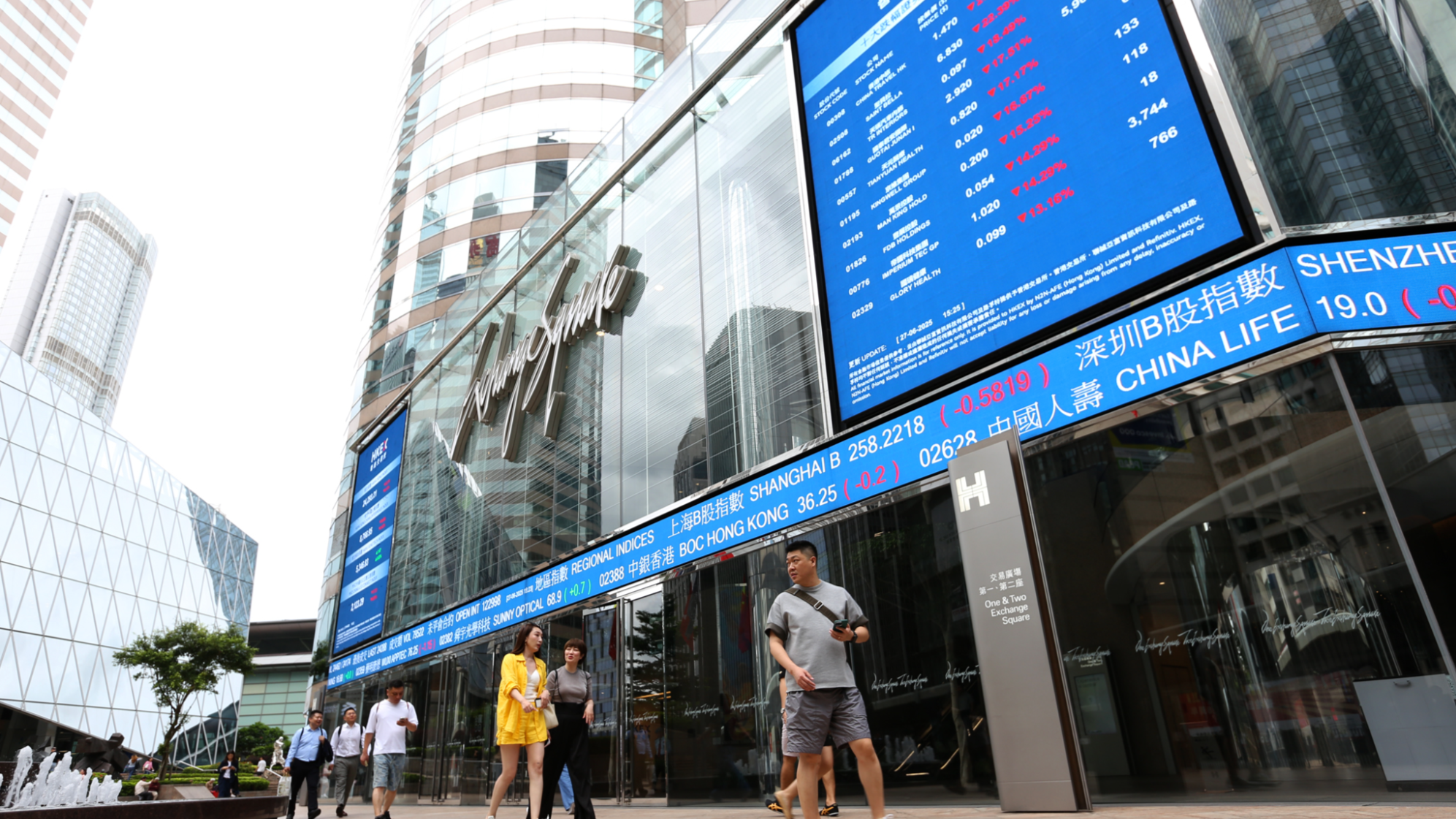
As of the end of 2025, over 400 “new economy” companies were listed in Hong Kong, positioning the financial center to continue attracting cutting-edge technology firms throughout 2026, Hong Kong Financial Secretary Paul Chan Mo-po said in his Sunday blog.
He noted that while “new economy” firms represented only 15 percent of all listed enterprises in 2025, they accounted for almost 30 percent of both market capitalization and trading turnover.
The benchmark Hang Seng Index got off to a strong start on the first trading day of the new year as Shanghai Biren Technology made a stellar debut as the special administrative region’s first listing of 2026.
ALSO READ: Hong Kong stocks open 2026 with strongest rally in seven months
Hailed as the first graphics processing unit-focused stock listed in the city, Biren is among the first batch of strategic companies from high-tech industries, such as advanced manufacturing and new energy technology, that Hong Kong has attracted to expand their local presence.
Chan recalled visiting Biren in Shanghai in 2023 when he introduced the company’s management to Hong Kong’s unique advantages under “one country, two systems”. Later that year, Biren became one of the first key enterprises brought into the territory, establishing a research and development center, as well as its regional headquarter at Cyberport.
“By leveraging Hong Kong’s strengths in fundamental research and its concentration of international scientific talent, we aim to accelerate development through synergy, while enriching the city’s innovation and technology ecosystem. At the same time, we support these companies in setting up regional or international headquarters in Hong Kong, using the city as a platform to expand into Southeast Asia and global markets,” Chan said.
ALSO READ: Hong Kong tech hub eyes 90% occupancy rate in Q1
Regionally, the finance chief highlighted the Hong Kong-Shenzhen Innovation and Technology Park in the Lok Ma Chau Loop area, which officially commenced operations last month, as a flagship platform for joint innovation efforts between Hong Kong and other Guangdong-Hong Kong-Macao Greater Bay Area cities.
According to Chan, the first three buildings in the initial phase have been completed, with two wet-lab facilities achieving occupancy rates of nearly 80 percent. More than 60 enterprises and institutions from the mainland, overseas and Hong Kong have moved in. By industry type, around half of the tenants are engaged in artificial intelligence and data science, while about 40 percent focus on life and health technologies.
“With the synergistic development of finance and innovation and technology, Hong Kong’s advantages have become even more pronounced in an era where technology increasingly defines competitiveness,” Chan reckoned.
READ MORE: HKEX: Hong Kong tops global IPO venues in 2025
“The city will seize this momentum to further build a more vibrant innovation and industrial ecosystem, supporting high-quality economic development.”
