

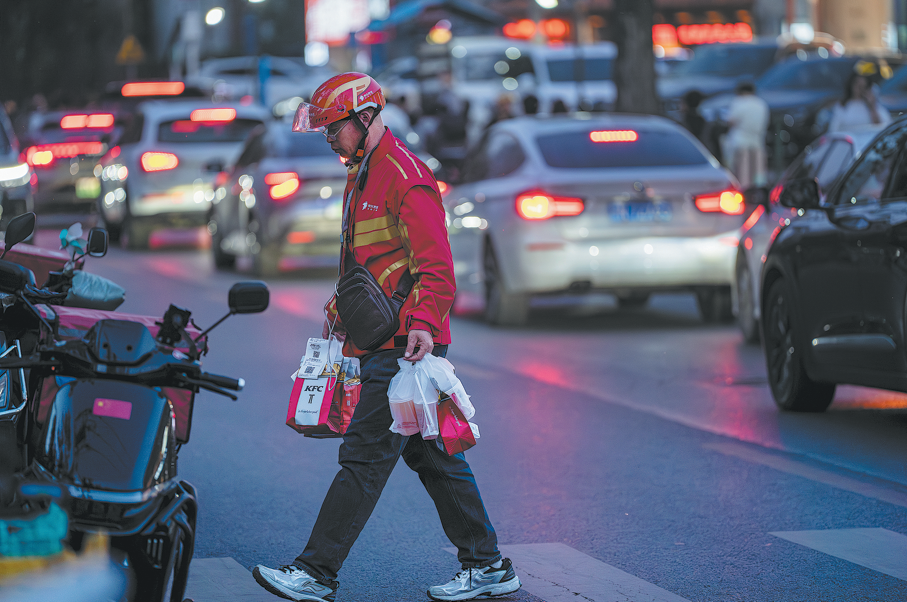
Chinese e-commerce giant JD has announced that it will invest 22 billion yuan ($3.12 billion) over the next five years to provide 150,000 homes through rentals, self-built housing and housing security funds for food delivery riders, further improving the living conditions of couriers and riders.
Industry experts said that against the backdrop of intensified competition in the food delivery sector, JD's newly launched long-term housing security plan is not only an important human resources strategy, but also a concrete demonstration of a leading company's commitment to social responsibility.
They added that the initiative will significantly improve the living conditions of tens of thousands of logistics workers, and have a positive impact on talent attraction and retention across the industry.
READ MORE: JD expands recruitment drive
JD said that for more than 20 years, it has cumulatively invested 22 billion yuan in improving housing conditions for its employees. It has rolled out housing security measures for frontline employees and provided 28,000 housing units for frontline staff, covering 145 cities nationwide so far.
The company said in 2023 that an additional 10 billion yuan was injected into the "housing security fund", with frontline employees accounting for as much as 77 percent of total applicants. Over the past decade, tens of thousands of frontline employees have been able to purchase homes with support from the housing security fund policy.
Apart from housing guarantees, JD has stepped up efforts to improve welfare benefits and strengthen professional training for frontline employees.
JD plans to invest 2 billion yuan to upgrade benefits for its full-time riders. In addition to providing full-time food delivery riders with comprehensive social insurance and housing funds, special allowances would be given to full-time riders each month during the summer and winter.
Food delivery platform Meituan announced that it will invest 10 billion yuan over the next five years to build a comprehensive protection system for delivery riders. The company has launched apartments for riders in Beijing; Shenzhen, Guangdong province; and Chongqing. It will provide rental subsidies for riders, ensuring that the actual monthly rent stays below market rates.
The first batch of housing units is expected to meet the needs of more than 600 riders, with water, electricity, heating and internet covered by the company. The program will expand to more cities next year, Meituan said.
Chen Liteng, an analyst with Chinese economic information platform 100ec.cn, said couriers and delivery riders, which serve as the backbone of delivery capacity for food and e-commerce platforms, affect the service quality and competitiveness of the platforms.
"Meituan and JD's move to provide housing for riders is a strategic choice to stabilize key human resources and enhance fulfillment capabilities through welfare innovation. These measures also respond to public concern for the protection of gig workers' rights," Chen said.
ALSO READ: New rules for food delivery sector
To safeguard the rights and interests of delivery riders, Alibaba Group and financial tech company Ant Group have rolled out a plan aimed at providing better guarantees of benefits and stimulus measures. The plan includes offering more support to riders and their families, covering special rewards, educational improvement, healthcare assistance and career development.
Jiang Han, a senior analyst at market consultancy Pangoal, said the competition in China's instant retail sector is intensifying as major platforms have stepped up subsidies to compete for market share, leading to the compression of merchants' profits and a decline in consumer experience.
Jiang said these platforms should pool more resources into safeguarding the rights and interests of riders, and improve the quality of services and delivery efficiency, so as to promote the regulated, healthy and sustainable development of the platform economy.
Contact the writers at fanfeifei@chinadaily.com.cn
