

Fresh from his Paganini victory, 17-year-old violinist Zhang Aozhe has yet to claim his teacher's signature dish — a symbol that motivates students to produce their best performances, Wang Xin reports in Shanghai.
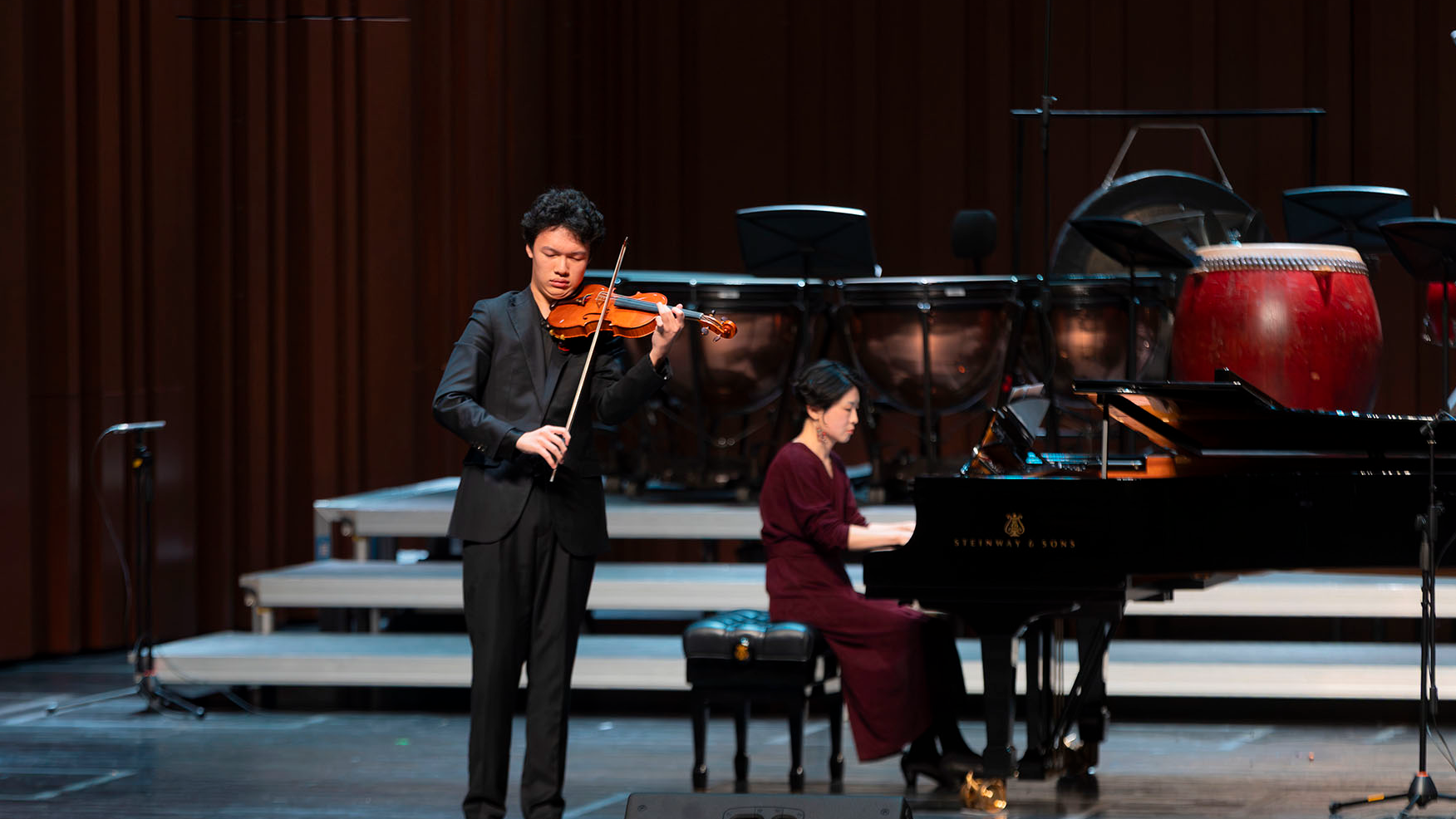
Nearly one month after Zhang Aozhe bagged the gold at the 58th International Violin Competition Premio Paganini, the 17-year-old violinist still has not had the time or chance to receive his special reward back home in Shanghai — a coveted bowl of braised pork cooked by his teacher He Xian.
It is a long tradition between the instructor and his students at the Music Middle School Affiliated to Shanghai Conservatory of Music. Each time they finish a competition, award winners are treated to the family delicacy as an extra prize, which has extended far beyond a meal and is now a symbol that motivates them to produce their best performances.
Usually, when Zhang finishes first in international competitions, he places the order early at the airport and tucks into the tasty reward once back in Shanghai. But this time, his win is big and the rising young violinist's itinerary is fully packed.
READ MORE: Pulling at audiences' heartstrings
On Oct 25, Zhang won first prize at the 58th Premio Paganini, one of the most prestigious violin competitions in the world, and also took the prize for the best performance of Paganini's Violin Concerto. His win marks the return of a Chinese champion to the top of the competition after a 19-year gap.
His teacher, He, also professor of violin at the Shanghai Conservatory of Music, is not that surprised about the win, even though it came one year earlier than He's original plan. Despite a dissatisfying third place at the 9th Sendai International Music Competition earlier this year, He had full confidence in Zhang and his performance, which was further strengthened and complemented by performing several concerts in 40 days spanning September and October.
Like his teacher, Zhang stays cool about his big win. At the competition's closing concert, Zhang was given the honor of playing on the legendary Il Cannone — the 1743 Guarneri violin once played by Niccolo Paganini.
When asked about his feelings toward playing the violin, Zhang smiles and says, with his signature calm maturity: "Essentially, it is just a violin, but with it, you feel more at ease and more confident in performing Paganini's works. As more of a spiritual symbol, it might not have the best sound, but it presents a unique experience."
Mature beyond his years is how audiences often describe Zhang, such as when he won the Chinese Golden Bell Award for Music in 2023. However, the modest violinist partly disagrees with the evaluation, as he recalls that he was just too nervous to move onstage, which made him look calm and mature.
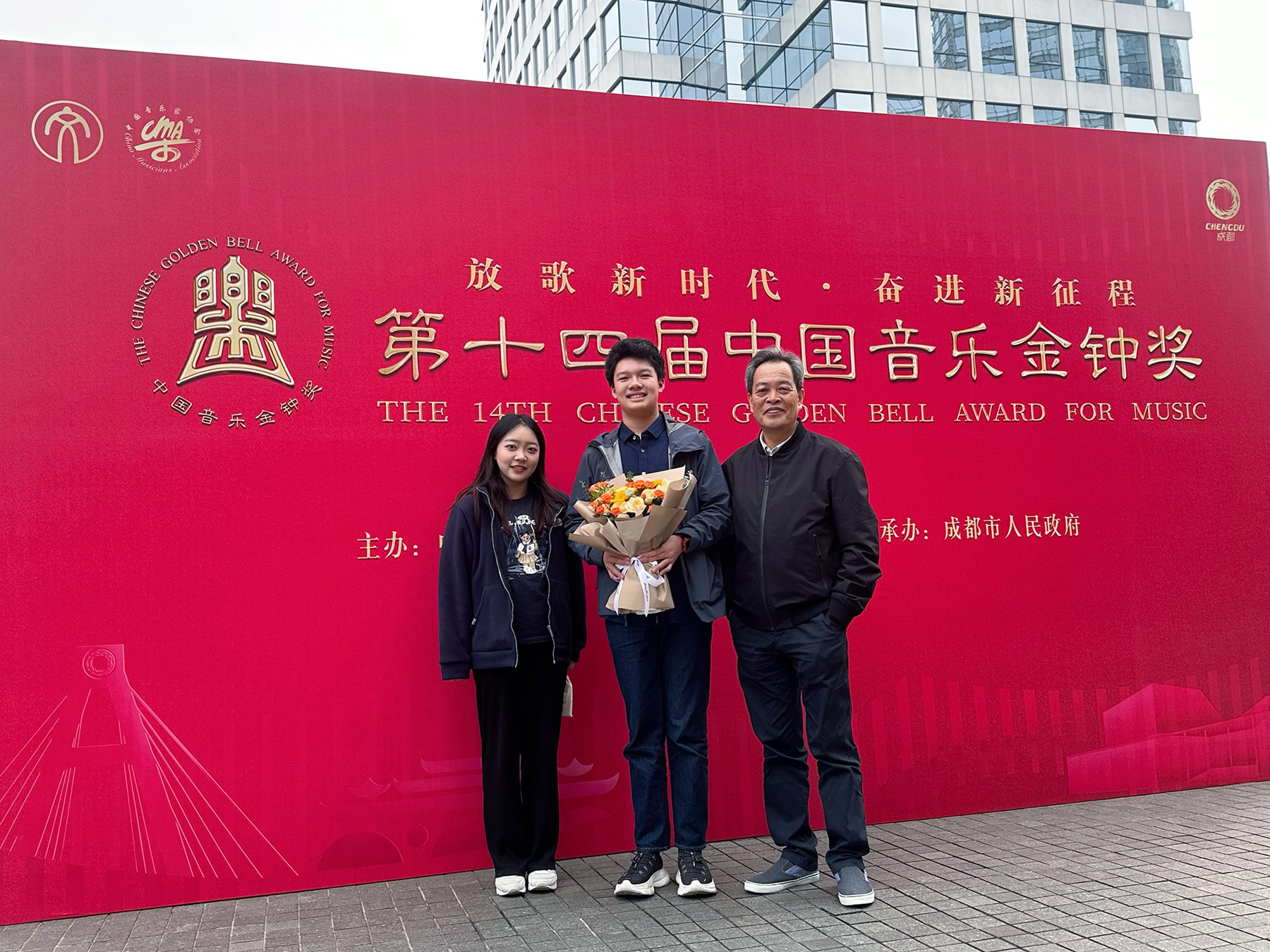
After becoming the youngest winner of the Golden Bell Award in the violin category, Zhang has appeared on a variety of stages and is now becoming truly calm, mature, stable and focused.
"The stability comes from my daily practice, and especially the experiences accumulated on various stages. The focus increases when I play some of the technically challenging parts. Some people may say I'm relaxed onstage, but I don't think so at all — this is exactly what I need to improve," Zhang tells China Daily.
Zhang began playing the violin at 3 years old, becoming a student of He at 9. Five years later, he held a solo recital at 14, performing Paganini's 24 Caprices for Solo Violin. But the journey has not always been smooth.
Zhang says that he has been troubled by pitch accuracy since childhood. To pull him out of the low ebb, He assigned Zhang the intense task of Paganini's 24 Caprices, telling him to record his playing and then listen to the recording. This helped him to identify his errors and improve proactively.
He Xian says that he would not label Zhang as a "genius" as many people might do. Behind this simple word and the remarkable prizes are the enormous and consistent efforts that Zhang, Zhang's family and teachers have made over the past many years.
"When I was a kid, my family had to keep watching over me to play the violin. I do not feel I enjoyed playing it at that time, as daily practice was more like a habit or routine for me, but now it's changing," says Zhang.
He says that it is only recently he has felt truly touched by the music he has been playing. It was in May in Kunming, Yunnan province, when he collaborated with conductor Huang Yi and the Kunming Nie Er Symphony Orchestra to perform Russian composer Pyotr Ilyich Tchaikovsky's Violin Concerto in D Major, Op 35 — a masterpiece that Zhang says he would choose to represent himself.
When Zhang finished his performance and sat offstage to enjoy the composer's Symphony No 5 in E Minor, Op 64, he was overwhelmed by its fourth movement.
"Although the music is grand and resplendent, I feel it laments sorrow through joyful scenes, evoking a profound sense of despair and grief. That hit me the most," recalls Zhang.
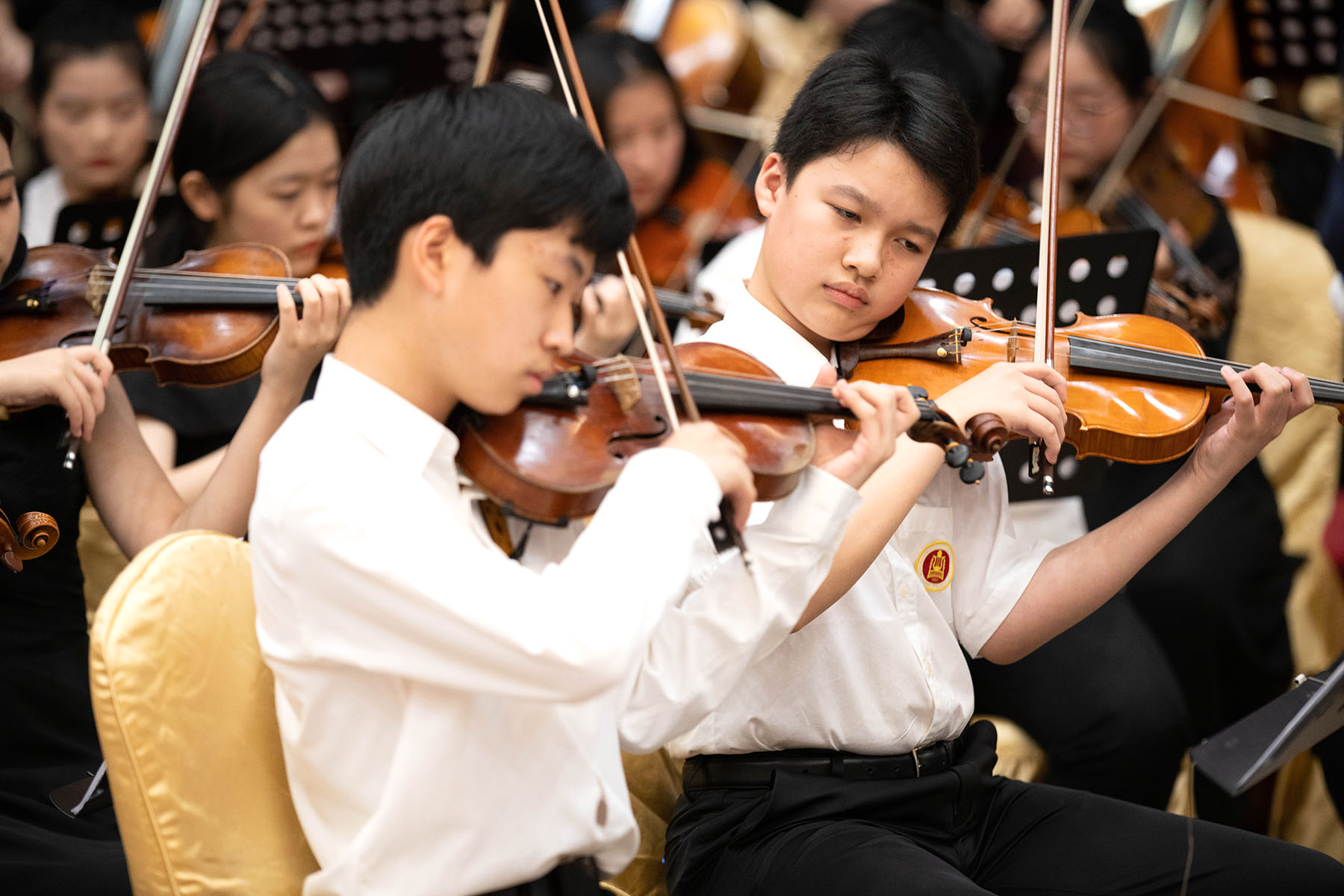
The emotional sensitivity and special connection with music is one of Zhang's talents, and is what He wants him to cultivate and express to the audience.
"Practice with your brain and play with your heart. This is what I've been telling the students, as playing music needs emotion. We have been discussing this topic and musical aesthetics, and Zhang has realized that too," says He.
He says that people, regardless of national and cultural differences, share similar emotions. Music can be shared based on such similarities, and musicians need to explore and find them.
It also explains why He and Zhang made the bold and successful decision to perform two Chinese pieces during the second round of the Premio Paganini competition.
Composed by Chen Gang in the 1970s, Zhang played Yangguang Zhaoyao Zhe Tashiku'ergan (Sunshine Over Tashikurgan) and Miaoling De Zaochen (The Morning in the Mountain Villages of the Miao People) and won enthusiastic applause from the Western audience.
"Honestly, I did not think about it too much at first (when deciding to perform the two Chinese pieces).We naturally would like to share great musical works with the world, and luckily we find the 'sameness' among different audiences. They feel them, enjoy them, and share emotions in the same way," says He.
As Zhang's teacher for eight years now, He is looking to the future. In his eyes, Chinese musicians belonging to Zhang's generation are facing many challenges in the fast-evolving world of music. As the mediums and carriers of sharing music are changing, younger musicians are shouldering the responsibility of bridging the past and the future. To achieve that, they need to be equipped with solid basic skills as well as an open mindset and a forward-thinking outlook.
ALSO READ: Violinist strings together anecdotes and classical music
Fortunately, Zhang is not walking the road alone. Supported by the Shanghai Conservatory of Music's unique training system, students are able to study, practice, and grow consistently with long-term, stable and personalized guidance, all the way from primary school to university. That means the teachers and students work together.
Off the stage and in his spare time, Zhang describes himself as an introvert who enjoys his own company and playing mobile games. He tells China Daily that some violinists may begin their careers directly after the Premio Paganini competition, but he is still learning about his chosen career path. "I will gain more knowledge about it in the future …For now, ensuring I consistently play well at each performance is the most important thing to me," he says.
"We have built up trust. Just like flowers, we need time to grow, so there is no need to hurry. All we have to do is to keep his confidence high and help him walk ahead steadily, step by step," He says firmly.
Contact the writer at wangxin2@chinadaily.com.cn
