

China’s flying car sector races ahead to commercialize the vehicles, with a firm’s large Dubai order marking a milestone

At sunrise over the Persian Gulf in Dubai, a black, pod-shaped aircraft detached from its six-wheel carrier vehicle and rose steadily into the sky.
For several minutes, it circled above calm waters before returning smoothly to the helipad.
The flight in mid-October was brief, but for XPeng Aeroht — and for China’s fast-emerging low-altitude economy — it was a significant moment: the first public, piloted overseas flight of a Chinese flying car.
The demonstration was not merely a technological showcase but also a precise commercial engagement.
At the event, the company based in Guangzhou, Guangdong province, signed pre-sale agreements for 600 units of the “Land Aircraft Carrier” with customers from the Middle East.
At 2 million yuan ($281,200) per unit, the total contract value exceeded 1.2 billion yuan, setting a record for the largest overseas order of Chinese flying cars.
XPeng Aeroht has long been a key player in the flying car sector. Founded in 2020, it is the largest flying car company in Asia, specializing in the research, development and manufacturing of electric vertical takeoff and landing (eVTOL) vehicles.
The Land Aircraft Carrier, the model signed in the pre-sale, comprises a six-wheel ground vehicle, referred to as the “mothership”, and a detachable electric vertical takeoff and landing aircraft.
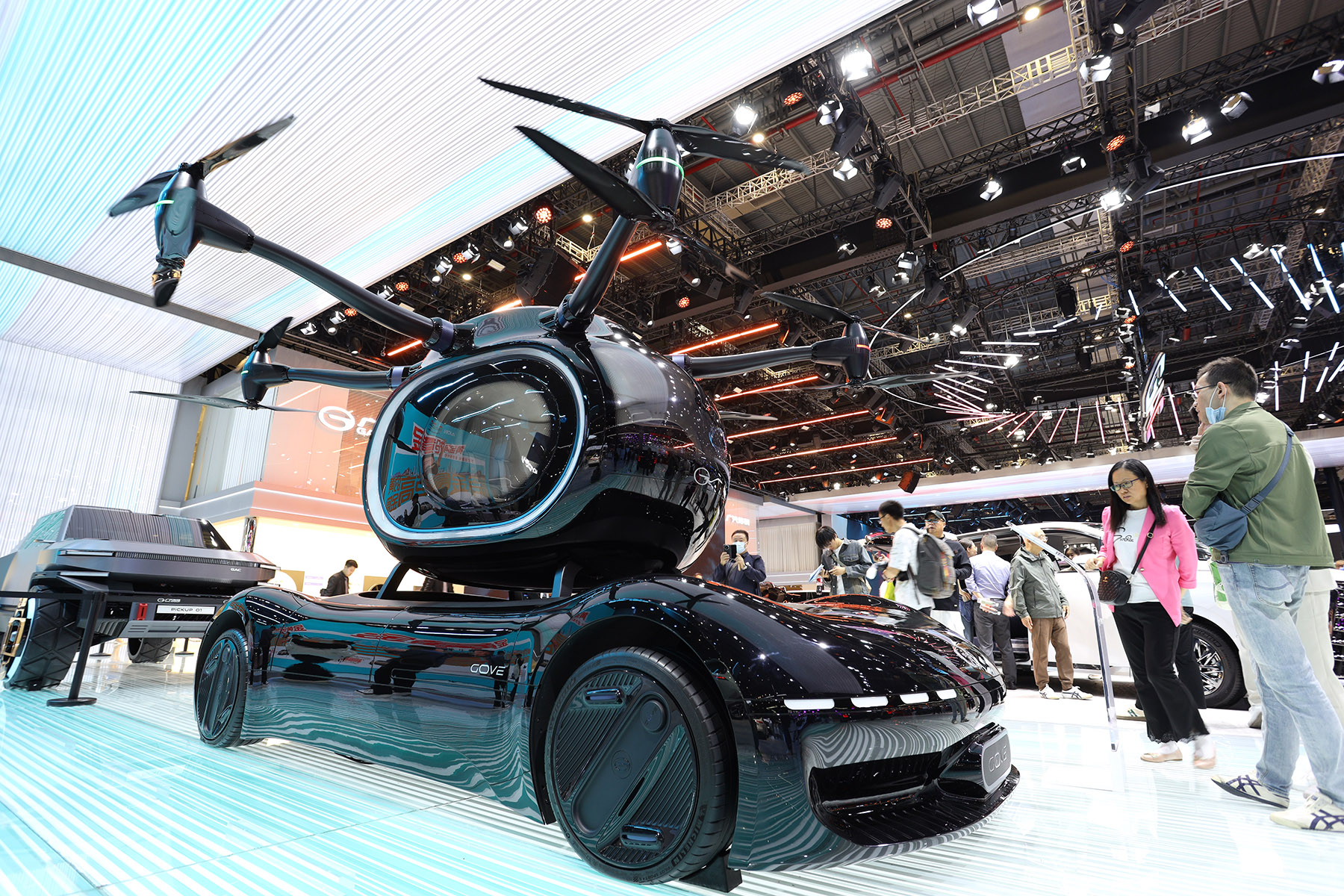
The eVTOL aircraft offers both automatic and manual flight modes. Its automatic mode enables smart route planning, as well as one-touch takeoff and landing.
At about 5.5 meters in length, the vehicle can be driven on public roads with a standard license and parked in regular parking spaces.
The flight module accommodates two passengers, with a maximum range of 130 kilometers and a top speed of 120 km/h, making it suitable for short-distance commuting and tourism.
Ali Ahmad Al Blooshi, an official from the Dubai Civil Aviation Authority, said the Chinese solution for flying cars will help realize Dubai’s vision of “air commuting”.
“Imagine a flight from Dubai to Abu Dhabi taking just 30 minutes. Personally, I’d definitely want one in the future,” he said.
To date, global orders for the model have exceeded 7,000 units, demonstrating strong market recognition.
To support large-scale delivery, XPeng Aeroht has fully advanced its industrial layout. Its flying car manufacturing plant in Guangzhou was completed in late September, with an annual production capacity at the “10,000-unit level”, the company said. Trial production started in early November.
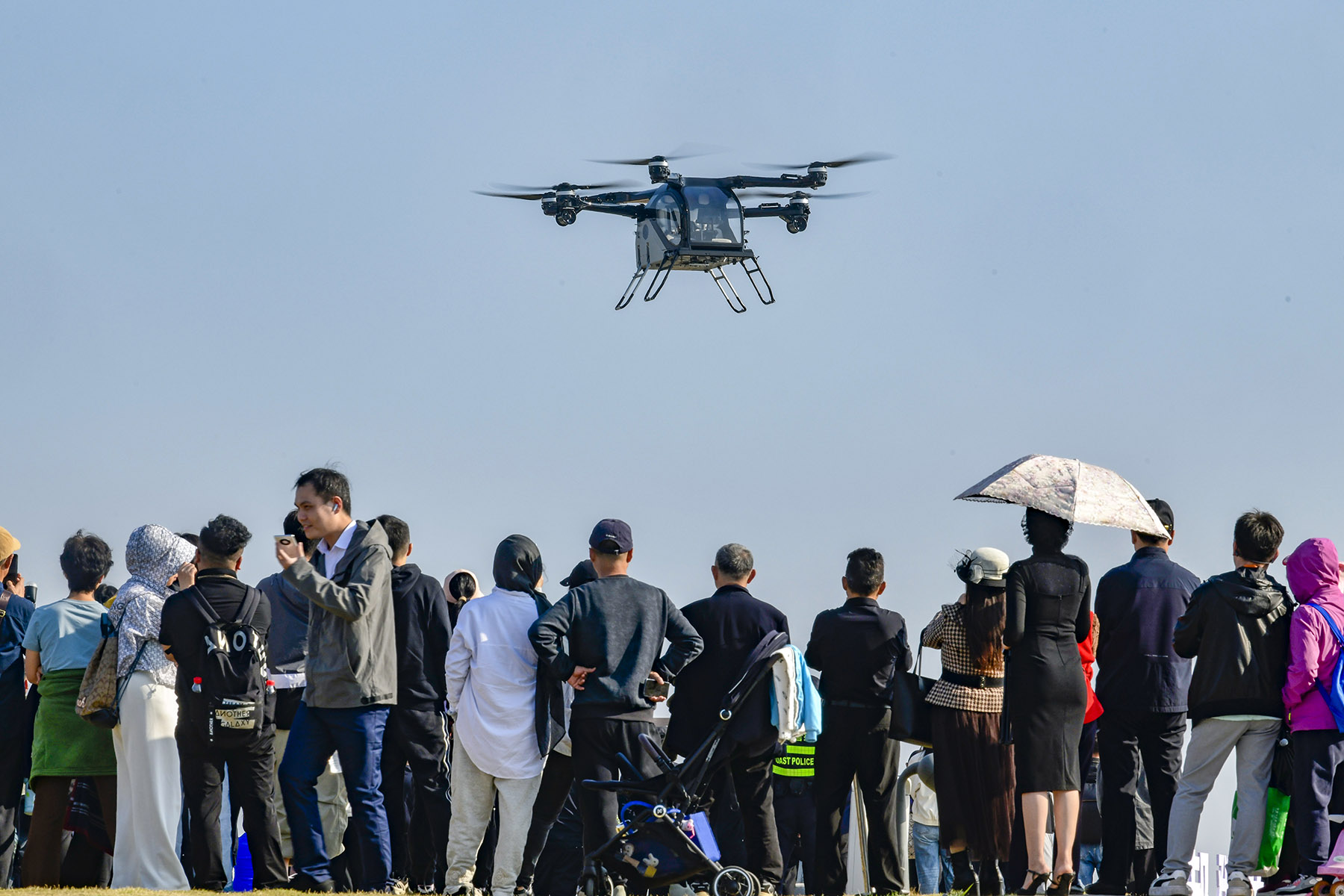
The successful overseas flight of the Land Aircraft Carrier is a reflection of the rapid development of China’s low-altitude economy, which spans manned airships, urban “aerial buses”, rapid drone logistics, and storm-resilient emergency drones.
This fast growth is closely linked to national policy support. China said in its 2025 Government Work Report that it wanted “to promote the safe and healthy development of emerging industries such as commercial aerospace and the low-altitude economy”.
This marks the second consecutive year that the low-altitude economy has been included in the report, reflecting a continuous upgrade in policy support.
Analysts say China’s low-altitude economy features a coordinated development model of “top-level design plus local practice”.
Statistics show that as of September this year, there had been over 50 low-altitude economy-related policies put in place nationwide covering infrastructure, scenario development, and safety regulation.
Of them, around 44 percent were issued by provincial governments, accelerating applications in low-altitude tourism, logistics, and emergency rescue.
City governments are also leveraging their individual advantages to advance the fast-evolving low-altitude economy.
In early 2024, authorities in Shenzhen, Guangdong, issued China’s first local low-altitude economy regulation.
In March, Shaoxing in Zhejiang province launched a 2.05-billion-yuan low-altitude infrastructure project, the largest of its kind in China, involving takeoff and landing sites.
“These sites not only meet the diverse needs of helicopters, eVTOLs, and drones, but will also adopt a development model that integrates cultural tourism, business services, and community services,” Liu Gao, a transport bureau official in Shaoxing, told The Paper news outlet.
In September, the Chongqing municipal government issued a draft regulation seeking public comment, promising to provide up to 20 million yuan in subsidies for major low-altitude projects in the city.
In Chengdu, Sichuan province, authorities have released measures to enhance infrastructure, flight supervision, market expansion, and industrial support, with incentives reaching up to 30 million yuan per company.
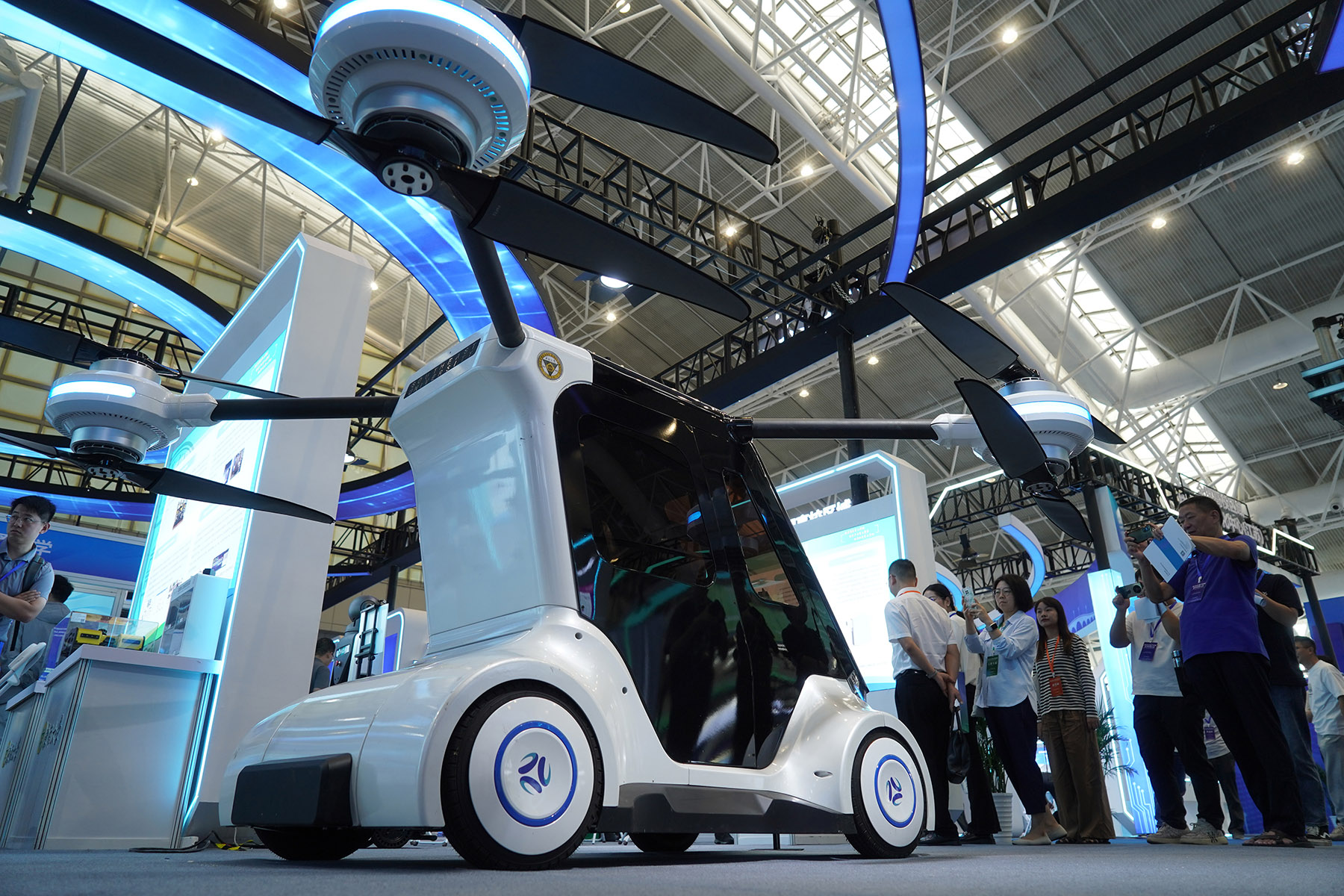
Besides policy support, technological breakthroughs along the industry chain are fueling the rise of the sector.
Battery manufacturing giants such as CATL are developing high-density batteries for electric vehicles as well as robots and flying cars.
EVE, a battery maker headquartered in Guangdong, has been selected by XPeng Aeroht to provide low-voltage batteries for its projects.
Huawei’s AI-powered air-traffic management system, running on Ascend AI chips, can process millions of flight paths per second and has undergone city-scale simulation tests in Shenzhen.
Meanwhile, materials supplier Zhongfu Shenying has slashed the production cost of carbon fiber, making lightweight flying car frames more economically viable.
XPeng Chairman He Xiaopeng said a flying car can use up to 300 kilograms of carbon fiber compound materials.
“When we start production in 2026, our plant will be the one that consumes the most carbon fiber in the auto sector,” he said.
Bolstered by policies and technological breakthroughs, some regions are rapidly exploring large-scale introduction of flying vehicles.
In Hangzhou, Zhejiang, the West Lake sightseeing route began trial operations in September, with bookings in the first month exceeding 5,000, and rides priced at 680 yuan per seat.
In Chengdu, business commuter routes and “low-altitude tourism” models are being tested.
“The flight from Dujiangyan to Qingcheng Mountain takes only 8 minutes, and in 2025, it is expected to serve over 100,000 tourists,” said Zhou Ting, manager of Sichuan Airlines’ low-altitude operations.
With Chengdu as one of the nodes, Sichuan has been accelerating reforms in recent years to pilot a coordinated low-altitude airspace management program.
The province hosts 82 national and provincial innovation platforms in low-altitude fields, more than 500 low-altitude economy enterprises, and over 40 major projects each worth more than 100 million yuan.
In early November, Sichuan unveiled an institute of low-altitude economy to map the sector’s further development in the province.
Wang Xiangyang, director of the Low-Altitude Economy Research Institute of the Aviation Industry Corporation of China, or AVIC, said: “China’s advantage lies in policy coordination and scenario diversity.”
Driven by policy and market demand, the low-altitude economy market is experiencing explosive growth.
The Civil Aviation Administration of China forecasts the market size will reach 1.5 trillion yuan in 2025, and could rise to 3.5 trillion yuan by 2035.
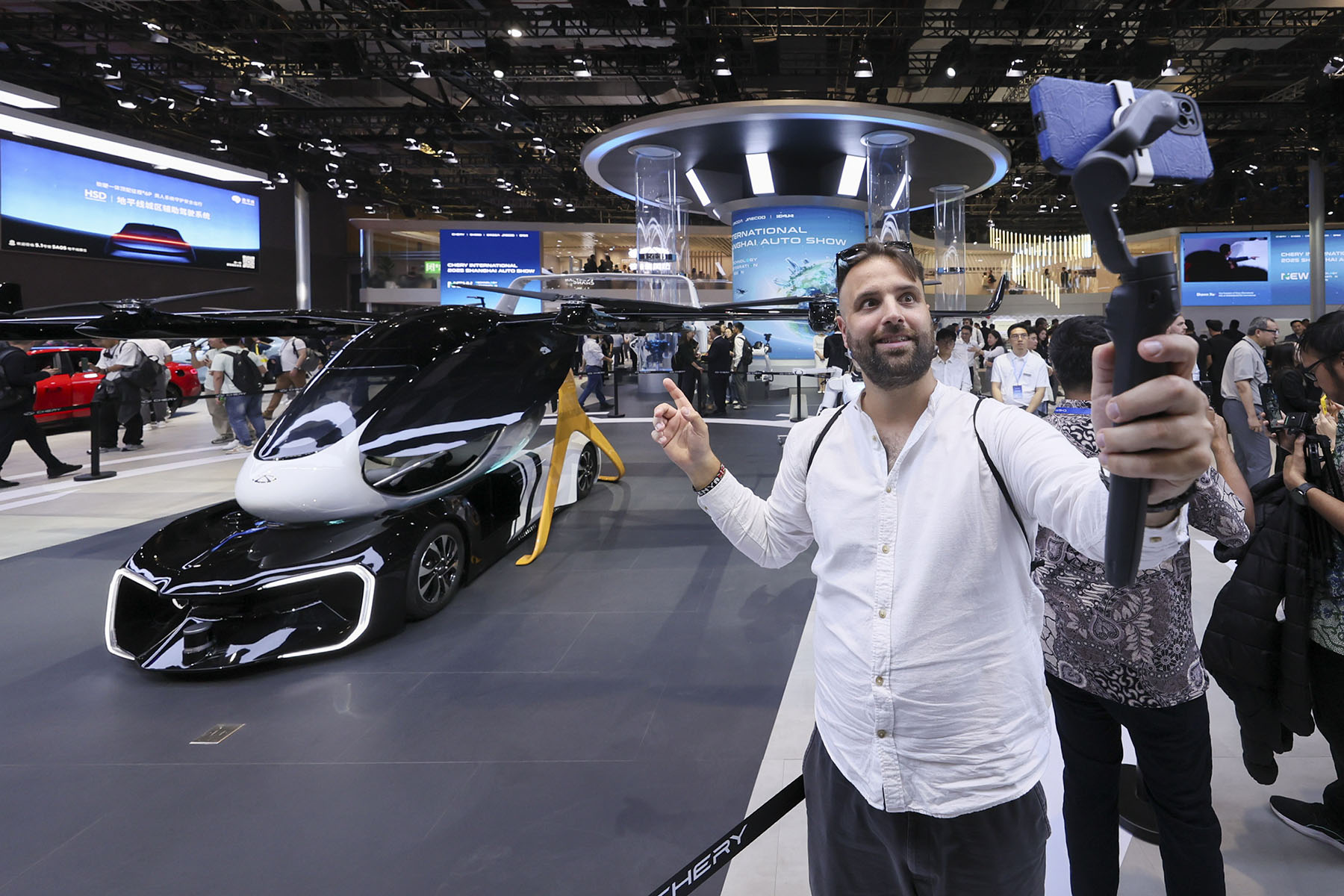
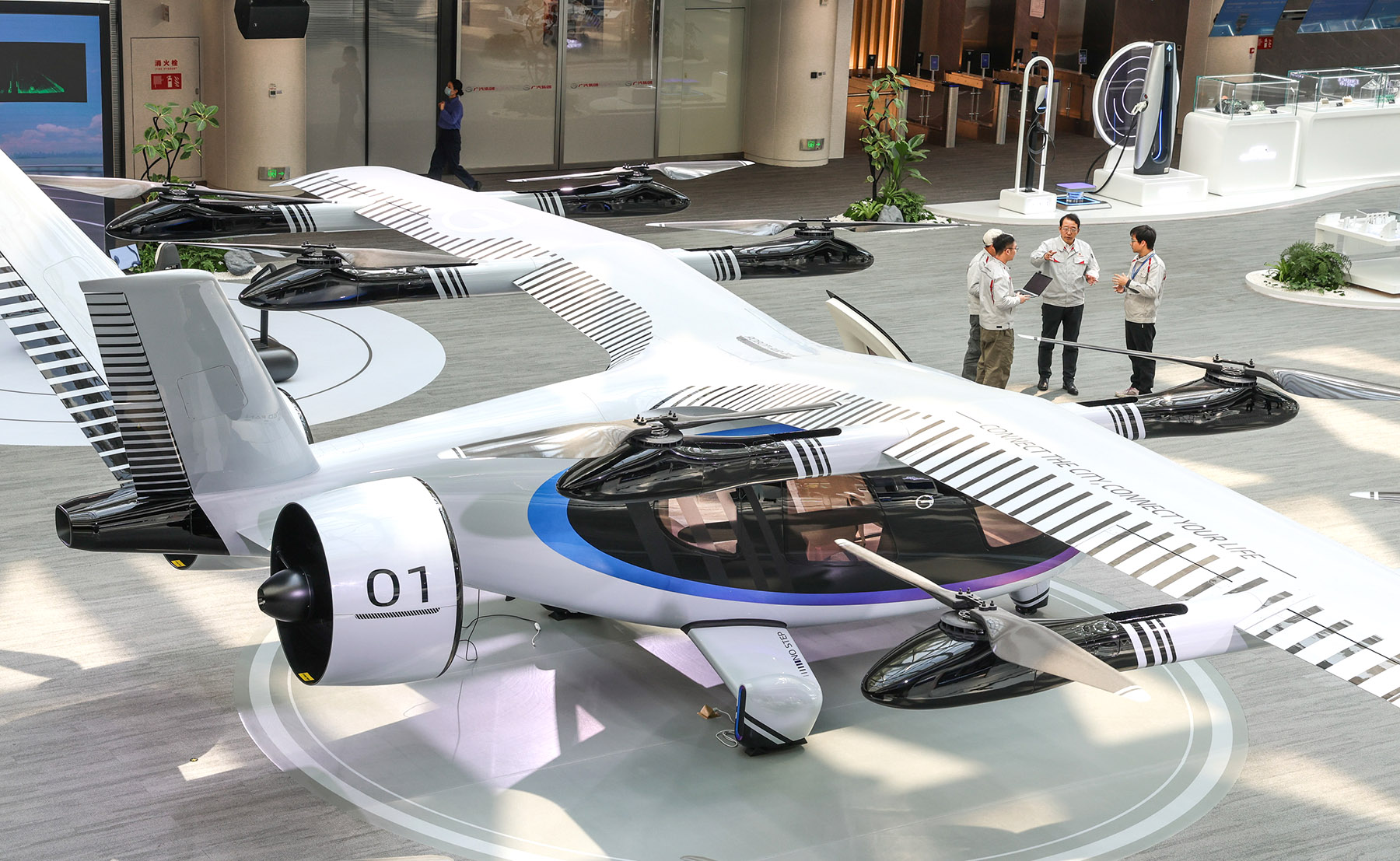
The financial prospects have attracted many players. In December 2024, Chinese automaker GAC Group unveiled its flying car brand, GOVY, saying that it plans to establish production lines in late 2025.
GOVY AirJet, a composite-wing flying car, combines the advantages of fixed-wing efficiency and the vertical takeoff flexibility of multi-rotor systems.
Designed with over 90 percent carbon fiber composite materials, its lightweight structure ensures durability and high performance.
Powered by GAC’s proprietary electric drive system, the AirJet achieves a top speed of 250 km/h and a range of over 200 km, with rapid recharging in just 30 minutes.
Future models may extend ranges to 400 km with solid-state battery technology, the company said.
By 2027, GOVY aims to pilot demonstration operations in two to three cities within the Guangdong-Hong Kong-Macao Greater Bay Area, further refining its service model and operational infrastructure.
Another car manufacturer, Changan, announced a strategic cooperation agreement with EHang Holdings Ltd to advance flying car development, manufacturing and sales, with joint investment to reach 20 billion yuan in five years.
Changan’s chairman Zhu Huarong said: “Cooperation in the development of flying cars is of great significance, allowing both parties to leverage their respective strengths.”
EHang, headquartered in Guangdong, is a global leader in the urban air mobility segment. Changan said it expects to finish its first flying car test flight this year.
“Over the next five years, Changan plans to invest more than 20 billion yuan in the low-altitude economy sector to accelerate the development of the flying car industry,” said Zhu.
Zhang Jing, director of Changan’s low-altitude transport division, said the company’s autonomous flight control platform can manage six eVTOLs at the same time.
It is working with Chongqing University to develop lightweight materials, which will enable its flying car’s range to reach 220 km, said Zhang.
China’s low-altitude economy carries enormous potential but will require a long, steady build-out rather than quick wins, according to Ning Zhenbo, chief adviser at AVIC’s Information Technology Center.
“This is not a 100-meter dash — it’s a marathon,” Ning told Beijing News’ Shell Finance.
Demand will determine the trajectory of the sector, while safety remains the top priority, he said.
Ensuring safety hinges on certification. Usually, three approvals are required for flight: the type certificate, the production certificate and the aircraft certificate for single-aircraft operations.
“Currently, six eVTOL models are in the final stages of airworthiness certification, with key components domestically sourced, opening greater space for commercialization,” said Wang from the Low-Altitude Economy Research Institute.
Fei Lan, chief marketing officer of Chengdu-based Aerofugia, said the company’s AE200 six-seat eVTOL has completed all airworthiness reviews and is expected to obtain certification and start small-scale production in 2026.
Analysts at Soochow Securities said China’s low-altitude tourism market is worth 6 billion yuan a year.
Gao Yuanyang, director of General Aviation Industry Research Center, Beihang University, said the benefits are not limited to these figures. A bigger change lies in the social development it would facilitate: decongested cities, faster emergency response, and vitalized rural connectivity, he said.
“Indeed, the low-altitude economy will signal a paradigm shift — elevating industries, transforming daily life and redrawing the map of possibility in three dimensions,” said Gao.
Contact the writers at lifusheng@chinadaily.com.cn
