

Tech strides, policy support, new industries seen taking Shanghai to greater economic heights in next five years
While Shanghai has overtaken all other cities with a whopping 10,000 cafes, flavor is no longer the main factor competing for coffee lovers’ attention.
Providing more “emotional value”, ideally with a touch of technology, can help a brewer stand out from their peers, according to Han Zhaolin, founder of Shanghai Hi-Dolphin Robot Technology Co.
The company’s sixth-generation robot baristas can provide such added value by displaying a customer’s image as latte art. The idea partly comes from the close ties Hi-Dolphin has built with the local community in central Shanghai’s Changning district, home to “Silicon Alley”.
“Places where you can find everyday hustle and bustle can generate new lifestyles and new ways of consumption,” Han said. “It’s for this reason that we located our office to Changning in 2018. The neighborhood and communities can provide companies with various scenarios to test their new ideas, whether it is about writing codes or developing robots,” he said.
WestWell, a Shanghai-based logistics solutions provider specializing in artificial intelligence (AI) and autopilot technology, set up an operation in Silicon Alley in February 2024. According to the company’s founder and CEO Tan Limin, “writing codes among plane trees and discussing state-of-the-art technology advancements” can best describe the everyday work scenario.
The easier access to restaurants, shops, museums, and sports venues also greatly appeals to WestWell’s employees, most of whom are overseas returnees aged around 30, Tan said.
“Sometimes our engineers can complete the product innovation and upgrading plan in a cafe, which can be easily found in Silicon Alley. There are another two technology companies within 15 minutes’ walk from WestWell, which creates a strong innovation vibe here,” he added.
Xu Yuxuan, public affairs director of Black Lake Technology, an industrial internet company that set up office in Silicon Alley in 2016, said: “The distance between different technology companies here is measured in hundreds of meters. Deals may be inked with a neighboring company over a coffee.”
More than 900 technology startups are now operating in Silicon Alley, which covers only 1.48 square kilometers.
Shanghai started the development phase of renovating existing spaces in 2014. Liu Ping, head of Changning, said the district’s goal is to improve its capacity via “micro upgrading” of the existing workspace, a scarce resource in the center of the city.
While Shanghai is preparing for the 15th Five-Year Plan (2026-30), Changning should stick to its strengths by attracting technology clusters to the city’s central areas via urban upgrading, said Liu.
Changning is just one snapshot of Shanghai’s goal for the next five years, which is to take the upper hand in developing frontier and future-oriented industries by giving full play to its existing advantages.
During a municipal government meeting in late November, Shanghai Mayor Gong Zheng emphasized that the 15th Five-Year Plan period is critical for the city’s transformation and upgrading. Unswerving efforts should be made to develop new quality productive forces. Shanghai should consolidate its role as a source of technology innovation and a place where innovation results can be successfully transformed, he said.
The good news is the city is well-placed to achieve these goals. During the first three quarters of 2025, the three pioneering industries of AI, biomedicine, and integrated circuits saw their combined industrial output jump 8.5 percent year-on-year, helping Shanghai’s GDP grow by 5.5 percent in the period — 0.3 percentage points higher than the national average and exceeding market expectations.
While Shanghai’s GDP reached 5.39 trillion yuan ($760 billion) in 2024, the three pioneering industries saw their combined industrial output reach 1.8 trillion yuan.
Their contribution to Shanghai’s GDP was 33.4 percent last year, compared with about 7.5 percent in 2021, when the 14th Five-Year Plan (2021-25) period started.
But Shanghai has a bigger vision.
In late October, the city rolled out 15 measures to support the development of “frontier and disruptive” technologies covering cell and gene therapy, brain-computer interface, silicon-based optoelectronics, quantum technology, and controlled nuclear fusion.
Although these areas are lesser known, Shanghai has already set up a 15 billion yuan fund to develop these future-oriented industries. More specific tasks have been set, including nurturing 20 industry leaders in these cutting-edge sectors by 2027. Industrial clusters of these emerging technologies should also be established in the city by 2030.
Wang Sizheng, president of the Shanghai Society of Macroeconomics, said strengthening technological independence is a core mission for Shanghai in the upcoming five years.
But the development of new quality productive forces does not follow a linear path. It is usually with a singular technological breakthrough that chain effects are instigated. In this sense, technological innovation is deeply embedded in industrial upgrading. It is for this reason that companies usually play a critical role in innovation, said Wang.
The municipal government of Shanghai is well aware of the importance of enterprises’ vibrancy to foster innovation, and in late November it released the revised version of the regulation for improving Shanghai’s business environment.
It underlined that the business environment should be friendlier in order to boost innovation and entrepreneurship. More favorable talent policies will also be introduced, while the construction of innovation clusters will be further supported.
All these measures aim to further stimulate innovation activity in the city, according to the revised regulation, which will take effect on Jan 1, 2026.
At the same time, Shanghai will improve its business environment to attract more foreign companies, which have already played an important role in the city’s upgrading, according to the city’s commission of commerce.
Luo Zhisong, chief economist at the Shanghai Municipal Commission of Commerce, said multinational companies’ investment in Shanghai has become stronger and more high-level in recent years, despite headwinds and complexities in the global market.
Statistics and examples support Luo’s assessment.
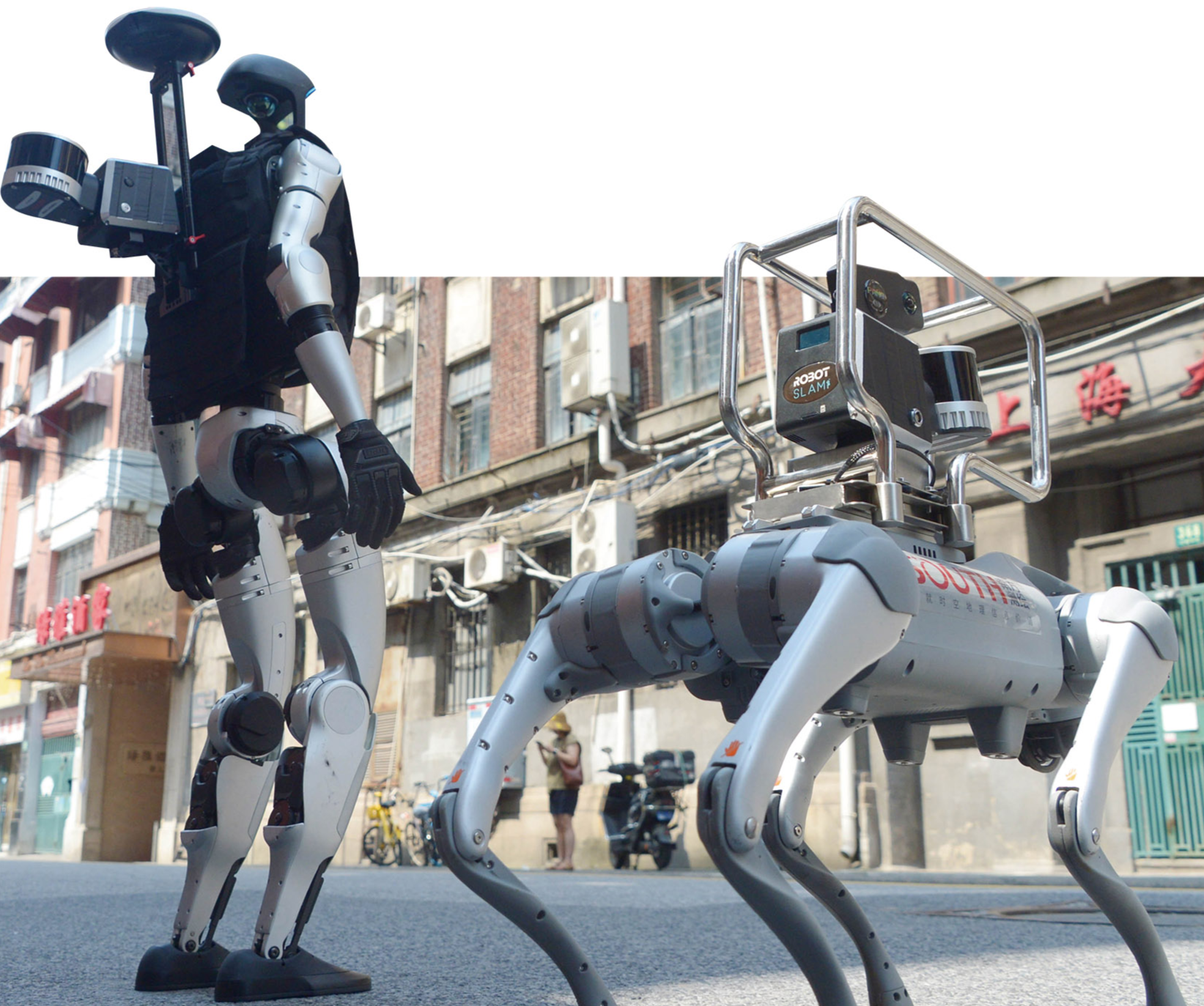
In 2024, a total of 75.4 percent of foreign capital that landed in Shanghai’s manufacturing industry was devoted to the advanced sectors, including integrated circuits, biomedicine, and AI. This compares with 37.2 percent in 2020. A total of 623 multinational companies have set up their regional R&D centers in the city, of which 19 are global R&D centers.
On Nov 6, German optics giant Zeiss announced that it would acquire a land in the China (Shanghai) Pilot Free Trade Zone to build its Greater China headquarters. Covering 40,000 square meters, the new project will involve a total infrastructure investment of more than 600 million yuan, marking the company’s largest single such investment in China to date.
Techniques Surfaces Holdings, a subsidiary of France’s HEF Groupe and a leader in surface treatment technologies, announced on Nov 5
that its only Asian technology center will be located in Songjiang district of southwestern Shanghai. Focusing on environmentally friendly surface engineering technologies, it is estimated the center will churn out 280 million yuan of industrial value once in operation.
Chen Jining, Shanghai’s Party secretary, said China has come up with higher requirements for the country’s opening-up during the 15th Five-Year Plan period. Shanghai should give full play to its role as an international transportation hub and better use the various innovation results achieved in the Shanghai Free Trade Zone, so the city can lead China’s advancement to a higher level of opening-up.
Shanghai should better connect the domestic and international markets, while using resources in both markets more efficiently, he said.
Shanghai saw over 5,700 new foreign companies registered in the city every year during the 14th Five-Year Plan period. As an important gateway for China’s opening-up, to plan for the next five years and even a longer period, Shanghai needs to collect the world’s best wisdom and learn from the most advanced international experiences, said Chen.
Contact the writers at shijing@chinadaily.com.cn
