

China’s 15th Five-Year Plan promises to be key factor in the next decade of global growth
The Recommendations for Formulating the 15th Five-Year Plan (2026-30) for National Economic and Social Development, adopted by the 20th Communist Party of China Central Committee at its fourth plenary session, mark the beginning of China’s decisive decade toward the 2035 goal of basically realizing socialist modernization.
Its implications go well beyond China’s borders. In a global economy strained by fragile supply chains, climate emergencies and widening development gaps, China’s 15th Five-Year Plan will influence not only the trajectory of its own economy, but also the broader prospects for sustainable development in the Global South, the global green transition and shared global prosperity.
One distinctive feature of this plan is its explicitly global orientation, which links China’s domestic transformation with its external development agenda, articulated through its four major initiatives — the Global Development Initiative, the Global Security Initiative, the Global Civilization Initiative and the recently proposed Global Governance Initiative.
READ MORE: China pushes for integrated development of coal, new energy sectors
These frameworks are meant to complement the planning logic of the 15th Five-Year Plan by aligning China’s internal modernization with its external role as a provider of development solutions and global public goods.
The foundations of the 15th Five-Year Plan emphasize scientific and technological self-reliance, the construction of a modern industrial system and the strengthening of domestic demand.
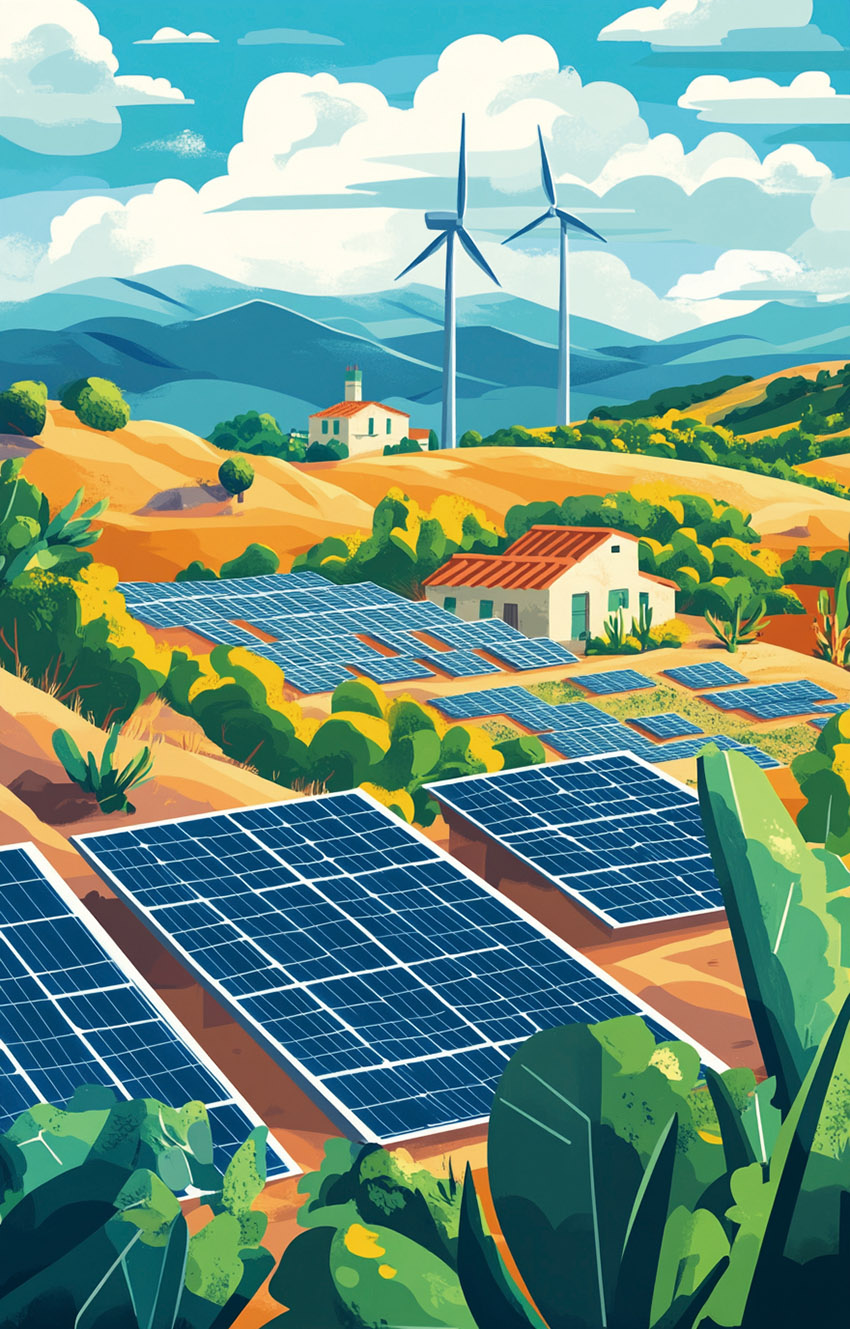
China already produces over 80 percent of global solar photovoltaic (PV) modules, leads the world in EV battery manufacturing, and deploys more wind and solar energy annually than any other country.
By centering on green modernization, the 15th Five-Year Plan will likely amplify the provision of these global public goods — reducing prices, improving access, and enabling even middle-income economies such as Mexico, Brazil, South Africa, and Indonesia to integrate renewable technologies into national development strategies at unprecedented scale.
Under the 15th Five-Year Plan, China is expected to channel more resources toward poverty reduction, food security, industrial upgrading, and digital connectivity in developing regions.
Notably, Mexico and China have intensified cooperation under the Global Development Initiative, especially in renewable-energy supply chains, agricultural technology, and medical manufacturing.
For instance, bilateral trade between Mexico and China surpassed $109.43 billion in 2024, while Chinese companies, such as Trina Solar and LONGi, have established over a dozen renewable-energy projects in Mexico’s solar and wind sectors.
China’s investments in the automotive and renewable energy sectors in Mexico — including EV assembly, solar panel production, and electrical components — are illustrative of how the emphasis of China’s 14th Five-Year Plan (2021-25) on high-quality development has influenced bilateral economic integration.
A central promise of China’s next five years is the acceleration of China’s dual carbon goals, peaking carbon dioxide emissions before 2030 and achieving carbon neutrality before 2060.
First, China’s transition toward green technologies has substantially reduced global renewable energy costs, enabling large-scale adoption in the Global South.
According to the International Renewable Energy Agency, in 2024 the levelized cost of electricity for solar PV globally averaged $0.043 per kilowatt-hour, making solar energy 41 percent cheaper than the lowest-cost fossil fuel alternatives.
The agency attributes much of the cost decline to “technological innovation, competitive supply chains and economies of scale”, factors in which China’s dominant manufacturing role plays a key part.
Second, China’s leading role in EV and battery production has driven innovation cycles and lowered barriers for countries seeking to decarbonize transportation systems.
In 2024, the Chinese battery manufacturer CATL held a 37.5 percent share of the global EV-battery market, while BYD reached 17.2 percent, underscoring China’s dominance in battery production and its role in driving down costs and enabling worldwide EV adoption.
Third, China’s rapid expansion of green finance has established alternative sources of climate-oriented financing outside Western institutions.
By the end of 2024, China’s cumulative issuance of “sustainable debt” (green, social, sustainability-linked and transition bonds) reached about $555.5 billion, with roughly $442.4 billion (approximately 80 percent) of that being green-labeled bonds.
For countries such as Mexico, this translates into easier access to solar technology, cheaper electric public transport solutions, and growing investment opportunities in climate-related sectors.
The Global Security Initiative, the Global Civilization Initiative and the Global Governance Initiative illustrate how China’s domestic governance philosophy increasingly shapes its global posture.
The Global Security Initiative emphasizes stability, conflict prevention and sovereignty. In practice, China can continue to support other Global South countries in non-interventionist security cooperation, cybersecurity training and infrastructure protection.
The Global Civilization Initiative promotes cultural exchanges, respect for civilizational diversity and people-to-people ties.
ALSO READ: China stays committed to climate, green goals
For China-Mexico relations, this initiative provides a platform for academic collaboration, tourism, language education and joint cultural projects, helping reshape Global South diplomatic narratives beyond traditional North-South frameworks.
The Global Governance Initiative articulates China’s aspiration to help reform global governance institutions to better represent the Global South and respond to contemporary challenges, such as climate change, digital governance, equitable development and global public health.
During the 15th Five-Year Plan period, China is likely to strengthen its role in United Nations-based platforms, development banks and digital governance mechanisms — areas where Mexico and China can share common interests in multilateral reform.
China’s 15th Five-Year Plan, therefore, is not just an internal policy document. It can emerge as a structural force shaping the next decade of global development, influencing South-South connectivity, green modernization, and the governance norms of the Global South.
The author is a professor of international relations at the Metropolitan Autonomous University and a senior fellow on China at the Mexican Council on Foreign Affairs. The author contributed this article to China Watch, a think tank powered by China Daily.
The views do not necessarily reflect those of China Daily.
