

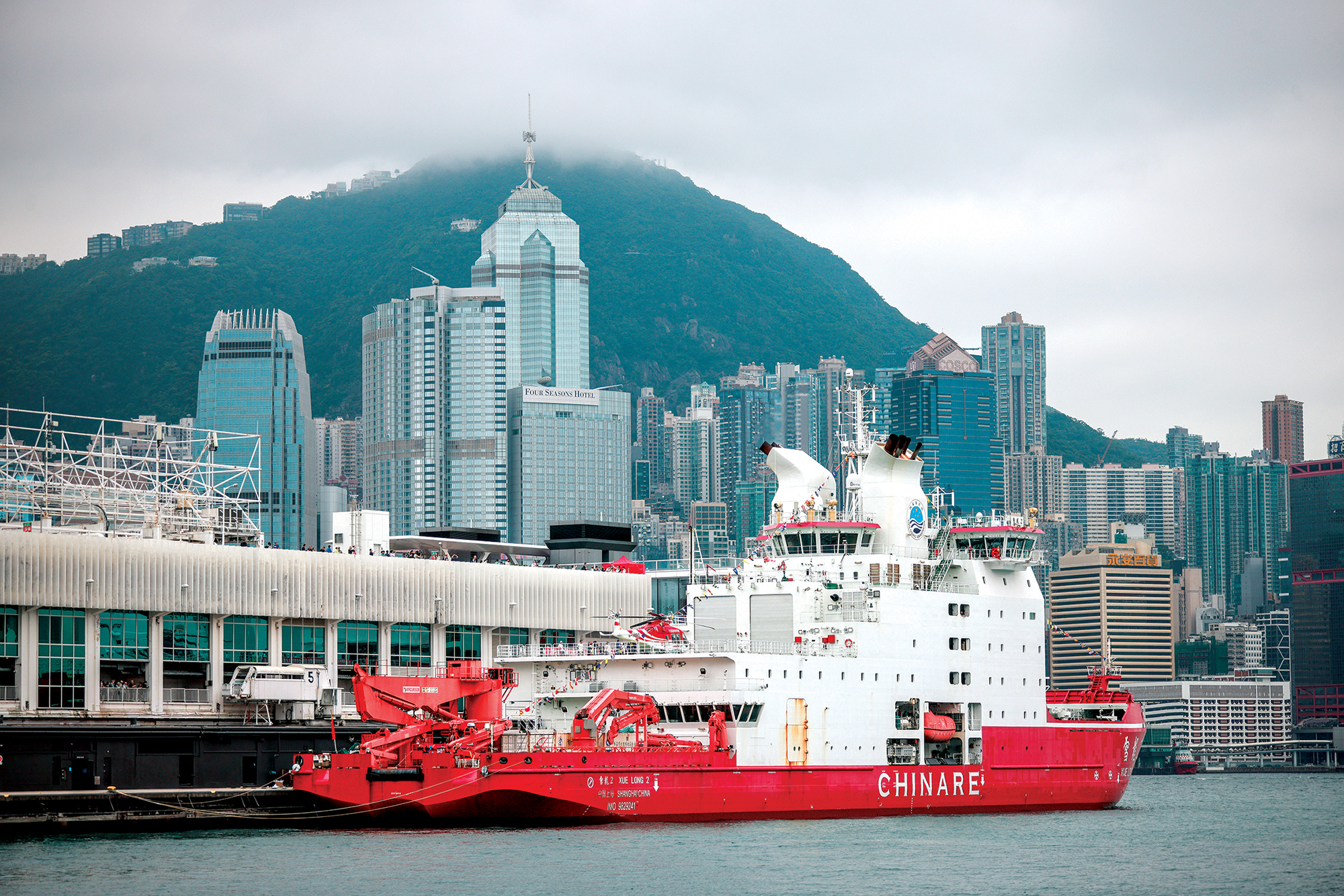
China continues to make achievements in polar research, highlighted by the icebreaker Xue Long 2, and welcomes international collaboration to protect the polar regions and prevent a climate crisis.
This progress was discussed at the Global Conference on Climate Change: Polar Studies, Environment and Climate Change, held at the Chinese University of Hong Kong on Tuesday.
Chinese polar scientists aboard the Xue Long 2 participated in the two-day forum, which coincided with the vessel’s visit to Hong Kong. They joined scientists, researchers, policymakers and industry leaders from around the world to share insights and foster collaboration on polar studies and the broader implications of climate change.
Addressing the conference, Chen Danhong, director of the Department of International Cooperation of the Ministry of Natural Resources, said the polar ecosystems are more sensitive than the rest of the world, making the effects of climate change more pronounced in the Arctic and Antarctic. The alterations in the polar regions, in return, affect weather patterns and ecosystems, and contribute to rising sea levels, she said.
In light of this, China has been dedicated to polar expeditions for 40 years and carried out extensive research on the climate, environment, ocean and ecology of the polar regions.
During the process, Chinese scientists have received international assistance from countries such as Australia and Argentina, and collaborated with foreign scientists on many polar research projects, Chen said. The country’s polar research stations and polar icebreakers have also hosted scholars from France, Thailand, and elsewhere for joint research.
On Feb 7, China opened its fifth Antarctic research station, Qinling Station, situated on the Ross Sea coast. Chen said she expects the station to become another open platform for Chinese and foreign scientific cooperation.
“I hope we can make a joint effort to better understand, protect and make use of the polar regions, cope with global climate change and help build a global community with a shared future,” Chen added.
In his keynote speech, Zhang Beichen, the team leader and chief scientist of China’s 40th Antarctic scientific expedition and part of the Xue Long 2 delegation, shared a recent challenge: Traditional snowmobile transport of cargo from the vessels to the inland bases has been jeopardized by weakening ice. “This year, when we went to the Zhongshan Station — China’s second Antarctic research base built in 1989 — we found that the ice there was basically broken and unable to support vehicles,” Zhang said. As a result, cargo was transported by aircraft.
The veteran polar scientist also reported an alarming temperature spike in Antarctica’s interior — from minus 60 degrees C to minus 20 degrees C — because of strong heat waves, and these changes could have widespread effects.
Over the last 30 years, the melting of Antarctic ice sheets has raised the global sea level by 8 millimeters, Zhang said.
With five research bases on the southern tip of the world, Chinese scientists are carrying out multidisciplinary studies and have published dozens of research findings in the world’s top science journals, including Nature.
Zhang said he welcomes Hong Kong researchers to work with Chinese mainland and international scientists at the polar research bases.
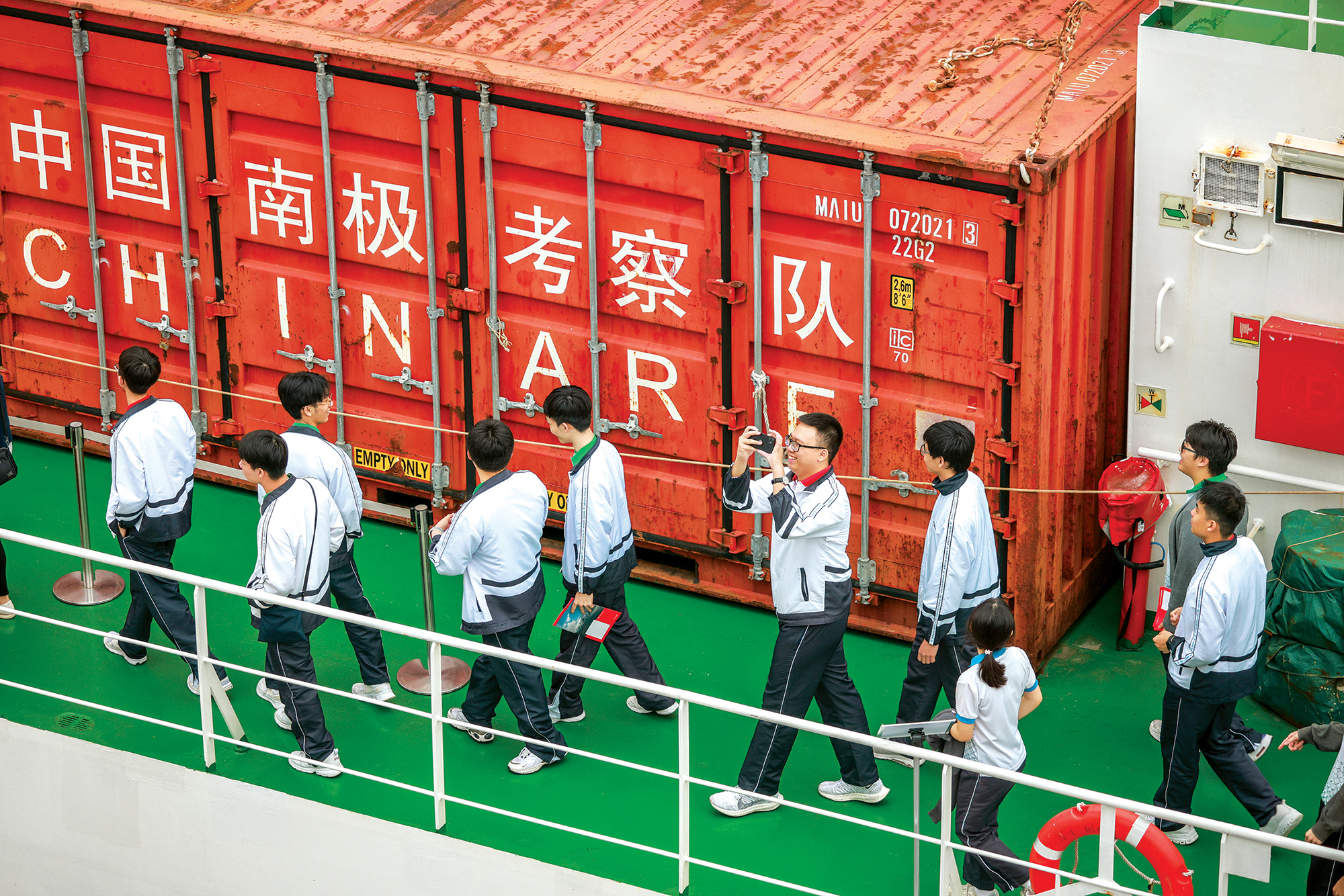
Ma Fung-kwok, chairman of the organizing committee of the Xue Long 2’s visit, emphasized that the vessel’s inspirational role for younger people, showcasing the wonders and challenges of exploring the unknown.
Ma said the Xue Long 2 demonstrates China’s dedication and capability to contribute to global science and environmental protection, which can encourage more youngsters to pursue careers in science.
Docked in Tsim Sha Tsui, the Xue Long 2 is open to the Hong Kong public through Friday, with tickets being distributed online.
The forum today will arrange a special session that will have the mainland polar scientists communicate with local students. Some other polar scientists will come to the Hong Kong Science Museum today and talk with about 200 Hong Kong students at a sharing session.
