

Hong Kong Special Administrative Region should create a high-level government department dedicated to coordinating space policy, a cross-party group of lawmakers said on Wednesday, as the city looks to turn its research strengths into establishing a foothold in China’s fast-expanding commercial aerospace industry.
The call came as the Legislative Council passed a non-binding motion to seize the opportunities presented by Hong Kong’s participation in the country’s aerospace development and that of the Northern Metropolis University Town.
Lawmakers said the city must proactively align itself with the National 15th Five-Year Plan (2026-30) and Beijing’s strategy to build a space powerhouse.
By plugging into the Greater Bay Area’s comprehensive aerospace manufacturing supply chain and vast market, they argued, Hong Kong can turn its research and development achievements into “new quality productive forces” that serve the country.
The debate gained momentum from the impending return of Shenzhou XXIII astronaut Lai Ka-ying, a Hong Kong native whose mission has reignited public enthusiasm for aerospace across the city.
University town as a ‘core platform’
LegCo member Ng Wun-kit, who moved the motion, said Hong Kong should use the Northern Metropolis University Town as a core platform to promote the integrated development of education, technology and talent.
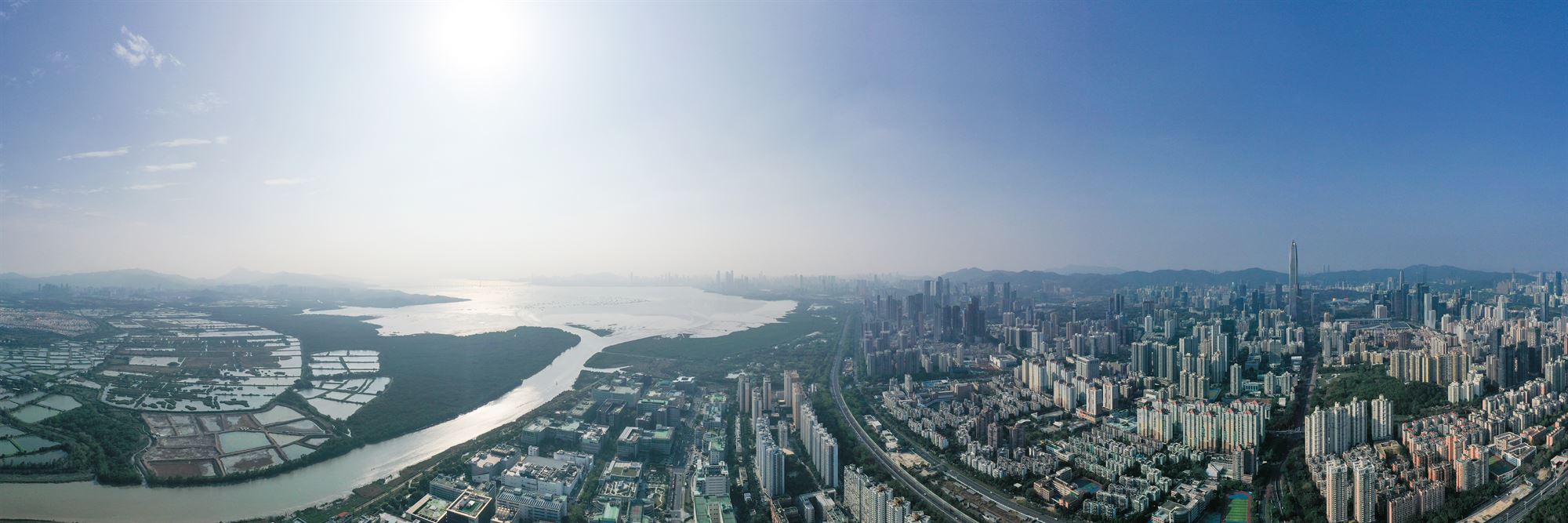
San Tin University Town, he said, can capitalize on its strategic location linking the Northern Metropolis San Tin Technopole and Hong Kong Park of the Hetao Shenzhen-Hong Kong Science and Technology Innovation Cooperation Zone. This would help align regulations with Shenzhen and ease cross-border flows of researchers, data and space science samples.
He proposed supporting top local and overseas universities in establishing a “joint laboratory for aerospace technology and deep space exploration”, focusing on cutting-edge research such as aerospace artificial intelligence, space robotics and radiation-hardened microelectronics.
Another LegCo member, Duncan Chiu, suggested that the special administrative region government establish a high-level department to coordinate resources and policies across scientific research, computing power, telecommunications, finance, law and international cooperation. He also called for removing bottlenecks in Greater Bay Area collaboration on manufacturing and market development to build a complete commercial aerospace industrial chain.
A third LegCo member, Kitson Yang Wing-kit, said that the Northern Metropolis University Town would enable universities and businesses to establish joint labs and shared platforms.
Cross-border ‘whitelist’
He suggested that Hong Kong seek to pilot a cross-border “whitelist” for remote sensing data in Hetao, while leveraging the Hong Kong Stock Exchange’s listing regime for Specialist Technology Companies to attract mainland commercial aerospace firms seeking to raise funds and obtain satellite insurance. He also encouraged universities to introduce course modules in aerospace finance and space law to cultivate cross-disciplinary professionals.
A fourth LegCo member, Alex Fan Hoi-kit, said the SAR government should enact a Space Asset Registration and Finance Ordinance and establish an “exclusive arbitration mechanism for space disputes” to close the gap and provide certainty for the financing of space assets.
