

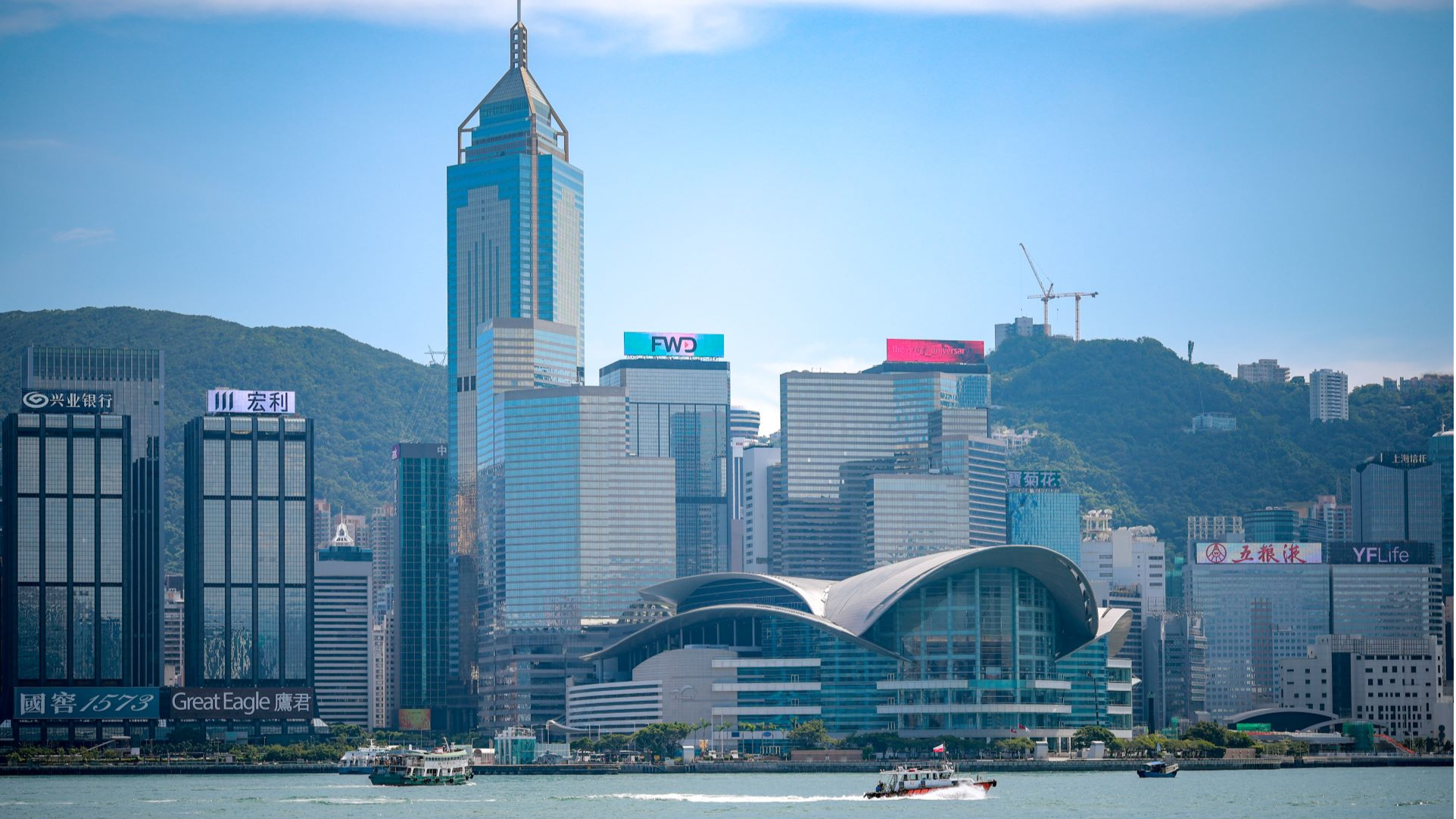
Fund-raising activity in Hong Kong is expected to rebound in the second half of 2027, driven primarily by A+H share listings, while the momentum of share trading in the secondary stock market depends on the recovery of corporate earnings growth, experts have said.
Global auditing firm EY said it expects the Hong Kong initial public offering (IPO) market in 2026 will be ranked second globally after the Nasdaq market in the United States, likely to raise in excess of HK$430 billion ($55.2 billion) — a 50 percent year-on-year increase which will be the highest for five years. The total number of new listings for the year is expected to reach 140, representing an annual increase of 23 percent.
But stepping into 2027, EY expects fund-raising proceeds may slip to HK$300 billion.
It said the IPO market in the first half of next year may experience initial headwinds followed by a second-half recovery, primarily driven by "A+H" share listings. According to EY figures, there will be a total of 40 "A+H" share listings for the full year of 2026, raising over HK$280 billion.
“As of end-November, an estimated 610 companies will remain in the IPO application pipeline that can sustain listing and fundraising into 2027,” said Jacky Lai, Hong Kong capital market services spokesperson at EY, adding continued refinement of the competitiveness of the listing regime will also support listing activities.
ALSO READ: Deloitte expects HK to be world’s second-largest IPO market this year
The downward correction of the secondary Hong Kong stock market since August, and subsequent new listings that have fallen below offering price on their first trading day, are likely keep IPO pricing and subscription sentiment subdued in the first half of next year.
Looking forward to 2027, the concentrated wave of mega-IPOs in the US Nasdaq may crowd-out global capital that will expose technology IPOs to liquidity and valuation pressure. Geopolitical developments, concern whether AI-related investments are overheating, and the uncertain direction of related policies will also potentially weigh on the valuation of AI-related issuers.
“When considering a listing, issuers take factors such as valuation, liquidity, and the optimal timing for an IPO into account. Hence, with recent market correction, they are not necessarily in a rush to list, preferring to wait for valuations to recover or for a more favorable timing,” Lai said.
Regarding the recent trend of A-share companies withdrawing their Hong Kong listing applications, Lai explained that factors such as valuation and strategies for international expansion influence an issuer's choice of listing venue. He added that these withdrawals represent only a small fraction of the applications currently being processed and are unlikely to have a major impact.
Swiss-based investment bank UBS said while the expected two interest rate hikes this December and in January of next year in the United States will tighten financial conditions in Hong Kong, policy developments in the Chinese mainland — such as regulations on outbound investment and instances of tax collection enforcement — may also weigh on Hong Kong stock market sentiment to some extent.
“Overall forecast for Hong Kong market valuation for 2026 remain relatively stable, though there may be slight downward pressure next year. We believe that the performance of the Hong Kong stock market indices next year will primarily depend on corporate earnings growth,” said Angus Chan, head of Hong Kong Research and Hong Kong Strategy at UBS Global Research.
After an estimated 16 percent surge of earnings growth of MSCI Hong Kong’s constituent stocks in 2026, UBS expects the compound annual growth rate of company earnings will moderate to three to five percent annually in 2027 and 2028 respectively.
UBS forecasts a target of 11,800 for the MSCI Hong Kong Index in 2027 alongside a year-end 2027 target of 26,000 for the Hang Seng Index.
On Friday, the HSI gained over 2.1 percent to close at 22,694 with a market turnover of HK$257.1 billion. The Hang Seng China Enterprises Index — a barometer of Chinese mainland companies — hiked 2 percent to reach 7,644 points, while the city’s technology stock gauge — the Hang Seng TECH Index — soared over 6.4 percent to finish at 3,637 points.
ALSO READ: Hang Seng Tech Index jumps 6.45% as AI, chip stocks rally
Chan said the preferred investment themes next year will be banks and financial institutions, companies exposed to artificial intelligence-related trade, and companies that can benefit from AI application. On the other hand, real estate and Macao gaming companies are less preferred.
“Market volatility is expected to be relatively high next year so we will be highly selective in our sector allocation. High-dividend stocks must constitute a significant portion of the investment portfolio to serve as a hedge against broader market volatility,” Chan added.
The outlook for Hong Kong stocks next year is positive, with the HSI potentially reaching 30,000 points by the end of 2027, driven primarily by improving corporate earnings and capital inflows, HSBC Private Bank said.
HSBC Asset Management said it is selectively constructive on Hong Kong equities in 2027 although the HSI is poised to exhibit a range-bound movement in the first quarter of 2027.
“The National Team (Chinese mainland state regulators, state-owned or backed securities firms, brokers, investment funds and banks that pool their buying power to prop up stock prices) buying offers support; renewed southbound flows and more stable US treasury yields would strengthen Hong Kong’s liquidity backdrop,” it said.
The fund manager added that investment opportunity lies in capturing differentiated earnings growth and sustainable shareholder returns rather than positioning for a broad market re-rating.
