

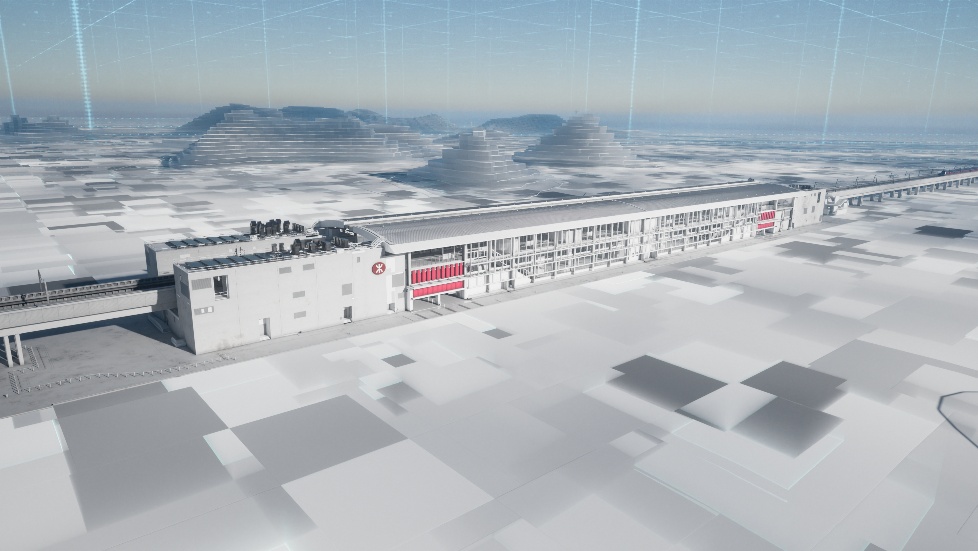
Thirty meters — it's about 40 steps for an adult walking at an average pace. Yet, in the construction of MTR Corporation’s Hung Shui Kiu Station on the already operating Tuen Ma Line, that short distance represents a remarkable feat of engineering.
How to establish a new station on an operating railway without disrupting services? To answer the question, the MTR’s project team adopted an innovative approach: rather than building the station directly in situ, as is typical for a new rail line, it chose to use the skidding construction method.
To put it more simply, the major structures of Hung Shui Kiu Station would be assembled about 30 meters from the railway viaduct before being slid into position, which means the Tuen Ma Line service does not need to be impacted while construction continues until the final critical stage of integrating the new structure into the existing railway system and establishment, thereby maximally speeding up the building process and fulfilling the public’s transport needs.
It is not only a Hong Kong first, but also the world's first application of the skidding method to precisely encapsulate an operating railway viaduct within the station structures.
Serving hundreds of thousands
As the Hong Kong Special Administrative Region government speeds up development of the mega Northern Metropolis project, construction has begun on four of its nine planned New Development Areas (NDAs).
While large-scale site formation works press ahead, the surrounding transport network is also taking shape. One of its key nodes is Hung Shui Kiu Station, located at the heart of the Hung Shui Kiu/Ha Tsuen NDA, connecting the Hong Kong-Shenzhen Western Rail Link and the Smart and Green Mass Transit System.
Situated between Tin Shui Wai Station in Yuen Long district and Siu Hong Station in Tuen Mun district on the Tuen Ma Line, the new MTR station is targeted for completion in 2030.
According to official estimates, the Hung Shui Kiu/Ha Tsuen NDA is expected to generate about 150,000 jobs and provide 66,700 new residential units for some 226,000 people in the years ahead.
For a community of this scale, Hung Shui Kiu Station will be more than a new railway stop, but a crucial gateway serving hundreds of thousands for work, education and daily life.
Build first, skid later
As a major rail artery connecting the western New Territories to the area's eastern boundary and Kowloon, the Tuen Ma Line has remained operational while construction for the new station is underway. Minimizing disruption to passengers is therefore central to the planning of Hung Shui Kiu Station.
Conventional in-situ construction would restrict many activities to the “golden two hours” between the last train at night and the first service the following morning. That narrow working window often constrains progress and adds complexity to an already challenging project.
Given the circumstances, the MTR must find a way to build the station while ensuring the busy rail line keeps moving at the same time.
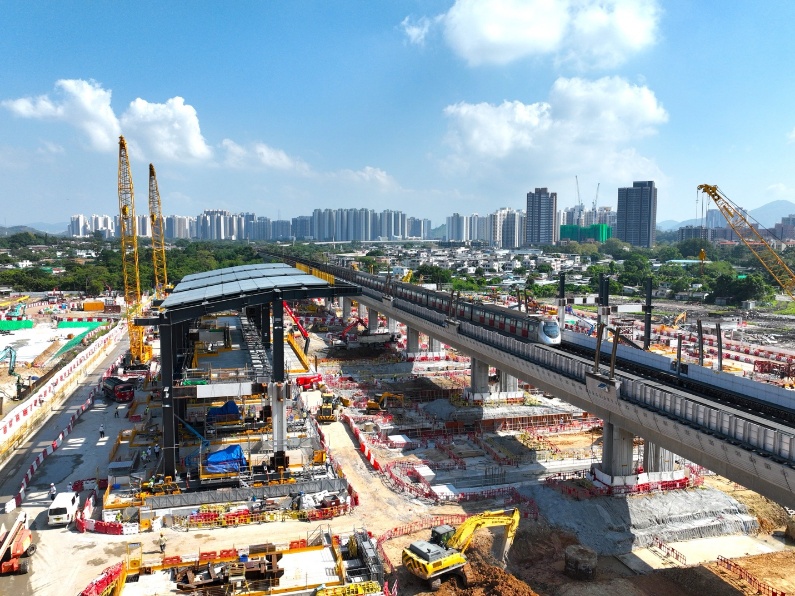
Drawing on experience from large-scale skidding projects involving bridges, buildings and railway works on the Chinese mainland and overseas, the MTR’s project team developed a solution tailored to the operating Tuen Ma Line viaduct, local railway requirements and site conditions. The approach allows the station’s main structures to be assembled beside the railway, then skidded into position in phases using a large-scale hydraulic jacking system.
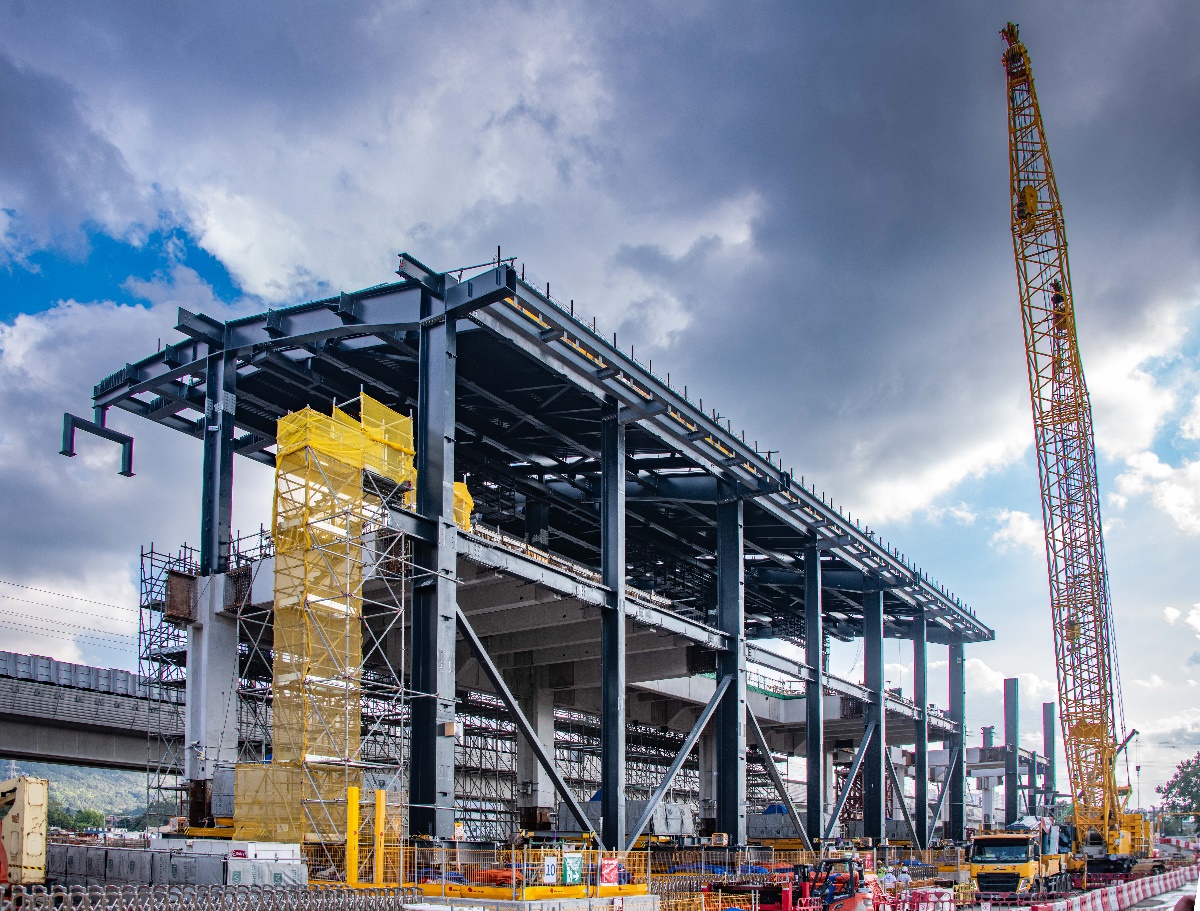
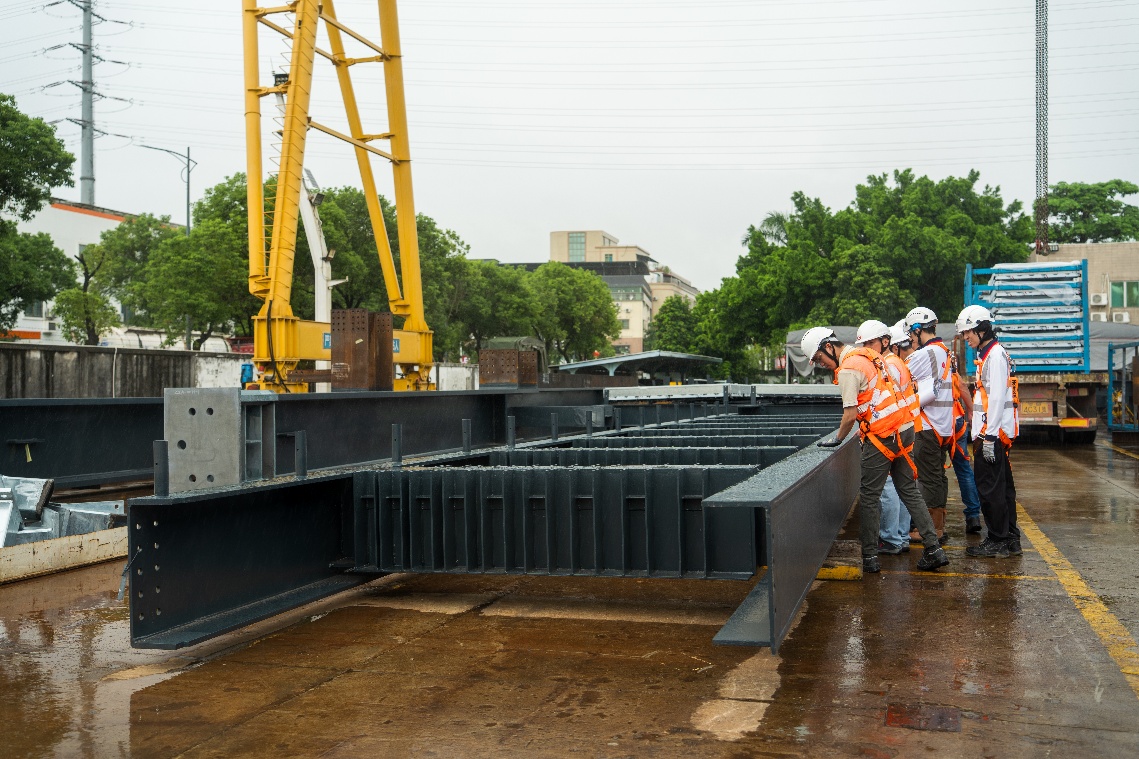
While the foundations are built at the station’s final spot, two main station structures are assembled in parallel about 30 meters from the viaduct, one on either side. These structures each measure approximately 210 meters long, 15 meters wide and 20 meters high, and weigh about 10,000 metric tons.
By such parallel construction methodology, civil construction and equipment installation can therefore proceed concurrently rather than sequentially, reducing the work required after the structures reach their final positions.
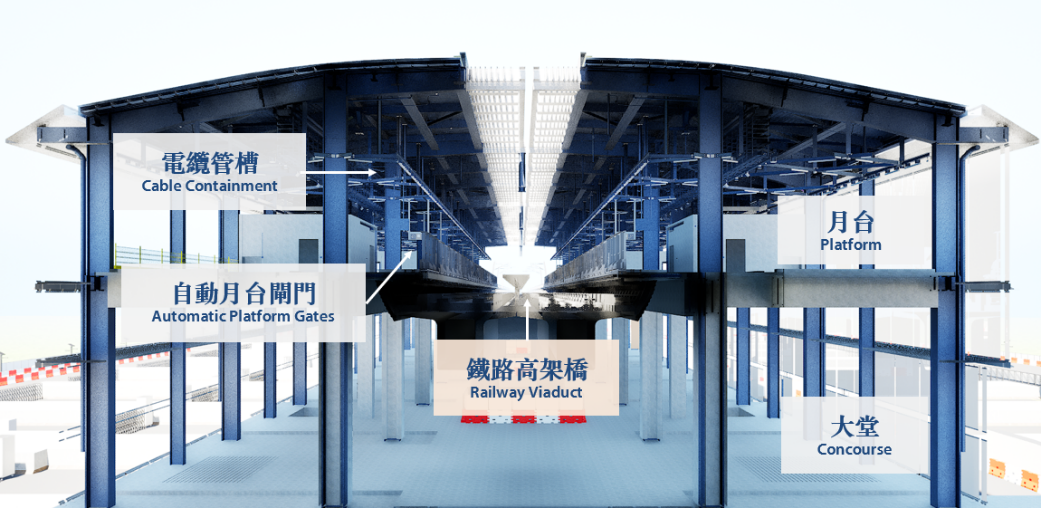
The completed station modules will include the concourse, platforms and rooftop, as well as major electrical and mechanical and building services installations, including automatic platform gates, cable containment, lighting and ventilation systems.
In total, the station will comprise more than 6,000 prefabricated components, including over 4,000 major structural components, alongside electrical and mechanical components of various shapes and sizes.
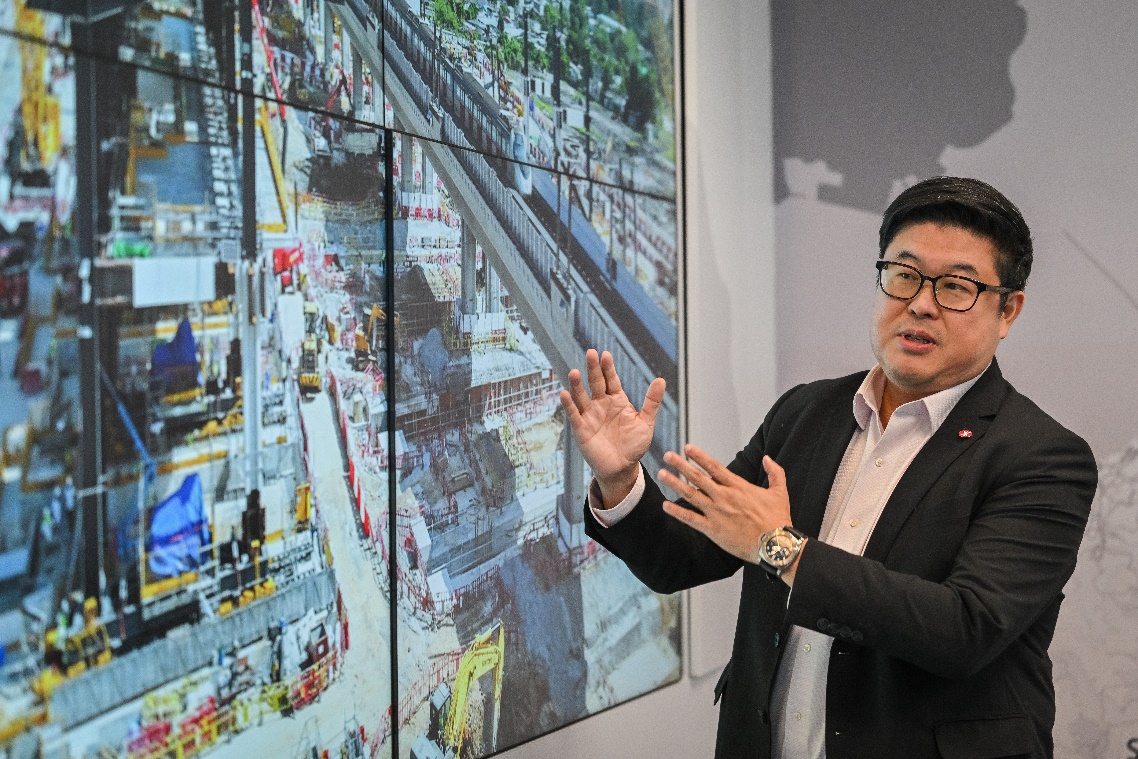
“Conventional in-situ construction methods would not have been able to overcome the unique challenges of constructing Hung Shui Kiu Station on an operating railway viaduct. By rethinking every aspect of delivery and embracing innovation, we transformed a ‘mission impossible’ into a ‘mission possible’. Moving a 10,000-ton station structure is not simply a matter of force. Like a team of strongmen acting in perfect unison, every movement must be precisely coordinated and controlled. Through meticulous planning, digital engineering and engineering precision, we are pioneering a world-first application that enables us to deliver Hung Shui Kiu Station safely, efficiently, and with high quality,” said Alan Yan, Head of Project Delivery – NT South at the MTR Corporation.
A strategic position
Beyond serving local communities, Hung Shui Kiu Station will anchor a three-line transport hub linking the Tuen Ma Line with the planned Hong Kong–Shenzhen Western Rail Link (Hung Shui Kiu - Qianhai) and the Smart and Green Mass Transit System in Hung Shui Kiu/Ha Tsuen. Together, they will strengthen connections between the Hong Kong SAR and Shenzhen, Guangdong province.
That connectivity will underpin the Hung Shui Kiu/Ha Tsuen NDA’s wider ambitions. The NDA near Shenzhen Bay Port will forge closer links with Shenzhen’s Qianhai Cooperation Zone, developing into a modern services hub and regional commercial center focused on professional services and modern logistics.
According to the MTR, as of early November, Hung Shui Kiu Station’s foundation works on both sides of the Tuen Ma Line viaduct were substantially completed, and about a quarter of the station’s structure on the Wu Kai Sha-bound side had taken shape.
Skidding of the Wu Kai Sha-bound structure is scheduled for late in the first quarter of 2027, followed by the Tuen Mun-bound structure in the third quarter.
The final connection works will require service adjustments at some Tuen Ma Line stations, it said.
Contact the writer at gabylin@chinadailyhk.com
