

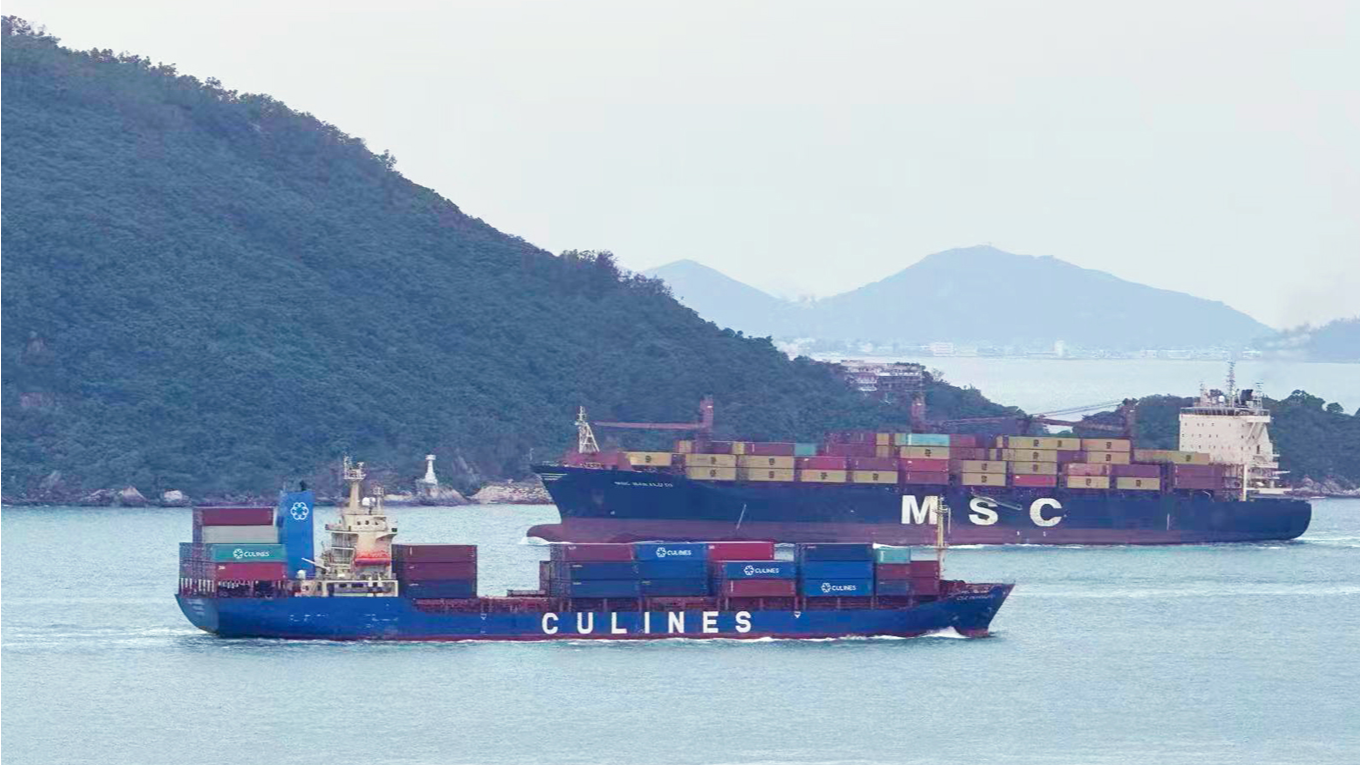
Hong Kong's merchandise exports surged 65.6 percent year-on-year to a record high in October, extending a run of growth to 32 consecutive months and marking the fastest pace in more than 70 years, official figures showed on Thursday.
According to the Census and Statistics Department, export value rose to a record HK$764.5 billion ($98 billion) last month, while imports grew 56.2 percent to HK$783.8 billion, resulting in a trade deficit of HK$19.3 billion. This is the fastest export growth for Hong Kong since April 1956, when the rate reached 70.7 percent.
ALSO READ: HK GDP rises 5.2% on exports surge, solid domestic demand
Hong Kong’s merchandise exports to major destinations posted growth in October from a year earlier, with shipments to Thailand and the United States more than doubling, and exports to Singapore climbing 98.9 percent.
Most major product categories recorded gains, led by technology-related and high-value consumer goods. Shipments of office machines and automatic data-processing machines jumped 146.5 percent year-on-year, while miscellaneous manufactured articles — mainly jewelry, goldsmiths’ and silversmiths’ wares — surged 146.7 percent.
On a cumulative basis, Hong Kong’s merchandise exports rose 47.4 percent in the first 10 months of the year, marking the fastest growth for the period since 2022.
Shipments to Singapore advanced 83.6 percent from a year earlier, while exports to the US, Thailand, and Malaysia all expanded by more than 50 percent. Across major commodity divisions, shipments of office machines, electrical machinery, non-ferrous metals, and jewelry also grew by over 50 percent each.
READ MORE: Hong Kong logs 28.6% y-o-y increase in August exports
A spokesman of the Hong Kong Special Administrative Region government attributed the gains to continued strong growth in exports of artificial intelligence-related electronic products.
“Looking ahead, robust global AI investment and related demand will continue to support Hong Kong's merchandise trade performance,” he said.
Tommy Chung Ki-fung, a Hong Kong lawmaker representing the import-and-export sector, said that October’s foreign trade saw a narrower deficit even as exports accelerated, reflecting the continued strengthening of Hong Kong’s high value-added trade hub functions in resource allocation and transshipment amid the restructuring of global high-tech industrial chains and deepening regional trade.
He noted that active cross-border transactions in precious metals and jewelry products, as well as precision industrial instruments, demonstrated Hong Kong’s comprehensive advantages as a free port in diversified commodity sourcing and the integration of international supply sources.
“The development of an ecosystem for precious metals and bulk commodity trading is injecting richer structural momentum into the city’s foreign trade,” he said.
READ MORE: HK exports volume surges 31.6% y-o-y in July
However, Chung remained “cautious” about the future trade outlook. He pointed out that tariff barriers and technology export controls imposed by advanced economies, fluctuations in AI capital expenditure and the pace of returns, as well as changes in energy and shipping costs, all brought risks and operational pressures, requiring companies to stay alert when adjusting supply chains and inventories.
He called on the SAR government to accelerate the improvement of gold and bulk commodity infrastructure, expand precious metals warehousing as well as testing and certification capacity, promote interconnection between the Port Community System and the Commercial Data Interchange to facilitate financing for small and medium-sized enterprises, and deepen cooperation with emerging markets such as Association of Southeast Asian Nations and the Middle East.
The industry should closely track the global technology investment cycle and developments in tariff policies, while accelerating its transformation towards high value-added supply chain management and professional supporting services, he said.
Principal Economist and Strategist at Dah Sing Financial Group Gary Wan Ka-wai is of the same view. He said renewed tariff pressure from the US and lingering geopolitical uncertainty in the Middle East would weigh on external demand and costs. However, driven by robust trade in electronic products, he expects Hong Kong’s full-year exports in 2026 to maintain relatively rapid growth, with the rate likely to exceed 40 percent.
Contact the writer at akirawang@chinadailyhk.com
