

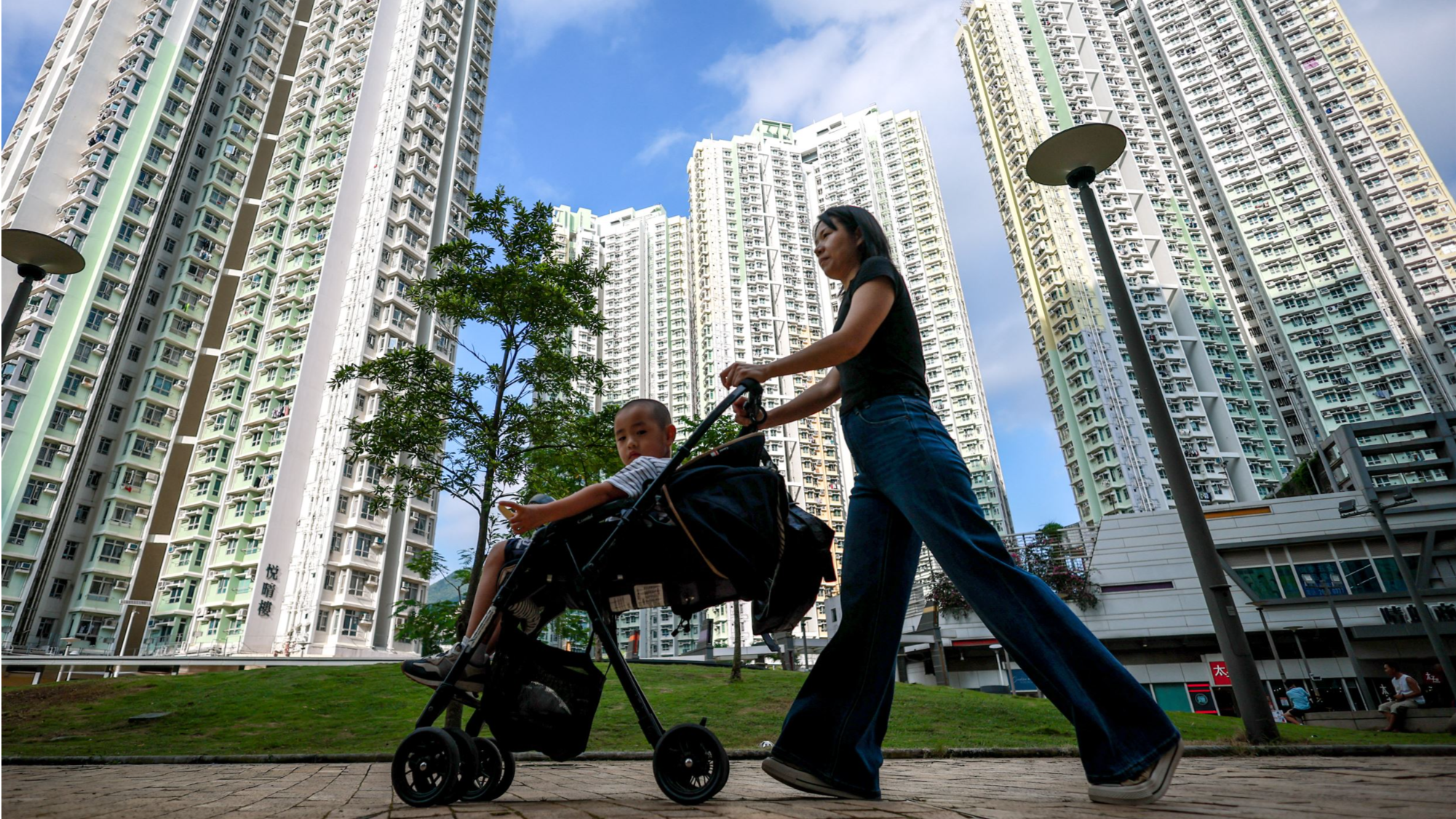
HONG KONG — The average wait for subsidized rental housing in Hong Kong has fallen below 4.5 years for the first time and reached a 10-year low, the Housing Bureau (HB) announced Friday.
The latest Composite Waiting Time for Subsidized Rental Housing (CWT) stands at 4.4 years, a sharp decline of 0.4 years from the 4.8 years recorded at the end of June this year, the bureau said.
Compared with the peak of 6.1 years before the current-term government took office, the figure represents a reduction of 1.7 years.
The CWT is calculated based on the average waiting time of general applicants — families and elderly one-person applicants — who were housed in public rental housing (PRH) or Light Public Housing (LPH) in the 12 months ending September 2026.
“With the continuous increase in overall public housing production and the progressive completion of various PRH and LPH projects, the long-standing backlogged applications have been gradually cleared, resulting in a downward trend in the CWT,” an HB spokesman said. “We are confident that we can achieve the target of reducing the CWT to 4.5 years in 2026-27 as announced by the chief executive in the 2022 Policy Address.”
ALSO READ: Five-year plan: Welfare blueprint is in place
‘Harvesting phase’
The bureau said the government’s efforts over more than four years to “enhance quantity, speed, efficiency and quality” have laid a solid foundation for public housing production, which is now entering a “harvesting phase”.
Over the next five years — from 2027-28 to 2031-32 — public housing, including PRH and subsidized sale flats, will be provided at an average of more than 35,000 units per year.
That represents an increase of about 73 percent compared with the five-year production total since the current-term government took office, and is the highest level in the past 25 years.
As for LPH, about 29,800 units had been completed as of mid-November 2026.
The remaining two new projects, converted from school premises on Shun Lee Tsuen Road in Kwun Tong and Chuk Yuen Road in Wong Tai Sin, will provide a total of about 210 units and are set to be completed in the first quarter of next year.
All 13 projects, providing about 30,000 LPH units in total, will be completed in slightly more than four years — ahead of the five-year target set out in the 2022 Policy Address.
READ MORE: HK’s five-year plan should ‘scale up’ grassroots facilities
Newly housed applicants
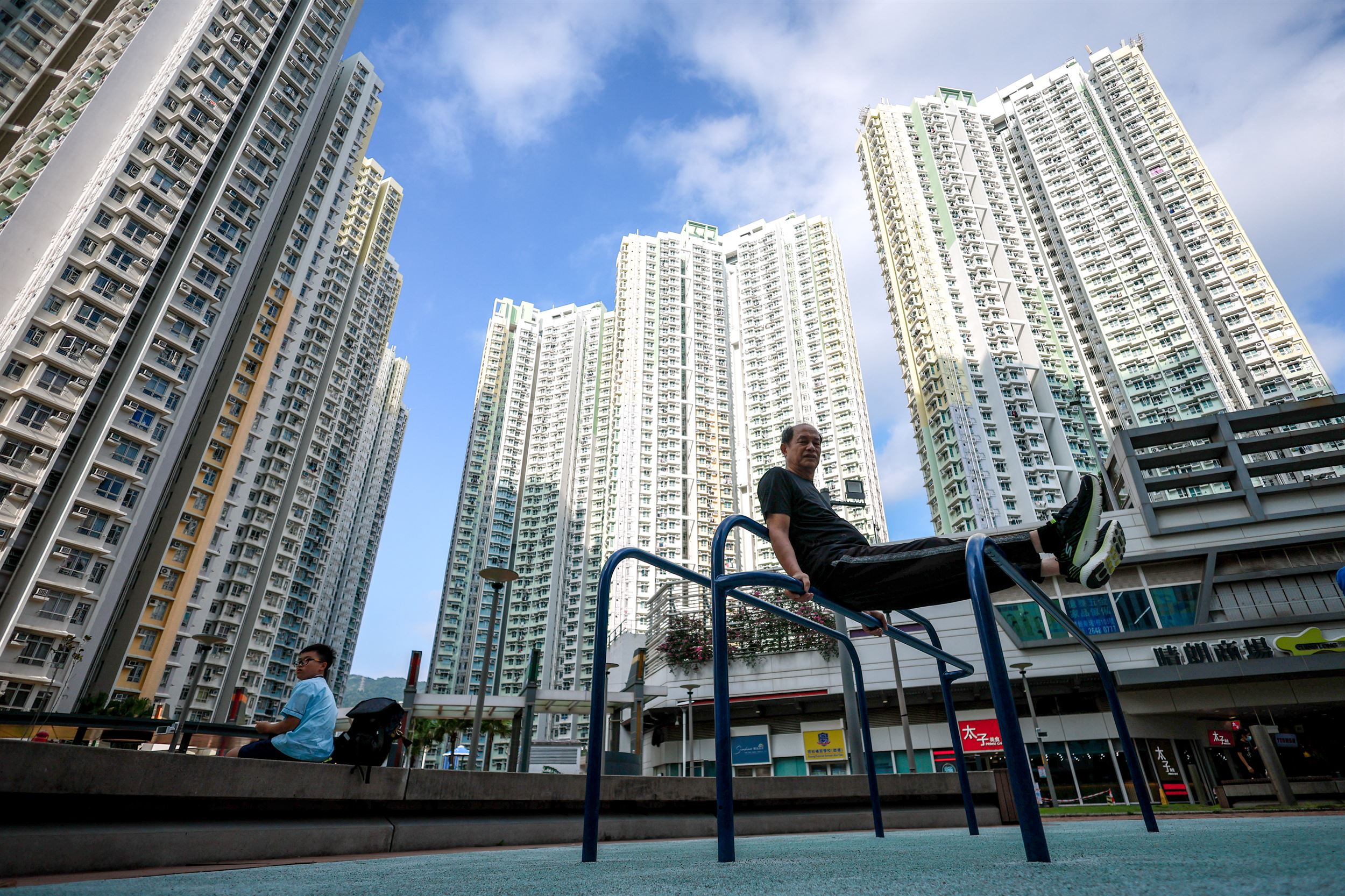
In the third quarter of 2026, about 11,200 general applicants were housed in PRH or LPH. They included about 3,100 in newly completed PRH flats, about 2,700 in recovered PRH flats and about 5,450 in LPH units.
The number housed in LPH was more than four times that of the previous quarter, when about 1,300 units were provided.
“Over the past 12 months, the supply of PRH and LPH has significantly increased to an average quarterly supply of about 8,200 units, which is double the average quarterly supply of about 4,100 units during the four years before the current-term government took office,” the spokesman said, referring to the period from the third quarter of 2018 to the second quarter of 2022.
The spokesman noted that LPH reached its peak intake from July to September this year.
General applicants housed in PRH over the last 12 months waited an average of 5.3 years, while those housed in LPH waited only 2.8 years. The spokesman said the contrast “fully highlights that the LPH policy has played a key role in enabling faster fulfilment of the grassroots citizens’ housing needs.”
Shortest queue in 15 years
The bureau also reported progress in turning over PRH flats through a multipronged approach. The number of PRH general applicants fell by about 4,400 cases, continuing a downward trend.
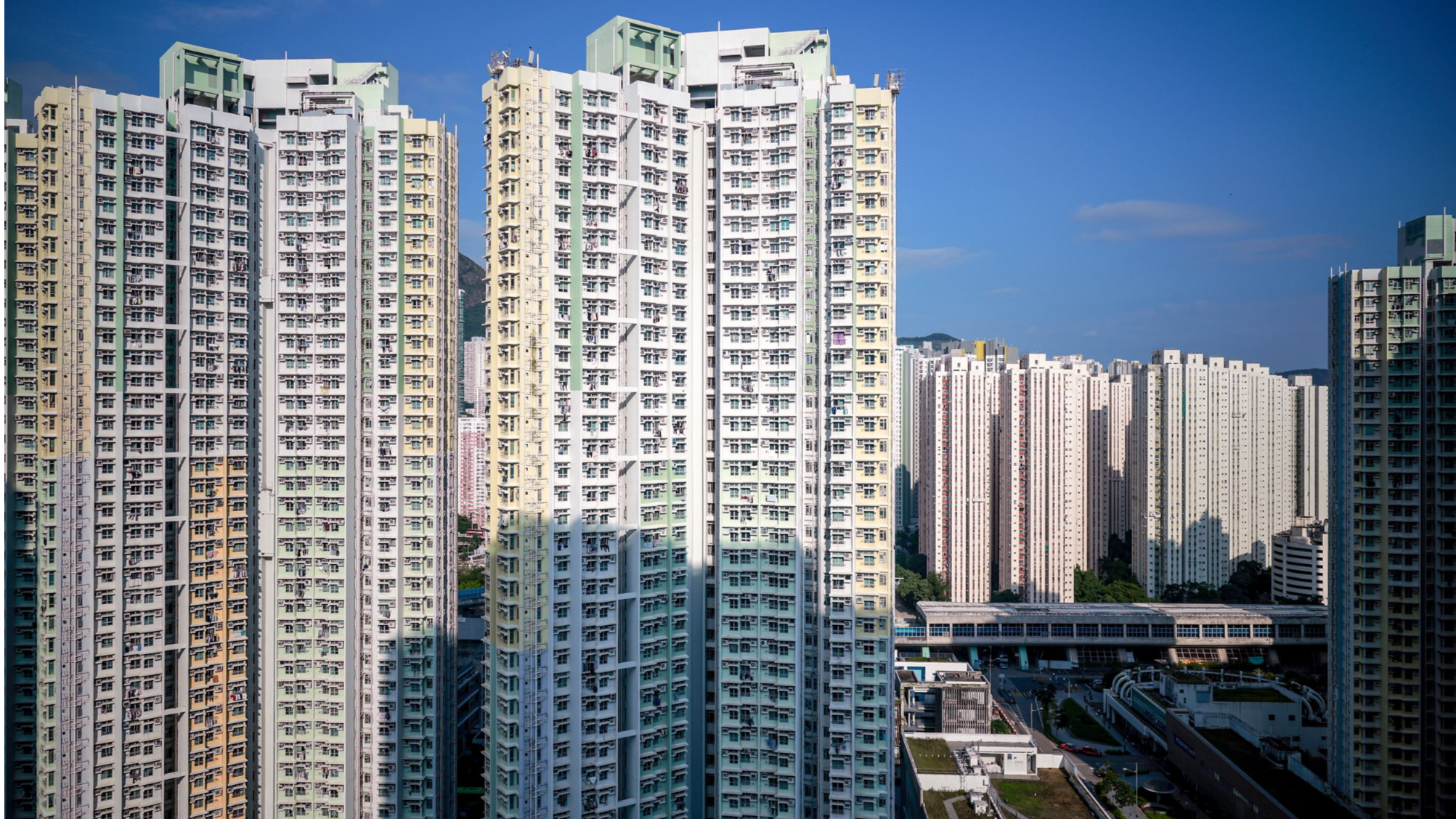
As of end-September 2026, there were about 96,100 general applications for PRH — a decrease of nearly 40 percent from the peak of 156,400 cases in September 2020. That was a new low in the past 15 years and the first time the figure had fallen below 100,000 since 2012.
Non-elderly one-person applications under the Quota and Points System totaled about 80,600, a drop of more than 40 percent from the peak of 143,700 cases in December 2015.
READ MORE: HK public rental housing waiting time inches up slightly to 4.8 years
The decline was even steeper among non-elderly one-person applicants under age 30, whose numbers fell by about 60 percent over the past decade, from about 70,400 as of end-September 2016 to about 29,300 as of end-September 2026.
“These figures clearly demonstrate that the PRH waiting queue is being cleared,” the HB statement said.
