

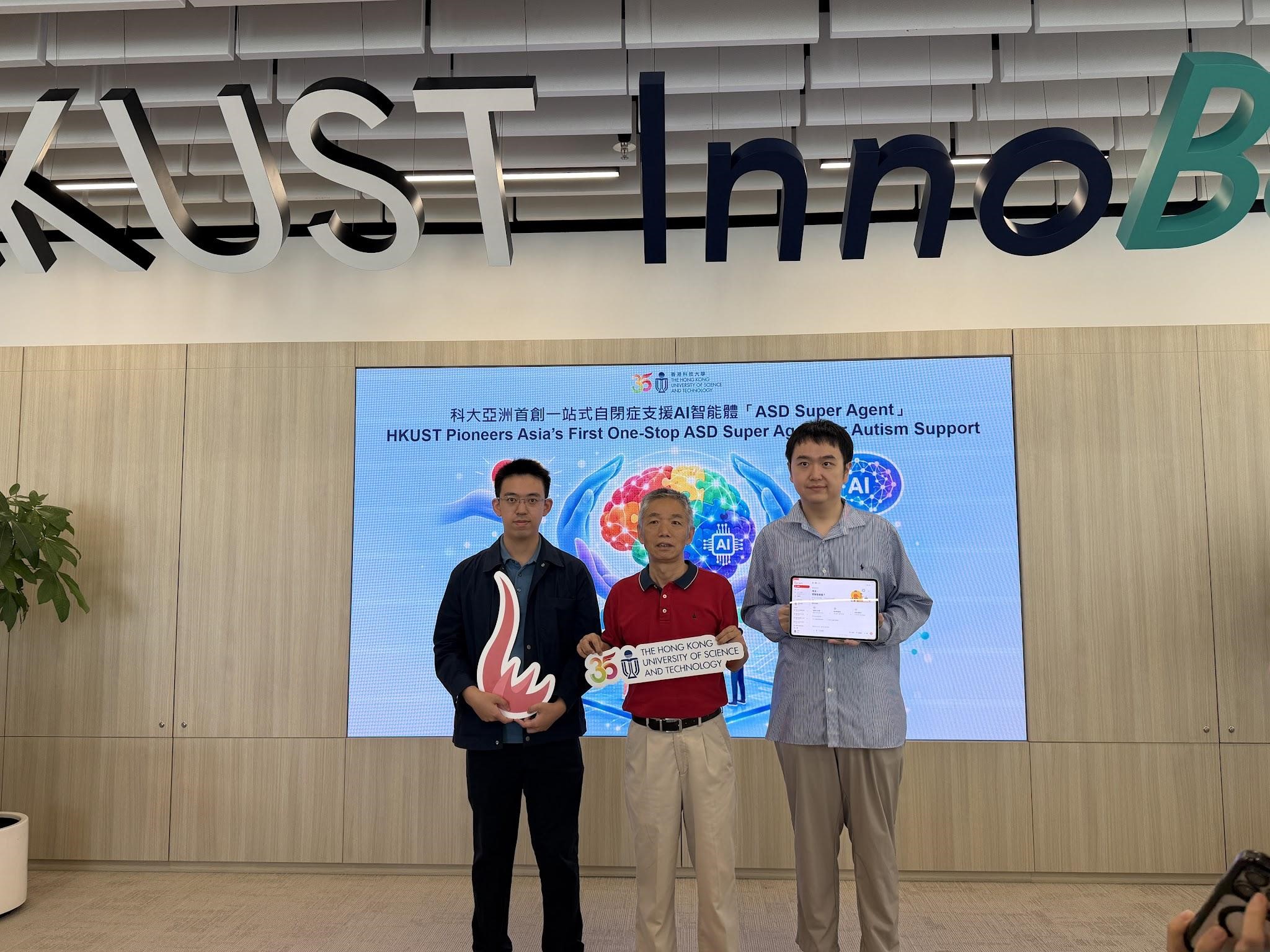
The Hong Kong University of Science and Technology on Wednesday launched Asia’s first trilingual, one-stop artificial-intelligence platform for autism spectrum disorder support, which researchers say has a diagnosis accuracy of 92 percent.
The platform, developed by a university research team, is open for free public use, offering services such as early screening, personalized intervention guidance, and continual family follow-up.
Named “ASD Super Agent”, it works in Cantonese, Mandarin and English.
The researchers found that many families face lengthy assessment waiting times, high treatment costs, and fragmented information regarding intervention services.
ALSO READ: HK scientist develops retinal scan tech to identify early autism
Chen Xingze, a Master of Philosophy student in the university’s Individualized Interdisciplinary Program, said, “In our interactions with parents of children with autism, we have found that many institutions do not accept children over the age of 6, which leaves us with a very narrow window for intervention.
“We hope that this platform can help shorten the time required to access services,” Chen added.
A 2020 survey by the Census and Statistics Department found that about 22,400 Hong Kong people, or about 0.3 percent of the population, had autism spectrum disorder, or ASD.
Education Bureau figures in 2026 showed that 15,110 students in public-sector ordinary schools had ASD in the 2025-26 academic year. Meanwhile, only about 70 percent of new cases at the Department of Health’s Child Assessment Centres completed their assessments within six months in past three years.
Nationwide, ASD affects more than 14 million people, according to the National Health Commission.
To develop the tool, the team consulted hospitals, clinics and special education centers across Hong Kong, Shenzhen and Beijing beginning in November 2025, engaging with nearly 500 parents.
READ MORE: HKUST launches HK$100m fund to boost startups
Wang Xianfei, a Master of Philosophy student in HKUST’s Department of Computer Science and Engineering, said users can use smartphones, tablets or computers to upload a three- to five-minute video of a child’s daily activities, alongside basic developmental details.
Processing the video takes about one minute, after which the AI analyzes the child’s movements, speech, and social interactions to generate a risk assessment report.
To ensure accuracy, the platform provides academic literature and background information for each recommendation in the report, enabling parents and professionals to follow up accordingly.
It can also offer personalized plans tailored to a child’s specific developmental needs.
In preliminary tests based on 1,000 videos, the system achieved an overall accuracy rate of 92 percent.
For families with diagnosed children, the system offers switchable modes for parents and professionals.
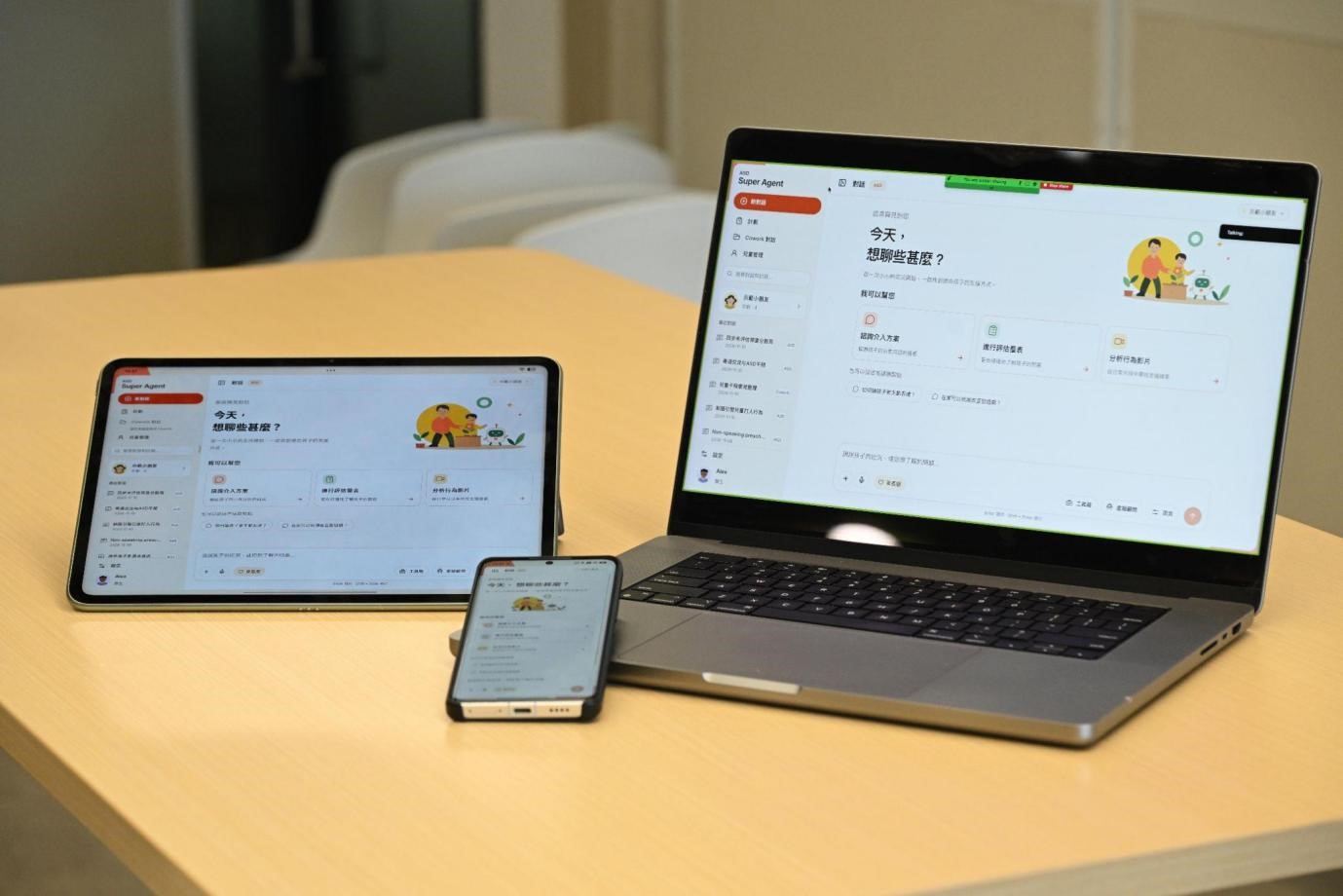
Its intervention guidance is powered by a “20+1” framework — combining 20 internationally recognized intervention models with a customizable module for authorized institutional teaching materials, targeting the problem of fragmented information on treating autism.
In parent mode, users can build personalized profiles to track their children’s progress and receive tailored advice for daily behavioral challenges, such as repetitive actions.
Chen shared a case in which an autistic child changed his habit of tucking his pants legs into his socks after following the platform’s step-by-step guidance.
To safeguard privacy, the system performs data de-identification before the analysis — extracting posture features on the user’s device without uploading videos to the cloud, while automatically blurring faces, clothing and home backgrounds. Users may opt in to share anonymous data to help refine the model.
Team leader Chen Kani, a professor in the Department of Mathematics and the Department of Industrial Engineering and Decision Analytics, said several hospitals in Beijing and Shenzhen have already adopted the AI-driven platform.
The team is in talks with a Shenzhen tech company to integrate the platform into embodied AI toys to accompany children and track behavioral data, while also seeking charitable funding to sustain long-term free operations, he added.
The professor said that AI cannot replace professional diagnosis but can assist.
“We are not claiming that this AI is replacing people; it is helping them,” Chen Kani said. “It is not meant to replace parents, teachers and professionals. We are providing them with the best possible tool to strengthen human care, not replace it.”
Contact the writer at hazelwong@chinadailyhk.com
