

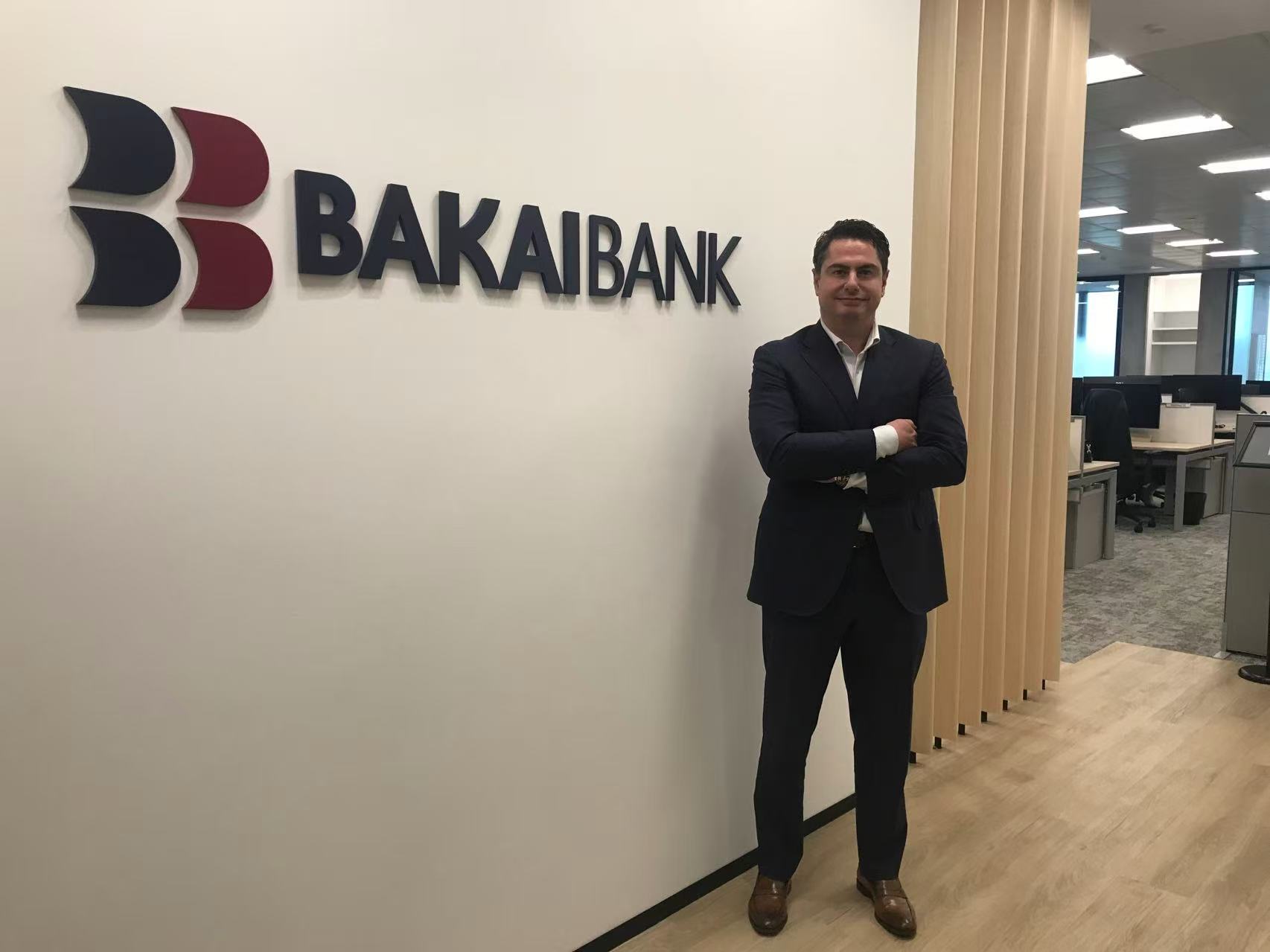
Bakai Bank Hong Kong — the first banking branch of a Central Asian financial institution in the Asia Pacific — is betting on the market opportunities arising from an immature financial intermediation link across Central Asia and the Asia-Pacific economic corridor.
Bakai Bank OJSC, which is the parent company of Bakai Bank Hong Kong, said last month it has been granted a banking license by the Hong Kong Monetary Authority to set up a restricted licensed bank in the Hong Kong Special Administrative Region. The lender expects to make a commercial launch early next year.
Established in 1998, Bakai Bank OJSC is one of the largest lenders in the Kyrgyz Republic, providing retail, corporate and investment banking services across Central Asia.
The lender’s Hong Kong branch is expected to offer wholesale corporate banking services like cash management, trade financing, and foreign exchange and treasury services through hedging solutions.
As the SAR is a premier offshore renminbi financing center, Bakai Bank Hong Kong is expected to offer financial products that hedge Central Asian currencies against the renminbi to commercial enterprises and financial institutions. However, the bank will not provide financial services to help Central Asian companies get listed in the city.
Andreas Meletiou — chief executive of Bakai Bank Hong Kong — said the bank’s expansion in Hong Kong is an easy and conscious choice.
RMB corridor ambitions
“Being a superconnector and an ideal gateway to the Chinese mainland, Hong Kong is the ideal location for executing the strategy of bridging Central Asia and the Asia Pacific. The city also offers financial market infrastructure, a deep talent pool, as well as the sophistication of the regulators, the technology ecosystem and a robust legal system,” he said. “Our presence in Hong Kong will add value in terms of business connectivity across these two regions.”
Bakai Bank Hong Kong’s strategy is to bridge Central Asia and the Asia Pacific in terms of financial intermediation, where the linkage is currently immature. “Receiving payments for things you buy, receiving payments for things you sell, and financing that powers trade are not present in this nascent corridor,” Meletiou said.
ALSO READ: Central Asia offers ‘lots to explore’, says HKSAR investor
“There is still a large gap in terms of banks providing the type of services that are needed for businesses to transact with each other across the corridor,” he added.
According to Meletiou, the trade value between China and Central Asia reached $100 billion last year, and is projected to hit $120 billion by the end of 2026. China has become the top trading partner for Central Asia. Besides trade flows, capital flows from the Asia Pacific into Central Asia are also significant.
“As China and Central Asia are expected to trade more, there is a clear pivot to the renminbi which is now the preferred currency for trade settlement between the regions. The bank fully intends to be a part of the renminbi internationalization initiative,” he said.
Partnership-led growth
Bakai Bank Hong Kong’s prospective clients are companies in Hong Kong, on the Chinese mainland, or elsewhere that are either doing business with Central Asia or are planning to expand into the Central Asian market.
According to Meletiou, the banking partners of the prospective clients are not able to serve them well because of too-much friction in transactions, excessive costs and the banking partners’ weak financial connectivity with Central Asia.
He said he expects the strong momentum to continue as Central Asia is growing and diversifying its relationships with the rest of the world, and China is uniquely placed to support the region. Chinese companies have been deeply involved in infrastructure development in Central Asia, he added.
While Bakai Bank Hong Kong’s strategy is predominantly anchored in Central Asia and the Asia-Pacific corridor, its Hong Kong banking office is expected to facilitate business between Central Asia and Europe, the Middle East and the Americas.
Bakai Bank OJSC will focus on the Hong Kong operation and does not plan to expand into other Asia-Pacific markets.
“We can play the role of bridging Central Asia and the Asia Pacific out of Hong Kong. We do not require a second base to do that,” Meletiou said.
He noted there may be other banks in the Kyrgyz Republic that will follow suit in Hong Kong. “But, getting a banking license in Hong Kong is not a simple and a quick thing, so there will be some time until one of our peers from Central Asia is able to get to the stage we are at,” he said.
READ MORE: HK delegation signs 96 MoUs during Central Asia tour
Bakai Bank Hong Kong currently employs 35 experienced bankers and the figure is expected to reach 50 within two or three years. “There will be growth in people, but it will not be proportional to the business growth. We want to scale the business smartly through partnership and technology,” Meletiou said.
Bakai Bank Hong Kong will pursue a multifaced partnership strategy with banks, multilateral or supranational organizations, and potentially, with financial technology firms. Some of the partnerships will be technical and some of them will provide credit lines and liquidity that the bank may want to provide to its corporate clients.
