

Exhibition explores how ancient Chinese craftsmanship pondered humanity’s existence
‘Afar, I gaze upon the surging white clouds. They billow and drift, then pause at ease; clear and turbid currents mingle in boundless murk, rising layer upon layer … Coiling like a wheel in mid-heaven, they resemble startled tigers and frightened dragons … Jostling and pressing in restless tumult.”
These enigmatic lines come from Jia Yi, a precocious poet and political thinker of China’s Western Han Dynasty (206 BC-AD 24). Sidelined from political life and dead at just 33, he infused his rhapsodies with philosophical and allegorical meaning, animated by an imagination of astonishing vitality and inexhaustible invention.
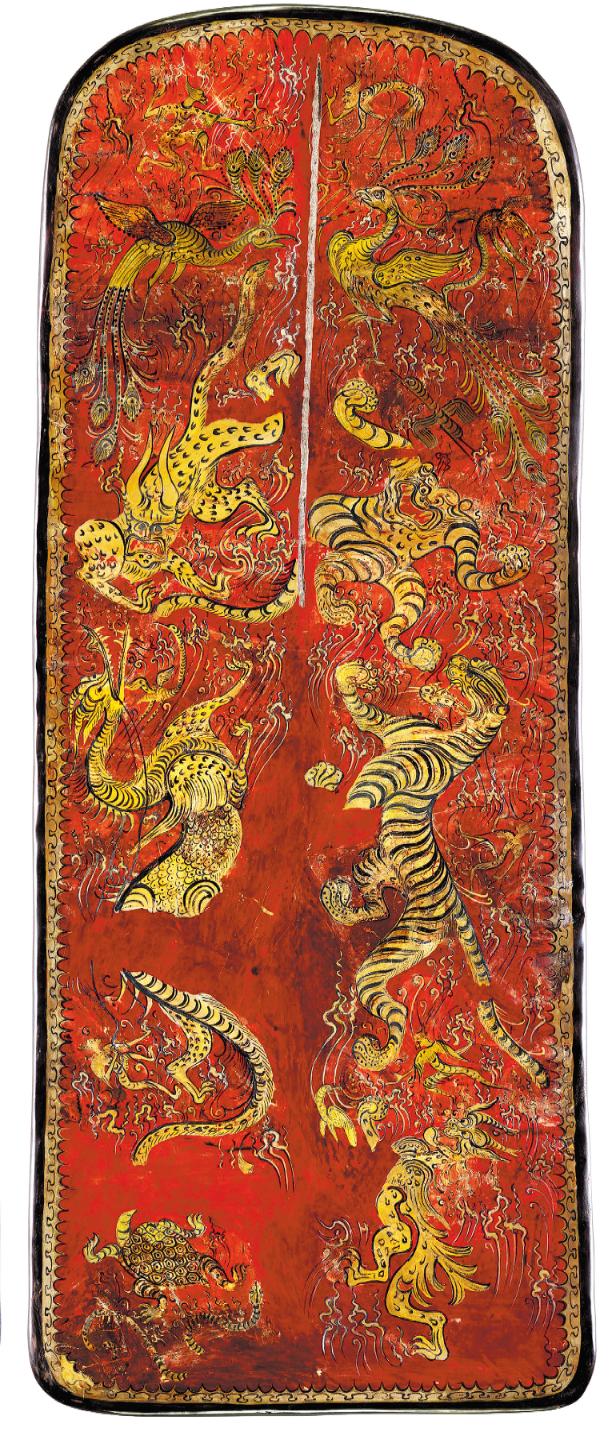
For readers familiar with Jia Yi’s verses, a visit to the Nanjing Museum in Jiangsu province offers an uncanny encounter between word and image. A lacquered shield on display bears swirling clouds on one side and writhing tigers, dragons and other mythical creatures on the other. One can almost imagine Jia Yi contemplating these patterns before setting them free in words.
Measuring about 75 centimeters long and 30 centimeters wide, the shield consists of lacquer applied over a ramie-fabric core. As Zuo Jun, curator of an ongoing exhibition of ancient Chinese lacquerware, puts it, the object “offers a point of encounter between Han craftsmanship and the literary imagination of the age”.
The exhibition, running until Nov 15, takes a deliberately focused approach, narrowing its scope both chronologically to the Western Han Dynasty and geographically to the ancient Guangling region, centered on present-day Yangzhou and its surroundings in Jiangsu province.
“Every object, the shield included, opens a window into the world of the Han: not only how people lived, worked, and adorned their surroundings, but also how they anticipated the passage beyond death,” Zuo said.
In these objects, the divide between the inhabited world and imagined realms — celestial domains or the afterlife — seems less a boundary than a threshold. Their intricate designs bring together nature’s untamed vitality with the cosmic forces the Han people sought to evoke in all their mystery and grandeur.
In ancient Chinese thought, these generative and transformative forces, at work throughout the cosmos, were known as qi. Present in every breath and living being, qi also animated the universe, setting clouds in motion, as Jia Yi so vividly captured in verse.
“If qi speaks to an underlying principle, clouds, the vaporous manifestation of a shifting process at work, offer a natural phenomenon through which we can contemplate it,” Zuo said, referring to the undulating designs known as yunqi wen, or cloud-and-qi motifs.
“But clouds here should not be understood simply as formations high in the sky. Anyone who has lived in the humid, mountainous regions of southern China knows how mist rises from valleys and gathers over lakes. These, too, are clouds.”
Zuo traces the artistic style of Guangling lacquerware to the shamanic traditions deeply rooted in Chu culture. Originally a vassal state of the Zhou Dynasty (c. 11th century BC-256 BC), Chu gradually emerged as an independent power over eight centuries, from the 11th century BC until its conquest by Qin in 223 BC, two years before Qin Shi Huang unified China for the first time.
Rising in the middle Yangtze region, Chu reached its greatest territorial extent in the second half of the fourth century BC, extending eastward toward the Yangtze River Delta, where Guangling was located. Under sustained Qin attacks, it later retreated from its ancestral heartland and shifted its political center eastward. There, elements of Chu’s artistic traditions, including lacquer craftsmanship, found new ground on which to endure and evolve.
These traditions found renewed resonance under the Western Han, when the pursuit of immortality and ascent to celestial realms captivated aristocrats and commoners alike. Feathered immortals, mythical beasts and flowing clouds evoked a universe animated by qi, the vital force linking all things. This fascination with the supernatural gave Chu’s shamanic legacy fresh relevance, allowing its visual language to take root in Han culture.
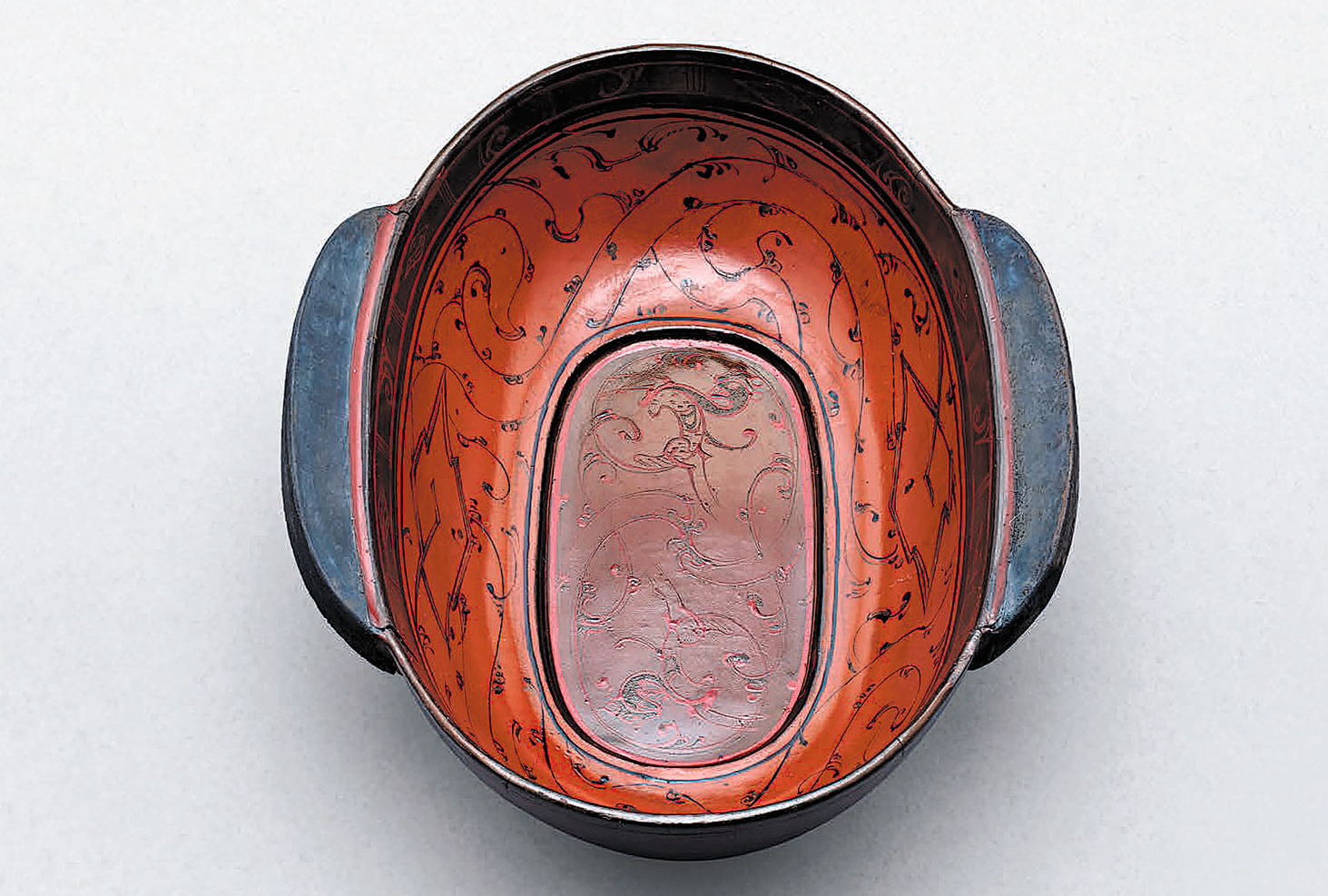
Cloud patterns do more than fill empty spaces: they create visual transitions between forms not ordinarily seen together, such as a deer and a dragon. The animals seem to travel with the clouds rather than interrupt their movement, their bodies woven into a continuous flow.
A similar sensibility runs through Han fu, or rhapsody, an elite literary form exemplified by Jia Yi’s work. Its rhythmic cadences and vivid descriptions drew on the lyrical intensity and mythological imagination of the Chuci (Songs of Chu), a classical poetic tradition rooted in the ancient state of Chu.
“Let’s be frank: those who composed rhapsodies may well have used lacquerware, but the artisans who made these objects were almost certainly unable to read such sophisticated literary works. Why, then, is the correspondence between them so striking?” asks Zhang Yinan, a researcher of ancient Chinese poetry at the National Library of China.
“Because both drew on the folk culture of Chu, allowing it to blossom in different forms.”
According to Zuo, lacquerware had eclipsed bronze as a dominant art form by the Han Dynasty (206 BC-AD 220), reflecting a subtle shift in humanity’s relationship with the cosmos. Reverence for Heaven endured, alongside a growing awareness of humanity’s place in a vast, interconnected universe. The flowing lines of lacquer designs evoke journeys through time and space without end.
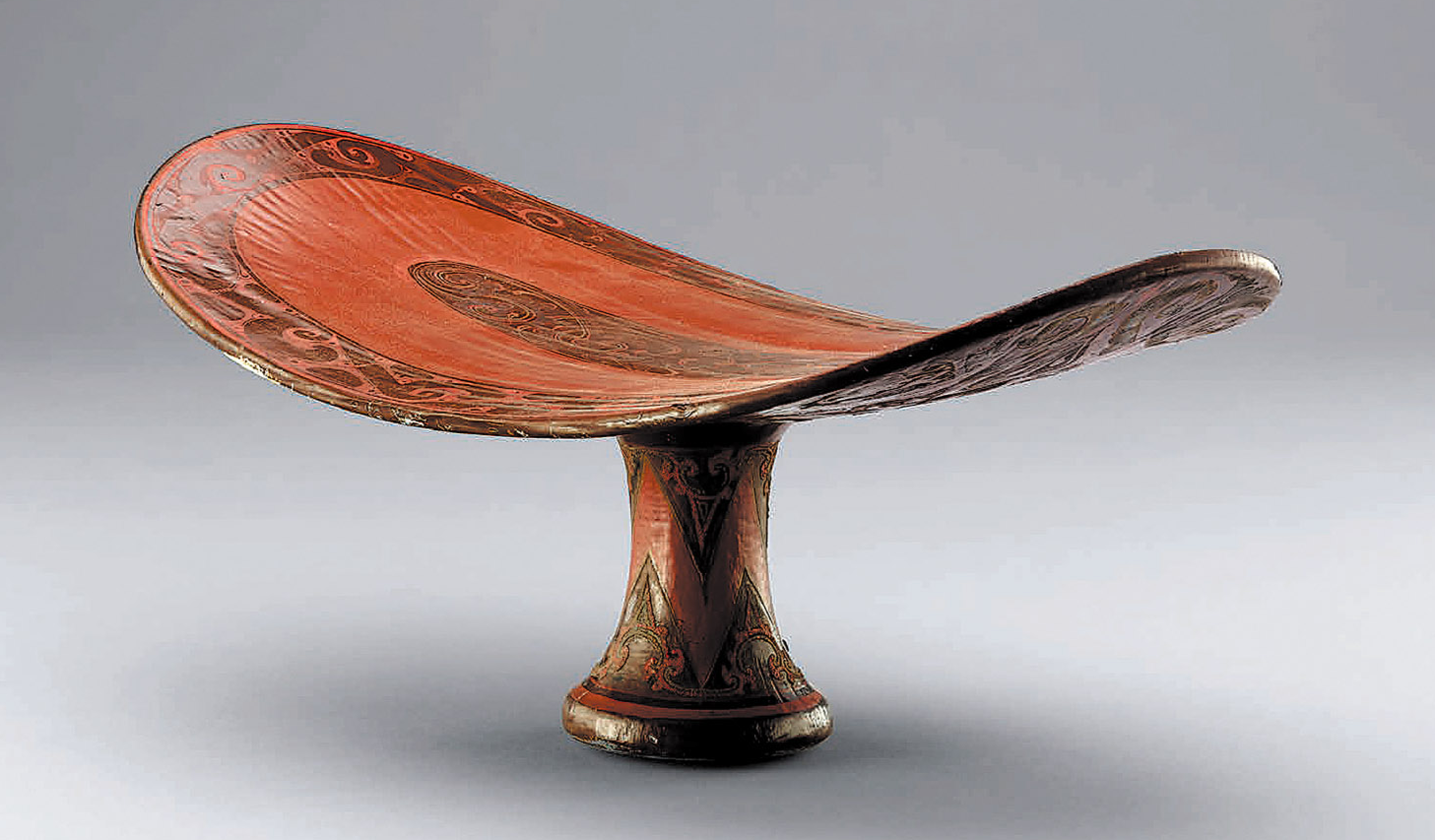
“With lacquer trees abundant in the Guangling region and lacquerware easier to produce than cast bronze, it became part of everyday life. People drank from two-handled lacquer cups, served wine and soup with lacquer ladles, and placed their food on trays with gently raised edges to prevent spills,” Zuo said.
“Even when going on picnics, they packed their provisions in ingeniously designed lacquer food containers that fit neatly together inside a larger lacquer box, sometimes with two tiers.”
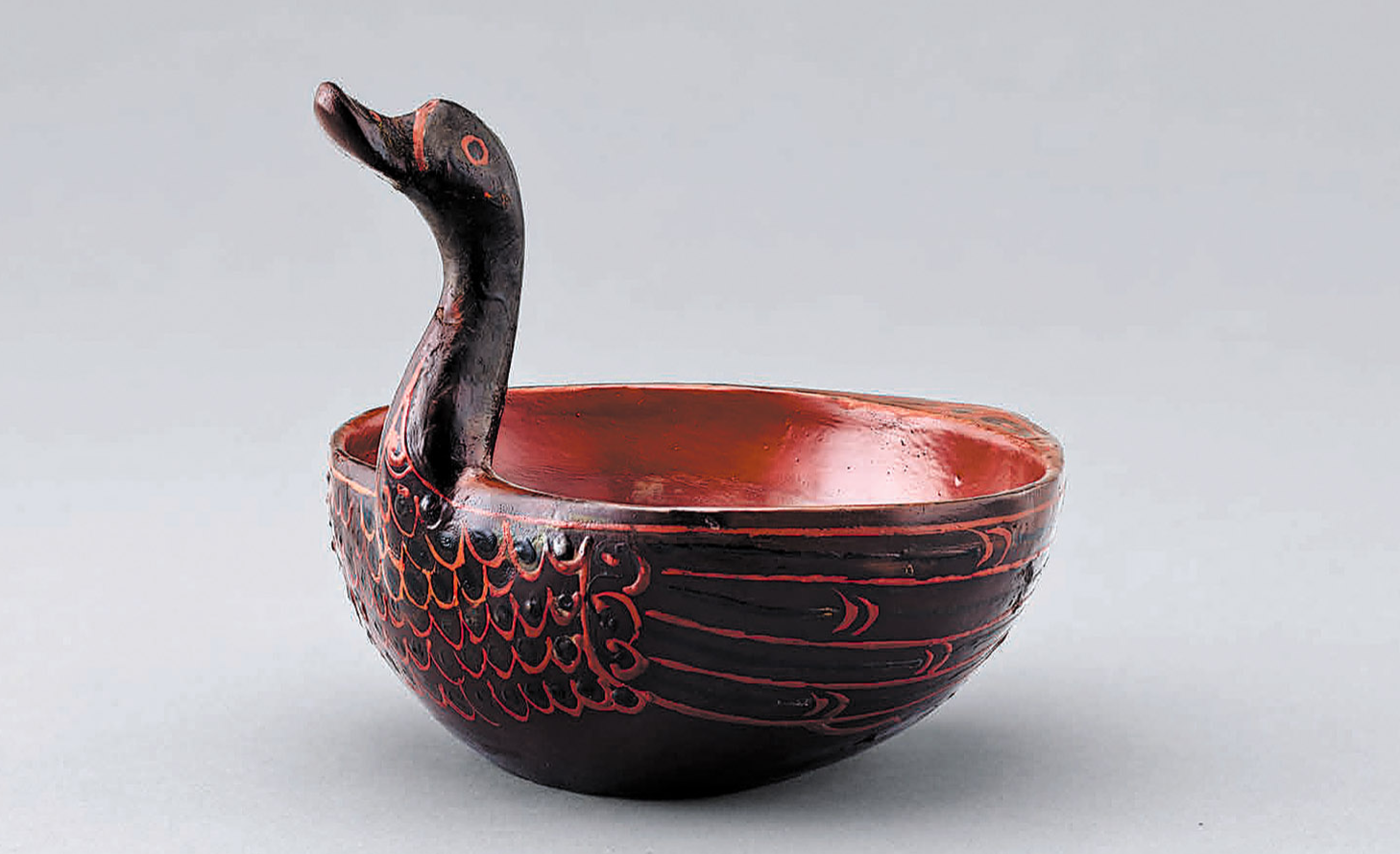
One highlight is a duck-shaped wine ladle with a flat base that bobs gently in the wine like a duck on water. Another is a tortoiseshell-inlaid lacquer wine vessel whose form, like that of many contemporary lacquer vessels, draws on the long tradition of bronze vessel design.
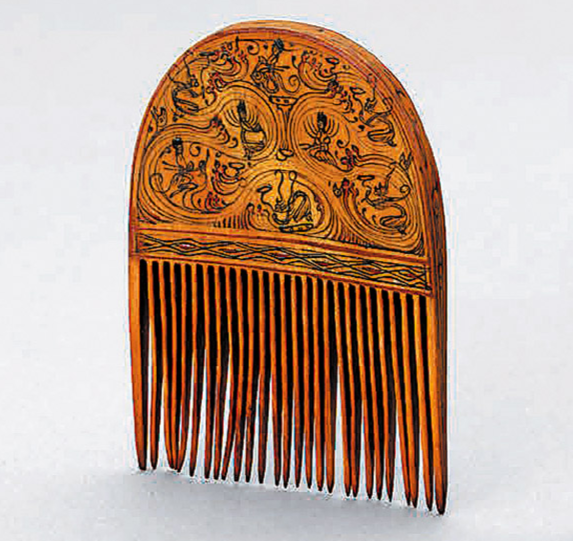
Perhaps unsurprisingly, the exhibition’s most magnificent pieces appear in a section devoted to daily makeup rituals.
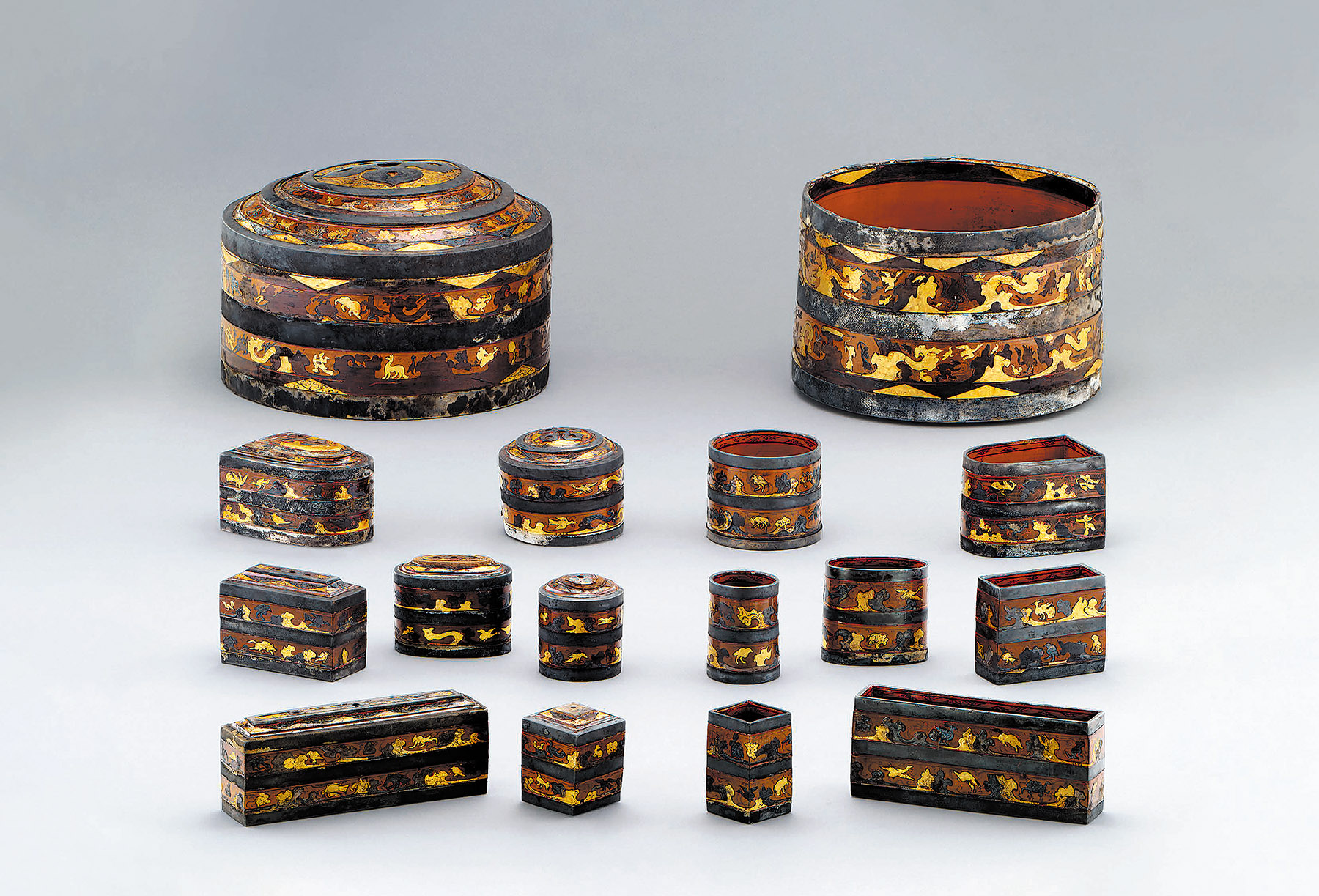
These compartmentalized, silver-mounted lacquer containers are lavishly adorned with gold and silver foil, a decorative choice that Zuo links to the alchemical practices that particularly captivated Han emperors and vassal kings. Excavations of tombs in the surrounding region over the past decades have yielded a wealth of lacquerware for the exhibition.
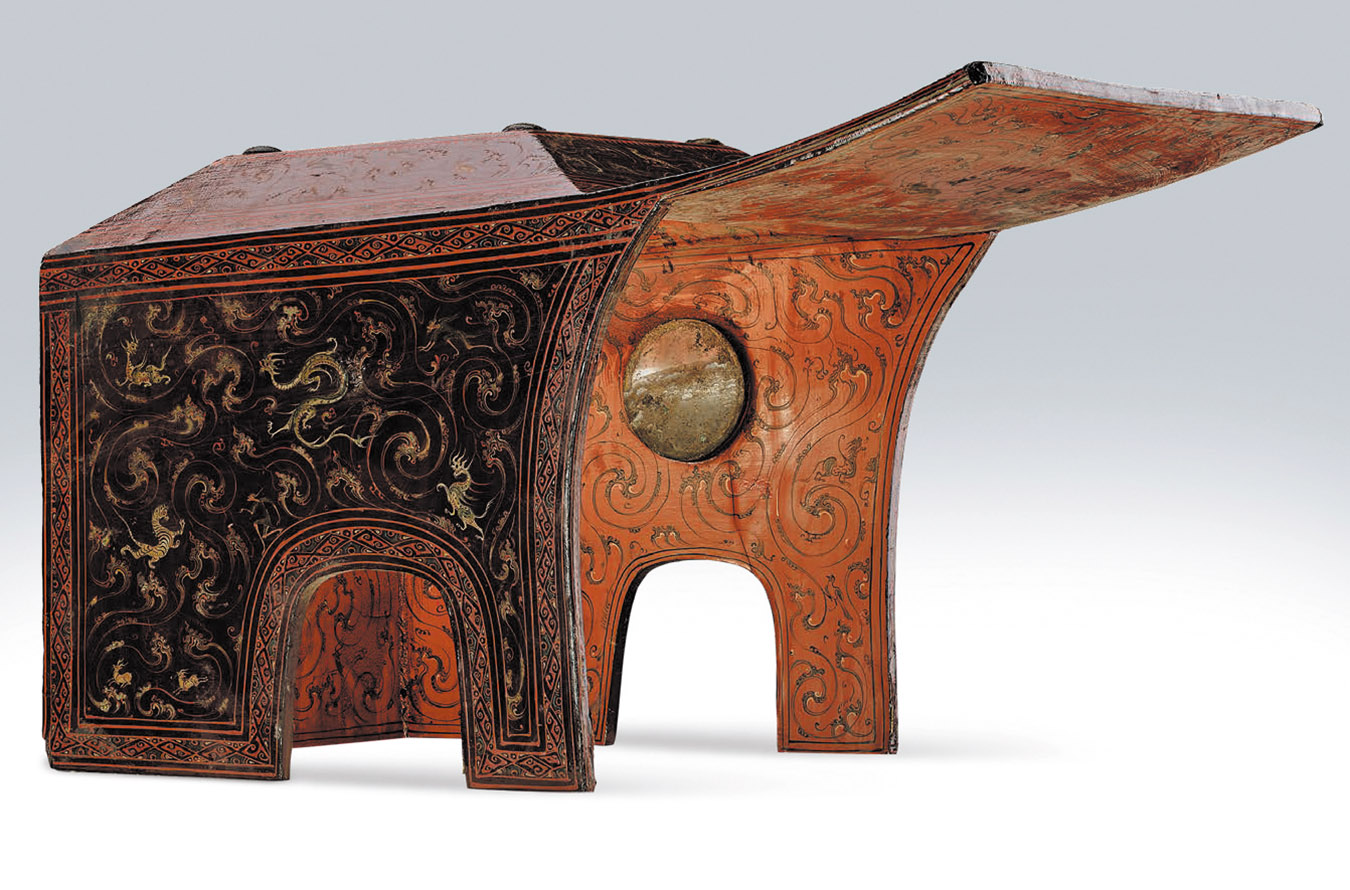
Interestingly, one lacquer container from a male burial held a bronze mirror, several tortoiseshell hairpins and a bronze comb-cleaning brush. Cosmetic practices during the Han Dynasty were not confined to women: contemporary texts record that male palace attendants wore face powder, while archaeological finds suggest that men also used grooming implements.
Elsewhere, this masculine taste for adornment is reflected in a wooden lacquered sword scabbard designed to be worn with jade sword fittings, and a much smaller knife in a lacquered sheath. The latter was not intended for self-defense, but for scraping away errors on the bamboo slips used for writing during the Han Dynasty.
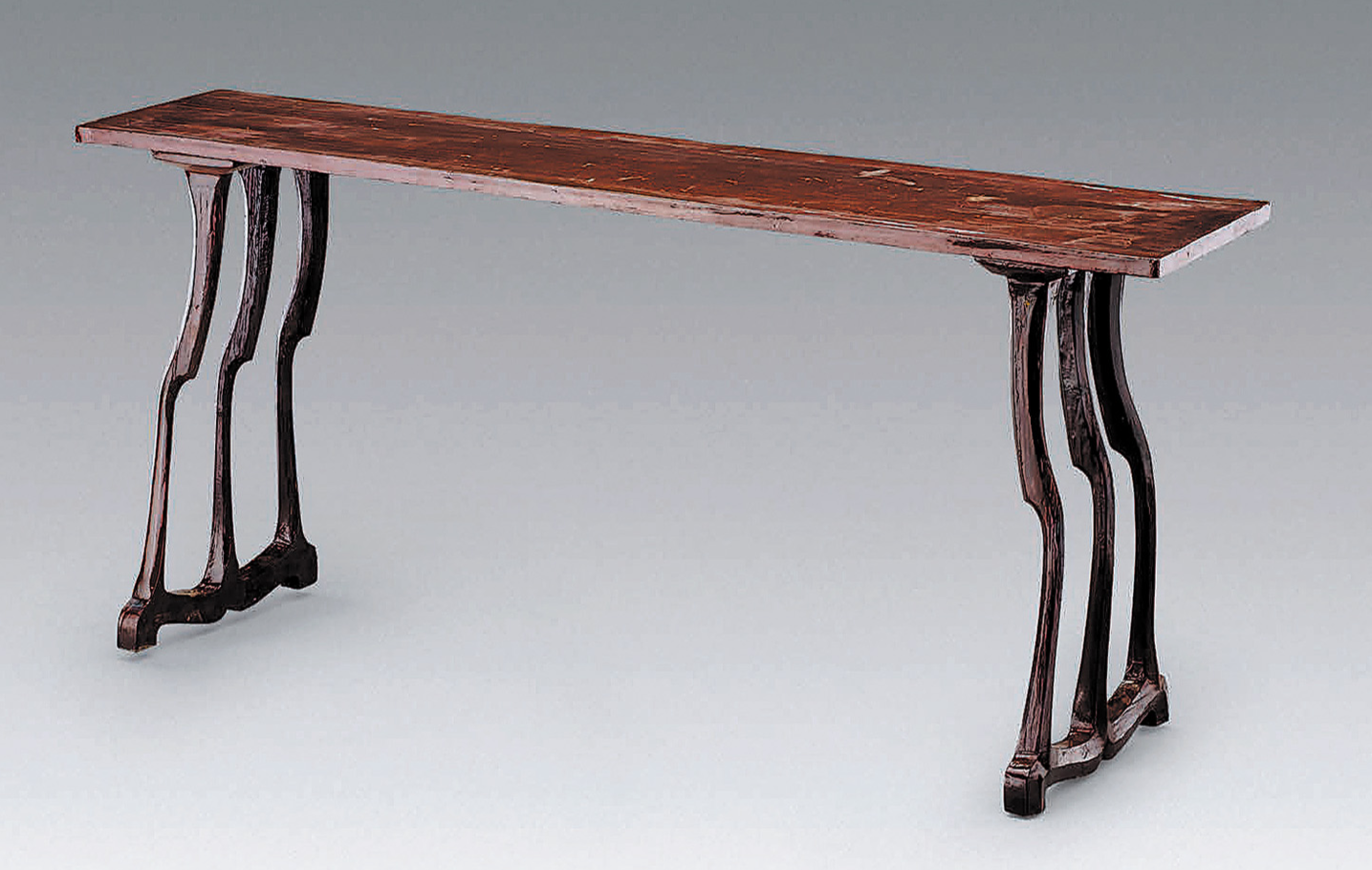
Known as a shudao, or writing knife, it belonged to a world in which practical objects could also convey refinement. Lacquered inkstone boxes and writing tables served similarly cultivated pursuits.
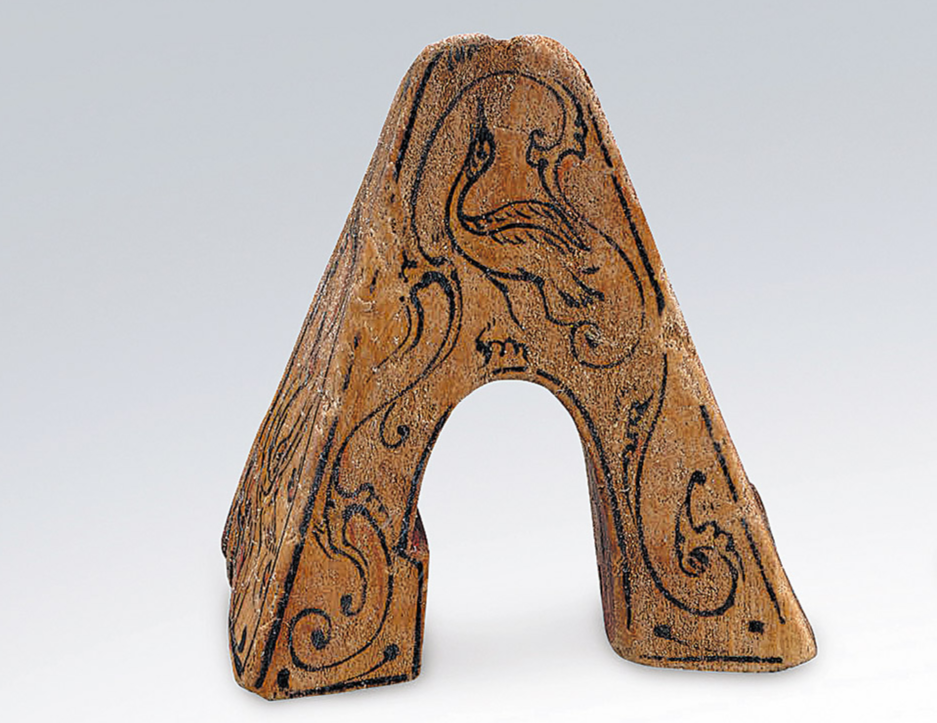
Music was also central to ritual propriety and cultivated life during the Han Dynasty. The exhibition offers a glimpse into the artistry of ancient zither-making through delicate wooden bridges that supported the strings and regulated their pitch. Their lacquer paintings depict animals, while the instrument’s measured rhythms find a visual echo in the sinuous lines of Han lacquerware.
The real and imagined worlds converged in the Zhuangzi, a foundational Taoist text traditionally attributed to Zhuang Zhou (c. 369-286 BC), whose ancestors some scholars believe came from the ancient state of Chu. The text questions the boundaries between self and other, dream and waking, and different states of existence, including life and death.
Zhuang Zhou, who once served as an official overseeing a lacquer grove, filled his writings with fantastical imaginings to explore humanity’s place within nature and to contemplate life and death as phases in a larger process of change.
A founding figure of philosophical Taoism, Zhuang Zhou exerted an enduring influence. More than three centuries after his death, Zhang Heng (78-139), one of the Han Dynasty’s most celebrated polymaths, revisited the philosopher’s vision of life and death in his Dulou Fu (Rhapsody on a Skull).
The work recounts an encounter with a talking skull that refuses Zhang Heng’s offer of resurrection, declaring that in death it has “united with the primordial vitality of the cosmos … with heaven and earth my bed and bedding” — a powerful evocation of an understanding of existence reflected in almost every form of Han Dynasty art, lacquer included.
Contact the writers at zhaoxu@chinadaily.com.cn
