

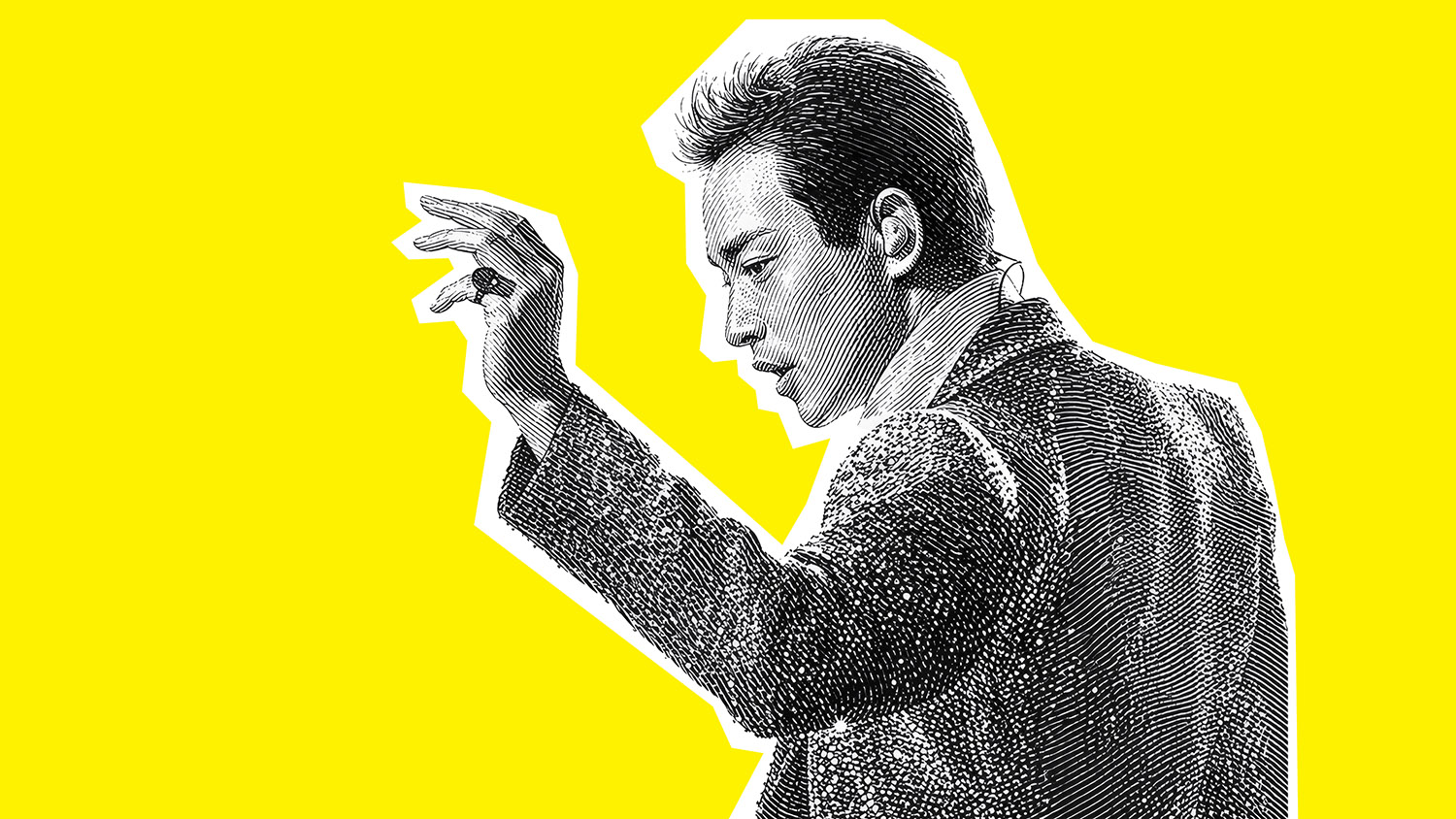
As HK celebrates Leslie Cheung’s 70th birth anniversary through multiple exhibitions, Faye Bradley looks for possible reasons behind the Cantopop star and actor’s enduring legacy.
The golden jacket, sequined top, and purple-striped trousers ensemble is etched in the memory of those old enough to remember Leslie Cheung Live in Concert ’97. For the first time, these and a few other stage costumes worn by the legendary Cantopop star and actor — who died prematurely on April 1, 2003, but lives on in the hearts of the people of Hong Kong and beyond — are on show at the Hong Kong Heritage Museum (HKHM) in Sha Tin.
As one walks further into the museum’s Thematic Gallery, the glitter falls away and something quieter takes hold. The living room of Cheung’s former home has been rebuilt on a full scale, with the sofa, tea table, carpet, and desk he had used.
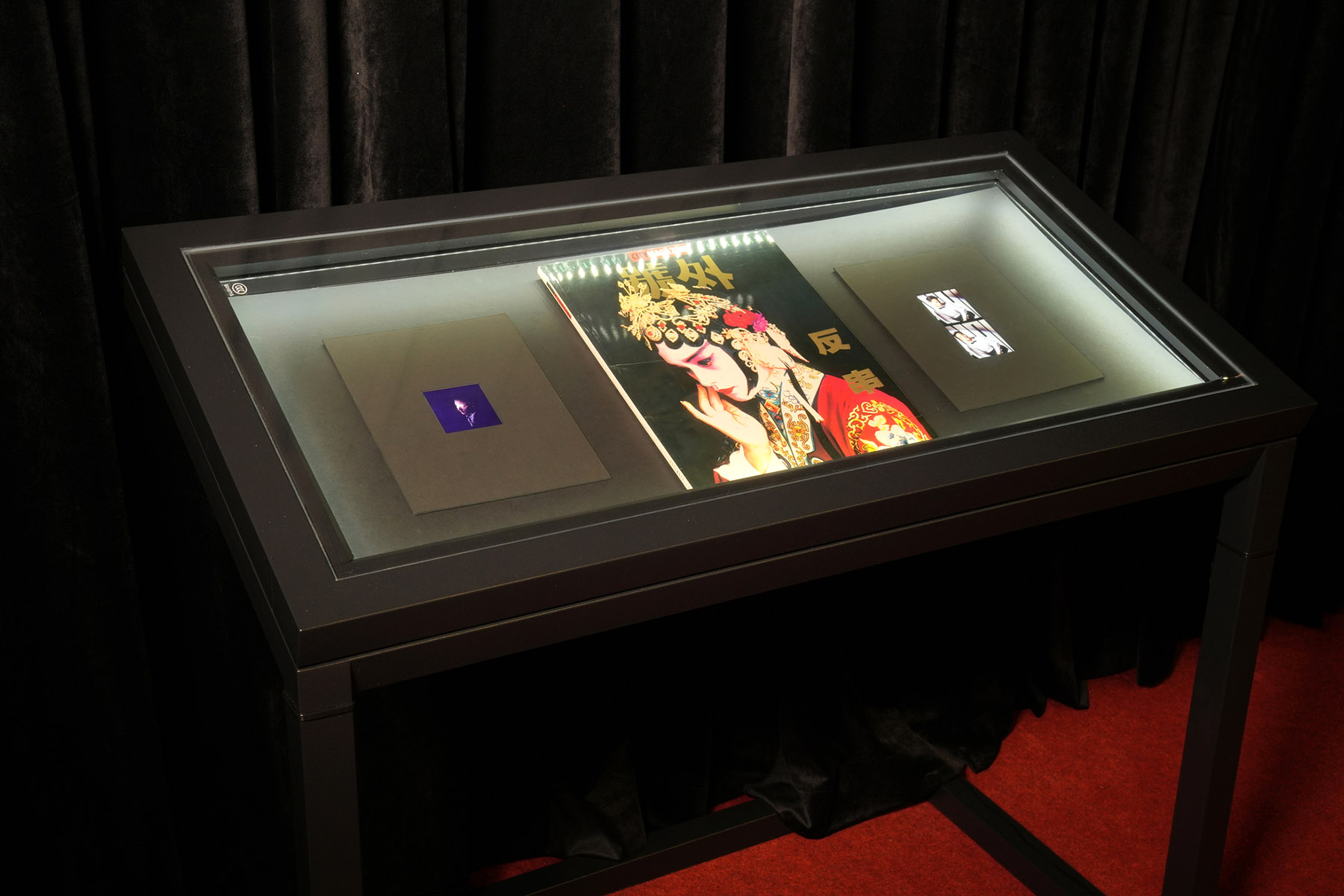
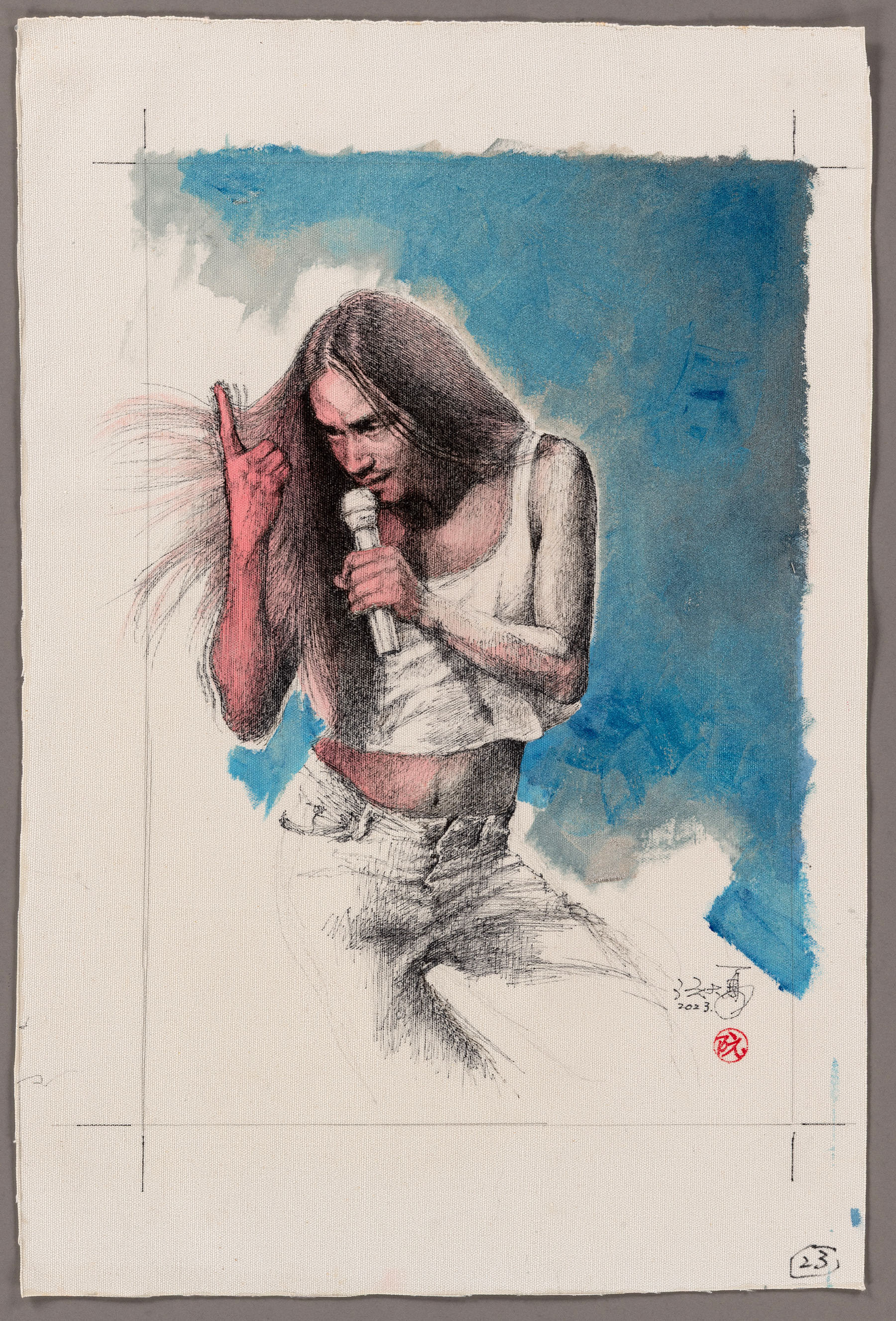
Miss You Much • Leslie 70th Birthday opened on Sept 9, ahead of the star’s birth anniversary on the 12th. The exhibition features more than 300 items — including vinyl records, stage costumes, film posters, photos, trophies, a portrait that harks back to Cheung’s long-haired look from his 2000-01 Passion Tour concerts by Hong Kong artist Yuen Tai-yung, and a card written by members of the fan club Les FANmily to mark Cheung’s first birthday after his death.
READ MORE: Leslie Cheung @ 70
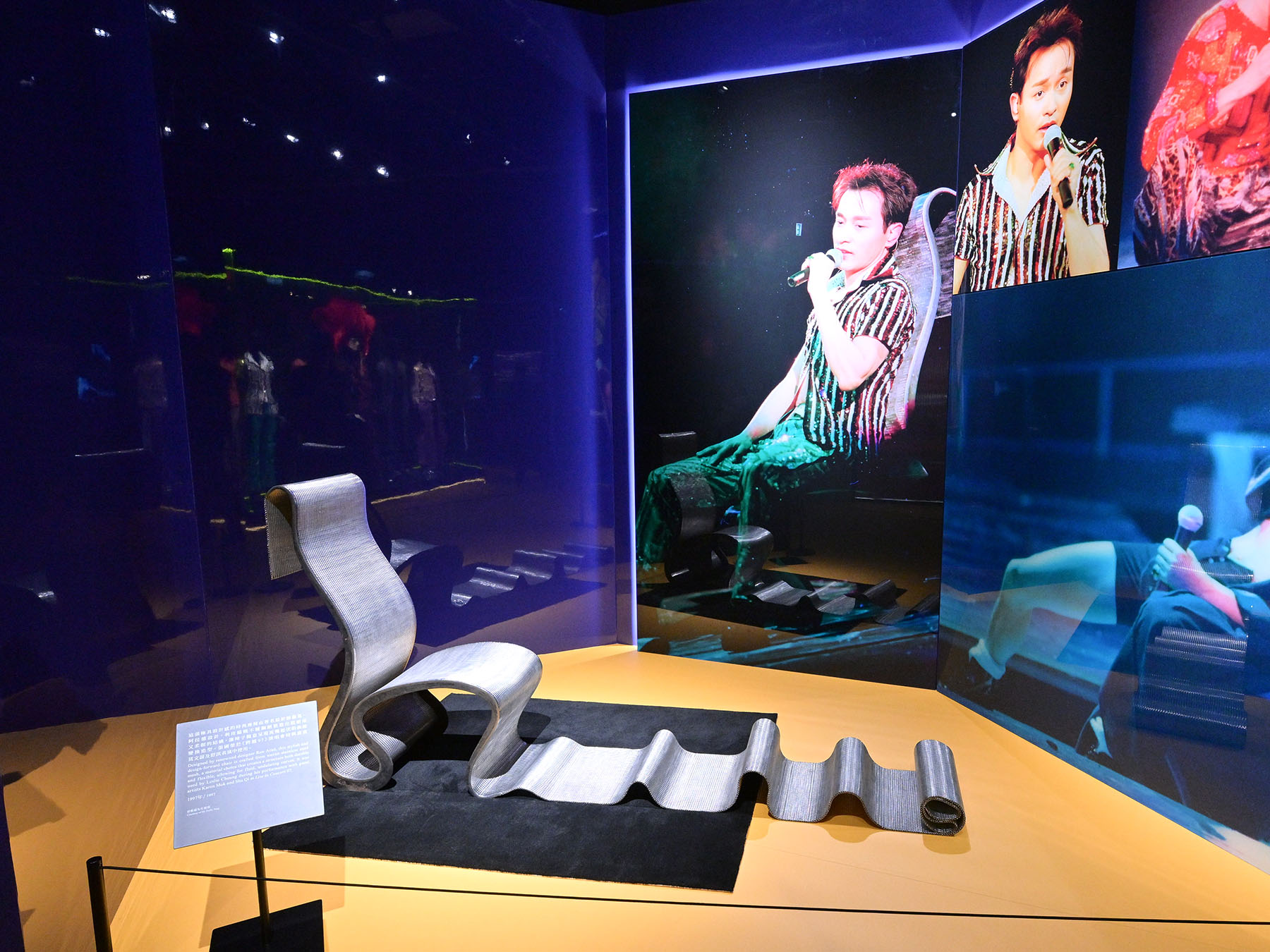
Many of these objects were sourced by Florence Chan, Cheung’s former manager, who also serves as guest curator on the show. Expectedly, some of the star’s personal belongings help illuminate certain intimate details about his everyday life. For instance, there is a woven stainless steel and mesh lounging chair designed by Ron Arad that Cheung took to all his Live in Concert ’97 shows.
“He always enjoyed the stage, and he also enjoyed life,” says Joseph Chow Chi-lim, assistant curator at the museum, calling the exhibition a rare chance to “look at Leslie’s life behind the stage”.
“Through this exhibition, we hope to show that Leslie was not only an idol, but also a genuine friend and creative artist,” he adds.
A myth that outlived the man
More than two decades after Cheung’s death, people are waiting in line to see his desk in the flesh. A sizeable number of these visitors had not been born when he performed last. Chow says young fans from Shenzhen, Shanghai, Hangzhou and other mainland cities have traveled all the way to HKHM to celebrate the star’s birth anniversary.
Several sociologists agree that such enduring devotion to a pop star and actor who has been dead for 23 years is quite extraordinary. Sabrina Yu Qiong, a professor of film and Chinese studies at Newcastle University in England, observes that stardom is usually built on the basis of interviews, reviews and publicity tied to a particular moment in an artist’s life. Seeing that many stars fade away during their lifetime, instances of them inspiring a following more than two decades after their death are indeed rare. Yu says that Cheung is “arguably the most enduring example of posthumous stardom within the history of Chinese-language cinema and popular culture”.
“I would not say that there is simply one fixed or inherited ‘Leslie Cheung’ though,” Yu continues, making a note of how the internet boom in the 2000s and the social- media explosion in the 2010s have helped sustain, and indeed enhance, Cheung’s popular appeal. “His posthumous stardom is therefore both inherited and continually re-created.”
Anthony Fung Ying-him, dean of Social Science at the Chinese University of Hong Kong (CUHK), agrees. “People’s connections to idols, including Cheung, are multilayered. They connect not just with an individual, but with the values, hopes, and memories that he has come to symbolize for the city.”
Icon of courage and kindness
If Cheung were only a symbol of the golden age of Hong Kong films — spanning the ’80s and ’90s — his appeal might have faded by now. “Nostalgia alone cannot explain Leslie’s posthumous fandom,” Yu says.
Younger fans, she argues, recognize their own defiant spirit in the figure of Cheung — his courage “to choose a life that was not tolerated by the mainstream system”. Indeed, Cheung showed extraordinary grit for a mainstream film actor of his time by openly acknowledging his homosexuality and cultivating a stage persona that defied orthodox notions of gender.
Besides, Cheung is remembered as a deeply kind man who treated other people as his equals. Lewis Ho of Studio Incline Ltd remembers how the first time he took Cheung’s pictures for a Valentine’s Day album, the star was not entirely satisfied with the results. But instead of dismissing the young photographer, Cheung spoke to him in a kind tone, explaining what his idea of romance was and how he would have visualized it.
“It was a combination of creativity and respectful discussion,” Ho recalls. “He always patiently communicated and shared his unique creative thoughts with me.”
Yu says Cheung’s honest and empathetic nature “have iconized him — even deified him in the eyes of some fans — and contributed to making him, in a sense, immortal”.
Chow Ka-ho, a lecturer at the Hong Kong Design Institute (HKDI), believes Cheung has transitioned from celebrity to an icon permanently etched in the collective memory. “People revisit him not only for nostalgia, but to reflect on freedom, authenticity and artistic possibility.” He adds that Cheung stands for a period when Hong Kong’s cultural life was marked by “uninhibited creativity, boldness, and international influence”.
Joseph Chow of HKHM concurs. “He remains a rare figure whose art and sense of personal freedom continue to inspire people far beyond Hong Kong.”
However, he believes that Cheung’s musical oeuvre is the bedrock of his enduring legacy. “His songs, such as Monica and The Wind Continues to Blow, became part of Hong Kong’s shared cultural memory, and helped define the golden age of Cantopop in the ’80s and ’90s,” he says. “For many Hong Kong people, his music still represents a proud, creative and confident era in local popular culture.”
On his overseas tours in Japan, South Korea, Malaysia, the United States, Canada, Australia and the United Kingdom, Cheung played an ambassadorial role on behalf of Hong Kong pop.
While people still love those golden oldies, they also like to hear rearranged versions of the same. In September, at the Jazzing Cinema: The Films of Leslie Cheung concerts held at the Hong Kong Fringe Club, the audience was treated to reworked versions of theme songs from his films with jazz arrangements and improvisations. All four standing-room-only shows were sold out.
Reimagining a timeless legend
The Leslie • Grace at 70 exhibition hosted by HKDI is a showcase of how the younger generation has been mining Cheung’s legacy to come up with material for new art. More than 400 students from the institute’s departments of communication design, digital media, and fashion and image design have participated in the project. Among the exhibits are reimagined versions of Cheung’s classic single album sleeves, such as Open The Mail Box, Paper Boat, Rouge, and She Done Him Wrong, created using digital tools.
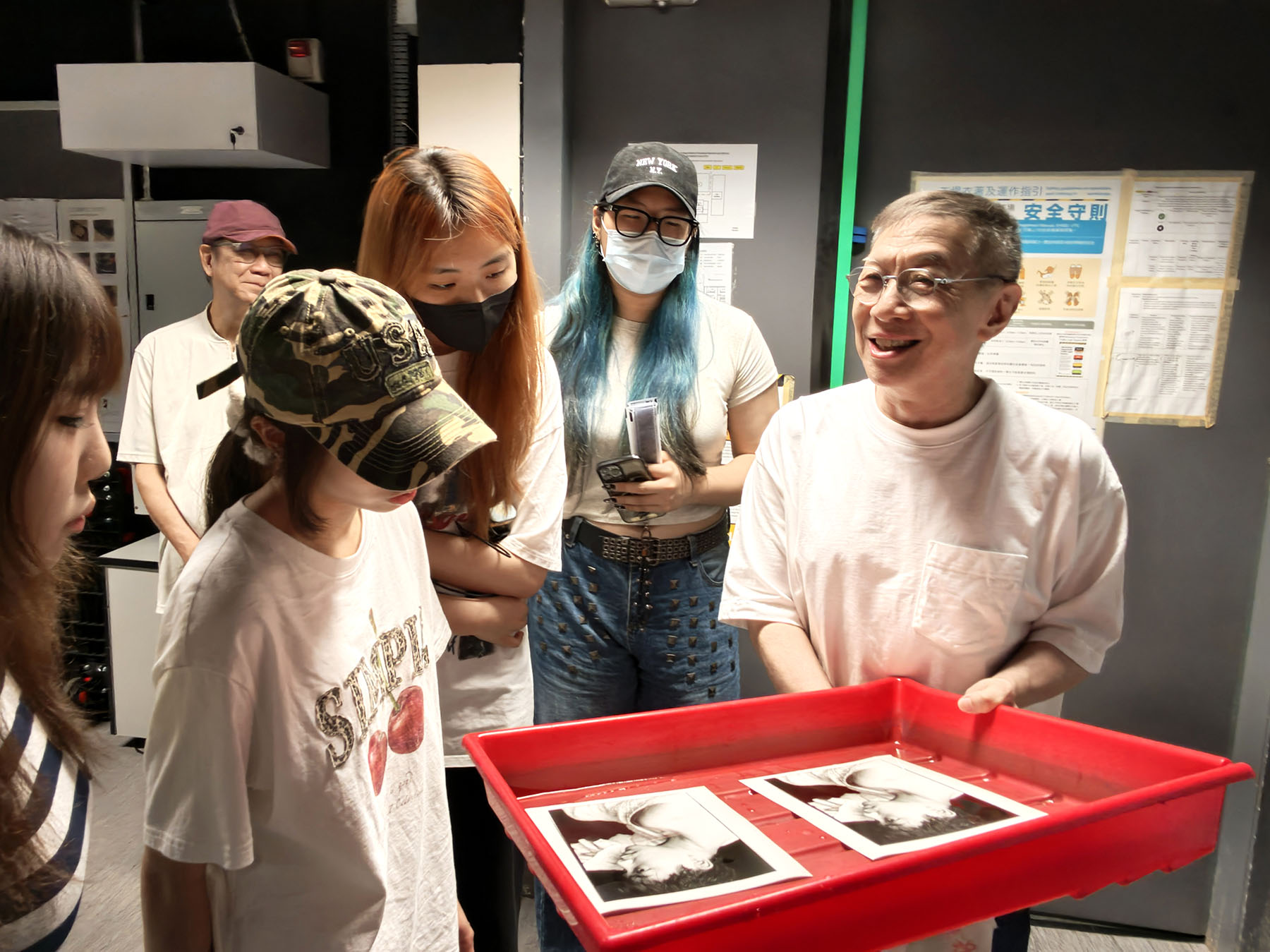
HKDI student Mavis Fok Tsz-ching says that she used to think of Cheung as “a famous figure from an era before my time”. Her interest in the star was sparked after attending master classes and darkroom workshops given by Sam Wong and Ringo Tang. Both photographers had worked closely with Cheung and shared stories of photographing him.
“Cheung wasn’t just a pop icon from history, but an artist with incredible visual awareness, professional dedication, and timeless charisma,” says a now-better-informed Fok. And although her piece didn’t make it to the HKDI exhibition, working on the project has left her with “a greater sense of pride and purpose as a designer”.
Could there be another one like him?
ALSO READ: Miss you much, Leslie
Might Hong Kong be able to produce another Cantopop star and cultural icon who could match up to Cheung’s aura?
Fung of CUHK is doubtful. “The conditions that allowed figures like Cheung to become cross-generational icons have fundamentally changed,” he says. The audience today is split across niche markets and global platforms. “Contemporary artists find it much harder to reach the same level of shared recognition and emotional resonance across generations.”
Chow Ka-ho points out that the way pop culture is consumed has changed. While Cheung and his contemporaries relied on album covers, styling of stage personas, and photos published in magazines to build their personal mythologies, “nowadays publicity visuals are created for fast social-media consumption”. “We’ve lost that space for slow, layered long-term visual storytelling.”
Fok, however, says that an artist of Cheung’s caliber would shine through, no matter which period of time he belongs to. “True cultural significance still comes down to authenticity, bold visual identity, and undeniable talent,” she says. If Cheung were starting out now, “his originality, artistic vision and strong personal identity would still attract audiences across different platforms and regions.”
If you go
Leslie · Grace at 70
Dates: Through Nov 15
Venue: Hong Kong Design Institute, 3 King Ling Road, Tiu Keng Leng
https://hkdi.edu.hk
Miss You Much · Leslie 70th Birthday
Dates: Through May 10
Venue: Hong Kong Heritage Museum, 1 Man Lam Road, Sha Tin
https://hk.heritage.museum
The writer is a freelance contributor to China Daily.
