


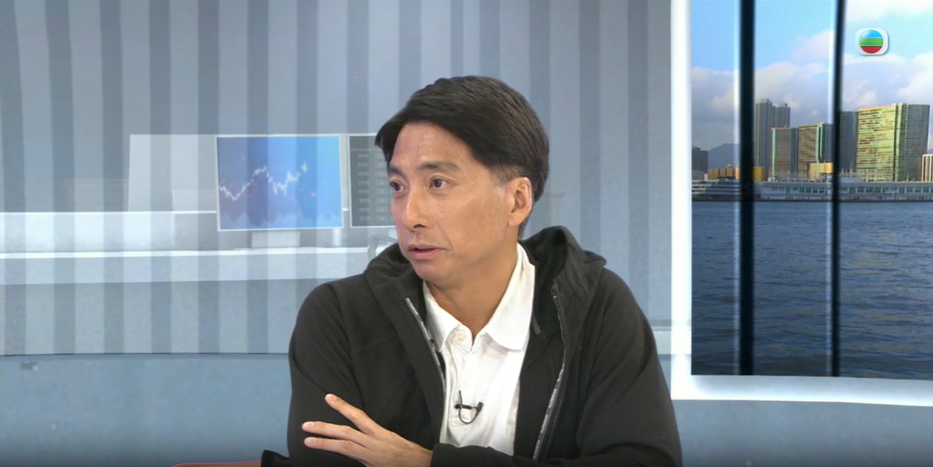
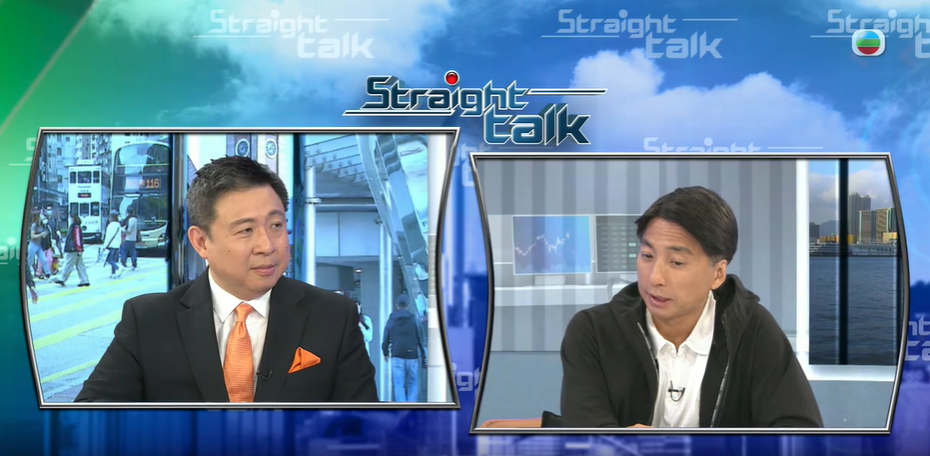
On Straight Talk this week is entertainment entrepreneur Ray Ng, who has more than two decades of experience in shaping Hong Kong’s social and entertainment scene, with multiple establishments in key locations in Central. Ray talks about the state of Hong Kong’s nightlife, what are the challenges and how we can overcome them.
Check out the full transcript of TVB’s Straight Talk host Eugene Chan Kin-keung’s interview with Ray Ng:
Chan: Good evening. I'm Eugene Chan, and this is Straight Talk. With me is Ray Ng, the founder of Stingray Group, and a veteran of Hong Kong's nightlife and hospitality industry. A top tennis player who had competed in Junior Wimbledon and French Open, and also a former lawyer, he left the profession in 1998 and went on to co-create iconic venues, including Volar and Lily & Bloom. With more than two decades of experience in shaping the Hong Kong social and entertainment scene, Ray is known for his energetic personality and keen sense for curating vibrant social experiences that bring people together.
We are going to ask him about the state of Hong Kong's nightlife. Are we still a city that knows how to party? Welcome to the show, Ray!
Ng: Thanks for having me, Eugene!
The journey
Chan: Ray, you entered the nightlife business, so-called, in 2002, after training and practice as a lawyer. I'm sure many viewers are going to ask you, what made you leave law for the nightlife business?
Ng: I think, since my young age, I've always been very sociable, friendly, with lots of energy. I think law was just not for me. So once I had the opportunity to step out from the legal profession, I took that chance to start a first F&B establishment. I think it was a bar with my friends back in 2002.
Chan: So, has it been a great journey?
Ng: Yes. I mean I've had a lot of great memories with friends, making people happy and making money and achieving stuff that I never would have imagined when I was a little child.
Chan: Right. Um, I'm sure many viewers would have identified with what you've said, I mean, because Hong Kong's nightlife was very vibrant. And maybe let's go down trip ... let's go down our memory lane. For the last 20-odd years, I mean, can you just remind us what was the nightlife then, and what are all the places that we used to go to?
Ng: I think … absolutely. If we go back to the origin of the nightlife in Hong Kong, that's like late '70s, '80s, that's when the Hong Kong modern nightlife really began. You know, we had iconic venues like Disco Disco, Canton, Hollywood East, Hot Gossip. Those were all inspired by say Studio 54 in New York.
Chan: Right.
Ng: And then came the '90s, and that's when things started really thriving, I would say. And we saw Club 97, which is named after the handover date. Manhattan, Graffiti, JJ's in the Grand Hyatt Hotel when it was opened, YY opening up. The scene was growing, and it was definitely becoming more diverse.
Chan: Right. I'm sure all the viewers would be like, "So, hey, those are the names or places we've been to."
Ng: Yeah.
Chan: What has changed since then?
Ng: Well, I think like the broader Hong Kong economy, we're all, even our industry is facing a structural change, as opposed to a cyclical. We're all witnessing Hong Kong's transformation from being a British colonial gateway to a part of a Greater China … Greater Bay Area hub.
Chan: Right.
Ng: So, what that means is easier border access to neighboring Chinese cities, and that it creates a huge price difference. So, when it's so much cheaper across the border, the economics are undeniable. And then also the demographics have changed. I think we're moving from, especially our industry, from Western expats to more Asian and Chinese professionals.
Chan: Right.
Ng: A mainland tourist.
Chan: Right.
Ng: And I would say a big part of our consumer base is fundamentally different now.
Chan: Right. So, Ray, when you talk about Canton, Disco Disco, Club 97, I think you have been very modest. You haven't mentioned your own places you created.
Ng: Yeah.
Chan: I mean, Volar and even places like Dragon-i.
Ng: Yeah.
Chan: Those are big names of years, weren’t they?
Ng. Yeah. Well, that was the real golden age of Hong Kong clubbing. I would say from around millennium all the way to 2018, for about 18, 19 years, the Hong Kong nightlife was buzzing. It was the golden age undoubtedly. And I think it was mainly driven by two factors, like the huge influx of expats from like banks, multinational corporations setting up regional headquarters in Hong Kong, and secondly, the China economic boom, you know?
Chan: Yeah.
Ng: And Hong Kong being the gateway, obviously.
Chan: Yeah. When you said that was a golden time, I remember there's actually a Cantopop that actually mentioned Volar in the lyrics.
Ng: Yes. It was written and sang by one of our regular patrons and friends …
Chan: Justin
Ng: … Justin, that's right. Yeah, that's right.
Chan: Another thing that we mentioned when we were sort of preparing for this interview is that you were saying that the proximity of Lan Kwai Fong make it Hong Kong a very special place because you can go from one bar to another in a very sort of small, short distance.
Ng: Yes.
Chan: Do you think Hong Kong Lan Kwai Fong still have that niche compared to the rest of the world?
Ng: Yes. I think this is one of the niche that is nothing ... there's nothing comparable in the rest of the world. So concentrated, all the premium like entertainment venues, all within proximity, and you can hop around easily three to four bars, restaurants, clubs a night.
Chan: Yes.
Ng: Whereas in outside, like in anywhere in, I would say anywhere in the world, like even in Asia, cities like Bangkok or, or Tokyo, LA, you can't … just simply can't do that.
Chan: Right.
Ng: They're too far apart.
Chan: Right, I think that's why… we had Alan Zeman here a couple of times. Yes. He's the father of Lan Kwai Fong…
Ng: Yes.
Chan: ... and I'm sure you know him very well.
Ng: Yes.
Experience through SARS, protests and COVID
Chan: So, when you're talking about Hong Kong nightlife, a lot of people say that Hong Kong was a city that we don't sleep, but things have changed, things have evolved, and with everything that has happened, now people think that there's no more nightlife. Do you agree?
Ng: No, I mean, there's still a very vibrant nightlife, but I think the fundamentals have changed. Now, it's main… Well, I mean, that's driven by a few main factors. I mean, there was an expat exodus post-COVID. A lot of the nightlife, core nightlife consumers have left Hong Kong and haven't come back. And then there's the travel north phenomenon.
Chan: Yes.
Ng: The massive spending power leaving Hong Kong every weekend, right?
Chan: Right.
Ng: So, that affected the nightlife a lot. And then the tourism gap, with a quality problem now because the composition is changed now. We used to have much more high-spending Western expats and business travelers coming to spend … stay longer and spend on nightlife.
Chan: Right.
Ng: Now, it's more like day travelers, budget-conscious mainland tourists, and the spending per capita is a lot less.
Chan: Right. And, so you're saying that Hong Kong still have a buzzing nightlife because you are there, but compared to our golden days, with all the factors you mentioned, things have quietened down. But I suppose that's a, a worldwide phenomenon. How would you compare Hong Kong now to big cities like, I mean, like Bangkok, Seoul, London, or even Shenzhen? How do you see Hong Kong's attraction as Lan Kwai Fong? Because we have a lot of people come up and and take pictures, and, being a Central and Western District councilor, we do have to spend a lot of time in thinking how to deal with the traffic, with the police, making sure there is ... people will be able to commute there and be safe. How do you comment on that?
Ng: I think Hong Kong is definitely still attractive. It has a lot of great venues, design and music, music-wise. And with a lot of, like, great restaurants around, it drives the whole economy.
Chan: Right.
Ng: People going out dining, and afterwards they go out. And nightclubs constantly bring in guest DJs from overseas ...
Chan: Right.
Ng: ... and drive a lot of traffic.
Chan: Right.
Ng: From local and even tourists, just to come in and enjoy the night.
Chan: Yeah. Recently, I had some cousins from Australia. We had dinner in Central, and we ... and actually going to your rooftop bar, Faye, and then we had a good time. But things have changed a lot because I, I personally haven't been to Lan Kwai Fong that regularly, but then you can see the footfall is still there, the vibe is there, and it's different now. I mean, it's not just drinking alone.
Ng: Yeah. I mean, now the younger generation is drinking significantly less.
Chan: Right.
Ng: The trend in even older generations. And we're living in an experience economy now. And young people, they still want to go out and meet friends and connect, but they're just doing it differently, I guess.
Chan: Right. I see.
Ng: They care more about the music, the vibe, and the authenticity of the experience.
Ng: So, I think, I mean, you look back in the days, our generations, we just want to go and get drunk …
Chan: Right.
Ng: ... to be honest. We don't care so much about the music, which was more, like secondary …
Chan: Right.
Ng: ... to the whole experience.
Chan: Or to meet girls or guys as well.
Ng: Yeah, yeah. And today's youth, I think they're more discerning about the sound, whether it's like K-pop, like girls pop, hip hop, electronic, tech house, minimal. So they want venues that understand and curate for their specific needs. So, yeah.
Chan: Right. Ray, let's go for a short break now. We'll be right back with more Straight Talk.

Chan: Welcome back, viewers. We have been talking with Ray Ng about the Hong Kong nightlife and how it has changed over the years, particularly more recently, and where it is heading. So, Ray, I think you mentioned that, a lot of things have changed. Actually, it may be a world pattern that people are drinking less, people may be going out less, and but Hong Kong still has a niche of being closely connected, especially Lan Kwai Fong, where the all the pubs are very close together.
Ng: Actually, I think one of our pubs in the world. It's, it's ranked very high up in the world right now. Anyway, there were like three major shocks to Hong Kong's nightlife from my point of view. That's from the SARS, the social unrest, and then COVID.
Chan: I mean, you have survived all of them, and which of those periods do you find the most difficult for the industry and yourself?
Ng: I think COVID. I mean, SARS was pretty short-lived …
Chan: Right.
Ng: … only a couple of months, so it wasn't that hard. I think COVID is definitely the hardest because it was long.
Chan: Right.
Ng: And Hong Kong was shut down …
Chan: Yes.
Ng: … probably longer than anywhere else in the world, right? Or one of the longest.
Chan: Yes.
Ng: So, yeah, it's probably the toughest. Yeah.
Chan: Yes. So, what did these so-called crisis teach you about the resilience of the nightlife industry in Hong Kong?
Ng: I think people, you know, like people still always like to connect with ... socializing is a very important element of us, right? So, as soon as there's chances of people getting out, they'll come out and socialize and, you know, interact, and obviously listen to music. It's an important part to relax, you know, also to enjoy the night.
Chan: Yes. Apart from going for a good time after dinner, as I mentioned in the first part, do you get many sort of surprise parties or even marriage proposals or even anniversary celebrations in your industry?
Ng: Some. Some, yeah. We have hosted some wedding parties, wedding after parties. We have had a lot of marriage, not getting married there, but married couples meeting …
Chan: Okay.
Ng: … for the first time.
Chan: Right.
Ng: ... in Vola, and also here in other venues in Hong Kong too.
Chan: Yes.
Ng: So that becomes very memorable, even to this day, even they have their kids.
Chan: Right.
Ng: You know, "Oh, we, we ... Me and mom, we met in this place." Let's say like Vola, Dragon-i, you know, like ... So that happens …
Chan: Right.
Ng: ... quite a bit.
Chan: Since you mentioned that, I can remember my sister and I when we were in the teens, we went to Cantonese over in Tsim Sha Tsui …
Ng: Canton, yeah ...
Chan: … and we saw an uncle with a nice lady sitting there, and then we were wondering whether we should say hello. Actually, there was auntie as well. So, it's a very exciting place with a lot of memories. So, right so Hong Kong has survived all these years, right into today, 2026. What worries do you have about the industry today?
Ng: I think the industry today, it's changed obviously. We're now more ... We're not, not ... We're less, especially, our industry is less expat driven.
Chan: Right.
Ng: So, a lot of like I said, Asian, Chinese professionals and mainland tourists also, so we have to adapt- Right.
Chan: ... basically and reinvent ourselves. But would you say that the mainland visitors or even more local clientele, can they replace the international clientele that you traditionally depended on?
Ng: I think we have to groom them.
Chan: Right.
Ng: I think culture-wise, it's a bit different the way they, the way they spend or the way they enjoy the night in a club or in a restaurant.
Chan: Right.
Ng: I would say they're a little bit less flamboyant…
Chan: Right.
Ng: ... than our Western
Chan: Right.
Ng: ... how they used to be. So, hopefully one day they will get there.
Chan: Right. How about this? We got the viewers that regularly give me feedback about they enjoy watching the show, and I'm sure if I'm going to ask you to entice, or I would say to invite some of our viewers to places like your, you know, your own place or other joints, what would you say to them? When should they go and why should they go? After dinner?
Ng: Yes, definitely after dinner, around midnight. You know, like, if you like music.
Chan: But that may be too late for many people.
Ng: Yeah. I mean, even before midnight, we have the great rooftop with a great view of the harbor, the harbor view, so can enjoy a good drink, we even start serving a lot of non-alcoholic drinks …
Chan: Right.
Ng: ... like to cater for the younger generation.
Chan: Yeah, but you know, most people nowadays, they have dinner at 6 or 7:00. They may finish at 8 or 9.
Ng: We open at 8.
Chan: Right. So that means people can be there earlier.
Ng: Yes.
Chan: That may be a new way of enjoying Hong Kong, isn't it?
Ng: Yes. Yes, definitely.
Chan: Yeah. So, given the world has changed so much, we have talked about that in the first half. Hong Kong has, still has an attraction. How you see Hong Kong as a city if you're going talk to ... If all, if us going to talk to a lot of visitors, or when we're overseas, what shall we say about Hong Kong's nightlife?
Ng: I would say Hong Kong nightlife is probably one of the best in the world. You know, like you can go to different bars on the same night with different music style. So, you can definitely find what you like.
Chan: Right.
Ng: You know?
Post-pandemic reality
Chan: Yes. You also mentioned that after the post-pandemic, there's a term that has come up to our dictionary called the “revenge clubbing”. Do you still see that happening? Is it still sustainable?
Ng: That happened probably right after we opened up, 2023, right? For maybe about less than a year, from what I remember.
Chan: Yeah.
Ng: There was a lot of revenge clubbing, revenge drinking. But then it dropped. I think the trend ... I think also the global wellness trends started to explode. People started to be more like health-conscious, drinking less.
Chan: Right.
Ng: And that's why we start rolling out like a non-alcoholic…
Chan: Yeah.
Ng: ... program.
Chan: Right. Another thing you mentioned is, apart from the expat- expatriates not 100 percent, they haven't fully returned to Hong Kong, another factor that you mentioned is the going north phenomenon. So, what does Hong Kong still has in terms of a niche as compared to a nightlife in Shenzhen? I mean, I know they'll be cheaper for sure because of the cost structure. What would you say is Hong Kong's niche compared to Shenzhen?
Ng: I think that the Shenzhen experience is a lot cheaper, but I think it still hasn't reached the standard of Hong Kong yet.
Chan: Right.
Ng: Hong Kong, it still has that niche, the music style, even the food quality. Yeah, I think it's still better I would say.
Chan: Yeah, I was ... I mean, I asked you this question earlier. If you were a 25-year-old visitor choosing between Hong Kong, Bangkok, Seoul and Shenzhen for weekend or nightlife, why should they choose Hong Kong?
Ng: I think our offering. Our offering is still better and more variety.
Chan: And definitely safe, isn't it?
Ng: Yes. Hong Kong is definitely one of the safest cities also, you know?
Chan: Right. Yeah, because when we were younger, at younger days, we still saw bouncers at the front of those the joints. Are they still there, or do they ... Is there still a need for it?
Ng: Yes, most clubs still have bouncers, to keep the venue safe and in order.
Way forward
Chan: I think we’ve come to sort of the last part of the show now. After like 20-odd years in the business, are you still optimistic about Hong Kong's nightlife?
Ng: Yes. I mean, I've spent three-quarters of my adult life in Hong Kong, and I rarely meet people that really dislike Hong Kong. I think Hong Kong still has great energy and great fundamentals. And you can see the government rolling out some driving engines …
Chan: Right.
Ng: … to help the economy.
Chan: Yeah. If you're going to tell our government officials who regularly watch the program, what needs to change for Hong Kong, maybe from the government's policy-wise, to make Hong Kong as one of Asia's great nightlife destinations again?
Ng: I think what they have already been doing is great. Like more sports events, music festival events. I think more venues are coming up, outdoor venues. So, there is more choices for operators to choose. And if they keep doing that, I think it will be … it has a very bright future again.
Chan: Right. Yeah. So, Hong Kong needs to reinvent itself, and the government's doing the right thing.
Ng: Yes. It's all ... I think it's definitely on the right track.
Chan: Right. Yeah. And also, I think all of us should go out more after dinners to …
Ng: Yeah.
Chan: ... to help support the industry …
Ng: Yes.
Chan: ... and have a good time.
Ng: And to attend the sports events and music festivals, you know, that really drives a lot of tourism also, and good energy for the whole of Hong Kong.
Chan: Right. I'm afraid we have to wrap it up now. And thank you, Ray, for sharing your insights with us. Hong Kong has never been short of energy. The challenge now is not to recreate the past, but to create a vibrant nightlife that reflects Hong Kong of today and keeps our city alive after dark.
Thank you for watching Straight Talk. I'm Eugene Chan, and goodnight.
