

HSBC Holdings Plc disappointed investors expecting a more bullish outlook from the bank on rising interest rates, while reporting lower-than-expected profit.
Pretax profit rose 32 percent to $9.6 billion in the period, the London-based lender said on Tuesday, falling short of the $9.7 billion company-compiled estimate. The bank reported $11.9 billion of banking income from interest, missing estimates.
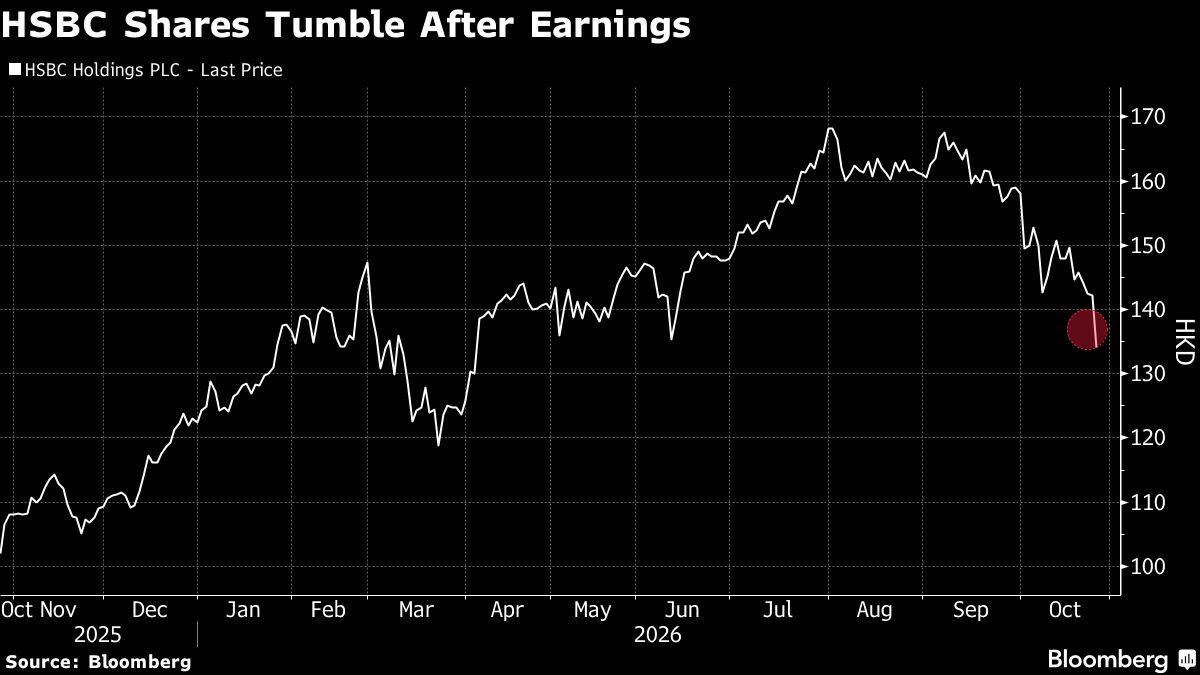
HSBC shares declined as much as 7.5 percent in London, making the stock the worst performer on Tuesday on the Stoxx Europe 600 Banks Index. In Hong Kong, shares similarly dropped after the results. Its London shares are still up 8.4 percent this year.
Chief Executive Officer Georges Elhedery has been working to overhaul HSBC since his appointment in 2024, shuttering several business lines and cutting thousands of jobs. The bank still is largely dependent on shifts in interest rates, particularly in the UK and Hong Kong, given its large deposit base.
With central banks around the world set to hike in the coming months, investors had been watching whether HSBC would lift its guidance around interest income, as it had in May.
RELATED ARTICLES
- HSBC moves to Wall Street bonus model, cuts fixed-pay deals
- FT: HSBC mulling sweeping job cuts across UK wealth business
- HSBC cuts back $38,000-per-kid school perk for some HK bankers
- HSBC scraps $25,000 members club perk for Hong Kong bankers
- AI deals are getting more difficult, HSBC’s head of banking says
“In a high interest rate environment, there’s sometimes a market expectation that we upgrade guidances or we change our targets,” Chief Financial Officer Pam Kaur said on a call with journalists on Tuesday discussing the results. HSBC reiterated that it’s expecting at least $46 billion of banking net interest income for 2026.
Analysts said net interest income was a weak point for the bank in the third quarter, with Goldman Sachs Group Inc analysts Chris Hallam and Melissa Kuang calling it “slightly disappointing.” They added that “benefit from the improved rate backdrop may be less than we had anticipated.”
Consensus estimates on net interest income for 2027 and 2028 might now be “overly ambitious,” said analysts at Jefferies including Joseph Dickerson and Theo Massing.
Earnings in the third quarter were helped by inflows into its wealth business and lower-than-expected credit losses. HSBC’s wealth customer inflows jumped $41 billion in the reported period from a year ago, compared with a $25 billion rise in the second quarter.
HSBC also announced a $1 billion share buyback, the second consecutive quarterly move for the Asia-focused bank, which resumed capital returns over the summer following an earlier pause linked to its $14 billion acquisition of Hang Seng Bank.
The lender has over the past couple of years radically overhauled its business following the appointment of Chief Executive Officer Elhedery in September 2024. Under his leadership the bank has shuttered, sold or merged several business lines, cutting thousands of jobs as it looks to refocus its operations on its core Asian markets.
Costs are an area of focus for investors and analysts, with HSBC saying in August that it would consider boosting its bonus pool if the business’s strong performance continued into the second half of the year.
For the quarter, the bank said operating expenses fell by 12 percent to $8.8 billion, including a “favorable net impact” of $1.4 billion from the non-recurrence of legal provisions a year earlier. Excluding one-time items, expenses rose mainly due to inflation, higher planned technology spending, and the timing of performance-pay accruals, partially offset by savings from the restructuring, the bank said.
