

The domestic agriculture sector has shifted from exporting raw commodities to building value-added products and brands. Hong Kong, with its trade links and professional services, helps propel mainland goods onto the world stage. Wang Zhen reports from Hong Kong.
Editor’s note: From energy-computing to AI, this series has followed China’s shifting global value. The third installment looks at premium agricultural exports — and why Hong Kong’s certification and trade networks matter.
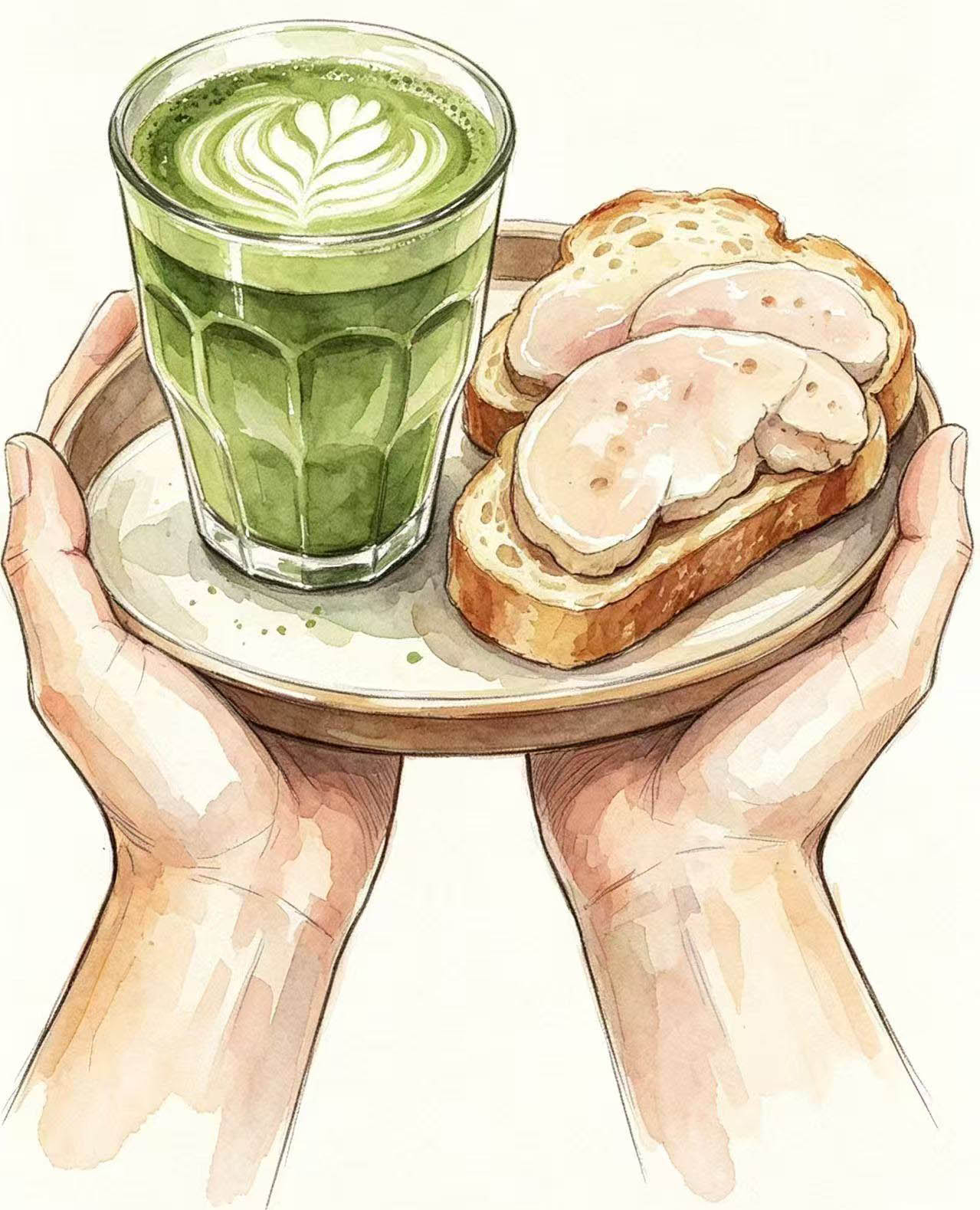
Adecade ago, few in the global matcha market would have ever heard of Tongren — a traditional green tea producing region tucked away in the mountains of Southwest China’s Guizhou province. Today, the “gateway to eastern Guizhou” stands as a major production base for high-grade matcha, shipping thousands of metric tons of the vibrant green-tea powder to cafes and food giants around the world.
Driven by a global appetite for matcha, the nation’s output reached 12,000 tons last year, accounting for 60 percent of the world’s total, according to the China Tea Marketing Association.
READ MORE: HK forum on international tea culture to spotlight global push for Chinese tea
Tongren’s story is merely a microcosm of a far broader shift. The Chinese mainland’s agricultural exports are seeing a rapid evolution — moving from low-cost shipment of raw commodities to high-standard and value-added products and brands.
Gateway to global markets
As a hub for international standards certification, global trade networks and professional services, Hong Kong has become a key springboard for premium mainland agricultural products reaching world markets.
“Last year, our total matcha production hit 2,500 tons, with roughly 1,300 tons exported,” says Xie Haodong, marketing director at Guizhou Tongren Gui Tea Group which had previously focused on exporting just raw Chinese green tea leaves. “Pivoting to matcha has opened the floodgates for us. Our products are now sold in 58 countries and regions.”
However, going global is far from easy for companies, given strict international food safety standards. Yet, Chinese matcha producers have raised the bar by modernizing the entire supply chain — from soil management and tea cultivation to final processing — ensuring their operational benchmarks can comfortably meet global requirements.
Tea plantations in the tea-producing region have installed solar panel arrays to generate clean power, upgraded matcha grinding machinery and lifted production standards. The improvements have enabled Chinese matcha to be supplied at scale under rigorous quality control, earning international agricultural export certifications, such as Europe’s SGS and AIB in the United States. Equipped with these credentials, Chinese producers have successfully cleared trade barriers and accessed overseas markets.
Chinese matcha has quietly integrated into the supply chains of global food and beverage giants, says Xie. Joining forces with industry leaders like Switzerland’s Nestle; Spain’s largest supermarket chain Mercadona; and US ice cream giant Dairy Queen, Gui Tea has supplied matcha, leading it to evolve from a low-cost raw commodity into a high-value food and beverage ingredient.
Beyond that, Xie says growing from a “silent supplier” to an industry giant isn’t their ultimate goal. To transform into genuine brands, Chinese enterprises must develop channels to gather experience directly from overseas consumers and build up localized capabilities.
“Hong Kong is the primary hub and springboard for our globalization strategy,” he says. By establishing a division in the special administrative region and teaming up with the city’s retail chains, Guizhou Tongren has swiftly absorbed global business expertise, gathered direct market feedback and designed tailored products for regional tastes. The SAR’s rich network of trade fairs also offers broad global exposure. “We’re ready to take our own brand global.”
“Several Hong Kong associations can help companies with product positioning, packaging and promotion in overseas markets,” says a spokesperson for Hong Kong’s Environment and Ecology Bureau. The SAR authorities and trade associations encourage enterprises to leverage the city’s established reputation for food safety and quality as a mark of assurance.
Eric Chan Kwok-ki — chief secretary for administration of the HKSAR — says for premium mainland agricultural products to expand successfully overseas, they require an efficient international trade platform, professional marketing services and seamless alignment with global standards — qualities that showcase Hong Kong’s core advantages. “By utilizing the city as a springboard to ‘go global’, mainland companies can achieve a multiplier effect without having to build their overseas presence from scratch,” he says.
Foie gras leap
A similar story is unfolding in eastern China’s Shandong province with another premium ingredient — foie gras. According to investment research firm CICC, the nation’s annual foie gras output exceeded 10,000 tons last year, accounting for about 45 percent of global production.
High-quality raw foie gras has drawn strong international interest. “In mainstream global markets, demand for raw foie gras is typically five to 10 times that for cooked products,” says Ma Lijun, general manager of Shandong Chunguan Food Co.
However, exporting raw foie gras — a specialty food made from duck or goose liver — involves elevated quarantine standards and rigorous supply-chain management. To enter premium world markets, Chinese producers have invested heavily in standardizing farming practices and feeding protocols, upgrading production facilities and achieving full traceability from gosling hatching to advanced processing.
For high-grade foie gras processing, Ma says her company has spent nearly 200 million yuan ($29.9 million) on factory upgrades. One innovation is low-temperature sterilization techniques to achieve exceptionally high aseptic standards without compromising the liver’s velvety texture or rich aroma.
Yet, despite matching or exceeding top global benchmarks in both quality and technology, Chinese exporters still face a dual challenge in market perception and distribution channels. How to gain acceptance among global fine-dining and high-end retail supply chains remains a pressing hurdle for the industry.
International trade fairs offer one path, but Ma points out that trade shows yield limited results for brands with low initial awareness, requiring proactive groundwork by industry associations equipped with global networks and professional services.
With the help of Hong Kong business chambers and industry associations, Ma took her company’s foie gras to an international agricultural exposition in Malaysia in September.
“What’s the actual market demand in Malaysia? What certifications are required for entry? What are the specific quarantine procedures and inspection standards?” According to Ma, companies venturing into trade shows often find themselves bewildered by such complex compliance hurdles.
This time, however, Hong Kong’s business chambers, having conducted deep market research in Malaysia for two years, gave her a comprehensive understanding of the Southeast Asian nation’s policies and consumer demand.
Through the chambers’ mediation, Ma established direct contact with Malaysia’s quarantine and inspection services, gaining clarity on the precise steps and regulatory road map required to enter the market.
Ma’s company currently produces about 2,000 tons of foie gras annually, with roughly 100 tons supplied to the Hong Kong and Macao SARs. In August, the company made its inaugural shipment of about two tons of premium raw foie gras to Hong Kong.
“During blind taste tests in Malaysia, our foie gras won exceptional praise,” says Ma. However, the lack of recognized international credentials has prevented the product from entering Malaysian retail and dining channels.
Seal of trust
Ma hopes to secure Hong Kong’s quality agricultural product certification this year. She says the city’s certification system enjoys high global credibility and widespread cross-border recognition, and sees it as a vital passport for Chinese raw foie gras to overcome regional bias and expand into global markets.
“Hong Kong has a mature ecosystem of testing, inspection and certification services. Accredited laboratories and certification bodies in Hong Kong operate under internationally recognized standards,” says Helena Chiu Yuen-ling, who chairs the Hong Kong Exporters’ Association. “The reports and certifications can help enterprises demonstrate compliance and quality assurance, subject to the specific requirements of each target market.”
She says Hong Kong can serve as a credible “first market” for mainland brands, supporting exporters across key areas, including compliance management, market access, buyer matching, logistics and international marketing.
“Building a track record in Hong Kong’s open and highly regulated market can help enterprises better prepare for entry into international markets,” says Chiu.
“Exporting Chinese agricultural products is increasingly shifting toward a strategy of ‘winning on quality and capturing brand premiums’,” says Hong Kong lawmaker Steven Ho Chun-yin.
ALSO READ: Food Expo ends on high note as HK, mainland deepen agricultural and food ties
Imports of deeply processed and high-value-added ingredients from the mainland into Hong Kong are surging, he says.
Mainland agricultural exports create commercial opportunities for Hong Kong in areas like testing and certification, branding, intellectual property protection, and multimodal logistics, says Ho. This booming trade, in turn, is encouraging Hong Kong to accelerate the enhancement of its supporting services.
“Mainland agricultural products entering Hong Kong often lack dedicated, long-term spaces for display and trading. They rely mostly on annual trade shows like the Food Expo, which have short cycles, high costs and limited opportunities for in-depth negotiations with overseas buyers,” Ho adds.
He proposed that Hong Kong replan its market spaces to offer long-term display and trading platforms for mainland agricultural goods.
He says Hong Kong faces a shortage of high-end cold chain and specialized warehousing capacity.
“Hong Kong should position itself as a comprehensive global springboard, integrating five key functions — a station for certification, branding, financing, legal services and distribution. By helping mainland agricultural products expand overseas, Hong Kong can further consolidate its status as a global trade hub.”
Contact the writer at akirawang@chinadailyhk.com
