

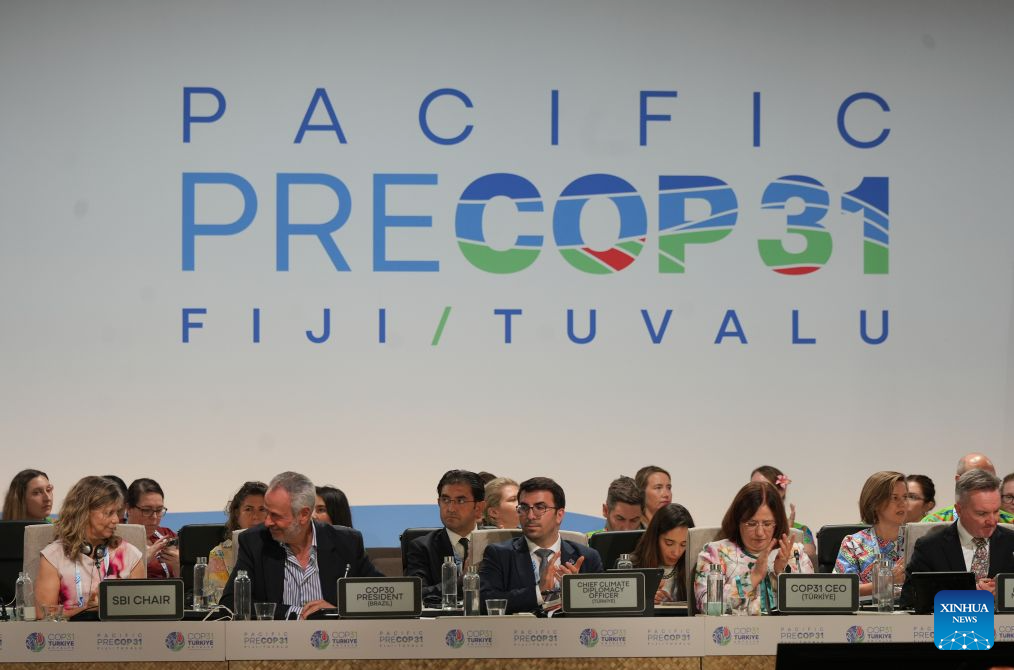
The COP31 United Nations climate change conference should develop road maps for developed countries to deliver the annual $300 billion climate finance goal by 2035 and fulfill the commitment to triple adaptation finance, a senior Chinese official said on Wednesday.
Li Gao, vice-minister of ecology and environment, said the conference should strive for positive progress on climate finance, which remains crucial to helping developing countries implement their climate commitments.
He made the remarks at a news conference held by the State Council Information Office in Beijing, where he outlined China's positions and expectations for COP31.
ALSO READ: China achieves some key climate targets ahead of 2030 schedule
Officially known as the 31st session of the Conference of the Parties to the United Nations Framework Convention on Climate Change, the UN gathering is slated to be held in Antalya, Turkiye, from Nov 9 to 20.
At COP29 in Baku, Azerbaijan, parties agreed on a new collective quantified goal of mobilizing at least $300 billion annually for climate action in developing countries by 2035, with developed countries taking the lead. They also called for efforts by all actors to scale up financing from public and private sources to at least $1.3 trillion a year by then.
At COP30 in Belem, Brazil, parties called for efforts to triple the 2025 adaptation finance levels by 2030 and urged developed countries to increase their collective provision of adaptation finance to developing countries.
READ MORE: PM Albanese: Australia to lead COP31 negotiations under hosting deal with Türkiye
Li said China believes COP31 should focus on translating such commitments into action. "The focus of global climate governance has shifted from negotiating rules to implementing them," he stressed.
COP31 should address both the long-standing problems of insufficient emissions reduction efforts and inadequate financial support from developed countries, and the emerging challenge posed by unilateralism and protectionism, he continued.
The multilateral climate process should provide support and create favorable conditions for all parties, particularly developing countries, to implement their nationally determined contributions and advance the goals of the Paris Agreement, the vice-minister added.
