

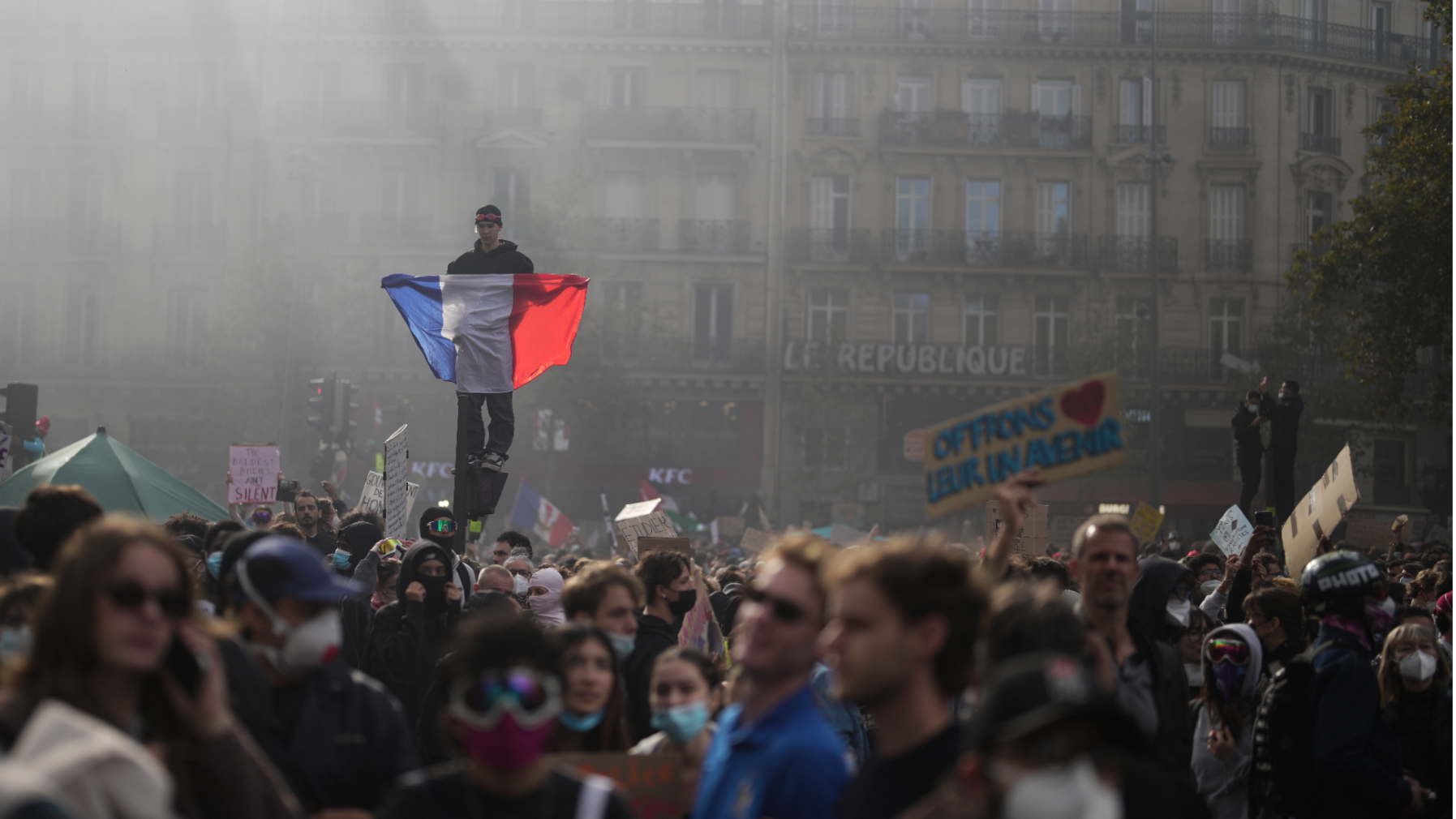
French protests largely died down after authorities rolled out tougher security measures, including targeted curfews, following cost-of-living protests over the weekend that degenerated into violence, vandalism and looting.
An 11 pm curfew was put in place in a few areas of Paris on Monday night, along with restrictions in other cities, after Prime Minister Sébastien Lecornu earlier called on regional authorities to impose curfews where needed.
Unrest on the margins of social movements isn’t unusual in France, with comparable rioting and opportunistic looting seen in 2023 and in 2018 with the Yellow Vests movement. Yet the violence and scale of the weekend’s events took authorities by surprise, coming at a moment of peak political and financial tension just six months before an election to choose President Emmanuel Macron’s successor.
READ MORE: Minister: 550,000 people take part in protests across France, about 400 arrested
Protests drew more than half a million people on Saturday across the country, but the demonstrations over cost-of-living concerns soon deteriorated as fast-moving groups targeted hundreds of shops. Some 2,397 people were arrested on Saturday, according to Interior Ministry figures. Vandalism continued on Sunday night, with looted stores and another 108 arrests in Paris.
The overall cost of the riots is rising, but should for now remain below €1 billion ($1.1 billion) to €1.2 billion, estimated Marcos Alvarez, global head of Insurance at Morningstar DBRS, in a note Monday.
“Assuming no further violence, we expect the latest French riots to be a manageable earnings event rather than a capital event for the country’s major insurers,” he added.
French bonds and stocks fell on Monday, leading European markets lower. Social media accounts on X linked to the Yellow Vests protests called to continue actions all week, and for another day of unrest on Saturday. Protests are likely to extend well beyond then. Several unions have already called for a strike on Nov 5.
Retailers across Paris urged authorities to do everything to avoid further scenes of destruction and looting. “It’s not normal for economic actors to be compelled — by hiring private security personnel — to ensure the safety of their establishments, as was the case this weekend,” wrote the representatives of retailers located in various high-end shopping areas of the French capital.
“We emphasize that Paris and our neighborhoods represent the image of France. These events are ruining our country’s reputation,” wrote the organization representing the glitzy Champs-Elysées and Faubourg Saint-Honoré shops, among others.
ALSO READ: French premier vows energy price curbs, talks to quell protests
French Finance Minister Roland Lescure will hold a meeting with business federations, as well as banks and insurers, on Tuesday and said he plans to announce support measures for businesses directly affected.
Political tensions
France wasn’t alone in seeing weekend protests getting out of hand. Italian Prime Minister Giorgia Meloni chaired an emergency meeting of her advisers Monday after demonstrations in Milan ended in rioting and looting. Protests also took place in Belgium, Portugal and Albania.
Fallout from the weekend has exacerbated an already fractious political landscape in France. The leader of the far-right National Rally Jordan Bardella blamed the far-left party France Unbowed for the clashes on Monday, accusing its leader Jean-Luc Mélenchon of “turning the police officer into an enemy to be eliminated and law enforcement into an injustice to be fought.”
Far-right candidate Marine Le Pen would lead the first round of the presidential election with at least 31 percent of the vote, according to a Cluster 17 poll published Monday and taken before the riots. Mélenchon and center-right candidate Edouard Philippe would tie in second place at 20 percent.
After making a television address on Sunday night, Macron avoided reporters as he arrived in the United Arab Emirates on Monday, the first stop in a three-day tour across Gulf countries. The trip is aimed at strengthening business ties and securing energy supplies, according to the Elysee.
