


VIENNA – The International Organization for Mediation (IOMed) has seen steady growth in its membership over the past year and aims to build an inclusive global mediation ecosystem, its Secretary-General Teresa Cheng Yeuk-wah has said in Vienna.
In a recent interview with Xinhua, Cheng said as of Oct 20, 2025, the Convention on the Establishment of the IOMed had 37 signatory states, including eight contracting states. A year later, the figures increased to 48 signatory or acceding states, including 18 contracting states. She said the expanding membership bolstered the organization's confidence in its future development.
Headquartered in China's Hong Kong Special Administrative Region, the IOMed will mark its first anniversary of inauguration on Oct. 20 this year.
First year's achievements
Reflecting on its first year, Cheng said the IOMed has worked to improve its internal governance, including developing its staffing, financial management, record-keeping and IT systems. Meanwhile, the organization has handled several cases and made encouraging progress.
Citing a maritime dispute involving parties from China and Singapore, Cheng said that despite the involvement of multiple stakeholders, "the matter was concluded following a one-day mediation session and the settlement agreement signed."
ALSO READ: IOMed debuts Global Series, touts mediation
She said mediation had saved the parties time and money by eliminating the need to pursue arbitration in different jurisdictions and avoiding potentially complex proceedings and conflicting decisions.
One important takeaway from the case, she noted, was that the IOMed can also provide mediation services to parties from non-member states. While China is a founding member, Singapore has yet to join.
Alongside its expanding membership, the IOMed has also made strides in capacity building and international engagement. Over the past year, it has conducted three rounds of training on topics including state-to-state mediation. IOMed representatives have also visited many countries and engaged with corporations, governments and organizations to promote a better understanding of mediation mechanisms.
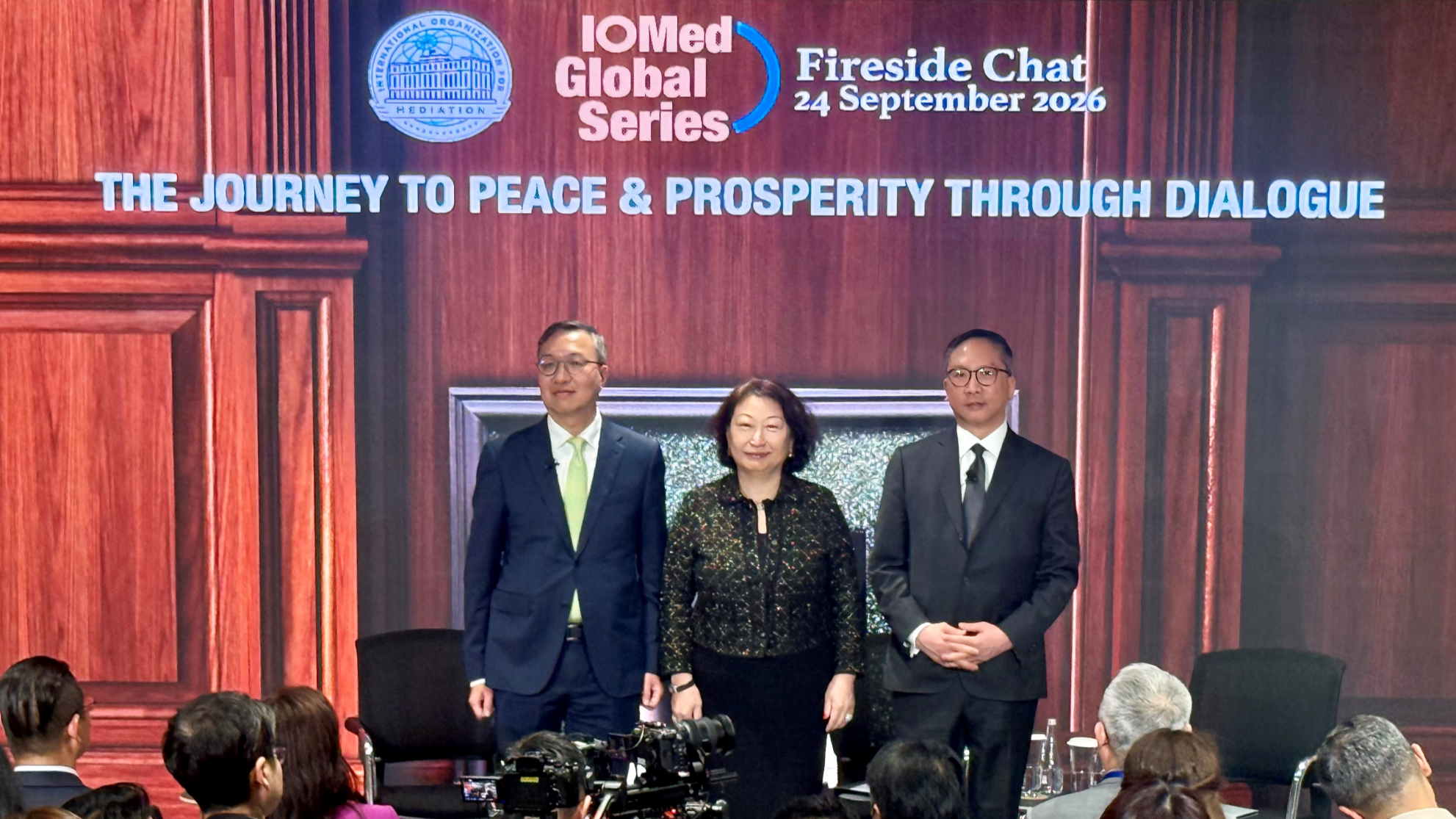
Explaining the differences between mediation, litigation and arbitration, Cheng said mediation is fundamentally based on dialogue.
"Its primary objective is not to determine who is right or wrong; rather, it empowers the parties involved to take control of the dispute resolution process and its outcome, with the assistance of a third-party neutral mediator to help identify a mutually acceptable solution," she explained.
"In mediation, we look to the future," Cheng said. Mediation not only helps settle disputes but also preserves relationships between the parties. In disputes between states, it can contribute to peaceful coexistence, she underlined.
Hong Kong's advantages
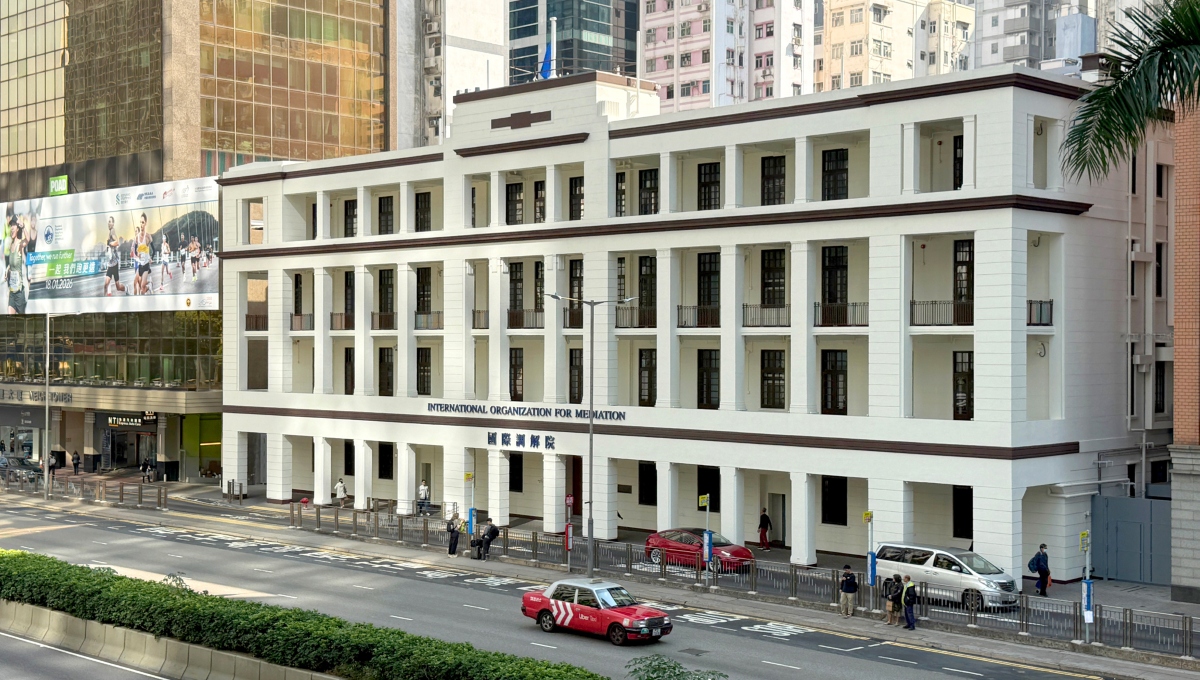
Cheng also highlighted Hong Kong's advantages as the IOMed's headquarters, citing its well-established legal system, reputation for safety and standing as one of the world's leading arbitration centers.
Describing Hong Kong as a "one-stop shop" for dispute resolution, she said parties could first seek mediation and turn to arbitration if mediation proved unsuccessful.
"And if during the arbitration they wish to mediate, they can always re-mediate and everything is in the same place to provide all these comprehensive services," she added.
Cheng also drew parallels between modern international mediation and traditional Chinese culture, noting that respect for differing views, open dialogue, consensus-building and compromise are central to both.
Looking ahead, Cheng said the IOMed will continue to advance its mediation practices, expand training programs and strengthen capacity building. It would also actively engage with young people to deepen their understanding of mediation and encourage their participation, helping foster a broader culture of mediation.
READ MORE: IOMed chief urges global mindset shift toward mediation
The organization's vision is to create a global mediation ecosystem that is inclusive, grounded in multilateralism and respectful of all parties' willingness, she said.
"We aim to promote a culture change, from the adversarial and adjudicative mindset to a conciliatory mode, and to remind people of getting a win-win solution," Cheng said.
