

From a shop stall to an academy, artisan builds a way to pass down craft while empowering locals and boosting tourism, Xing Wen reports in Tongren, Qinghai.
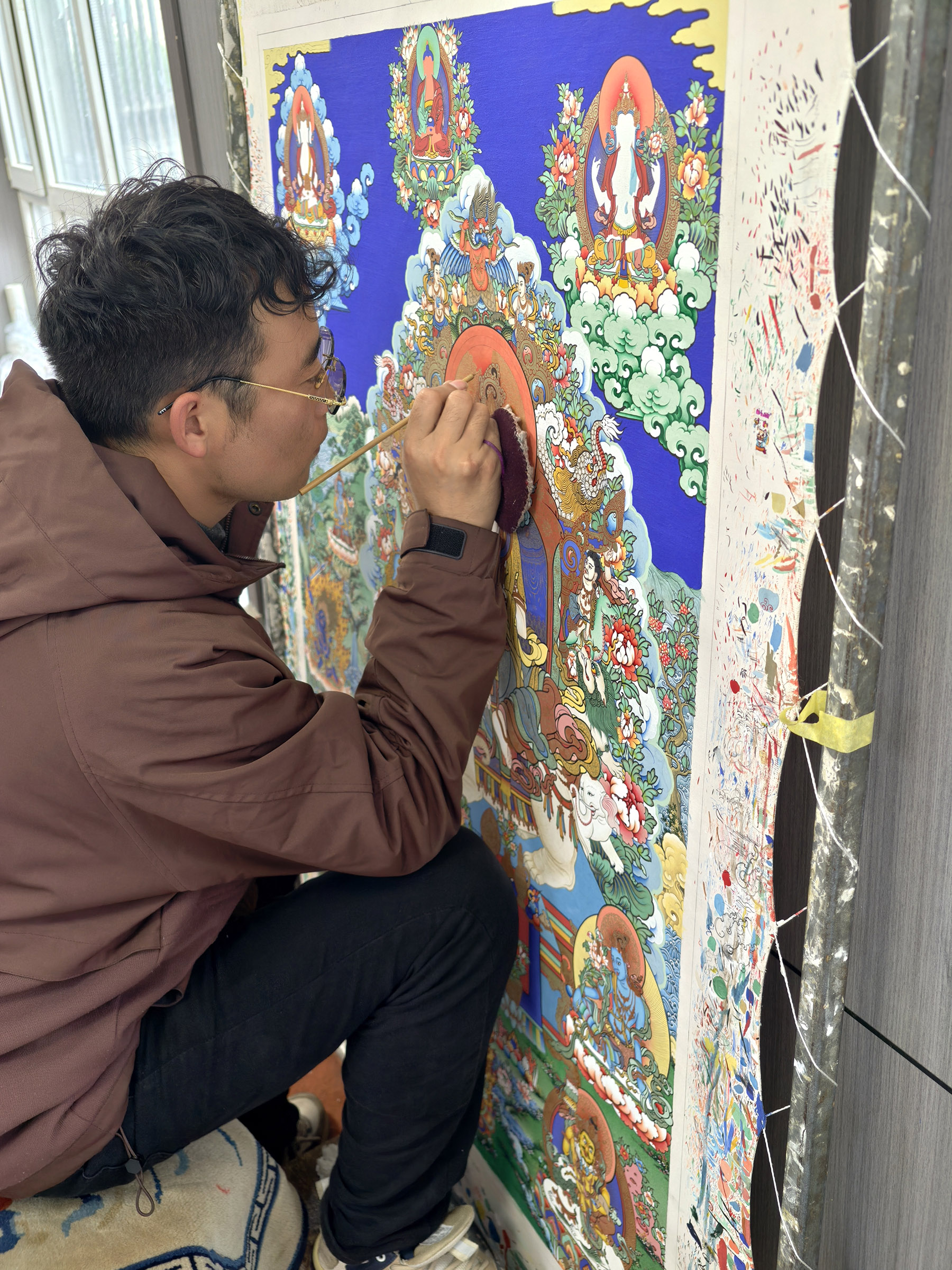
A decade ago, Sangye Gyal was a lone artist sitting outside the west gate of Yonghe Lama Temple in Beijing, hunched over a canvas in a 7-square-meter shop stall that served as both his studio and retail space, where he painted thangka, sold them to passersby, and slowly, patiently, taught a curious public what these sacred scrolls were.
Today, he runs a 3,800-sq-m academy in his hometown of Longwu Town in Tongren, Qinghai province, where more than 80 painters work beneath his roof.
What began in a cramped city booth has grown into a thriving hub that preserves and carries on the sacred painting tradition.
READ MORE: Threading the past forward
Gyal grew up in Tongren, Huangnan Tibetan autonomous prefecture, where local artisans have passed down Regong (name for a cultural region) art for generations.
"When I was a kid, my family had limited financial means. My father would go around the village, buy thangka from people, then carry them on his back and look for buyers," Gyal recalls.
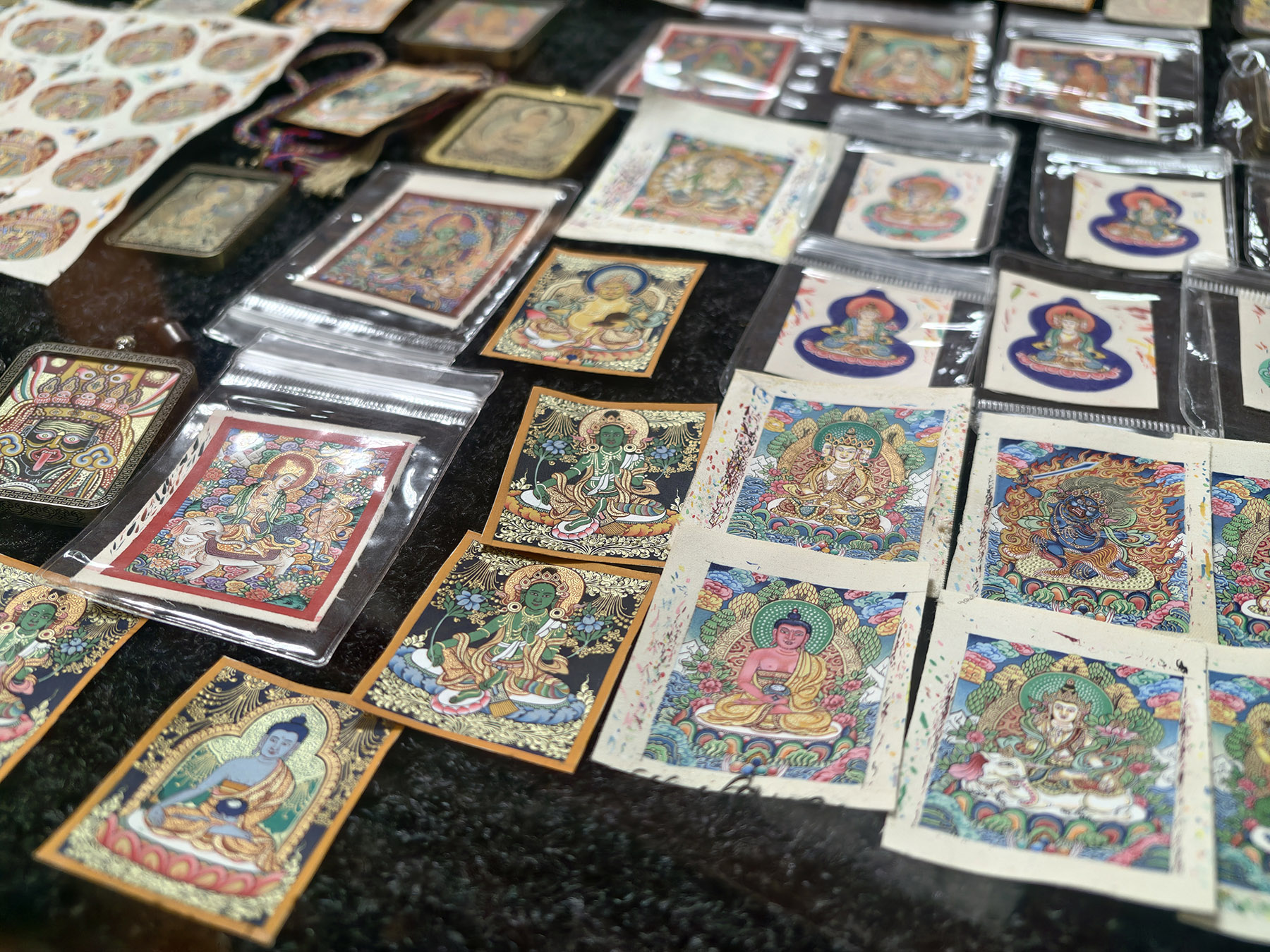
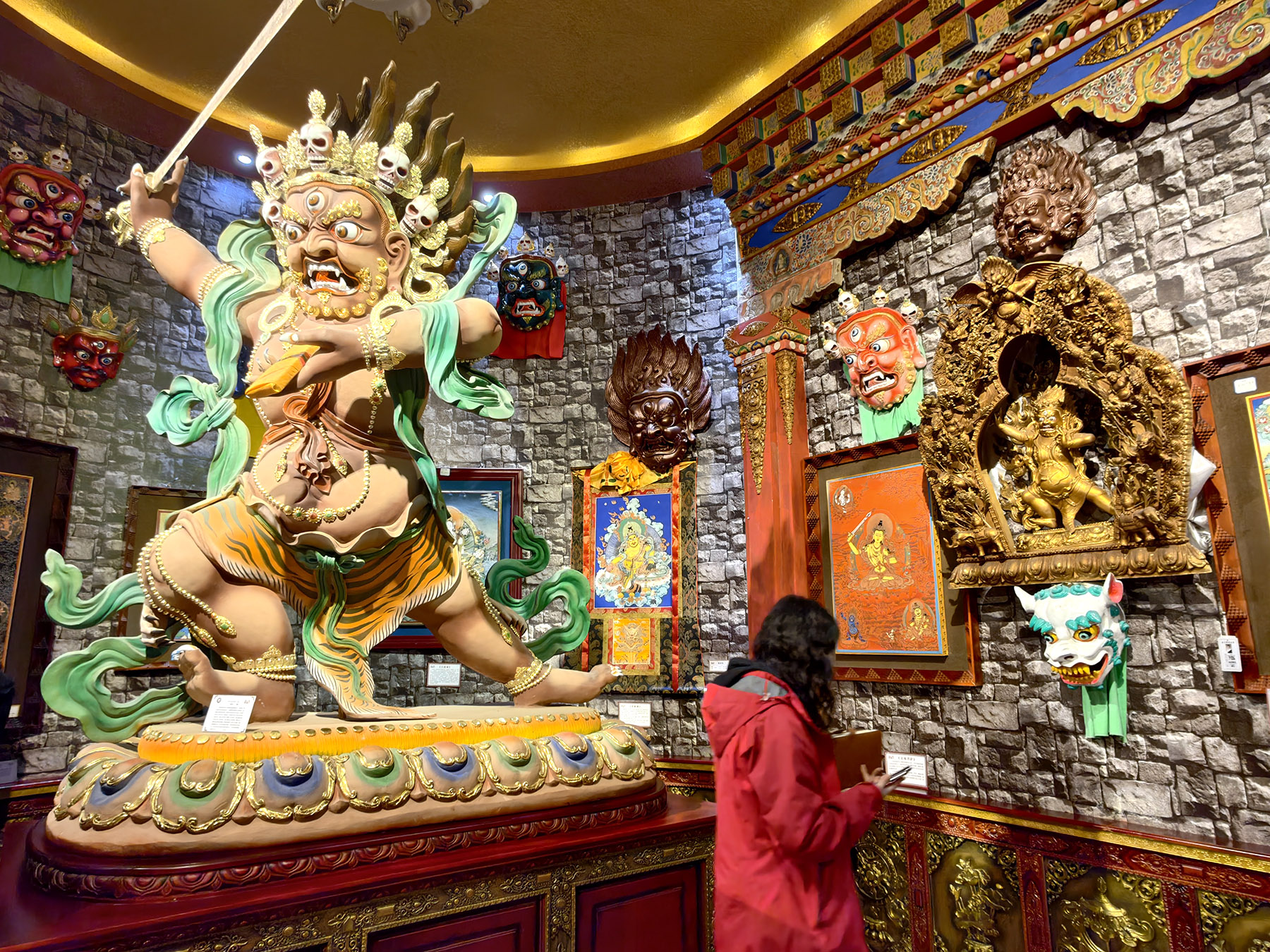
This folk art, originating in the 13th century, includes thangka painting, clay sculpture, murals, patchwork barbola, and wood and stone carving. Its main themes include tales from Tibetan Buddhism, Tibetan historical figures, myths, legends, and epics, and it also covers secular subjects such as astronomy, geography, the humanities, and ecology.
In 2009, UNESCO inscribed it on its Representative List of the Intangible Cultural Heritage of Humanity.
Gyal learned thangka painting from a very young age and had developed a solid command of the art by 16.
As the Beijing 2008 Summer Olympics approached, a friend invited Gyal, then 22, to attend a folk art expo in Beijing.
He traveled to the capital with his works and five apprentices. During the expo, they sold only one painting, which left a bitter taste in his mouth. He then decided to settle in the metropolis to find more clients and introduce the folk art to a wider, more international audience.
In that 7-sq-m shop, he gradually built a solid client network and accumulated capital.
In 2017, he returned to his hometown to launch the Sangye Thangka Academy and, with the local government's support, run a Regong art training program that teaches locals how to paint thangka and provides learners with food and accommodation free of charge.
Lhamo Drolma, 25, from the Haibei Tibetan autonomous prefecture, is now an apprentice at the academy. A graduate of the Haibei Tibetan Autonomous Prefecture Vocational and Technical School, she traveled to Tongren because her family wanted her to learn thangka painting and carry on Tibetan faith and culture. She now shares a free-of-charge dormitory with a close friend she met at the vocational school, and they study together.
Every morning, she sits down in the studio at 8 am, puts on her headphones, and plays soft music on shuffle as she starts painting.
"I used to be impatient, but coloring thangka paintings forced me to slow down and learn that good work takes time, because the mineral pigments are precious and you can't afford mistakes," she says.
"I feel an inner peace painting here every day. I want to become a true thangka painter one day."
Gyal's academy has trained more than 300 people to date and is drawing more local artisans to join.
Nyangshin Gyal, 37, a fellow villager of Sangye Gyal, began learning thangka painting at 20 and has long been painting at home. Last year, he joined the academy, a 10-minute scooter ride from his home.
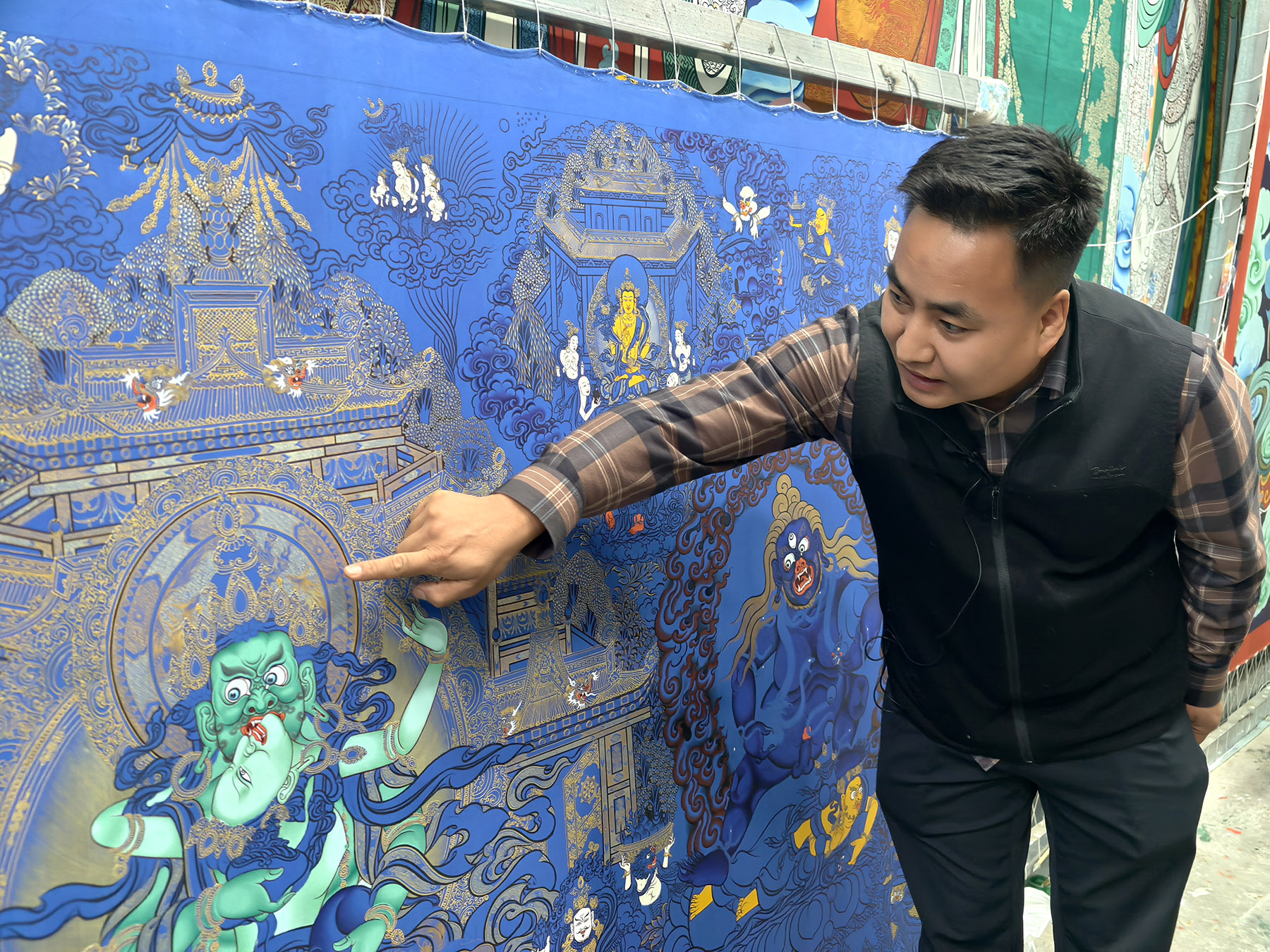
"Here, there are no household chores to distract me, so I can focus more on painting. We clock in and out on time, eat together, and have no worries. There are numerous clients here, making it more stable, and I earn double what I used to, about 50,000 yuan ($7,470) a year," he says.
Sangye Gyal thinks about where the art will go next.
Many of his steady clients come from Beijing and Shenzhen, Guangdong province, as well as buyers from the United Kingdom and the United States.
Beyond selling paintings, he also designs cultural and creative products and works with e-commerce livestreaming hosts to sell them.
"In a livestream earlier this year, we sold mini-thangka pendants that can be worn around the neck. Some single-session sales reached 10 million yuan," he says.
His academy is one of more than 20 in Tongren. Together, they have directly or indirectly drawn more than 24,000 people into the art of making Regong products.
ALSO READ: Connecting ancient art with modern values
Sangde Gyal, who heads another academy in the town, is exploring how to give tourists a more immersive experience of Tibetan culture by opening a study base where visitors can try their hand at thangka painting and clay sculpture while enjoying coffee and traditional Tibetan food.
"Tourists can stay here for a day or two and paint a simple thangka-style picture — maybe a small animal or a lotus flower. That helps spark their interest and gives them a sense of achievement," he says, adding that during the recent summer holiday, university students from Hong Kong and Sichuan province took part in this type of study experience.
Tongren city has built a full industrial chain around Regong art encompassing research and creation, training, production, sales, exhibition, collection, and import and export. Every year, it offers thangka painting training free-of-charge to local farmers and herders, covering not only tuition but also food, accommodation, supplies, and study materials, helping them gain skills and secure stable employment that boosts their incomes.
Contact the writer at xingwen@chinadaily.com.cn
