

Hong Kong’s transition from “positive noninterventionism” to a more proactive and development-oriented model raises a fundamental question: Does a government that increasingly embraces a proactive governance approach require a different mix of talent in its civil service? If economic transformation has become a core government function, the Hong Kong Special Administrative Region government should consider whether more experienced professionals from business, technology, finance and industry should be able to enter public service not merely as advisers or contract specialists, but as a genuine career pathway, in addition to the traditional Administrative Officer and Executive Officer talent development programs.
 For decades, Hong Kong built its success on a reputation for open markets, low taxation, efficient regulation, and limited government intervention. That is one of the main reasons why the Vancouver-based Fraser Institute has consistently ranked Hong Kong as the freest economy in the world. Those principles remain important and continue to underpin the city’s international competitiveness.
However, Hong Kong’s development agenda today extends beyond preserving an efficient marketplace. Under the national 15th Five-Year Plan (2026-30) and the development strategy for the Guangdong-Hong Kong-Macao Greater Bay Area, Hong Kong is expected to strengthen its role as an international financial center, innovation and technology hub, intellectual property trading center, aviation hub, and gateway connecting the Chinese mainland with the global economy. The Northern Metropolis, the Hong Kong Investment Corp, talent attraction initiatives, and new industrialization policies are all manifestations of this broader strategic vision. Achieving these goals requires not only a favorable business environment but also purposeful government action to attract enterprises, nurture industries, mobilize capital, and build ecosystems.
Yet the challenges facing the global economy today are markedly different from those of previous decades. Intensifying tech competition, supply chain restructuring, demographic pressures, and the race to attract talent and investment have prompted governments everywhere to become more proactive in shaping economic outcomes.
Hong Kong is no exception. Whether through talent attraction, innovation funding, strategic investment, or industry development, the government is increasingly taking on the role of facilitator, catalyst, and ecosystem builder. It is not abandoning market principles. Rather, it is seeking to create the conditions under which priority sectors can emerge and thrive. If this is the direction Hong Kong has chosen, a fundamental question follows: Does the civil service possess the capabilities required for this new era?
While Hong Kong’s civil service is globally recognized as highly efficient — as evidenced by Switzerland’s IMD Business School ranking it in second place — the city’s transition to development-oriented governance raises questions as to whether the civil service requires additional capabilities. Building innovation ecosystems, attracting strategic enterprises, evaluating investment opportunities, and nurturing emerging industries demand a deep understanding of markets, technology trends, business operations, and commercial decision-making. Officials increasingly need to engage not only with policy issues, but also with entrepreneurs, investors, scientists, and industry leaders.
Perhaps the most important difference is not technical expertise but attitudes toward risk.
Understandably, the public has high expectations of its officials, and our civil servants are well trained, and regulators are trained to prevent mistakes. The question is, are they the best candidates to lead agencies that are expected to create opportunities? One naturally focuses on minimizing downside risks; the other must also consider the costs of inaction.
Rather than expecting every civil servant to become a natural risk-taker, Hong Kong may find it more practical to broaden the pathways into public service. Individuals who have spent years building businesses, evaluating investments, commercializing technologies, managing supply chains, leading innovation projects, or competing in global markets often bring a different perspective on opportunity, uncertainty and execution. These experiences cannot always be acquired through traditional public-sector career progression alone.
The question, therefore, is whether Hong Kong should create a more systematic pathway for experienced professionals to join the civil service as a long-term career rather than as temporary advisers, consultants or contract specialists. Instead of treating industry expertise as an external resource to be consulted from time to time, the government could make it part of its institutional capability.
Singapore offers an interesting reference point. Over the years, it has deliberately opened leadership pathways to mid-career professionals from diverse sectors while providing structured training, rotations and career development within the public service. The objective is not to replace career administrators but to complement them with people who bring commercial instincts, sectoral expertise and firsthand experience of how markets work. Such an approach may offer useful lessons for Hong Kong as it seeks to build a civil service that is equally capable of regulating markets and helping to shape them.
There is likely no shortage of experienced professionals in Hong Kong who would be willing to contribute to public service after successful careers in business, technology, finance, engineering, logistics, or innovation. Many are motivated not by compensation, but by the opportunity to help shape the city’s future. Yet for most of them, the pathway into a meaningful long-term government career remains largely unclear. While specialists can be recruited on contract and advisory committees can provide external expertise, there are few visible mechanisms for mid-career professionals to enter public service, be systematically developed, and eventually assume leadership responsibilities.
Despite Singapore’s example, Hong Kong should not seek to replicate another system wholesale. The city’s institutions, history, and governance traditions are different. The real challenge is to find the right balance between preserving the strengths of a highly professional career civil service and introducing greater diversity of experience into its ranks. As Hong Kong moves from vision to implementation in areas such as innovation, new industrialization, talent attraction and the Northern Metropolis, this may be the right time to begin a serious conversation about what the next generation of public servants should look like, and whether the city’s future civil service should be drawn not only from traditional entry routes, but also from those who have already spent years creating value in the marketplace before choosing to serve the public.
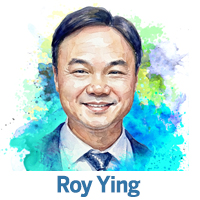
The author is a senior lecturer at the Hang Seng University of Hong Kong and co-chair of the Advocacy and Policy Research Committee, the Hong Kong Institute of Human Resource Management.
The views do not necessarily reflect those of China Daily.
