

Industry experts highlight need for eateries to look beyond traditional business models to capture the palate
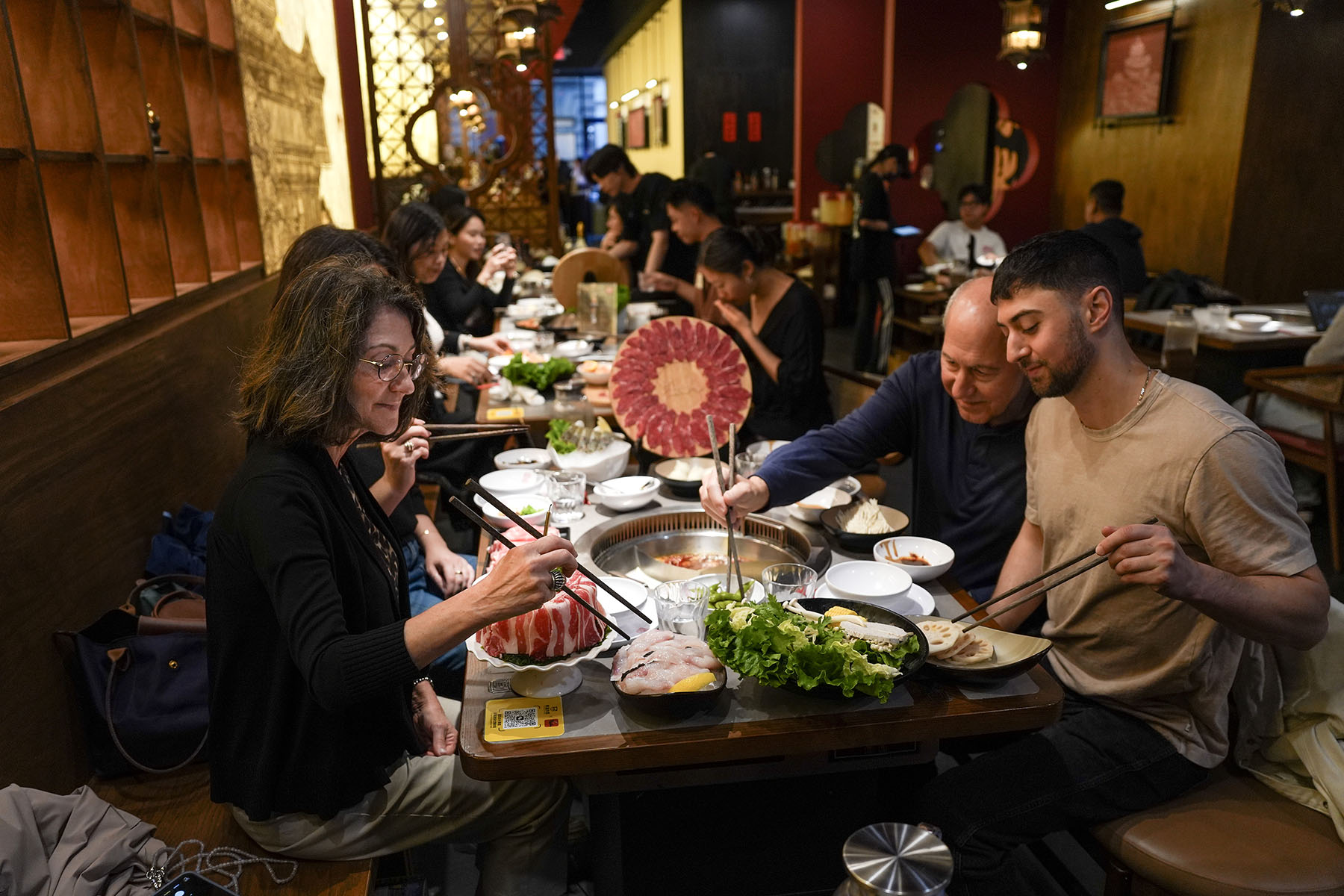
For companies running Chinese restaurants in the United States and seeking growth, bringing authentic flavors across the Pacific may be only the beginning.
Success increasingly depends on whether they can build recognizable brands, understand local regulations and consumers, establish resilient supply chains and adapt their organizations to an unfamiliar business environment, industry executives and experts said at a recent China-US restaurant conference in Los Angeles.
"Most Chinese restaurant founders should approach the US as a completely new market with a mindset of learning and integration," Huang Geng, founder of Chinese restaurant chain Huang Ji Huang and chief consultant for the Chinese Dining Business Division at Yum China, told China Daily at the event.
Huang said companies cannot assume that a business formula proven in China will work unchanged in the US. Executives should spend time in the market themselves and develop a detailed understanding of local laws and regulations, financial planning and human resources, while drawing on the knowledge and networks of local partners and franchisees.
His comments come with a broader shift as Chinese cuisine expands overseas. Rather than simply exporting restaurants and signature dishes, companies are increasingly seeking to build international brands, localize supply chains and use digital technologies to compete in North America. At the same time, they face rising operating costs, tariffs, intense competition and regulatory requirements that can differ significantly from one US state to another.
That environment is forcing restaurant companies to rethink when, where and how they expand.
Hosted by TOA (Taste of Asia), a business platform initiated by the North America Asian Food Industry Association, the event brought together restaurant executives, franchisees, investors, supply-chain companies, technology providers and frontline operators from Asia and North America to discuss changing consumer demand, expansion strategies, operating costs and technological change.
"Today, what really concerns restaurant owners is no longer simply what kind of restaurant to open," said Cosmo Hu, founder of TOA. "They are asking when is the right time to expand, whether franchising is a better way to enter the market, how an Asian brand can truly establish itself in the US, and how to build the business model as labor, rent, ingredient and customer-acquisition costs continue to change."
For many Asian brands, California remains a natural first stop because of its large Asian communities, international connections and mature restaurant market — but those same advantages come with high costs and extensive regulation.
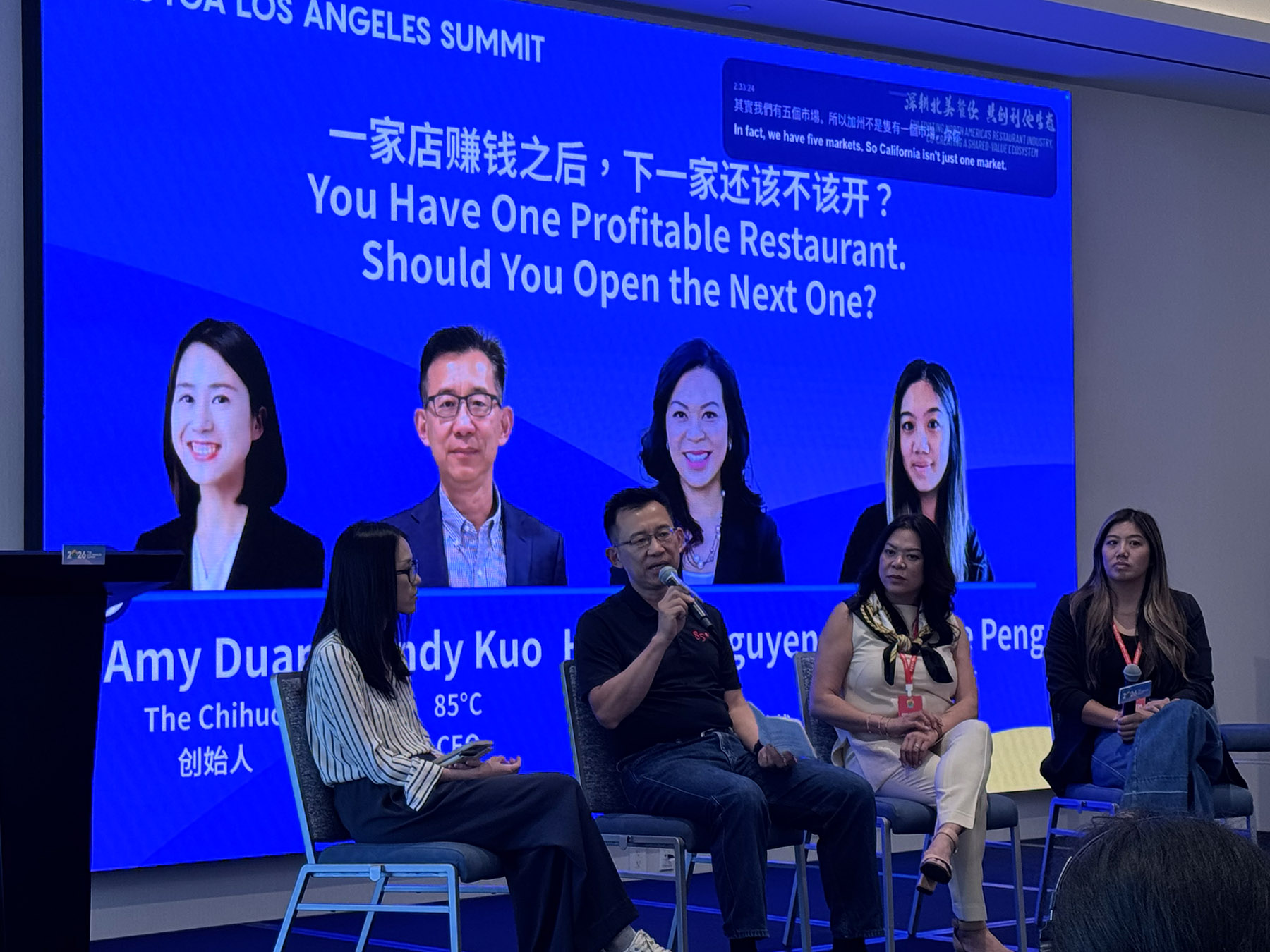
"California is the strictest market for doing business due to the regulations, so we believe that if you can make it in California, you can make it anywhere," said Amy Duan, founder of The Chihuo.
Economic scale
The state's economic scale adds to its attraction. California's nominal gross domestic product reached $4.25 trillion in 2025, maintaining its position as the largest state economy in the US and one of the world's largest economies.
But even within California, markets can differ sharply.
Andy Kuo, CEO of 85C Bakery Cafe, said Southern and Northern California require different business approaches, suggesting that mastering those variations can help prepare a company for expansion into markets such as Phoenix, Las Vegas or Texas.
"Restaurant operators need to understand the complexity of entering a new country," Kuo said. "One of the key questions is which parts of a successful business model can be replicated and which need to be fundamentally rethought when expanding internationally."
85C opened its first US store in Irvine, California, in 2008, while Bafang Dumpling entered the market through Southern California in 2022. Bafang CEO Stephanie Peng said an Asian customer base can provide an important foundation, but long-term growth requires brands to reach a broader US audience.
"We still have a journey to understand and fix all the operations before we open up a franchise," Peng said, noting that franchising represents a long-term relationship rather than simply an investment transaction.
As competition intensifies, franchising is emerging as an increasingly important route into the North American market.
Li Yu, co-founder and chief operating officer of restaurant technology company MenuSifu, said the company's operational figures from more than 10,000 restaurants suggest that newcomers can often find a clearer route to market by joining an established franchise rather than trying to build an entirely new restaurant brand from scratch.
He described North America's restaurant market as increasingly crowded and said operators need to continuously generate new sources of growth.
"Based on our internal analysis, restaurants unable to sustain annual revenue growth of around 6.2 percent could risk losing ground in an increasingly competitive environment," Li said.
That means restaurants need to explore new products, locations and business models, he said. But at the core of those efforts is a supply chain capable of being both stable and responsive.
Li pointed to what he described as China's "flexible supply chain" model as a potential source of lessons for North American restaurant businesses, particularly the ability to respond quickly to changes in consumer demand, introduce new products and adjust sourcing while maintaining operational consistency.
Localization stressed
Companies are also becoming more sophisticated about how they enter different overseas markets.
Masamichi Okada, a senior managing executive officer at Japan's Monogatari Corporation, described the company's sharply different approaches in China and the US.
Monogatari entered China in 2012 and later developed its Meat &Rice concept from scratch in Shanghai. The brand has since expanded to more than 60 locations in China. When the company entered the US in 2025, however, it chose to acquire existing teppanyaki restaurant operations instead of repeating its China strategy.
"What we bought was not just a restaurant, but a platform for learning the market," Okada said.
That platform included an existing customer and revenue base, employees, supplier networks, operational know-how and familiarity with local laws and regulations, he said.
The experience shows an increasingly important lesson for Asian companies expanding globally: localization goes well beyond adapting menus. It can involve organizational structures, hiring, sourcing, real estate, marketing and even the fundamental method of entering a market.
Huang similarly stressed that Chinese brands and their franchisees need to be aligned in their vision and goals. China and the US have different legal and financial systems and different approaches to human resources management, while regulations can vary significantly from state to state.
New links
Localization is also creating new economic links between Chinese brands and US suppliers.
Beijing's DaDong Roast Duck is expanding into North America through cooperation with Xiaomai Group, which has been developing standardized supply chains for Chinese cuisine in the US.
Michael Wang, executive director of Xiaomai Group, said there is visible demand for Peking duck in the US, but serving a broader market requires both product adaptation and local sourcing.
The company has developed products including Peking duck pizza, burgers, sandwiches and spring rolls.
"This is part of the localization process," Wang said.
One of the biggest challenges, Wang said, was sourcing ducks in the US that met the standards required for Peking duck.
"The ducks have to be locally sourced, but the quality of ducks available in the US initially did not meet the standards required for authentic Peking duck," he said, adding that the company has since addressed much of the problem through partnerships with farms in Indiana.
"We need hundreds of thousands of ducks a year, and potentially more than 1 million, for production," Wang said. "This represents a significant business opportunity for local farmers. As our business grows, it also creates greater visibility and market opportunities for these farms."
The example illustrates how the overseas expansion of Chinese cuisine can create new links with local US suppliers, rather than relying solely on products shipped from China.
Supply-chain companies are also playing a larger role in helping restaurants manage costs and maintain consistency. Su Wanting, marketing director for the US market at Haitian, said the company has built a broad, one-stop sourcing system for restaurant operators.
"Our stable supply chain enables us to maintain market supply and stable prices even during periods of significant tariff volatility," Su said, adding that health-conscious, authentic and convenient products are becoming important priorities in the company's product development.
The National Restaurant Association said restaurant operators are increasing investment in technologies aimed at improving efficiency and customer engagement, including digital ordering, automation and data analytics. Experts at the summit said AI could play a growing role in back-of-house operations, food production and service workflows over the next three to five years.
Some operators are already putting such technologies into practice. Restaurant brands including Happy Lamb and California Pizza Kitchen have begun using robots for repetitive tasks such as food delivery, guest guidance and cleaning, according to speakers at the conference.
AI injects momentum
Deng Tianzhuo, chief marketing officer of Zoowork AI, said AI should be viewed not as a single tool but as part of a broader operating system that can help restaurants improve efficiency, control costs and expand more effectively.
"By analyzing information from point-of-sale systems, delivery orders, customer reviews, competitors and surrounding commercial areas, AI can help operators identify problems and business opportunities before moving on to diagnosis, execution and evaluation," Deng said.
But practical limitations remain. Rich Zhou, founder and CEO of Urbot, noted that many existing restaurants were not designed with robots in mind and often lack dedicated pathways or spaces for automated equipment. "Rather than pursuing automation for its own sake, business operators should focus on areas where technology can generate measurable improvements in efficiency," he said.
Even as technology assumes a greater role, successful globalization ultimately depends on people.
Lawyer Hu Xiaomin said Asian restaurant companies entering the US need to plan early for the movement and recruitment of key personnel, particularly businesses that depend on specialized chefs, research and development employees, store managers and operations professionals.
"For restaurant brands that rely heavily on the expertise of chefs, R&D specialists, store managers, and operations personnel, the legal entry of key talent into the US has become a critical issue that must be planned for in advance of overseas expansion," she said.
Contact the writers at renali@chinadailyusa.com
