

DOHA/TEHRAN/LONDON – Qatar said on Tuesday that meetings and contacts aimed at bridging differences between the United States and Iran are continuing, with Doha exchanging messages between the two sides and seeking to build common ground toward a peaceful settlement.
Majed Al Ansari, spokesperson for Qatar's Foreign Ministry, said at the ministry's weekly media briefing that a number of meetings and exchanges of messages had taken place in recent days, including meetings in New York.
"The effort now is focused on building common ground between the parties," Al Ansari said.
He said Qatar would continue its mediation efforts by working to narrow differences between Washington and Tehran and facilitate communication between them.
ALSO READ: Trump denies report of offering Iran sanctions relief
"Our role is to overcome difficulties and try to bridge the gap between the parties, and this is what is taking place now," he said, adding that meetings remained ongoing and messages continued to be conveyed between the two sides.
Al Ansari declined to disclose details on the current stage of the mediation efforts, but stressed that Qatar saw no alternative to a peaceful solution.
Qatar has maintained diplomatic efforts to revive the negotiating track between Washington and Tehran in recent months. During meetings on the sidelines of the UN General Assembly (UNGA) in New York last week, Qatari officials also discussed regional de-escalation and efforts to create conditions conducive to dialogue.
IRGC: Iran to use new weapons if conflict takes on another form
In the Iranian capital Tehran, the Islamic Revolutionary Guard Corps on Tuesday warned that if the conflict against Iran takes on a new form, the country will definitely bring new weapons to the battlefield.
Speaking at a live press conference, IRGC spokesman Hossein Mohebbi highlighted the country's constant efforts to expand its defense capabilities.
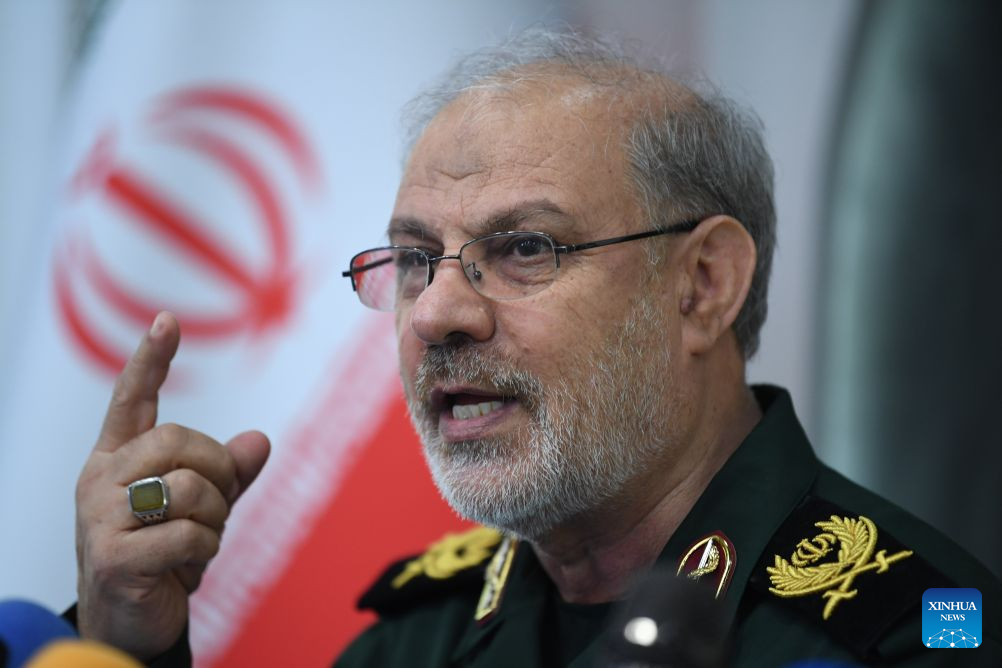
"We are incessantly designing new weapons, upgrading the existing ones, and continuing our mass production of weaponry to be able to defend ourselves. We employ technologies from around the world to manufacture arms capable of defending our country and our people," he said, adding, "If the conflicts assume another form, we will definitely bring new weapons to the battlefield."
He listed some of the US hostile actions against Iran within the past months, including imposing the 40-day war as well as the naval and aerial blockades, intensifying the economic pressure, inciting "street riots" in January and arming the anti-Iran groups stationed along the country's northwestern and southeastern borders, noting that those scenarios were all doomed to failure.
Mohebbi added that the "enemy" definitely has other scenarios, saying Iran is informed of those scenarios and has prepared itself for them, "and will continue to be victorious in the future."
ALSO READ: Trump says expects more US-Iran talks despite rejecting truce proposal
On Feb 28, Israel and the United States launched joint attacks on Tehran and other Iranian cities. Iran responded with waves of missile and drone attacks targeting Israel and US bases and assets in the region, and tightened its grip on the Strait of Hormuz.
On June 18, the United States and Iran signed a memorandum of understanding (MoU) on ending the war in the region on all fronts, including Lebanon. Under the MoU, they were scheduled to hold negotiations within 60 days, which ended on Aug 17, to reach a final agreement, but the fate of the talks remains unclear following a series of recent escalations between the two countries.
Iran's Qalibaf warns of ‘regret-inducing’ response to any US threat
Also on Tuesday, Iran's Parliament Speaker Mohammad Baqer Qalibaf warned that the country's response to any U.S. threat or adventurism would be "regret-inducing and swift," according to the official news agency IRNA.
Speaking at an open session of parliament, Qalibaf said the era of intimidating the "civilized" Iranian nation had ended and that Iran would never be forced to back down from its rights and demands despite threats, rhetoric, or economic and aerial blockades.
He said that US President Donald Trump's recent remarks at the 81st session of the UNGA and his "insult" to the Iranian nation demonstrated that Washington has not yet changed its hostile posture.

In his speech at the UNGA in New York, Trump said, "I have a big decision to make" on Iran, asking whether a deal would be made with Iran that lets them "rebuild and create a far greater country than it ever was before," or whether he should "annihilate the Islamic Republic and do it quickly."
Qalibaf also warned against Trump's "rhetoric" about the US control over the Strait of Hormuz, saying, "In a region where we do not sell oil, no one else will sell oil either; and if our security is not ensured, no infrastructure will be safe."
Ebrahim Azizi, chairman of the Iranian parliament's national security and foreign policy committee, told IRNA that if the United States makes another miscalculation and takes any action against Iran's national interests and security, such as waging another war or continuing the naval blockade, it will receive "painful and crushing" blows.
EU pays extra 100b euros for fossil fuel imports
Meanwhile, the European Union (EU) has paid an extra 100 billion euros (about $113.3 billion) for the same volume of fossil fuel imports since the start of the US-Iran war, EU Energy Commissioner Dan Jorgensen said Tuesday.
He was speaking at a meeting of the bloc's energy ministers in Dublin, in Ireland, which currently holds the rotating presidency of the EU.
According to the Financial Times, Jorgensen told journalists that the EU had not received "one extra molecule of gas or oil" - despite paying so much more.
Noting that rising global energy prices were hurting Europe's industries and consumers, Jorgensen said, "We are entering a winter that currently looks so challenging that we want to eliminate any uncertainties that can be eliminated."
READ MORE: Iran: Conditions for 'reviving diplomacy' conveyed to US through Qatar's mediation
His remarks came after Trump threatened to impose a ban on diesel exports last week, pushing up already high prices for refined oil products. Nevertheless, US Energy Secretary Chris Wright later expressed skepticism about the merits of a full diesel export ban, and Jorgensen said he was happy about this.
Irish Energy Minister Darragh O'Brien said he had spoken with US administration officials during meetings at last week's UNGA, and a 90-day diesel export ban was unlikely to happen.
EU member states are currently discussing measures to prepare for a winter of high energy prices. Jorgensen has urged member states to consider ways to cut demand, continue filling gas storage facilities to at least 80 percent of capacity, and adopt "targeted and temporary" measures to address high prices.
