

Routine healthcare has been severely disrupted in communities hit hardest by Ebola in the Democratic Republic of the Congo, where fear of infection and pressure on hospitals are stymying pediatric immunizations and discouraging patients from seeking maternity and other basic care.
Use of seven essential health services fell 42 percent between April and June in four major Ebola hotspots in Ituri province, the outbreak’s epicenter, according to an analysis published by ACAPS, an independent humanitarian research group. Childhood vaccination in the same areas fell by more than half.
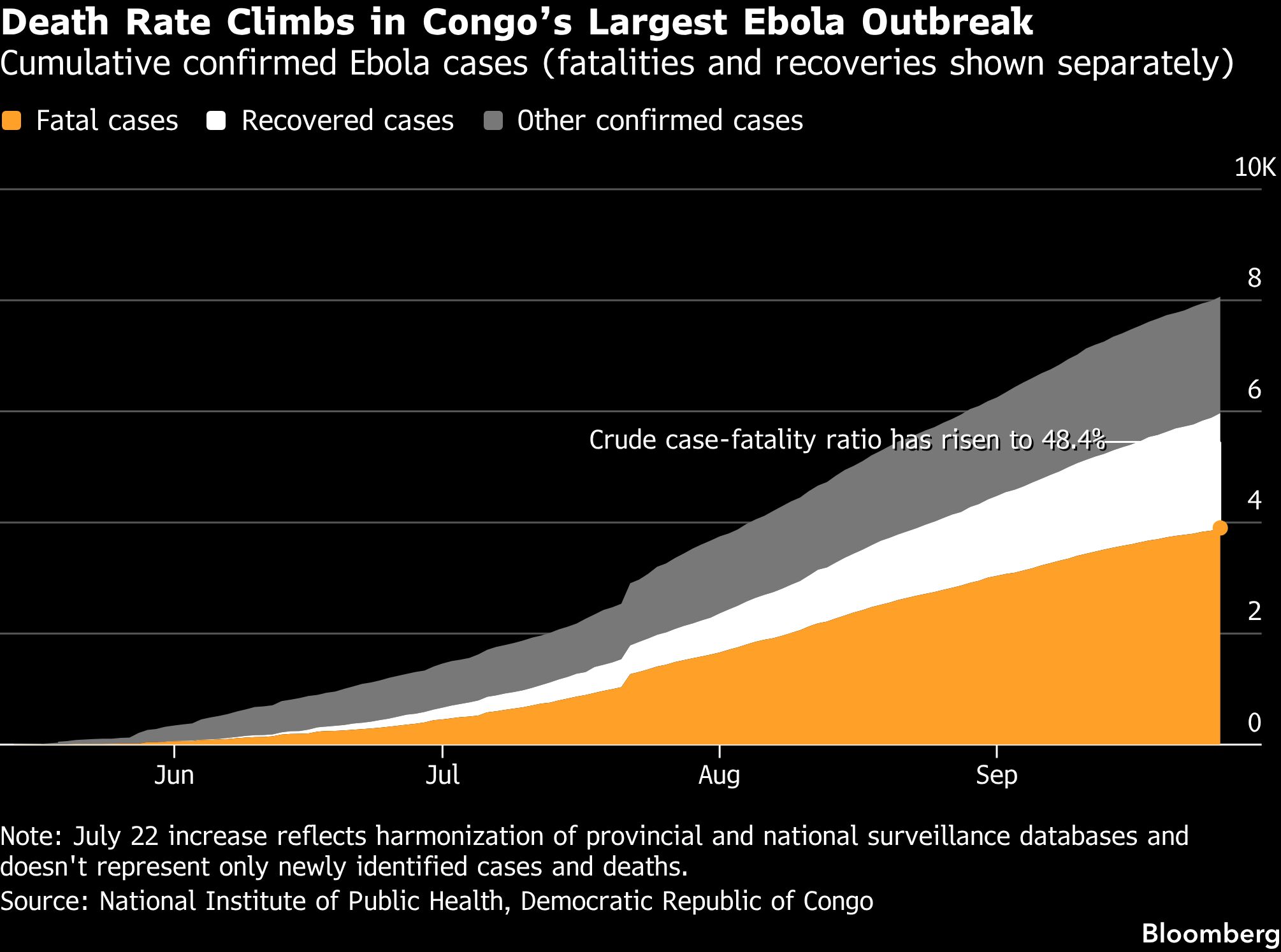
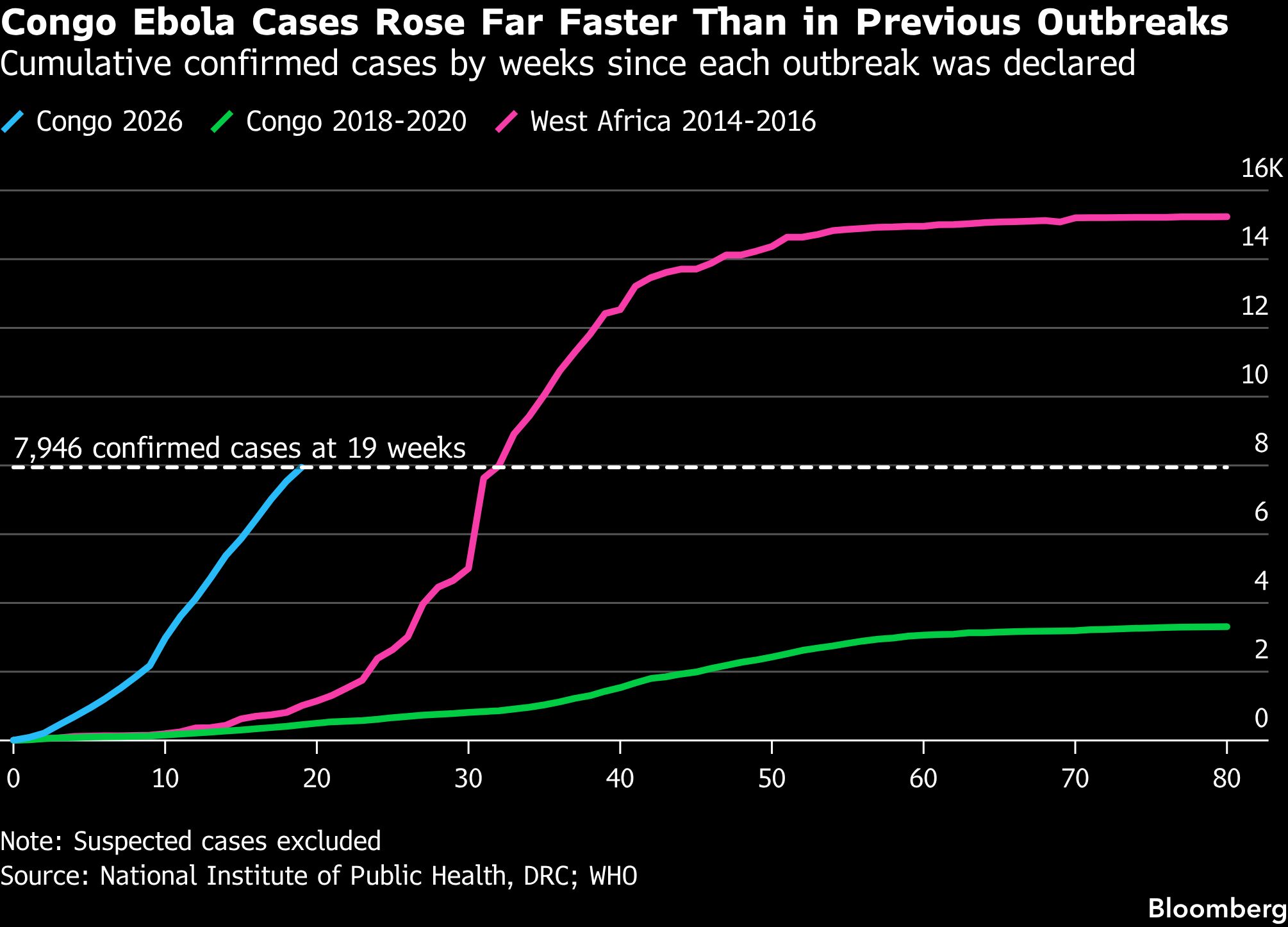
The disruption points to a widening toll from an epidemic that has already grown to more than twice the size of Congo’s previous biggest Ebola outbreak — and spread through more than twice as many health zones. The Central African nation reported 8,067 confirmed cases across 63 health zones in seven provinces through Sept 26.
The deterioration is most apparent in Ituri, where roughly three-quarters of confirmed Ebola cases have occurred. The use of routinely-monitored services fell from almost 24,900 patient encounters in April to just over 14,300 in June in four health districts.
No similar seasonal decline occurred during the same period last year, ACAPS said.
RELATED ARTICLES
- DRC's Ebola infections cross 8,000, government says
- WHO: DRC Ebola outbreak ‘increasingly heterogeneous’ with high community deaths
- DR Congo says Ebola outbreak ‘under control’ despite persistent risks
- UN warns response lagging as Ebola deaths in DR Congo surpass 3,000
The decline reflects both disruption to medical services and patients staying away because they fear contracting Ebola or being isolated if they go to a clinic, according to the report. Staffing and other operational pressures are also making some services harder to provide.
Children are among those most affected. First-dose measles vaccination fell 69 percent in Mongbwalu, a mining area that has been one of the epidemic’s major hotspots. Meanwhile, across Ituri province, health facilities administered more than 23,000 fewer routine childhood vaccine doses in May and June than they did in April.
Maternity care has also fallen, with births attended in health facilities declining almost 13 percent across Ituri between April and June.
The figures raise the prospect that Ebola’s eventual health toll will extend beyond patients infected with the virus. Fewer vaccinations can leave more children susceptible to measles and other preventable infections, while fewer births in health facilities increase the risk that dangerous complications will go untreated. ACAPS said the scale of those effects can’t yet be estimated.
Signs of disruption are emerging elsewhere. Use of maternity services has declined at health facilities assessed in Tshopo, a province farther west along the Congo River, the National Institute of Public Health said in a report Monday. At one facility in neighboring Bas-Uélé province, coverage of first prenatal visits fell from 100 percent in July to just 58 percent in August.
The outbreak is also depleting the workforce needed to keep ordinary health services running. At least 239 health and care workers had contracted Ebola and about 50 had died by Sept 24, according to ACAPS. Delayed pay, work stoppages and rising workloads are further reducing the personnel available for both Ebola patients and routine care.
In one area of Ituri’s Djugu territory, nine of 12 local health posts suspended operations after becoming overwhelmed by patients, according to reporting cited by ACAPS.
The outbreak is simultaneously increasing demand for laboratories, ambulances, protective equipment and other resources also needed to treat people without Ebola.
