

Inland province has emerged as one of China's fastest-rising production centers
In an old Chinese family photo album, a roll of Lucky color film might once have captured a birthday, a wedding or a first day at school. Today, the film itself has faded from daily life, but the technology behind it has not.
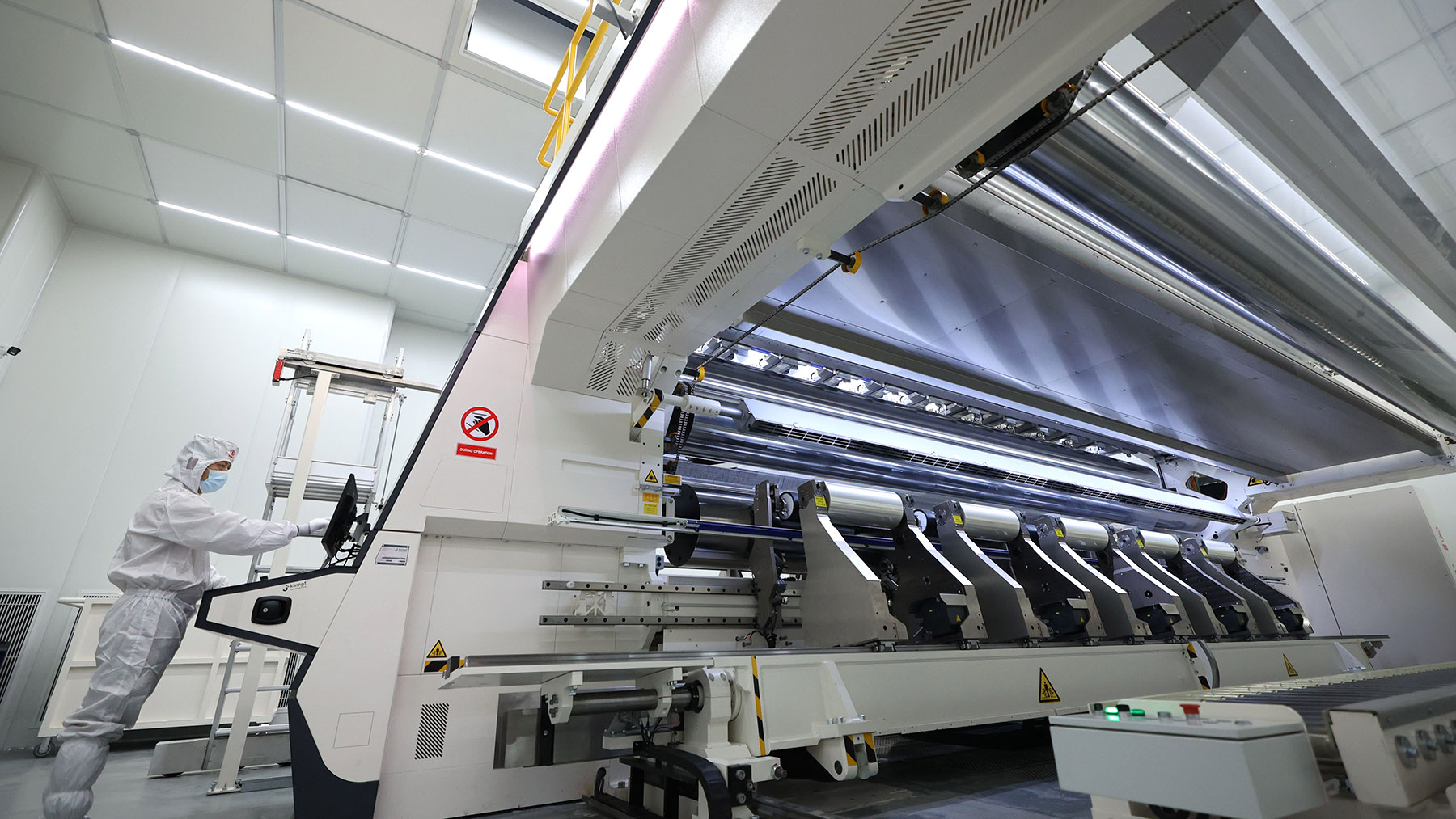
At Hefei Lucky Science & Technology Industry Co, transparent sheets of optical film now stream through automated production lines, destined for televisions, laptops, smartphones and other electronic products. What looks like an unremarkable sheet of plastic can help control how light passes through a screen, affecting brightness, clarity and energy use.
Founded from a Chinese photographic film business dating back to 1958, the company set up its Hefei operations in Anhui province about two decades ago as it shifted into high-end optical materials.
READ MORE: China to further prioritize AI-driven manufacturing
That transition offers a window into a much bigger change sweeping through Anhui, an inland province that has emerged as one of China's fastest-rising manufacturing centers.
China's most advanced factories are not becoming less important, but the things that increasingly determine their competitiveness are becoming harder to see: the chemistry inside a film, the algorithm behind a production schedule, the data streaming from a welding robot or an artificial intelligence system deciding whether something on the line needs attention.
In other words, the factory is no longer defined simply by its walls.
That shift was on display when the 2026 World Manufacturing Convention opened in Hefei, Anhui's capital, on Sunday. The event has attracted more than 1,000 guests, including over 500 overseas representatives.
More than 900 companies are set to showcase over 10,000 products across 70,000 square meters, ranging from intelligent connected vehicles and semiconductors to robots, embodied AI, quantum technology and biomanufacturing. Organizers have also identified 946 potential cooperation projects worth more than 400 billion yuan ($59.72 billion).
Liang Yanshun, Party secretary of Anhui, said at the convention that every minute, factories across Anhui produce about 190 home appliances, 50 laptop computers and four new energy vehicles.
"Such momentum benefits from Anhui's decades of technological innovation and intelligent transformation. More and more Anhui-made products are setting sail overseas and benefiting consumers around the world," he said.
The convention comes as Anhui moves unusually quickly up China's industrial rankings. Latest data from the Anhui provincial government showed that during the 14th Five-Year Plan period (2021-25), revenue from Anhui's industrial enterprises above a designated size climbed to 5.9 trillion yuan from 3.8 trillion yuan, taking the province to fifth place nationally.
Behind those numbers lies a broader experiment: whether China can turn the scale it built over decades into deeper technological and systems-level advantages.
Battle fought in microns
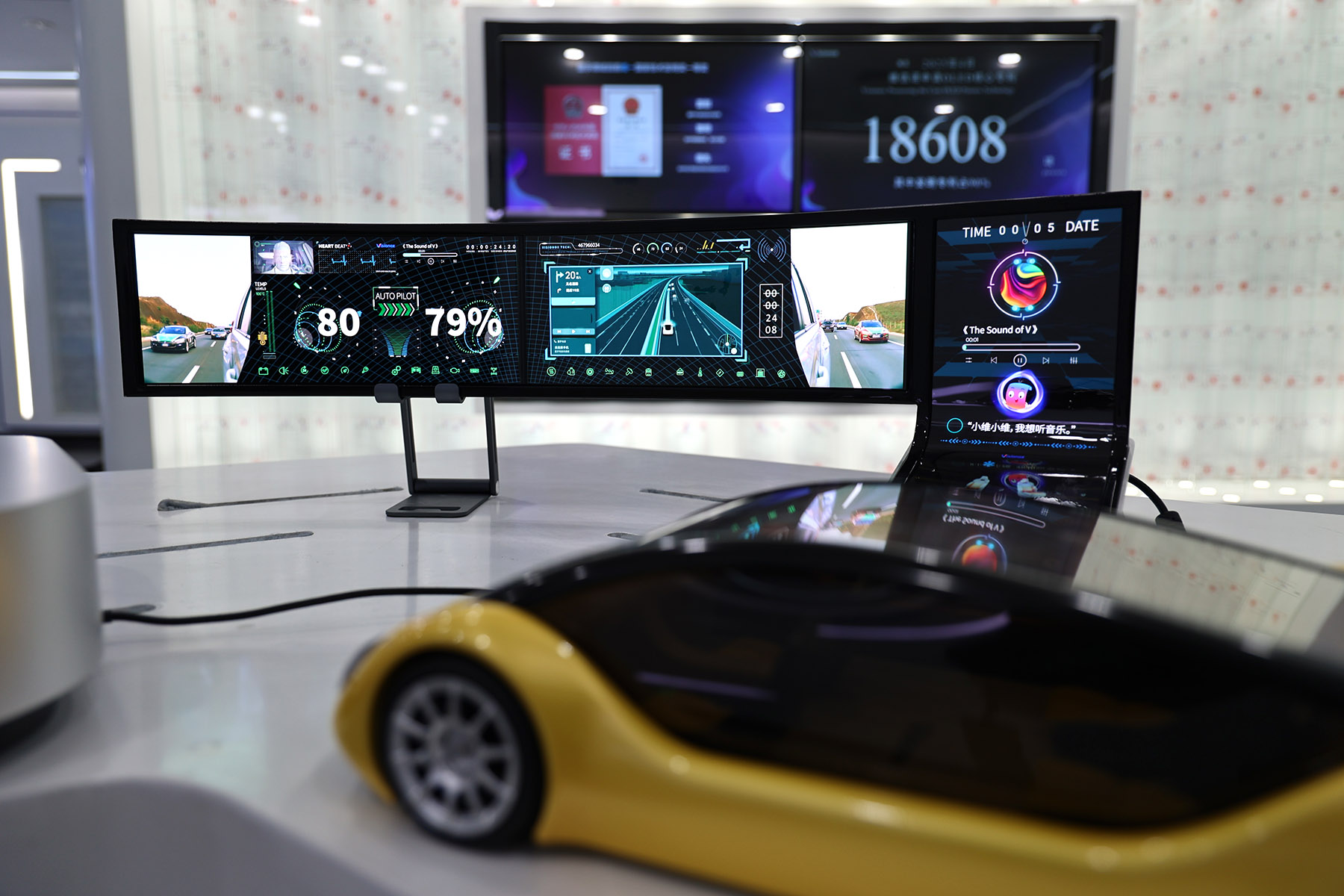
Inside Hefei Lucky, that transformation can be held between two fingers. Place one of its polarizing films over a demonstration LCD screen and an image suddenly appears. Remove it, and the image disappears.
Zhu Yejian, deputy general manager of Hefei Lucky, said the company mainly produces optical films used inside LCD televisions, which include reflective films, diffusion films and composite films, as well as base materials used in polarizing films.
"These products also extend into laptops, smartphones, multilayer ceramic capacitors and protective films for foldable phones," Zhu said. "They may look simple, but making them reliably is not. Twenty years ago, most of these films relied on imports."
The problems were often microscopic: scratches, tiny surface defects, unevenness, thermal instability and optical imperfections. Over two decades, Hefei Lucky repeatedly upgraded equipment and production processes to tackle those issues, Zhu said, allowing the company to substitute domestically made products for imported ones in areas it had targeted.
It captures one of the quieter shifts in Chinese manufacturing.
A generation ago, industrial progress was often measured in tons of steel, kilometers of production line or millions of units rolling from factories.
Now some of the toughest industrial battles are fought across microns.
The accumulated skills that Lucky once used to make photographic film — forming films, coating them and controlling microscopic structures — did not disappear with the camera roll. They migrated into materials buried deep inside modern electronics.
The surrounding district tells a similar story.
Hefei Xinzhan High-tech Industrial Development Zone has gathered nearly 300 companies across the new-display supply chain, including BOE, Visionox and SeeYA Technology, creating a cluster in which panel makers, material suppliers and equipment companies sit increasingly close to one another.
That clustering matters because modern manufacturing competition is increasingly less about a single finished product than about how much of the difficult technology underneath it can be controlled, improved and scaled locally.
Invisible factory manager
A short drive away, another old industrial company is confronting the same shift from a different direction.
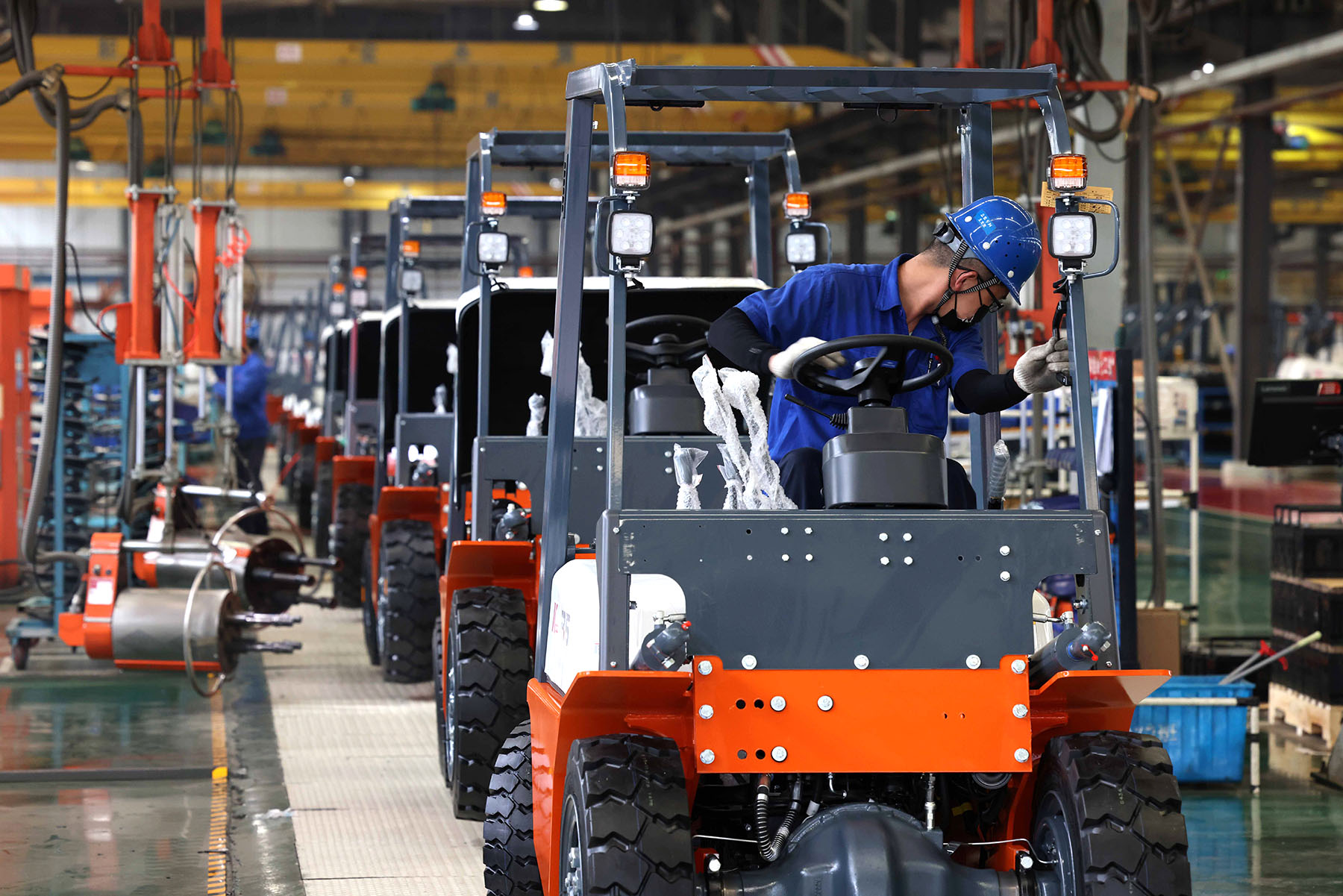
Anhui Heli Co traces its history to 1958 and is one of China's biggest forklift manufacturers. In 2025, it sold 394,500 vehicles and generated more than 19.8 billion yuan in revenue, according to the company.
For decades, a factory like Heli's depended heavily on something difficult to write into a balance sheet: human experience.
An experienced production manager knew which batch of parts was late. A veteran technician could hear that a machine sounded wrong. Dispatchers walked the shop floor asking where bottlenecks had formed.
Now much of that information is being pulled into what Heli describes as a "digital brain".
Working with China Telecom Anhui and other technology partners, Heli has deployed a manufacturing operations management platform that links data from people, machines, materials, production and quality systems.
Yin Bin, assistant director of the information technology department at Anhui Heli, said: "Through this digital brain, we can connect data across the whole production process. A forklift can now leave a digital trail showing when production began, which robot welded it and what current and voltage were used during the process."
"The data itself tells us what is happening," Yin said.
On one frame-welding line, 12 welding robots and a handling robot automatically identify, move, clamp, weld and calibrate parts. Labor efficiency has risen by more than 80 percent, Heli said. On a mast-welding line, it has increased by more than 60 percent.
The broader factory has also been moving from reactive management toward predictive management — using connected equipment, industrial networks and AI to detect abnormal conditions earlier and coordinate production more closely.
The worker has not disappeared. Neither has the factory manager. But some of the constant checking, chasing and coordinating that once happened through footsteps and phone calls is migrating into software. The machines are still noisy. The "manager" coordinating them is increasingly invisible.
When a car inspects itself
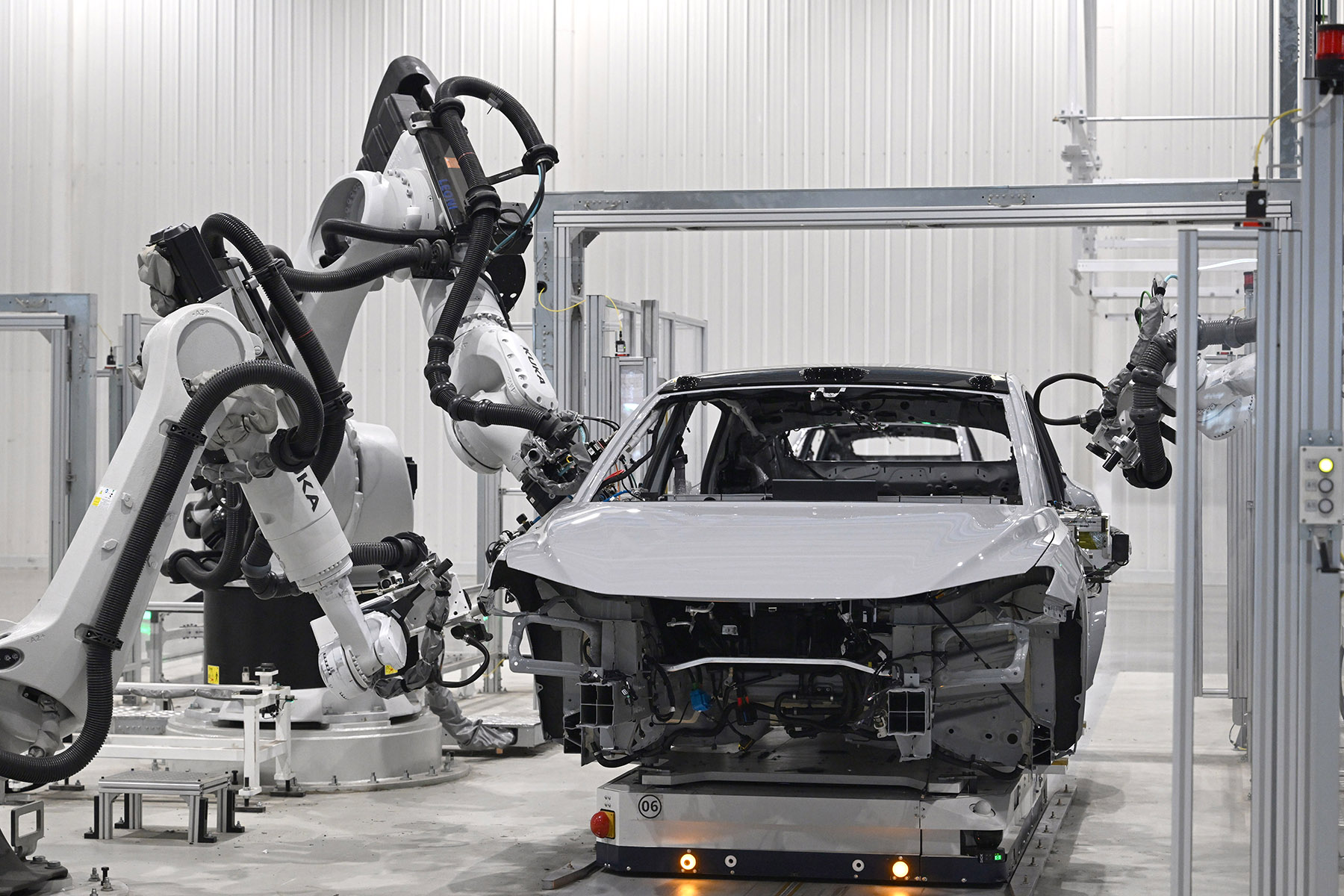
At Nio's factory in Hefei, the same idea is being pushed into automobile manufacturing, an industry built over more than a century around the principle of repetition.
The body shop alone has 941 robots, while joining processes are fully automated and multiple vehicle platforms and models can move through production simultaneously.
Nio said that around 80 percent of manufacturing scenarios at the factory are supported by AI-driven decision-making using in-house industrial algorithms, foundation models and specialized AI models.
The World Economic Forum added Nio's factory to its global lighthouse network in June, citing a real-time closed-loop system linking vehicles, battery-swap networks and digital twins capable of managing more than 3.6 million vehicle configurations.
One of the clearest examples comes near the end of the line. A newly built vehicle enters Nio's automated inspection system with no quality inspector sitting behind the wheel.
The lights switch themselves on. Seats begin to move. Electronic functions run through their commands. In about three minutes, nearly 1,000 functional checks can be completed.
A car, in effect, has inspected itself.
From scale to systems
Together, Lucky, Heli and Nio show three different layers of the same industrial shift.
At Lucky, competitiveness has moved deeper into materials. At Heli, it has moved into data and industrial software. At Nio, algorithms are entering decisions once made sequentially by production engineers, quality inspectors and line managers.
That shift matters beyond Anhui.
ALSO READ: Anhui boosting leading high-tech bona fides
Wang Peng, a researcher of Beijing Academy of Social Sciences, said: "China remains under pressure to move beyond a manufacturing model identified primarily with low costs, scale and fast replication. At the same time, other economies, including India, the United States and European countries, are spending heavily to build or rebuild advanced manufacturing capacity.
"The next contest is therefore not simply over who owns the most factories. It is over who develops the materials that go into them, who writes the industrial software, who can turn factory data into usable knowledge, and who can organize increasingly complex supply chains without losing speed or quality," Wang said.
Contact the writers at chengyu@chinadaily.com.cn
