

Local five-year blueprint emphasizes finance and I&T for economic growth
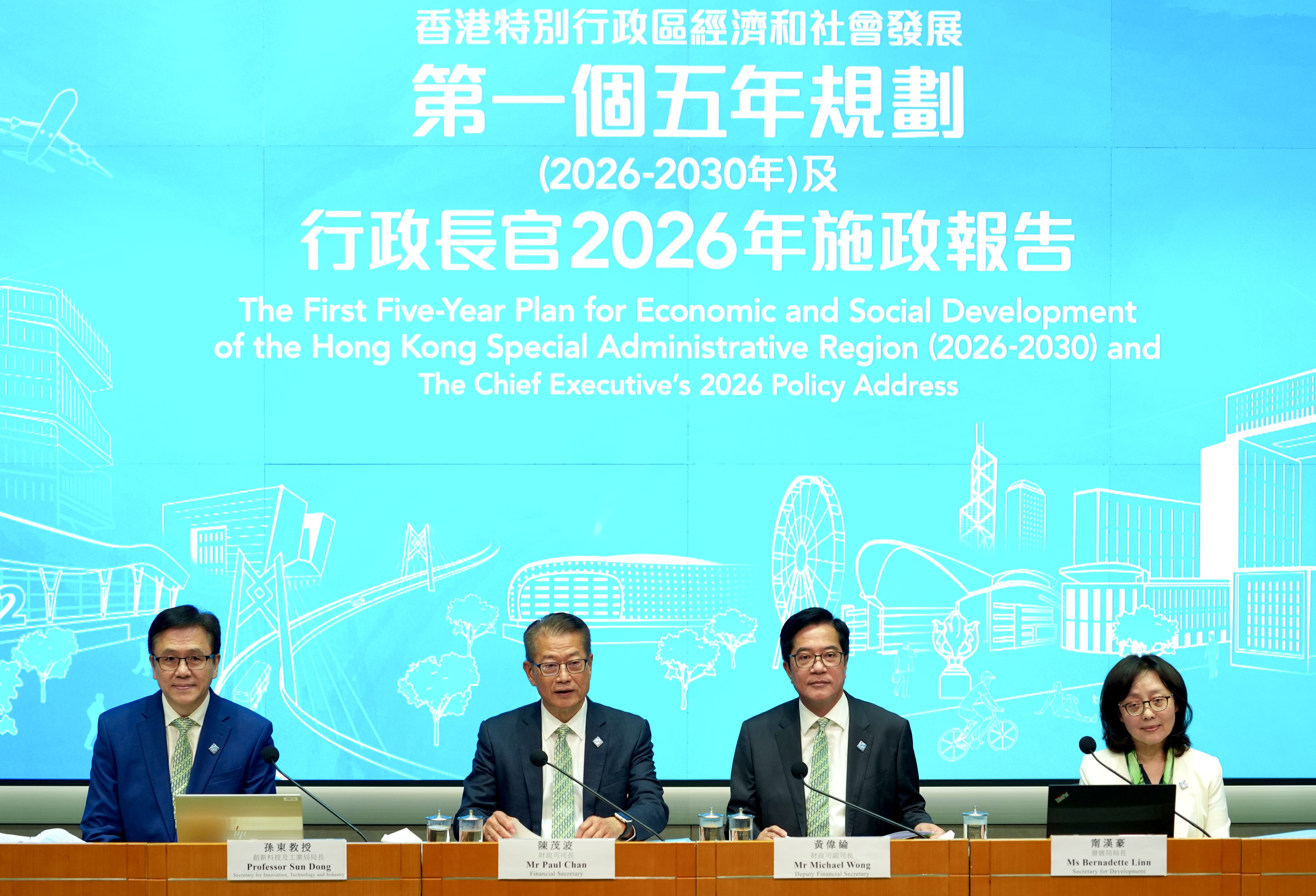
Hong Kong is moving full steam ahead with plans to create a dual-engine economic growth model anchored by finance and innovation and technology (I&T), as the special administrative region government vowed to speed up development of the Northern Metropolis project in its first-ever five-year plan.
With construction underway in four of the nine new development areas of the Northern Metropolis, delivering tangible progress on the mega project has become a key government priority. The Northern Metropolis was given a dedicated chapter in the HKSAR’s First Five-Year Plan for Economic and Social Development (2026-2030), and Chief Executive John Lee Ka-chiu’s fifth Policy Address, both released on Wednesday.
ALSO READ: Northern Metropolis at heart of five-year plan, Policy Address thrust
At a news conference on Thursday, Financial Secretary Paul Chan Mo-po said that accelerating development of the Northern Metropolis and promoting the integration of innovation, technology, and industry will inject stronger momentum into Hong Kong’s high-quality development and create more jobs and career opportunities for residents.
The Northern Metropolis is not merely a land resource, but also uniquely positioned to integrate talent, research and development, production, and the institutional advantages of cross-border collaboration, he added.
According to the five-year blueprint, the Northern Metropolis will be developed “with the objectives of a university town, I&T, industry, and an environment suitable for living, work, and travel”.
READ MORE: HK's 5-year plan, policy address aim to improve housing, help grassroots
The HKSAR government will strive to build the Hetao Shenzhen-Hong Kong Science and Technology Innovation Cooperation Zone — of which Hong Kong Park is a major project under the Northern Metropolis — into a world-class I&T platform. The blueprint also says that development of areas such as San Tin Technopole, the Sandy Ridge Data Facility Cluster, Hung Shui Kiu, and Lau Fau Shan will speed up more quickly.
Meanwhile, the Northern Metropolis is depicted as a critical pillar in forging real economic growth, together with the financially anchored Harbour Metropolis, located in the southern part of the city and encompassing key business districts such as Central and Wan Chai.
“The key is not to separate finance from I&T, but to foster a positive interaction between the two,” Chan said. “Use finance to support I&T, and let I&T drive the industry. This virtuous cycle will create more new opportunities for the financial and professional services sectors.”
READ MORE: HK’s ‘AI City Brain’ to wrap first phase by 2028
The SAR government also aims to raise its spending on innovation activities to 3 percent of the city’s gross domestic product after 2030, up from about 1.63 percent in 2024.
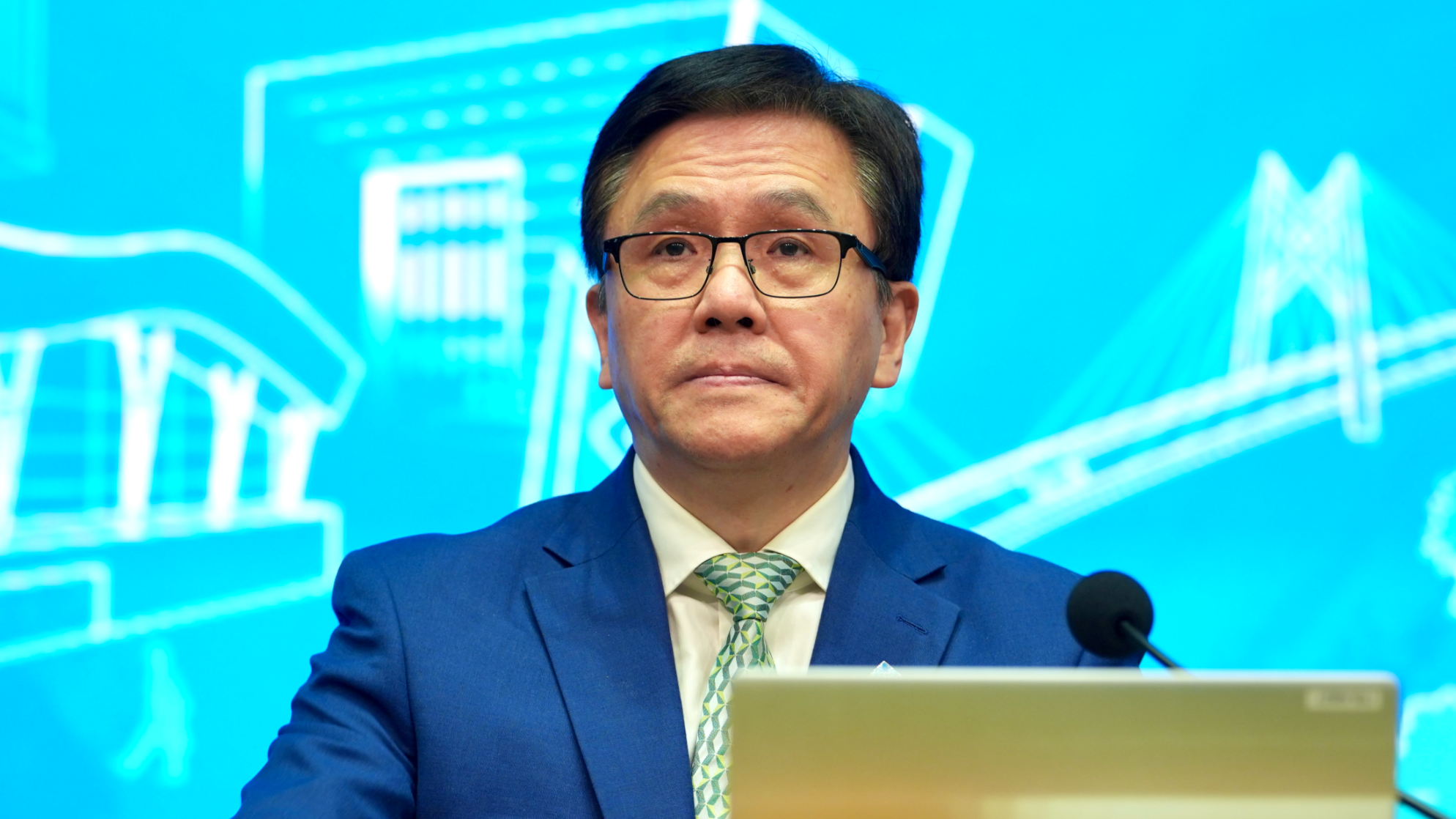
Secretary for Innovation, Technology and Industry Sun Dong said this is a “relatively aggressive target”, but it demonstrates the government’s confidence and strong determination to achieve the goal.
Citing several European countries’ plans to lift the ratio to 4 percent, Sun said that if Hong Kong is aiming to be an international I&T center, it must likewise invest at a certain level.
He added that the indicator includes not only expenditures on innovation activities in educational institutions, but also those in the business sector, such as product design, and software development conducted by enterprises.
“We want to use this indicator to push for more investment in innovation activities, not only from the government side but also mainly from the industry side,” he said.
Global management consulting firm Accenture welcomed the new step by the SAR government. Robert Hah, the company’s Hong Kong office lead, said meeting the goal of 3 percent research spending of GDP beyond 2030 will require far more than just public investment, while Accenture has already seen many C-suite leaders in Hong Kong say they intend to expand investment in artificial intelligence.
Hah said the company looks forward to working with other businesses in the city to translate policy momentum into measurable productivity, growth and competitiveness.
Contact the writer at gabylin@chinadailyhk.com
