

Development blueprints to accelerate ambitious Northern Metropolis project
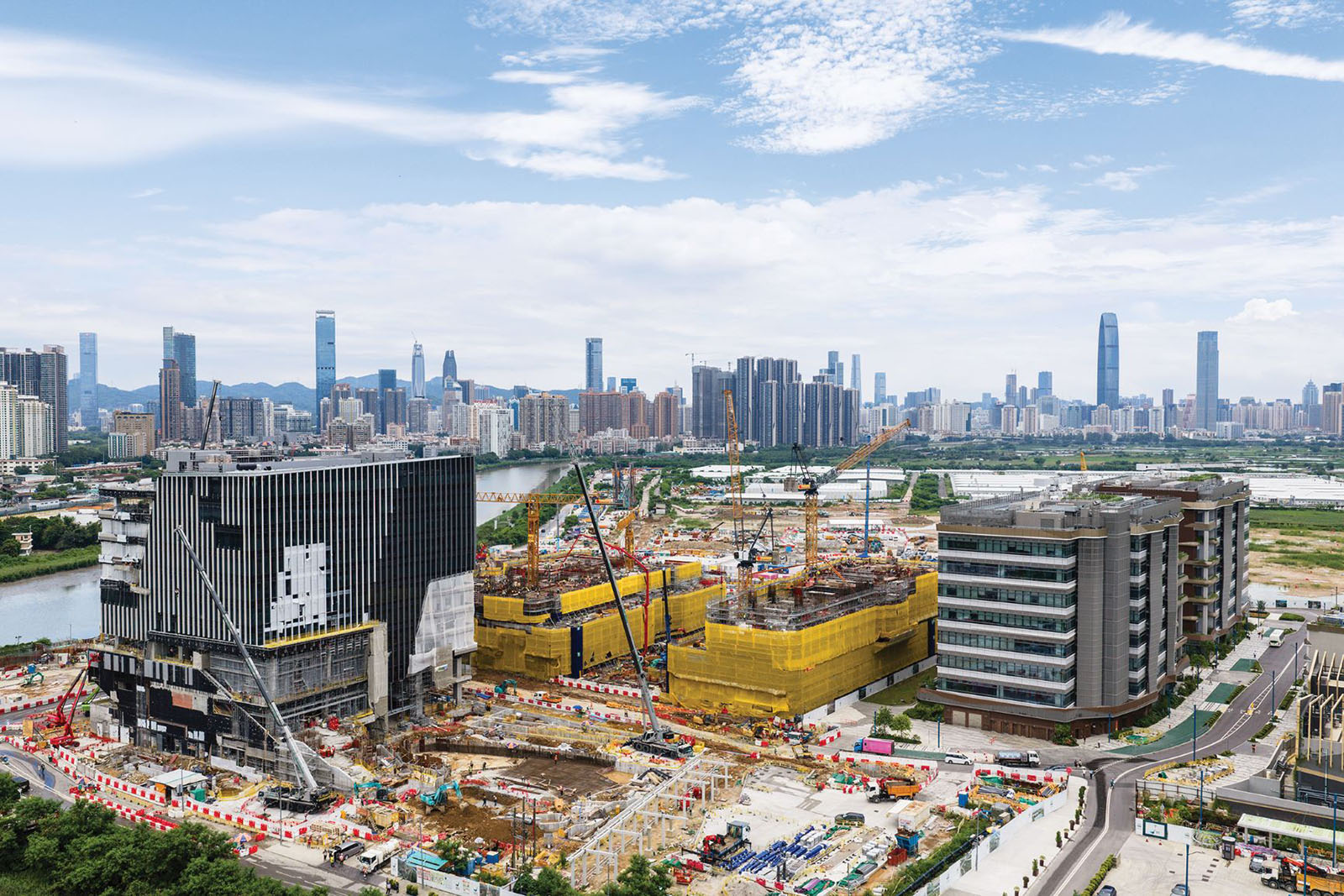
Hong Kong’s ambitious Northern Metropolis project has emerged as a centerpiece of the city’s inaugural five-year plan for economic and social development (2026-30) and its annual Policy Address, with a package of measures unveiled on Wednesday to accelerate construction, particularly of its three university towns.
The measures include significantly expanding the university towns’ total land area, clarifying their layout and positioning, creating a flagship project for them at the Hong Kong Park of the Hetao Shenzhen-Hong Kong Science and Technology Innovation Cooperation Zone, as well as increasing government-funded postgraduate places.
The total campus area of the three planned university towns — in San Tin, Hung Shui Kiu and Ta Kwu Ling in the New Territories — has been tripled to 300 hectares, roughly equal to the combined area of Hong Kong’s eight publicly funded universities, according to a government source.
READ MORE: Northern Metropolis at heart of five-year plan, Policy Address thrust
Built around the concept of “one town, five elements” — education, technology, industry, talent and urban development — the total area of the three towns will be expanded to more than 1,000 hectares, encompassing campuses, adjacent technology and industry zones and residential communities.
San Tin University Town will focus on medicine, life and health technology, artificial intelligence, robotics, microelectronics and emerging industries, while Hung Shui Kiu will concentrate on smart manufacturing and internationalized talent. The Ta Kwu Ling town will be geared toward developing emerging and traditional industries, along with an arts and leisure ecosystem.
The Policy Address unveiled detailed plans to accelerate the projects. Building 1 at the Hong Kong Park in the Hetao zone, which is due to be completed late this year, will serve as the flagship project for launching the university towns and bring together frontier research and capabilities from around the world.
As construction of the university towns gathers pace, the authorities will gradually increase the number of government-funded research postgraduate places by about 30 percent, from 7,200 at present to 9,600 in the 2030/31 academic year.
The five-year blueprint also pledged to build a platform for diversified industrial development linking different clusters in the Northern Metropolis, including the San Tin Technopole, Sandy Ridge Data Facility Cluster, Lau Fau Shan Digital Technology Hub and Advanced Construction Industrial Park in Yuen Long South.
To support these goals, the Policy Address set a timeline for launching all nine new development areas in the metropolis. It calls for statutory planning and related procedures for Lau Fau Shan to begin this year, while site formation and infrastructure works for Ngau Tam Mei are scheduled to start in the first half of 2027.
To facilitate the cross-border flow of research resources, a government source told China Daily that pilot projects covering bio samples, capital and data will be rolled out this year.
Further steps will be taken to streamline procedures and legislation, with the aim of cutting the time and costs of Northern Metropolis development. According to the Policy Address, a digital platform will shorten the approval time for works projects by three to six months, while the time required for initial approval of building plans for new railway projects will be halved to 30 days.
Chief Executive John Lee Ka-chiu announced the highlights of both documents on Wednesday. The full texts exceed a combined 100,000 Chinese characters. The five-year development plan is designed to align with the nation’s 15th Five-Year Plan (2026-30), while the Policy Address, the last of Lee’s current term, sets out detailed measures under broader development directions.
Experts and stakeholders welcomed the plans and offered suggestions on implementation.
Ryan Ip Man-ki, vice-president of local think tank Our Hong Kong Foundation, said that given the university towns’ large planned area, a phased approach should be adopted.
ALSO READ: CE: HK residents to enjoy higher income, improved city in 5 yrs
For Hung Shui Kiu, where land will be available for institutions to move in this year, a research and academic community for young people could be developed first with market investment, he said. He also called for faster construction of transportation infrastructure in the northwestern New Territories to meet the commuting needs of researchers and residents, as well as travelers arriving through the new Huanggang Port, which will open soon.
In a statement, Nancy Ip Yuk-yu, president of Hong Kong University of Science and Technology, said HKUST had received “overwhelmingly positive feedback” when promoting the university towns’ vision to leading overseas universities in recent years.
Many institutions have expressed strong interest in participating in the Northern Metropolis’ development, she said.
Ip also said HKUST’s third medical school, which will be located in the Northern Metropolis, is progressing at full speed and will help the area develop into an international health and medical innovation hub.
Contact the writers at amberwu@chinadailyhk.com
