

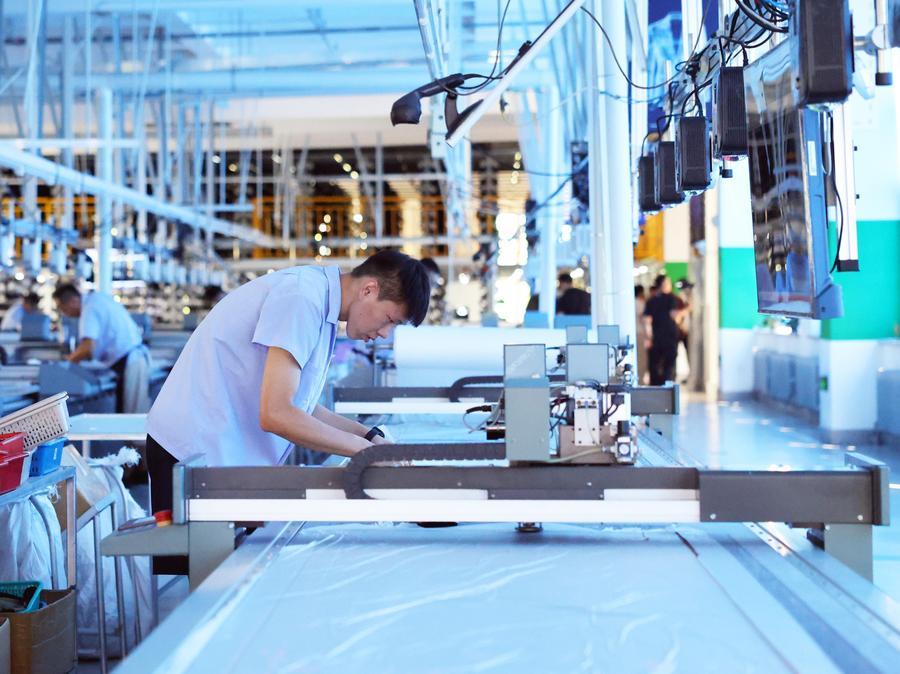
BEIJING – China's value-added industrial output expanded 5.2 percent year-on-year in August, accelerating by 0.7 percentage point from the previous month, official data showed Tuesday, with industrial robots among the standout products.
High-tech manufacturing output jumped 16.7 percent year-on-year in August, while equipment manufacturing rose 12.1 percent, outpacing overall industrial output growth by 11.5 and 6.9 percentage points, respectively, according to the National Bureau of Statistics.
At the product level, output of industrial robots jumped 34.6 percent year-on-year in August, while lithium-ion batteries and 3D printing equipment saw increases of 57.2 percent and 29.9 percent, respectively.
The rapid growth comes as industrial robots are finding applications across a widening array of industries in China. Data released in July by the China Machinery Industry Federation showed that homegrown industrial robots are now used in 253 industry groups, covering more than half of all such groups nationwide.
In terms of broader sectors, the value-added output of the mining sector fell 1.4 percent year-on-year, while that of the manufacturing sector grew 6.1 percent. The value-added output of the electricity, heat, gas and water production and supply sectors rose 4.9 percent.
Looking at ownership, the value-added output of state-owned and state-holding enterprises grew 3 percent year-on-year, while that of private enterprises rose 3.7 percent.
In the first eight months of 2026, industrial output grew 5.3 percent year-on-year, data revealed.
The bureau's data also showed that the purchasing managers' index for China's manufacturing sector in August stood at 49.8, while the index measuring firms' expectations for production and business activity came in at 53.8, signaling continued confidence in the outlook.
From January to July, total profits of China's major industrial firms reached 4.58 trillion yuan ($677.12 billion), up 17.6 percent year-on-year.
Industrial output is used to measure the activity of large enterprises each with an annual main business revenue of at least 20 million yuan.
ALSO READ: China's major industrial firms post double-digit rise in profits
Fu Linghui, a spokesperson for the National Bureau of Statistics, told a press conference on Tuesday that industrial production remained stable in August despite volatility in global energy and raw material markets, supported by efforts to secure energy supplies and advance the green transition.
He added that emerging industries continued to gain momentum as technological and industrial innovation became more integrated, with new growth drivers contributing more than 60 percent of the increase in industrial output.
Retail sales
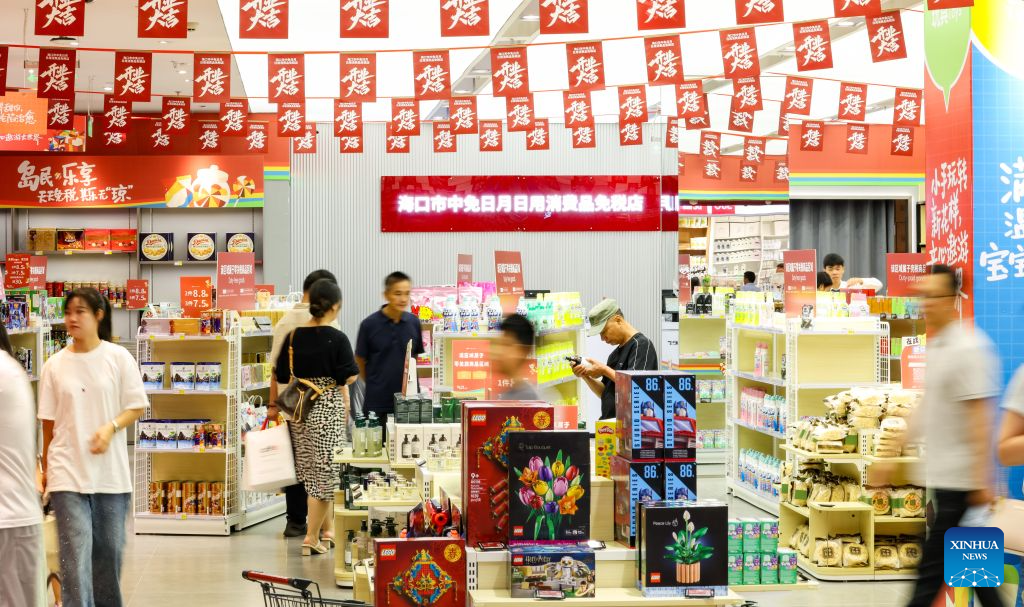
Tuesday's data also showed China's total retail sales of goods and services, a major indicator of the country's consumption strength, increased by 2.5 percent year-on-year in the first eight months.
Retail sales of services rose 4.9 percent year-on-year during the January-August period, outpacing the 1-percent growth in goods sales, according to the bureau.
Among service categories, retail sales of communication and information services, tourism consulting and rental services, and cultural, sports and leisure services posted relatively rapid growth.
In the first eight months, retail sales of consumer goods, including sales of goods and catering revenue, totaled 32.76 trillion yuan, up 1.1 percent year-on-year, the data showed.
ALSO READ: China moves to unlock county-level consumption, energize demand
Online retail sales of goods and services reached 13.48 trillion yuan, up 4.6 percent. Of the total, online goods sales rose 4.3 percent to 8.42 trillion yuan, while online service sales increased 5.1 percent to 5.06 trillion yuan.
In August alone, retail sales of consumer goods stood at 3.98 trillion yuan, up 0.4 percent year-on-year.
Fixed-asset investment
During the first eight months, China's fixed-asset investment dropped 7.2 percent year-on-year, according to the official data.
Investment totaled around 29.3 trillion yuan during the period, the bureau said.
Excluding the property sector, the country's fixed-asset investment decreased by 4.2 percent in the first eight months of the year.
Notably, investment in intellectual property products rose by 9.2 percent year-on-year.
Investment in high-tech industries rose 5.2 percent year-on-year. In particular, investment in information service industry, aerospace and spacecraft manufacturing, and electronic and communication equipment manufacturing increased by 22.7 percent, 14.9 percent, and 6.9 percent, respectively, in the first eight months.
By industry, investment in the primary industry decreased by 2.4 percent year-on-year, that in the secondary industry was down by 2.9 percent, and that in the tertiary industry down by 9.9 percent.
In terms of sectors, investment in infrastructure declined by 4 percent year-on-year, that in manufacturing was down by 2.3 percent, and that in real estate development declined by 19.9 percent.
Home price
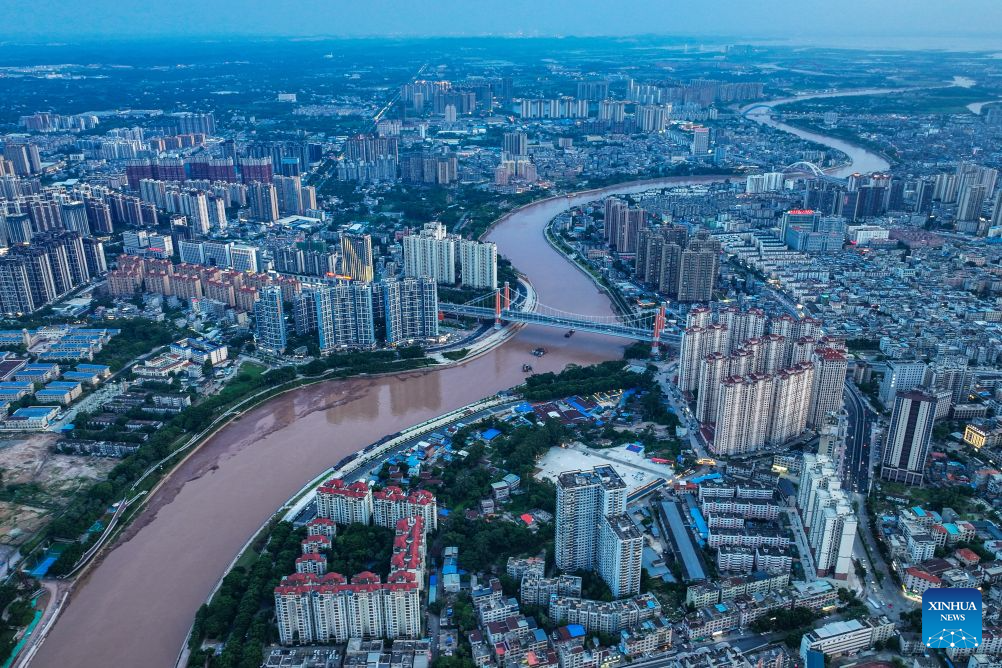
On the property market, major Chinese cities continued to report narrowed year-on-year declines in overall home prices in August, the bureau's data showed.
In the first-tier cities of Beijing, Shanghai, Guangzhou and Shenzhen, new home prices fell 0.9 percent year-on-year, 0.2 percentage points narrower than the previous month, according to the data.
Second-hand home prices in the four cities dropped 2.7 percent year-on-year overall, with the decline narrowing from 3.7 percent in July.
As to second- and third-tier cities, price declines in both new and second-hand homes moderated compared with July.
On a monthly basis, home prices in first-tier cities rose in August, while second- and third-tier cities generally registered narrowed declines.
Among 70 large and medium-sized cities tracked, 21 recorded flat or rising new home prices month-on-month in August, two fewer than the previous month. Eight cities saw flat or rising second-hand home prices, unchanged from July.
The bureau releases a monthly home price report tracking market changes in 70 major cities, including four first-tier cities, 31 second-tier cities and 35 third-tier cities.
