

TEHRAN/WASHINGTON — A top Iranian security official said early Tuesday that Iran will not negotiate with the US unless its conditions are met.
Secretary of Iran's Supreme National Security Council Mohsen Rezaei made the remarks in a post on social media platform X in response to US President Donald Trump's remarks on Monday, in which Trump claimed that Tehran wanted to make a deal "quickly and badly" and that Washington could resume negotiations with it.
"The failing Nation of Iran wants to make a deal, quickly and badly. I will determine whether or not the USA will choose to engage -- The concept of which we are open to," Trump wrote on Truth Social.
"Don't get distracted by the US president's mixed signals -- from 'no negotiations' to 'we're ready to talk.' The stakes around oil and the straits have changed. Damage control won't stop what's coming," Rezaei said.
"No talks until Iran's conditions are met. Period!" he stressed.
On June 18, the US and Iran signed a memorandum of understanding (MoU) on ending the war in the region on all fronts, including Lebanon.
Under the MoU, they were scheduled to hold negotiations within a period of 60 days, which ended on Aug 17, to reach a final agreement, but the talks' fate remains unclear following a series of recent escalations between the two countries.
US watchdog reports weapons shortfalls, damage from Iran war
A US government watchdog on Monday released its first report on the impact of the Iran war, detailing shortfalls in advanced weapons and damage to US aircraft, military bases and diplomatic facilities in the Middle East, multiple US media outlets reported.
The Pentagon inspector general's report, covering the period from April 1 to June 30, offered the fullest official accounting so far of the conflict's costs in American lives, taxpayer dollars and physical damage.
The war with Iran "has resulted in strategic inventory shortfalls and revealed industrial base bottlenecks for munitions resupply" of advanced weapons, said the report.
The report said Iranian strikes damaged or destroyed hundreds of buildings and other structures at US bases in Kuwait, Bahrain, Qatar, the United Arab Emirates (UAE), Saudi Arabia, Iraq, Oman and Jordan. Dozens of US aircraft and drones were also damaged or destroyed.
US Defense Secretary Pete Hegseth told Congress in late July that the war had cost $37.5 billion at that point.
The report also provided previously undisclosed figures on damage to US diplomatic facilities.
US diplomatic posts in Iraq, Kuwait, Saudi Arabia and the UAE suffered the most extensive physical damage, with the estimated cost reaching 184 million dollars, according to the report.
The evacuation operation, carried out through private and commercial flights as well as land and sea transportation, cost more than 11 million dollars as of late June, it added.
IRGC: Oil tanker explodes after hitting naval mines in Hormuz
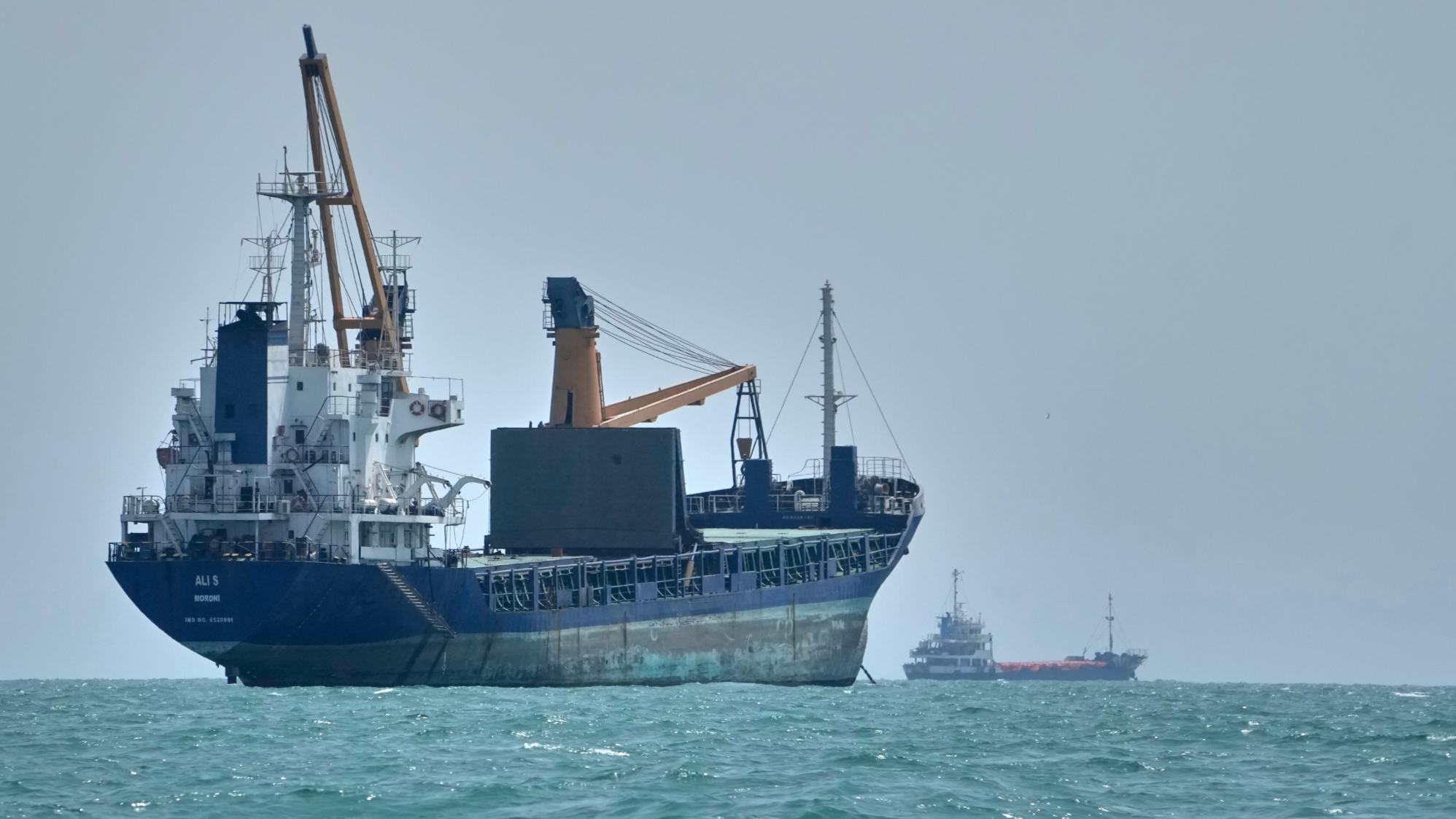
The Navy of Iran's Islamic Revolutionary Guard Corps (IRGC) said on Monday that a super oil tanker seeking to cross the Strait of Hormuz via the "forbidden" route south of the waterway exploded and caught fire after hitting naval mines.
In a statement on the IRGC's official news outlet Sepah News, the navy said efforts to contain the fire on the tanker, identified as "EL GAIA," were futile, and the entire vessel was engulfed in flames.
It added that warnings had been issued about the risks of using the "illegal" route in the strategic waterway, stressing that the strait remains closed and under the control of Iran's naval forces.
Earlier in the day, Iran's Persian Gulf Strait Authority (PGSA), the body responsible for maritime traffic in the Strait of Hormuz, warned insurance companies and classification societies against providing services to ships on its updated list of "violating" vessels.
In a post on its account on social media platform X, the PGSA said that insurance companies, protection and indemnity insurance (P&I) clubs, and classification societies "are warned to refrain from providing services to these vessels to avoid consequences arising from dealing with them."
Following US-Israeli strikes on Iran on Feb 28, Tehran restricted passage through the strategic waterway, while US forces imposed a naval blockade targeting vessels traveling to or from Iranian ports.
Report: Drone targets 2 fishing boats off Iran coast
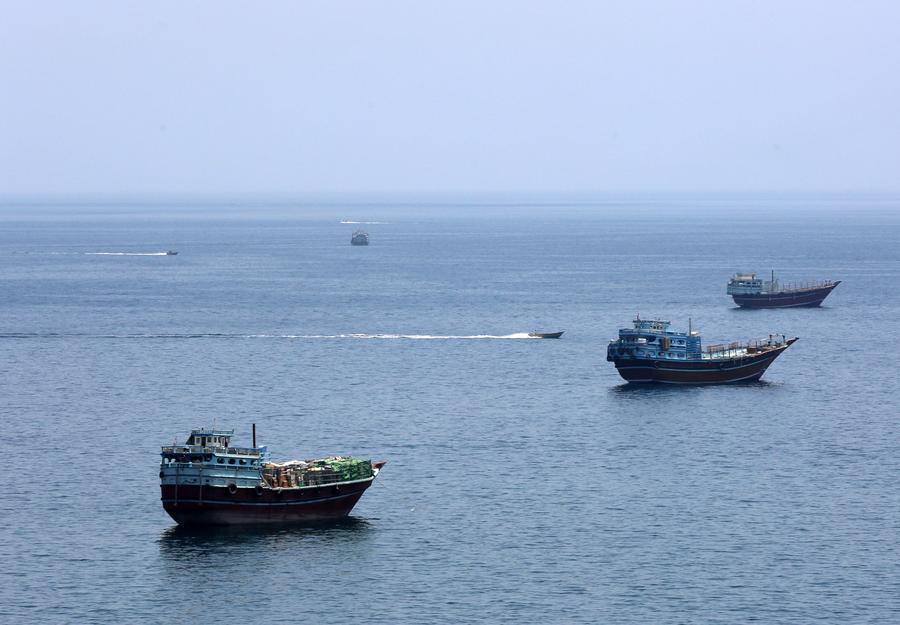
Two fishing boats were targeted in a drone attack off Iran's southern coast on Monday night, leaving a number of fishermen missing, the semi-official Mehr news agency reported.
The attack was carried out off the coast of the southern port city of Kargan and near Larak Island, Mehr cited Ahmad Nafisi, Hormozgan province's deputy governor for political and security affairs, as saying.
Search and rescue operations have been launched to find the fishermen, Nafisi added, noting that further details of the incident will be announced after investigation.
Iran says Oman meeting postponed at Saudi Arabia's request
Iran's Foreign Ministry spokesman Esmaeil Baghaei said on Monday that a meeting between the foreign ministers of Iran and Gulf states scheduled to be held on the same day in Oman was postponed at Saudi Arabia's request.
He made the remarks at the weekly press conference in the Iranian capital Tehran after Omani Foreign Minister Sayyid Badr bin Hamad Al Busaidi announced the meeting's deferral the previous day in a post on social media platform X.
Baghaei rejected "incorrect" reports that the meeting was postponed due to the ongoing developments between Saudi Arabia and Yemen's Houthis, describing such speculation as "giving a wrong address."
Iran blasts denial of Austria visa to nuclear chief
Also on Monday, Baghaei condemned Austria's "unjustified" move to deny the Iranian nuclear chief a visa and prevent him from attending an International Atomic Energy Agency (IAEA) conference in Vienna.
Baghaei stressed that the Austrian government, as the event's host, should have issued visas to members of the Iranian delegation in accordance with its obligations, while making the remarks at a weekly press conference in the Iranian capital.
He stressed that Iran has summoned Austria's charge d'affaires in Tehran and explicitly conveyed its protest to the Austrian government.
ALSO READ: Fresh violence sparks tension in Middle East
Baghaei said they level accusations, issue resolutions and release "incorrect" reports against Iran, and then prevent Iranian representatives from going and defending their country, describing such actions as "contradictory and a war in the diplomatic and legal areas to prevent Iran's voice from being heard by other countries."
He emphasized that Iran will use all its tools to prevent the achievement of that objective, adding that the Austrian government's pretext that it took the action under US pressure in no way absolves it of its responsibility as the host government.
Iran's state-run IRIB news agency reported Monday that Austria has denied a visa to the president of the Atomic Energy Organization of Iran Mohammad Eslami, who was scheduled to deliver a speech at the 70th Regular Session of the IAEA General Conference in Vienna later in the day, citing "obstructionism" by the US and certain other countries as the reason.
On Wednesday, the IAEA Board of Governors passed a resolution submitted by Britain, France, Germany, and the US by 23 votes in favor, three against, and eight abstentions, requesting "the (IAEA) director general to report" Iran to the UN Security Council and the UN General Assembly over the country's alleged nuclear "non-compliance."
