

In March, Hong Kong ranked third globally and first in the Asia-Pacific region in the Global Financial Centres Index. For nearly two decades, the city has consistently ranked either third or fourth worldwide. In 2025, Hong Kong also regained its position as the world’s leading venue for initial public offering fundraising. These achievements provide a clear answer to a frequently asked question: Is Hong Kong still Asia’s premier international financial center? The answer is an unequivocal yes. They reflect the enduring strength of Hong Kong’s fundamentals and the continued confidence that global investors place in the city. Yet the more important question is not whether Hong Kong remains an international financial center today, but what it must do to sustain and strengthen that position in the future.
 Nearly three decades after its return to the motherland, Hong Kong’s status as a leading financial hub in the Asia-Pacific region remains firmly intact. The “one country, two systems” framework has preserved the city’s distinctive institutional advantages, which continue to be highly valued by the international financial community. Equally important, Hong Kong benefits from its close connection with one of the world’s largest and fastest-growing major economies.
At the heart of Hong Kong’s success is its role as the Chinese mainland’s gateway to global capital markets. An increasing number of mainland enterprises have chosen to list in Hong Kong. For these companies, listing in Hong Kong is far more than a fundraising exercise. It provides access to international investors and requires compliance with internationally recognized accounting, governance, and disclosure standards. This process has contributed significantly to improving corporate governance practices. Ratings compiled by the Hong Kong Institute of Directors, for example, show a marked improvement in the governance performance of mainland-listed enterprises over the past two decades.
This gateway function continues to evolve. A growing number of biotechnology and artificial intelligence companies from the mainland have listed or are preparing to list in Hong Kong. Their presence has broadened and enriched the composition of Hong Kong’s capital market while creating new opportunities for global investors to participate in the mainland’s innovation-driven economy.
As part of China, Hong Kong enjoys a number of institutional strengths under the “one country, two systems” principle that distinguish it from other major financial centers in the region. Its tax regime is among the most competitive and transparent in the world. Low tax rates are complemented by a simple territorial tax system that international businesses can navigate with confidence. Its legal system, rooted in the common law tradition, provides the contractual certainty and rule-of-law protections essential for cross-border finance. The Hong Kong dollar’s linkage to the US dollar for more than four decades has also helped minimize exchange-rate risks for international investors and businesses.
Hong Kong’s talent base is equally remarkable. For a city of its size, it possesses an exceptional concentration of world-class universities and research institutions. Indeed, five of Hong Kong’s eight publicly funded universities are ranked among the world’s top 100, underscoring the city’s strength in talent development and innovation.
Underpinning these advantages is a firm constitutional and policy commitment. Article 109 of the Basic Law requires the Hong Kong Special Administrative Region government to provide an appropriate economic and legal environment for maintaining Hong Kong’s status as an international financial center. At the national level, the 15th Five-Year Plan (2026-30) explicitly supports Hong Kong’s role as a global financial hub.
At the same time, the world is changing rapidly. AI is advancing at an unprecedented pace, reshaping industries and redefining what a modern financial center must offer. Tokenized assets, stablecoin, and cross-border digital payment systems are no longer experimental concepts. They are becoming integral components of the global financial infrastructure. As a result, regulatory agility, digital infrastructure, and fintech talent are increasingly important determinants of competitiveness in international financial markets.
Geopolitical developments have added another layer of complexity. Intensifying strategic competition between China and the United States in trade, investment, and technology has placed increasing pressure on the SAR’s longstanding role as a superconnector. For decades, Hong Kong has served as a bridge between East and West. Traditionally, this meant facilitating flows between the mainland and the economies of North America and Western Europe. However, when traditional Western capital becomes more cautious or politically constrained, the nature of that bridging function must evolve accordingly.
This raises a critical strategic question for the coming decade: Are Hong Kong’s existing strengths sufficient, on their own, to maintain its international financial center status amid technological disruption and a rapidly changing geopolitical landscape?
The honest answer is that the city’s current advantages, while substantial, cannot be taken for granted. Hong Kong must therefore look beyond its traditional markets. Just as prudent investors diversify their portfolios, Hong Kong should diversify its international engagement. Some of the most promising opportunities lie in the Middle East, the Association of Southeast Asian Nations, and Belt and Road Initiative-participating economies. These regions are characterized by youthful populations, strong growth potential, and rising demand for capital.
For these economies, Hong Kong offers a combination of advantages that few financial centers can match: deep and liquid capital markets, the certainty of a common law system, and unparalleled connectivity to mainland capital and supply chains. Hong Kong is well positioned to facilitate cross-border listings, infrastructure financing, and wealth management services for these regions’ expanding middle and affluent classes.
Another significant opportunity lies in the continuing internationalization of the renminbi. Hong Kong is already the world’s largest offshore RMB center, handling more than 70 percent of global offshore RMB clearing. As the RMB gradually expands its role as a trade settlement, reserve, and investment currency, Hong Kong is poised to be one of the principal beneficiaries.
As global demand for RMB assets grows, so too will the need for RMB-denominated investment products. Hong Kong is uniquely positioned to meet this demand by offering a broader range of RMB-denominated bonds, equities, exchange-traded funds, derivatives, and structured products. Further expanding the RMB ecosystem will not only reinforce Hong Kong’s financial markets but also strengthen its position as Asia’s leading international financial center.
Hong Kong’s position as an international financial center is not in doubt today. Yet the durability of that position tomorrow cannot be secured solely by the strategies that delivered success in the past. The greatest risk is not competition from other cities. It is complacency: mistaking resilient rankings for permanent advantage.
The path forward requires a clear-eyed assessment of Hong Kong’s strengths, continued investment in technological innovation, a deliberate strategy for expanding international partnerships, and a bold commitment to strengthening the city’s role in the internationalization of the RMB. If Hong Kong acts decisively on these priorities, the city will not simply retain its place among the world’s leading financial centers. It will help redefine what an international financial center looks like in an increasingly multipolar world.
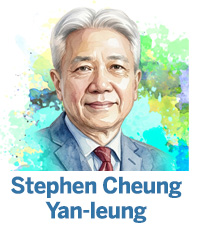
The author is president of Saint Francis University. He was named in Stanford University’s World’s Top 2% Scientists list in finance.
The views do not necessarily reflect those of China Daily.
