

Eight centuries after the ancient settlement first took shape beside mountain streams, citizens trace back their ancestry as they recall stories and memories of their families in the place where heritage continues, report Yang Feiyue and Li Yingqing in Lijiang, Yunnan.
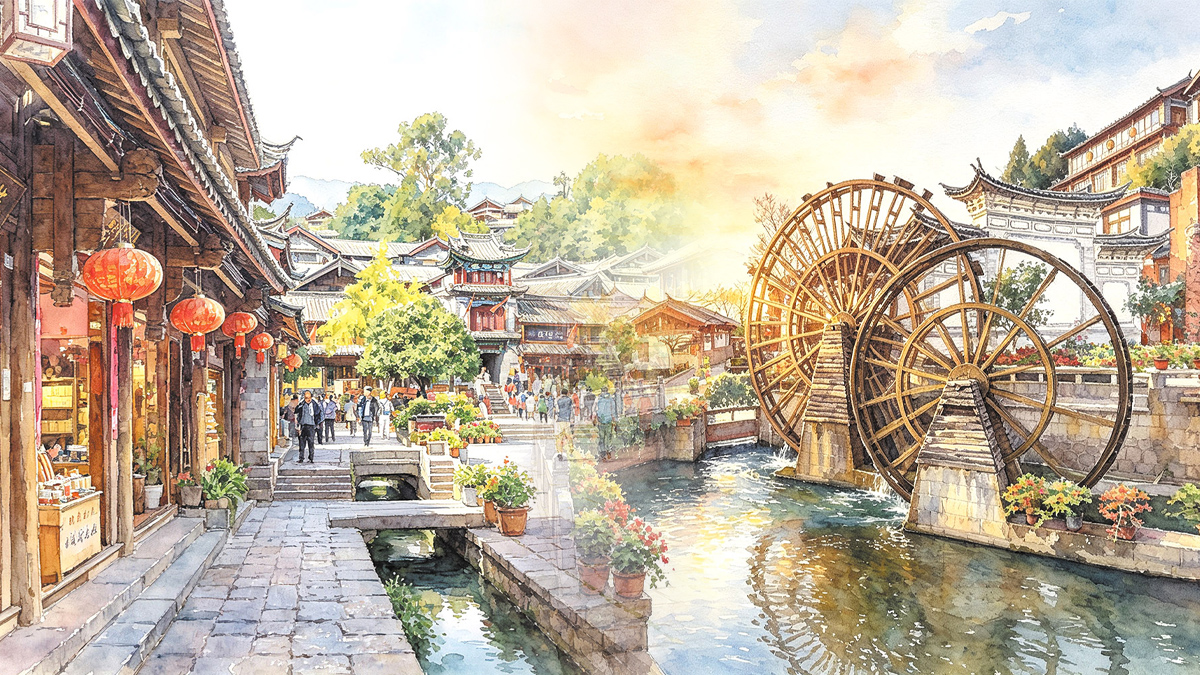
Editor's note: A number of Chinese cities have maintained their cultural memory in the form of historical neighborhoods that have only added to their multilayered charm and vigor with the passage of time. China Daily is taking readers on a journey to some of these timeless areas, where efforts on the preservation and vitalization of heritage are setting examples. In this installment, we wander about Yunnan province's Old Town of Lijiang, which remains as a thriving community where customs are woven into the everyday.
Mu Li usually wakes to the sound of running water. "When I was a child, we fetched drinking water from the river before 6 am. After that, the river was for washing vegetables and clothes," recalls Mu, who was born and raised in the Old Town of Lijiang, Southwest China's Yunnan province.
"The elders always told us: Never throw anything into the river, or your mouth will rot."
For generations, such unwritten rules had governed daily life in the Old Town, where waterways have long been both a lifeline and a guardian.
Mu still prefers to describe herself simply as "a child who grew up in the Old Town". For more than two decades, she has worked in a series of local government roles dedicated to the ancient town's management and preservation. "I've never really left," she says.
READ MORE: Irresistible lightness of being
Founded during the late Song (960-1279) and early Yuan (1271-1368) dynasties, the Old Town of Lijiang has stood for about 800 years. According to Mu, people of the Naxi ethnic group first established settlements in Baisha, an ancient town north of Lijiang, before gradually moving south to Dayan — the historical name for the area that later became today's Lijiang Old Town. Drawn by a basin sheltered by surrounding mountains, they built their homes around the waterways.
"The mountains block the wind and keep the valley warm," Mu says.
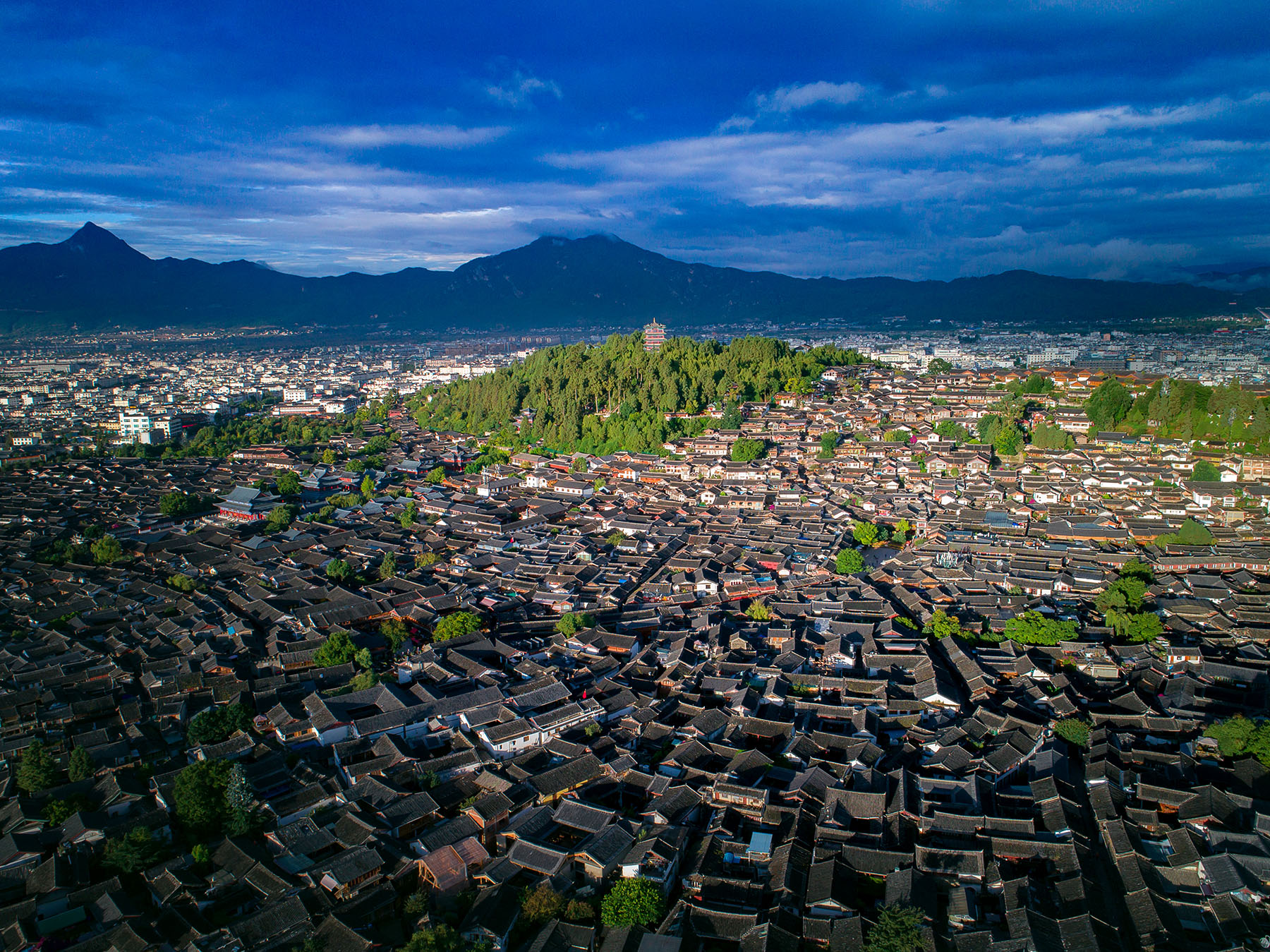
They diverted a single stream through the settlement. Over time, it branched into three waterways, around which houses, lanes and markets gradually took shape, following the natural contours of the land.
"Few settlements of this scale have preserved such an integrated water system," Mu says.
More than 350 stone and wood bridges link homes, courtyards and winding alleys. Water has never been merely ornamental. It supplied drinking water, sustained daily life and agriculture, and helped regulate floods.
Every week, residents near the town's Sifang Square still open the wooden sluice gates to release water from the Yuhe (Jade) River, allowing it to cascade down the gently sloping square and wash the stone streets clean.
"The covers used to be open," Mu says with a laugh. "But tourists kept falling in, so we had to close them."
Even the paving stones tell a story. The streets are paved with locally quarried five-colored stone from Yulong (Jade Dragon) Snow Mountain, traditionally known as wuhuashi. Today, many locals call it "Unity Stone".
"People of the Han, Bai, Yi, Tibetan, and Naxi ethnic groups have lived and traded here for centuries. The new name reflects that shared history," Mu says.
Refusing to sell
A few steps away from the bustling streets stands Hengyugong, a traditional courtyard completed in 1875. It is a classic Naxi residence, featuring a four-sided courtyard. Covering more than 600 square meters, the compound comprises four wings arranged around a central quadrangle. The courtyard still holds Qing Dynasty (1644-1911) gilded carvings on its doors and windows.
Li Junxing, affectionately known as "Uncle Six", is its fourth-generation keeper. "I've been running this museum for 16 years," he says. "It's a living museum because we still live here."
Visitors tour the front courtyard while his family continues everyday life in the rear residence, separated only by a single wooden door.
When a devastating earthquake struck Lijiang in 1996, Hengyugong emerged almost unscathed.
"Look at the walls," Li says, pointing to the weathered masonry. "There isn't a crack. The whole courtyard stays level."
The Li family traces its roots in Lijiang back about 400 years, when their ancestors arrived from Nanjing, Jiangsu province, to serve the Mu family. During the Qing Dynasty, the family shifted from scholarship to commerce, establishing the Hengyugong trading house in 1868. The present courtyard followed seven years later.
Every morning, Li wipes down the wooden doors and sweeps the courtyard before welcoming visitors. "A house needs people. Only when people live in it does it stay alive," he says.
In the center of the courtyard lies a pebble mosaic resembling an ancient copper coin. At its center sits a raised stone.
"This is our family's stumbling stone. Every time someone trips over it, they're reminded not to stumble over money."
Every object, Li emphasizes, has been passed down within the family.
He usually opens an old account book dating to the late Qing Dynasty when greeting guests.
"It tells us what our great-grandfather was doing. He traded silk with the Jiangnan region (the southern regions of the lower reaches of the Yangtze River)," he says.
Carved wooden panels, porcelain and an old pair of eyeglasses fashioned from bamboo sit nearby.
Buyers have been knocking on the family's door for decades. Each time, Li turned down the offer.
"An ancestral home cannot be sold," he says.
Paper that endures
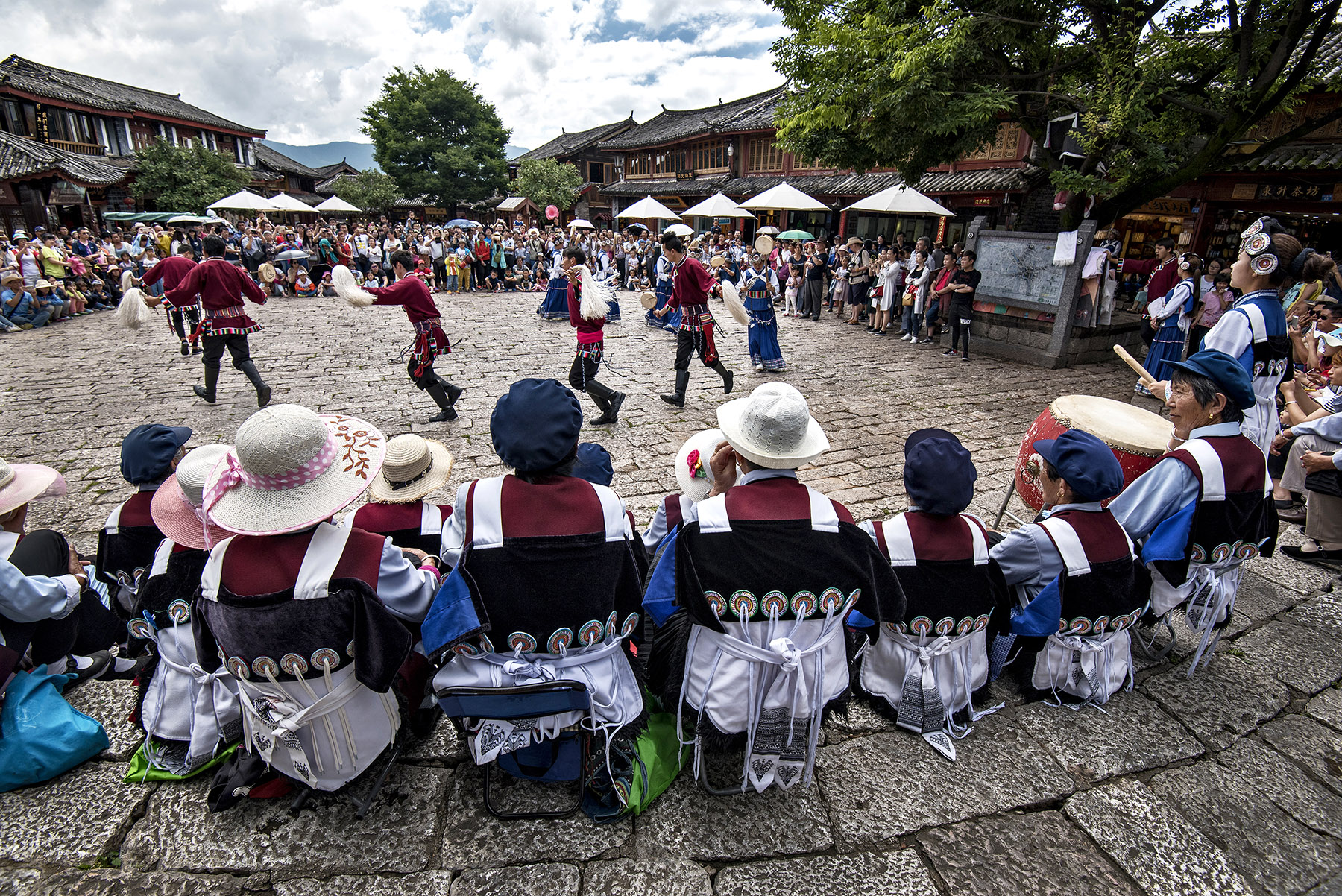
Tucked away in another quiet alley is the Shoudao Lijiang Folk Handicraft Art Museum, where He Xiuchang, an inheritor of Dongba papermaking, has practiced the craft for over 30 years.
The paper begins with a humble shrub called raohua (Wikstroemia canescens), which grows only on limestone slopes at an elevation of around 2,200 meters above sea level in the Jinsha River valley.
"Higher or lower, it won't survive," He says.
Left untouched, the shrub lives for about 13 to 15 years before naturally dying. Harvested earlier, however, it sprouts again. "It's just like cutting scallions," he says.
Transforming the bark into paper requires at least 34 steps, including stripping, boiling, washing, fermenting, and pounding the fibers into pulp, before forming each sheet by hand.
"The traditional method had more than 90 steps," He says. "If I still followed every one of them, a single sheet would cost 500 yuan ($75). No one would buy it."
Today, a sheet sells for around 68 yuan.
Small black specks occasionally visible in the paper are fragments of outer bark that remain after processing. "They'll disappear once you write with black ink," he says.
Dongba paper is prized for three distinctive qualities. Insects rarely damage it because the plant itself contains medicinal compounds. It can remain intact after prolonged water immersion and, when burned, it releases a fragrance resembling temple incense.
The craft is deeply personal to him.
He recalls that years ago, after a traditional Chinese medicine researcher recommended raohua as a herbal remedy, his seriously ill mother drank an infusion made from the plant. He believes it helped her recover, strengthening his appreciation for the shrub that has sustained both his family and his craft.
Today, Dongba paper has found new uses beyond calligraphy and ancient manuscripts. Artists paint on it, designers incorporate it into creative products, and one of He's students has even used it as a base for embroidery. In 2003, the ancient Dongba manuscripts, many of which were written on this handmade paper, were inscribed on UNESCO's Memory of the World Register.
He hopes to pass the craft to a new generation. "I'm willing to teach," he says.
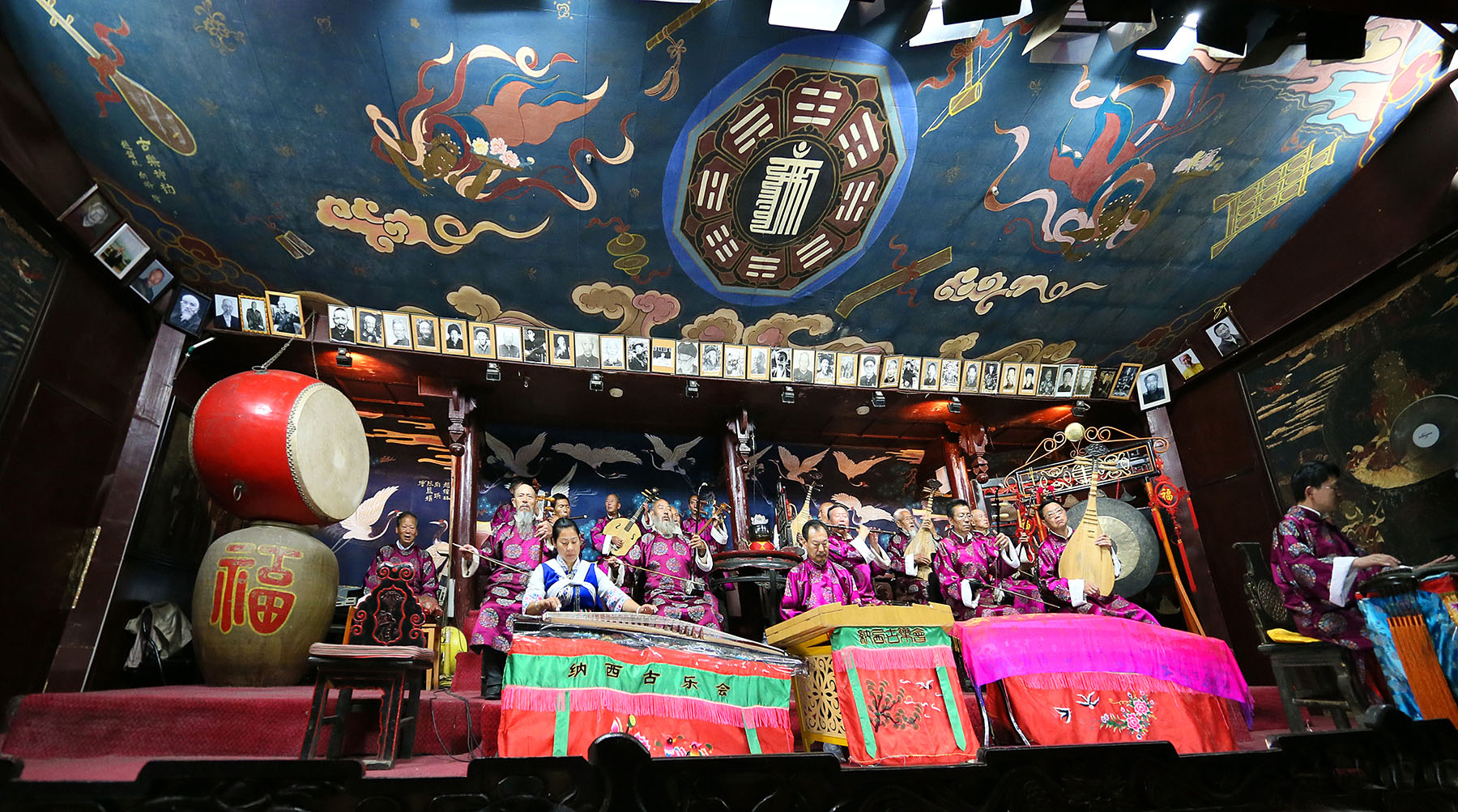
A permanent residence
Unlike many historical districts that have gradually become open-air museums, the Old Town of Lijiang remains a functioning community.
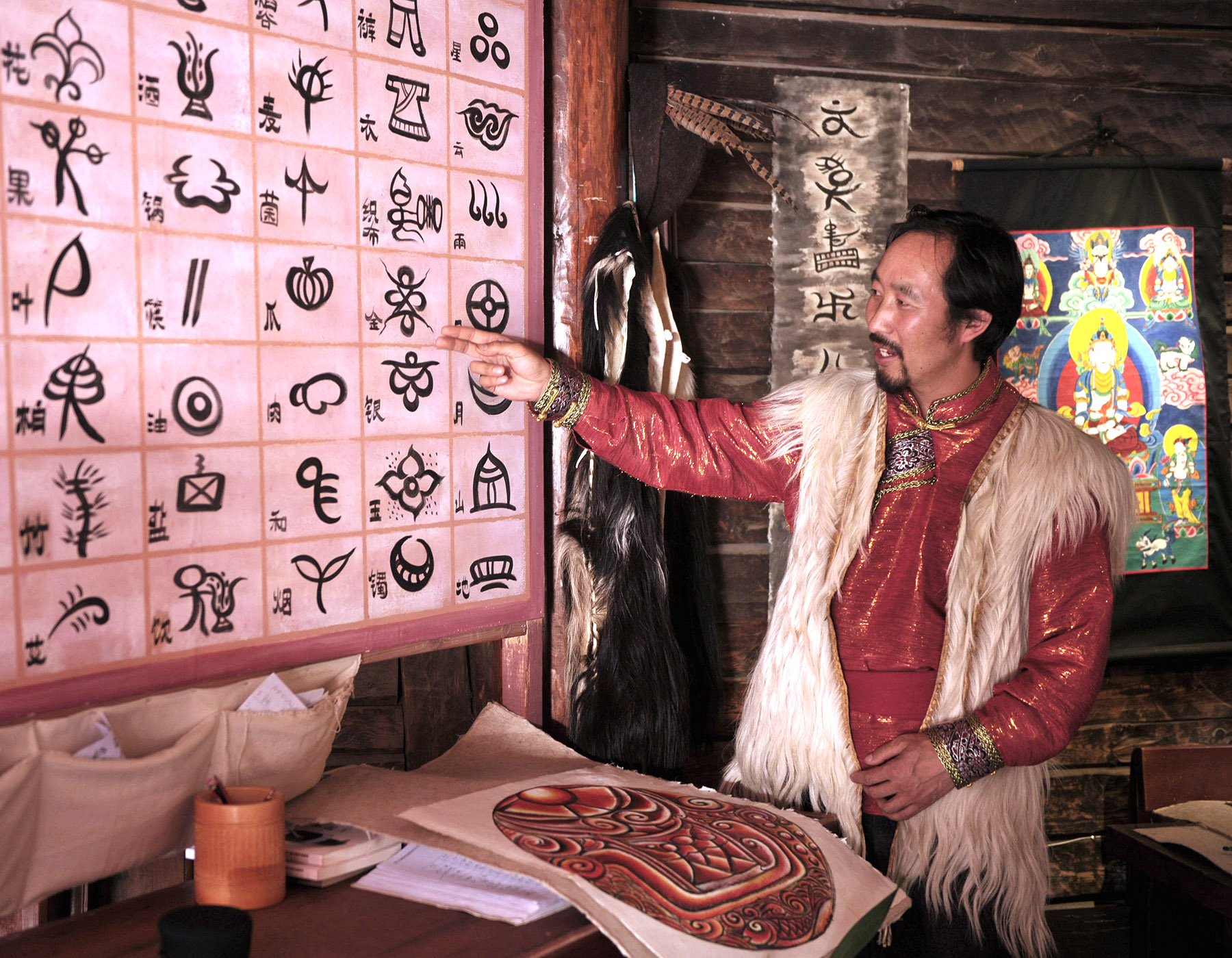
More than 25,000 original residents continue to live within the ancient town alongside more than 5,000 businesses. In 2025, it welcomed over 24 million visitors. During the 2026 Spring Festival holiday alone, arrivals exceeded 2.4 million, with a single-day record of more than 346,000, according to local authorities.
ALSO READ: Wild mushroom season in Yunnan has visitors heading for the hills
Many newcomers have also made the Old Town their permanent home. A cafe owner from North China's Tianjin, a merchant from Wuhan in Central China's Hubei province and a clothing shop owner from Wenzhou in eastern China's Zhejiang province all arrived years ago intending to stay briefly, only to remain.
For Mu Li, the water still runs the same way it did when she was a child. What has changed, she says, is the understanding that a historical site is not preserved by walls and regulations alone.
"People are the soul of this town," Mu says. "We have to respect the market forces that have always been part of this place, but we also have to keep it alive — not as a relic, but as a home."
Contact the writers at yangfeiyue@chinadaily.com.cn
