

Egyptian teen wins hearts with role in blockbuster Chinese film that highlights how food brings people together even during war, Xu Fan reports.
For most foreigners learning Chinese, nihao (hello) and xiexie (thank you) are the most common first words.
Omar Sherif, however, found himself saying a different Chinese phrase far more frequently: shou gong — "it's a wrap".
The 16-year-old Egyptian actor has won over Chinese audiences this summer with Once Upon a Time in the Middle East, which topped the country's daily box office for 25 consecutive days following its release on Aug 11.
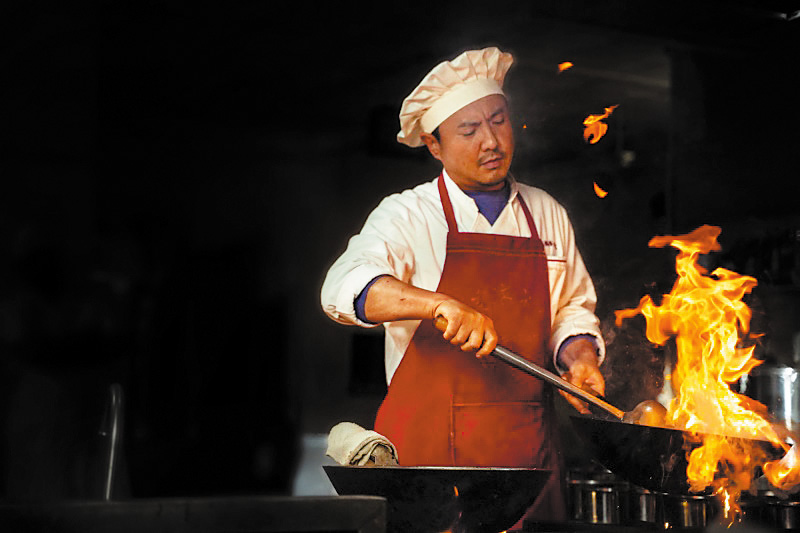
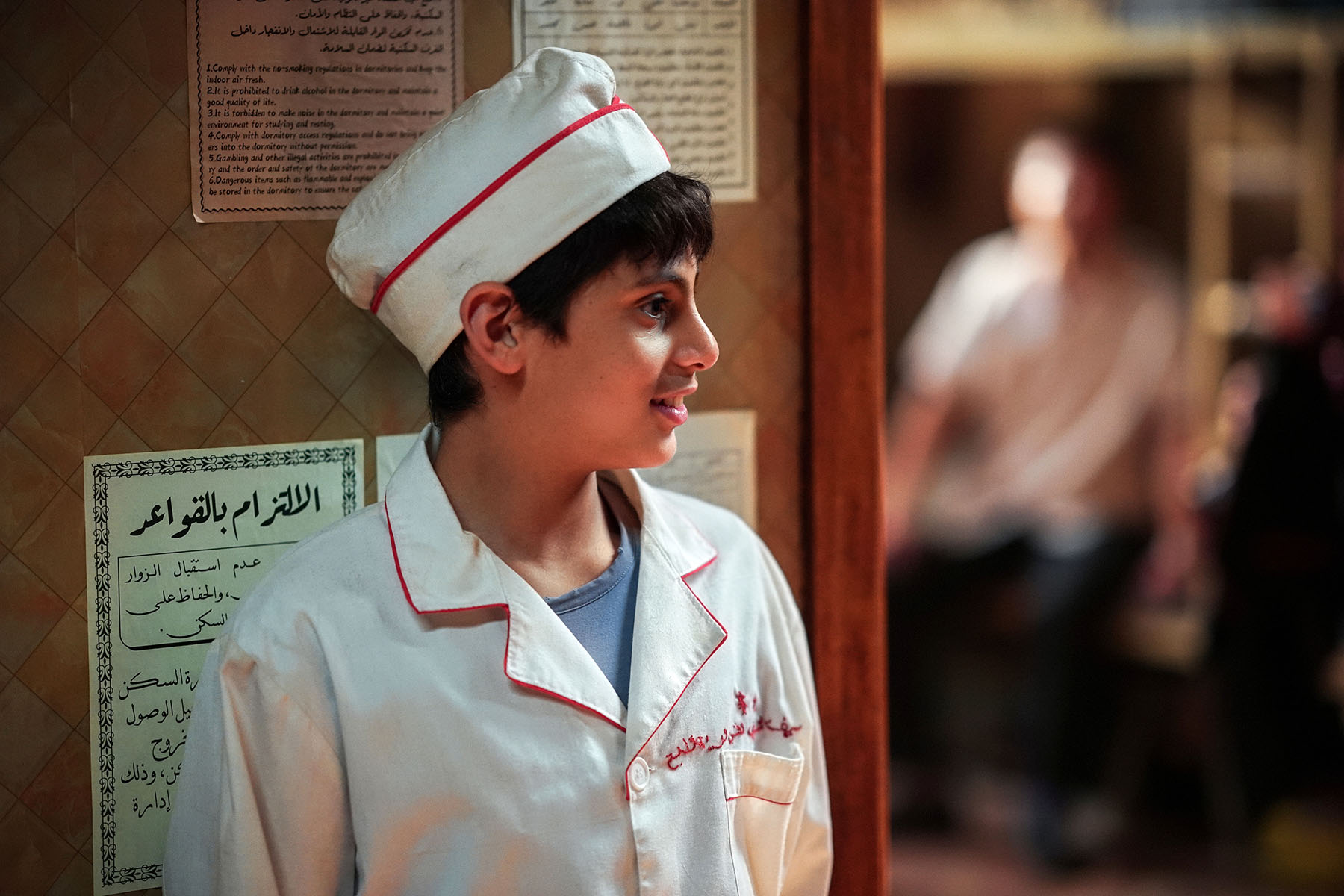
In the movie, Sherif — who was cast when he was 13 — plays Seif, a local orphan in an unnamed war-torn Middle Eastern country. Gifted with a talent for cooking, the boy is taken in as an apprentice by Xu Fu, a veteran Chinese chef played by Shen Teng.
READ MORE: China's summer box office edges up as diverse slate lifts market
Xu is a debt-ridden father who leaves home to work at a Middle Eastern restaurant and chooses to stay and earn more money after the country is suddenly plunged into war. In the early days, life remains relatively peaceful. His boss, a local official, manages to keep the restaurant supplied with electricity and water despite the conflict.
With his excellent culinary skills, Xu turns the restaurant into not only a local favorite but also a gathering place for soldiers, journalists and embassy employees. Alongside his friend Ma Junsheng, the restaurant's front-desk manager played by Jiang Qiming, Xu takes in more than 20 orphans, including Seif. But the seemingly peaceful days do not last. Xu and Ma, along with Seif, are wrongly imprisoned after being suspected of their involvement in a bombing.
Just days before their scheduled release, they fall into the hands of a group of extremist militants. Seif loses an eye while trying to protect the two men. When Xu discovers that the extremists plan to train orphans as suicide bombers, he risks his life to lead the children on a desperate escape — but the story takes an even more complicated turn.
For Sherif, the role was more than a demanding acting experience. Selected from more than 6,000 young hopefuls in Egypt, he tells China Daily that working on a Chinese film was an entirely new experience. With Chinese ancestry — his great-grandfather was from Shandong province — Sherif spent three months in Egypt learning Mandarin and Chinese cooking techniques before joining the production.
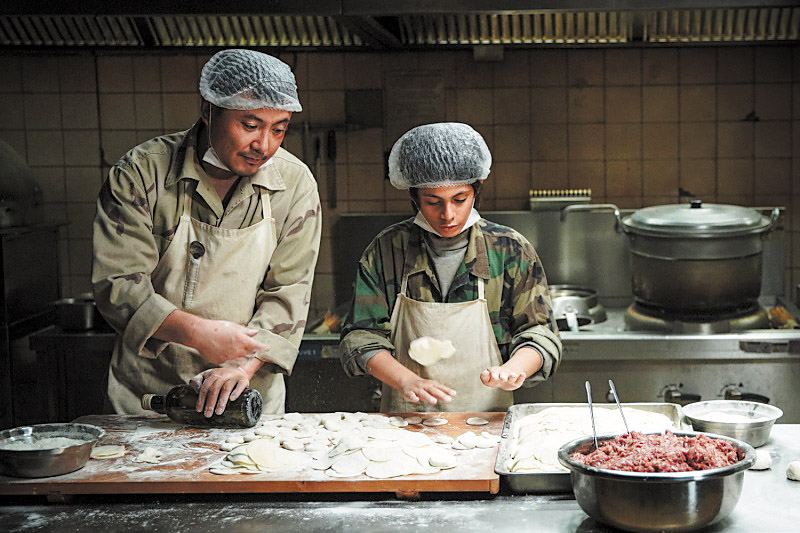
Among the dishes he learned to make were stir-fried shredded potatoes and scrambled eggs with tomatoes, two everyday staples on many Chinese family tables.
After spending two to three weeks adapting to life in China during the shoot, Sherif says he is thrilled to be part of the film, which he describes as "a truly powerful and excellent work".
He also clearly understands the film's message: War is not simply a conflict between countries; it also inflicts suffering on innocent people. "In war, it is children and civilians who suffer the most," he concludes.
That message lies at the heart of director Wen Muye's latest work. Known for his close observation of realistic themes, as seen in previous hits Dying to Survive (2018) and Nice View (2022), Wen has turned his lens to a broader subject: the relationship between food and people in an environment shaped by war, killing, and imprisonment.
The idea dates back to 2017, when Wen was working on post-production for Dying to Survive. He came across news reports about several Chinese people running restaurants in the Middle East. "When war broke out, they were still operating their restaurants. It immediately struck me," he recalls.
"War is an abnormal state — the world becomes deeply unnatural, and people are changed by it in equally unnatural ways. But food is profoundly ordinary. No matter which side of the conflict you're on, you have to eat," Wen says, explaining his inspiration.
That realization eventually became one of the film's central themes: The world may be chaotic, but we still long to eat properly in peace. For Wen, the idea also carries a deeply personal resonance, rooted in his mother's calls. No matter what they talk about, he says, her final reminder is often the same: Take good care of yourself amid the demands of work, and remember to eat well, regularly and on time.
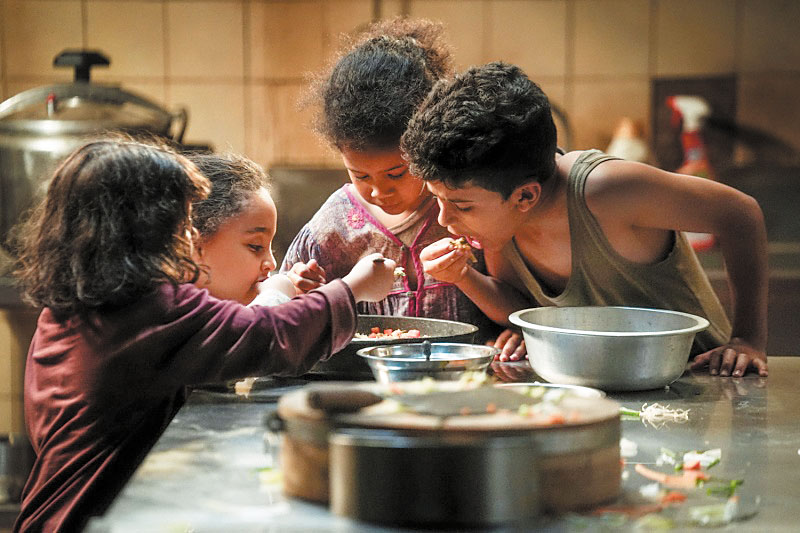
The film brings that idea to life through more than 40 dishes, many of which carry symbolic meanings, expressing a yearning for peace or reflecting the characters' grim circumstances.
Food also becomes a bridge — not just between cuisines, but between filmmakers from China and Egypt. With Egypt's well-established film and television industry, the Chinese director chose most of the Arabic-speaking cast from the country, creating an opportunity for creative collaboration between talents from both sides.
Mohamed Osama, the Egyptian talent producer in charge of casting the Egyptian actors, says China and Egypt, as two ancient civilizations, share many similarities. He hopes to play a role in strengthening those cultural ties and creating compelling stories that resonate with audiences worldwide.
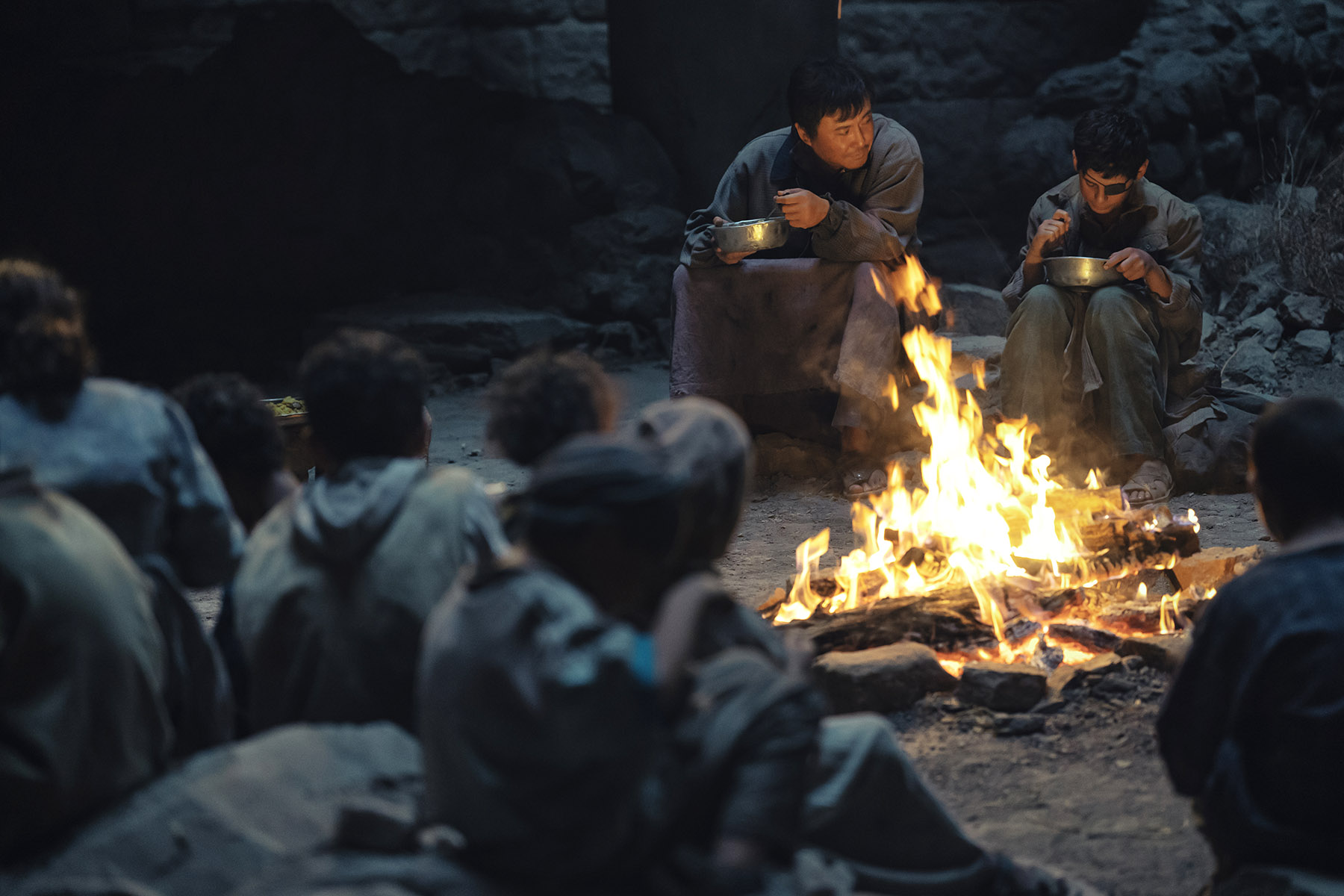
The cultural exchange has also left its mark on Sherif. During his time in China, he has learned that herbs can be used as medicine — a common principle in traditional Chinese medicine — and that drinking warm water is widely regarded as part of a healthy lifestyle.
For a teenager whose connection to China once came mainly through his great-grandfather, the experience has given the country a new meaning.
ALSO READ: Once Upon a Time in the Middle East justifies itself
"At first, China was simply the homeland of my great-grandfather. Now, it has become a place where I work, have friends, and where people know me. I love this country," says Sherif.
The movie has so far grossed 2 billion yuan ($298 million) at Chinese mainland box offices. It is set for overseas release, opening in Australia, New Zealand and Malaysia on Sept 11, Singapore on Sept 17, and in Japan on Sept 18. It will also be released in Cambodia, Indonesia, Thailand, Laos, and the Philippines in October.
Contact the writer at xufan@chinadaily.com.cn
