

A rapidly strengthening El Nino event is approaching super El Nino status, with its effects expected to persist into the summer of 2027 and potentially bring greater climate risks to China next year, according to the National Climate Center.
The event is developing unusually quickly and is expected to peak around November or December, potentially making it the strongest El Nino event on record, said Chen Lijuan, chief forecaster at the center.
The sea surface temperature index in the El Nino monitoring region reached 2.09 C in July and averaged 2.59 C in August, both the highest levels for the corresponding periods since records began in 1951, Chen said.
"The equatorial central and eastern Pacific sea surface temperature is expected to continue its fluctuating upward trend and reach the peak of this event around November and December," Chen said.
ALSO READ: Record-breaking El Nino looms: China's weather patterns already impacted
The World Meteorological Organization has also said the tropical Pacific is expected to warm further in the coming months, potentially developing into a super El Nino event that could peak toward the end of the year. The probability that the event will persist through February 2027 is close to 100 percent, according to its latest bulletin.
A super El Nino could increase the likelihood of major changes in rainfall, temperatures and atmospheric circulation in many parts of the world. In China, its effects could become particularly pronounced in the summer of 2027, said Gu Wei, another chief forecaster at the National Climate Center.
"China's climate in the summer of 2027 will be more significantly affected by El Nino than in 2026," Gu said.
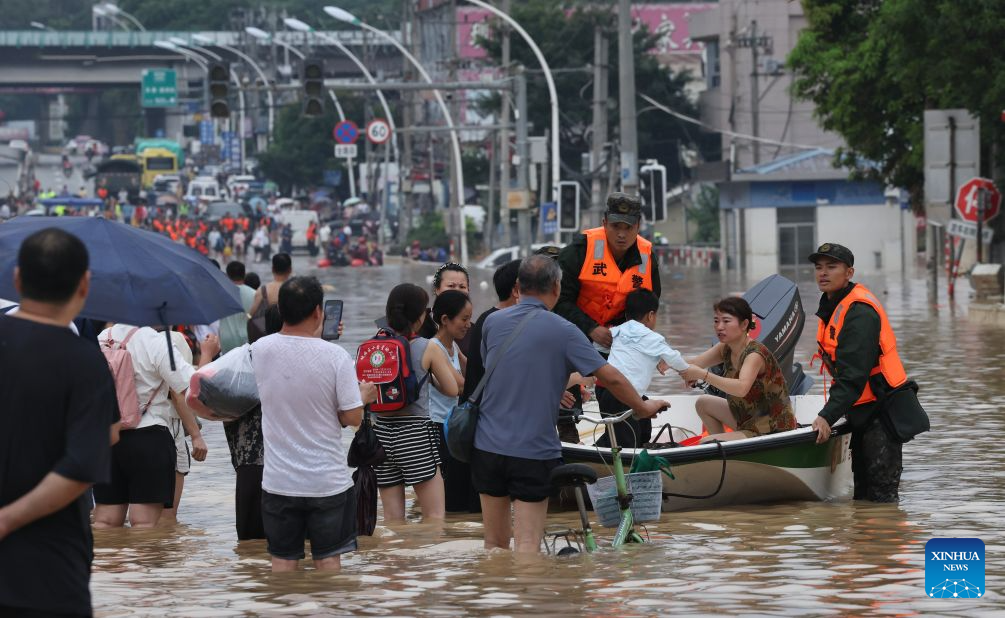
Rainfall is expected to be above average in much of central and eastern China in 2027, with the middle and lower reaches of the Yangtze River likely to see particularly heavy precipitation. This could increase the risks of torrential rain and flooding and potentially result in a severe flood season, Gu said.
ALSO READ: Record El Nino predicted to intensify
In the coming autumn, rainfall in most areas along and south of the Yangtze River is expected to be above average, with parts of Southwest China likely to receive particularly high precipitation and face an increased risk of extreme rainfall.
Temperatures in Southwest China and South China are also expected to be significantly higher than average, while periods of high temperatures are likely in September.
During the winter, when the phenomenon reaches maturity, most of China is generally expected to be warmer than average, although temperatures could fluctuate sharply as cold air periodically moves south, Gu said.
Li Xiang, a senior engineer at the center, said agriculture, electricity, infrastructure and transportation are among the sectors likely to face significant impacts from El Nino.
READ MORE: Is El Nino's economic risk too hot to handle?
In spring and summer 2027, as El Nino weakens and eventually ends, major grain-producing areas in Northeast and North China should prepare for above-average rainfall and flooding that could affect crop production.
Meanwhile, much of Northwest China and the Xinjiang Uygur autonomous region could face greater risks of drought caused by high temperatures and limited rainfall.
"Authorities should also guard against outbreaks of crop diseases and pests that could be encouraged by unusually warm and humid conditions," Li said.
The response to El Nino should be based on continuously updated real-time monitoring and dynamic forecasts, forecasters said.
