

China-Kyrgyzstan relationship brings shared benefits, offers useful example of coexistence, cooperation for other countries

For Ulukbek Kulukeyev, head of Kyrgyzstan’s National Hospital, the number 1,200 is anything but an impersonal statistic.
Kulukeyev revealed that cooperation between Chinese and Kyrgyz medical teams has seen 1,200 patients recover and be discharged after receiving ophthalmic treatment.
“This is not just a figure,” he reiterated. Behind every surgery, he said, was the suffering a patient had endured, the joy of regaining sight and the dedication of medical professionals.
During the Shanghai Cooperation Organization Samarkand Summit in 2022, President Xi Jinping had pledged to provide 2,000 free cataract surgeries for people in SCO countries over the following three years.
Since 2023, Chinese medical teams have performed more than 1,000 eye surgeries in Kyrgyzstan alone. China has also donated equipment and medicines and trained local doctors, helping build a local medical team with the skills to carry on the work.
Kulukeyev said that bilateral medical cooperation is expanding beyond clinical treatment to personnel training, technological innovation and academic exchanges. As the two countries address shared challenges such as how to apply digital technologies to improve the quality of medical services, their cooperation “holds immense promise”, he said.
Medical cooperation is one example of how practical collaboration between China and Kyrgyzstan is improving people’s lives. Kyrgyz officials and experts said its significance lies not only in the immediate outcomes of individual projects, but also in strengthening Kyrgyzstan’s capacity for independent development through technology sharing, personnel training and capacity-building.
Sheradil Baktygulov, director of the Kyrgyz Institute of World Politics, noted that Xi has said the Communist Party of China “will not pursue modernization in isolation, and will endeavor to achieve modernization with other countries, including fellow developing countries”.

Drawing on the ideas set out in the fifth volume of Xi Jinping: The Governance of China, he said isolationism and protectionism lead nowhere, while openness and mutually beneficial cooperation can enable more people, particularly those in the Global South, to share the benefits of development.
Kyrgyzstan can draw on the momentum of China’s economic growth to unlock its own geographic advantages, resources and industrial potential, Baktygulov said.
Kyrgyzstan was among the earliest countries to support and participate in the Belt and Road Initiative (BRI) initiated by China. Baktygulov said the China-Kyrgyzstan-Uzbekistan railway will help Kyrgyzstan integrate more deeply into international logistics networks and create conditions for greater economic diversification.
Launched in December 2024, the China-Kyrgyzstan-Uzbekistan railway is scheduled for completion in 2031. Construction of three key tunnels on the Kyrgyzstan section began in April 2025, marking substantive progress on the main line. Once operational, it is expected to shorten freight routes from China to the Middle East and southern Europe by about 900 kilometers and reduce transport time by seven to eight days.
China has remained Kyrgyzstan’s largest trading partner, leading source of foreign direct investment and largest source of imports. Chinese customs data show that bilateral trade reached $27.2 billion in 2025, up 20 percent year-on-year.
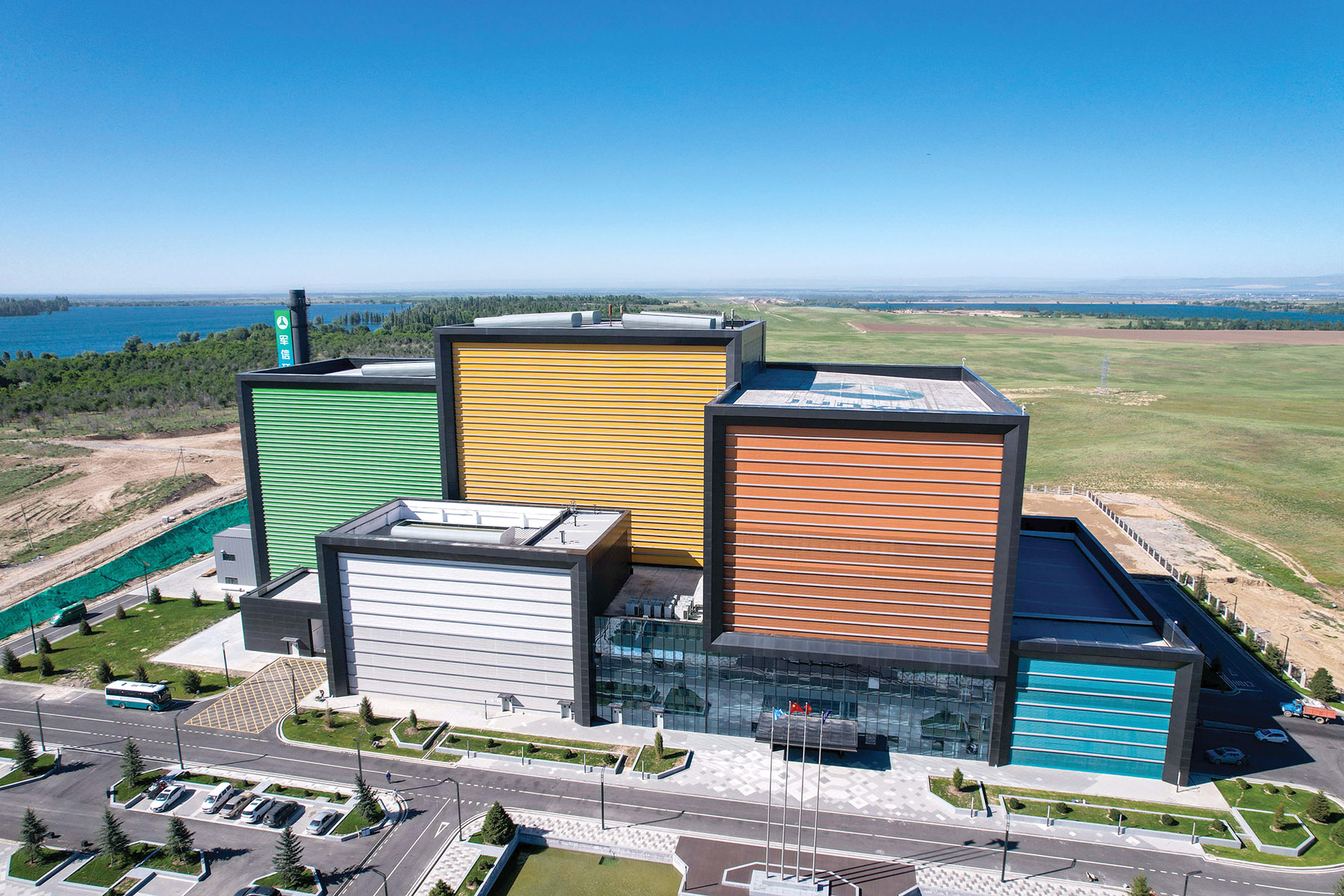
Baktygulov said that cooperation should not stop at expanding trade. Projects involving Chinese companies — including a 100-megawatt solar power plant and a waste-to-energy facility in Kyrgyzstan’s capital city Bishkek — along with the use of Chinese-made electric buses in the city’s public transportation system, are broadening cooperation into industry, energy and green technologies.
“This is not simply about introducing equipment and technologies,” he said. “It also involves transferring expertise and upgrading Kyrgyzstan’s infrastructure.”

Temir Sariev, president of the Chamber of Commerce and Industry of Kyrgyzstan and a former prime minister of the country, said the value of studying China’s development path and governance experience lies in applying relevant lessons to Kyrgyzstan’s own development.
Kyrgyzstan should “draw on these lessons to better serve our people”, he said, calling for governance exchanges to be translated into new momentum for investment, innovation and growth.
He said bilateral relations are at their strongest in history, supported by mutual trust, mutual respect and sustained high-level dialogue. This political foundation, he said, has created favorable conditions for deeper economic and technological cooperation.
Former Kyrgyz foreign minister Alikbek Dzhekshenkulov highlighted digital transformation as another promising area for cooperation.
China’s advances in artificial intelligence and digital technologies offer new opportunities for Kyrgyzstan’s modernization, he said. The two countries can expand the use of digital technologies across the fields of industry, agriculture, education and public services, while training more professionals in digital management and high-tech fields.
Such cooperation, he said, would enable Kyrgyzstan not merely to adopt digital technologies, but also to shape and advance its own digital transformation.
For former Kyrgyz president Roza Otunbayeva, closer links in the area of transportation also carry deeper historical meaning.
Noting that towering mountains lie between China and Kyrgyzstan, she said that for centuries they have served not only as natural boundaries, but also as meeting places for peoples, cultures and ideas. She described the BRI as a continuation of the ancient Silk Road, along which goods, knowledge and cultures once moved through Kyrgyz lands.
Projects including the railway, road upgrades and new border crossings are reviving that legacy and helping reposition Kyrgyzstan within Eurasian transportation networks.
“Kyrgyzstan is gradually transforming from a country on the periphery of transportation networks into an important connectivity hub on the Eurasian continent,” Otunbayeva said.
But physical links alone are insufficient, she said, as trust and friendship between the peoples do not grow automatically with every new road. This makes people-to-people exchanges all the more important as bilateral cooperation deepens.
“Roads themselves do not create trust. They only open up possibilities for cooperation,” Otunbayeva said. “Real trust emerges when people begin to understand each other better.”
She therefore called for a “road of trust” to be built through books, education, culture and academic exchanges, and broader people-to-people engagement, to provide an enduring foundation for bilateral relations.
That “road of trust” is already taking shape through expanding educational cooperation. Mirlan Dyldaev, rector of Bishkek State University, said education and youth exchanges are essential to nurturing friendship, as cooperation between Chinese and Kyrgyz universities continues to deepen in the areas of academic research, talent development and cultural heritage studies.
According to the Chinese Foreign Ministry, Kyrgyzstan is home to one Luban Workshop, four Confucius Institutes and 21 Confucius Classrooms. Luban Workshops are a Chinese international program dedicated to vocational education, while Confucius Institutes provide opportunities for people all over the world to learn about Chinese language and culture.
“All this cooperation must rest on exchanges among young people,” Dyldaev said, calling for the two countries to build on their tradition of academic exchange, enable more young people to benefit and lay a stronger foundation for future cooperation.
Gao Fei, president of China Foreign Affairs University, said that peace, development and good governance are shared aspirations of people around the world, and that China is willing to share its experience with other countries. “We hope China does well, and we also hope our neighbors do well,” he said.
Although China and Kyrgyzstan differ in size, stage of development and cultural tradition, more than three decades of diplomatic relations have shown that they can treat each other as equals, pursue mutually beneficial cooperation and grow together, Gao said.
Their cooperation not only benefits both countries, but also offers a useful example of how nations with different conditions can coexist and work together, he added.
Contact the writers at zhaojia@chinadaily.com.cn
