

From short-drama videos to immersive performances and field poetry, rural communities are being energized through numerous cultural art forms
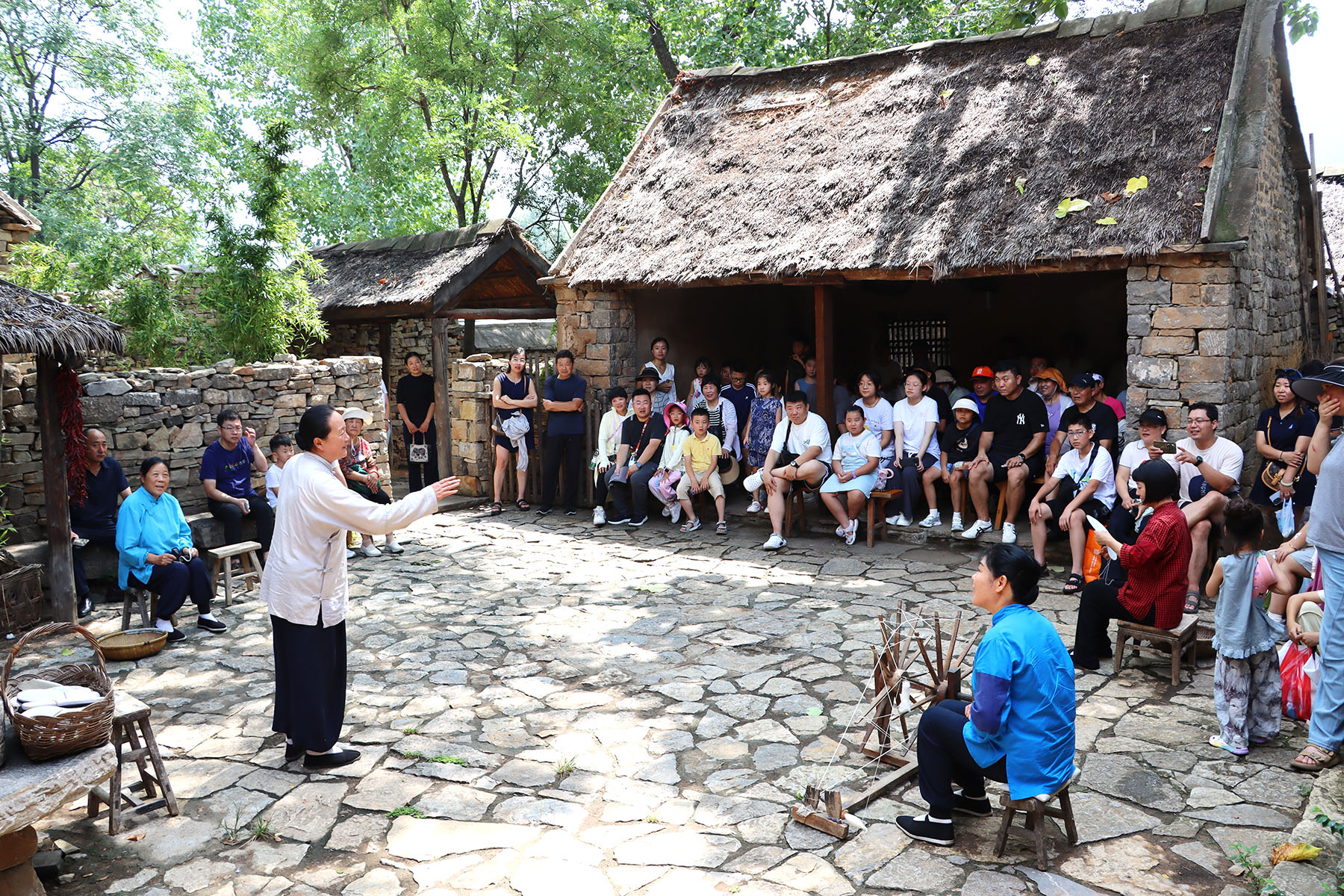
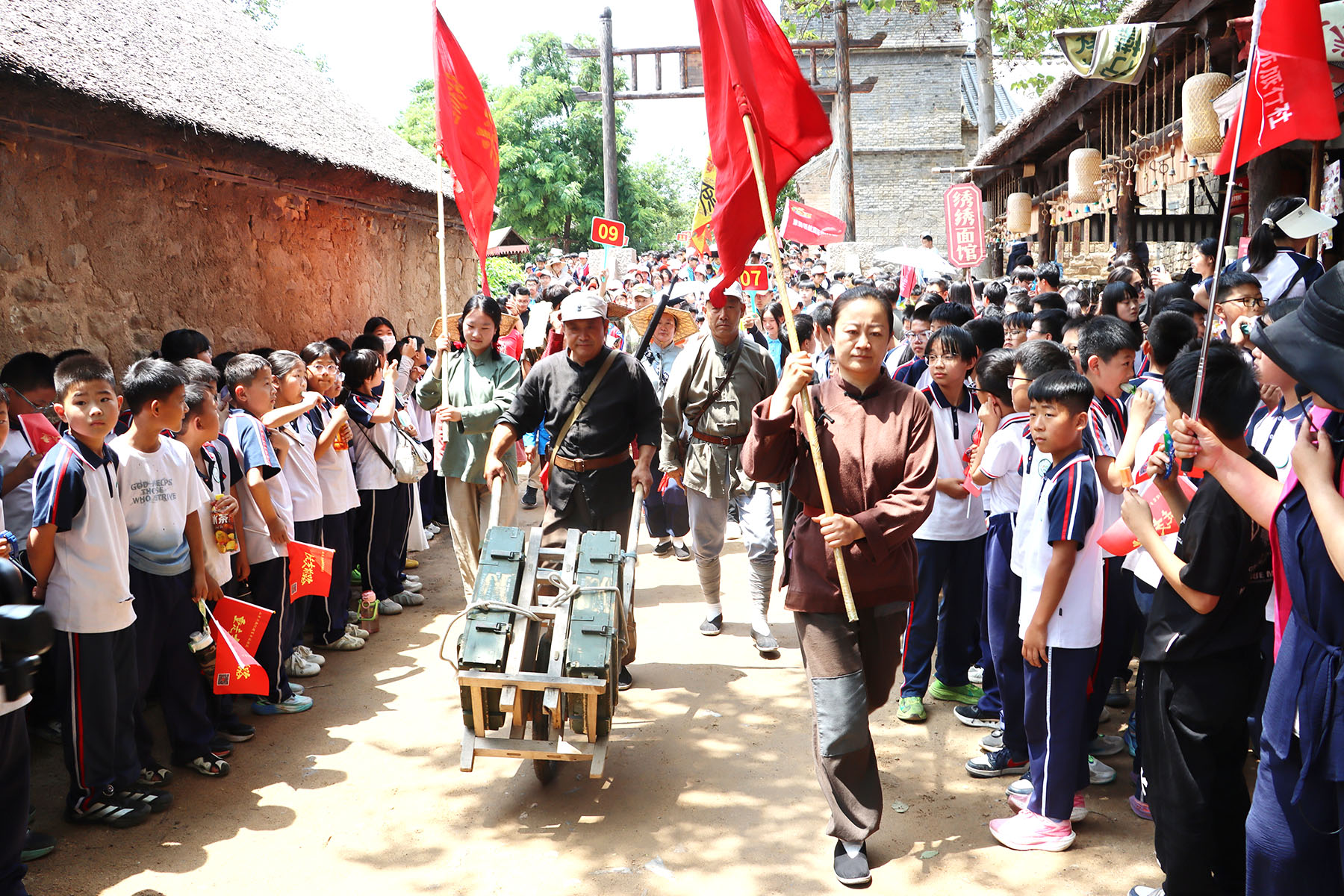
During the recent summer vacation, visitors followed local villagers along ancient lanes in Yinan county, Shandong province, joining a "supply team" bound for the front line.
The immersive Retrace the Frontline Supply Route performance in Changshanzhuang village was not staged in a theater. Instead, it took place in the same locations locals once hauled supplies along to support frontline troops during the Chinese People's War of Resistance Against Japanese Aggression (1931-45).
Since its launch in October 2024, the performance has drawn tens of thousands of visitors.
"This is completely different from anything we've done before," said Sun Fangchao, a tourist from Jiangsu province.
"I think he'll be thrilled about this for a very long time," he said while watching his 11-year-old son who moved along with the performance troupe.
For the show's creators, that emotional response is the point of its unique staging. Yinan county is famous for the Yimeng Spirit forged by ordinary villagers who risked their lives to support the Communist forces through extraordinary sacrifice during the war against Japanese aggression and the War of Liberation (1946-49).
The county has over 20 immersive Yimeng Spirit-themed performances, turning cultural tourism from a sightseeing experience into participatory education, according to the local government. The performers are villagers who know the heroic stories very well.
Ma Junling, 35, became a performer this year. Before then, she had worked as a tour guide in her village, explaining the Yimeng Spirit to visitors.
"Our village often receives groups of students on study tours. They are young and have limited understanding. A simple lecture couldn't hold their attention, but the live performances bring the stories to life and help children better understand the history and culture," Ma said.
Changshanzhuang is far from an isolated case. Across Shandong, grassroots cultural creativity is flourishing through immersive performances, verses composed by farmers, and rural micro-dramas filmed on mobile phones.
Ordinary farmers are picking up pens, smartphones, and scripts, becoming poets, actors and dramatists.
Storytellers
Changshanzhuang is the home of the Red Sisters, a group of local women who took care of the wounded soldiers and in some cases sacrificed their lives to protect them during the wars. They forged a major part of the Yimeng Spirit.
To honor their stories and promote the Yimeng Spirit, a Red Sisters Hometown Tourism Area has been established in the village.
Short folk performances are staged in old courtyards, bringing these stories to life, and the performers are villagers who have lived in the area their entire lives.
Yang Suhua, 63, from a neighboring village, used to spend her days doing housework and tending a small vegetable plot.
Two years ago, she became one of the most popular performers. Now she plays the role of an elderly cotton weaver in a show about the women's rescue association, a grassroots organization that supported the Communist revolution in the 1940s.
"I grew up hearing the heroic stories of the local women. I am so happy to tell their stories to more people through these small-scale plays," Yang said.
Villagers transform oral histories passed down from their ancestors into scripts, using relatable language and gestures that ordinary people can understand.
Li Xipeng, head of the Red Sisters Hometown Tourism Area, said the village's authenticity is key to the performances' appeal. "These houses and these lanes witnessed the actual events. They are the best textbook we could ever have," he said.
More than a dozen small farmyards have been turned into performance spaces. In one courtyard stands a small stone house with two dark narrow rooms. This is where Liu Naixiu, 73, once lived with her family of five.
"We were all squeezed in here. The house has barely changed from what it was back then. Now we've moved to a two-story home just 1 kilometer from this village," she said.
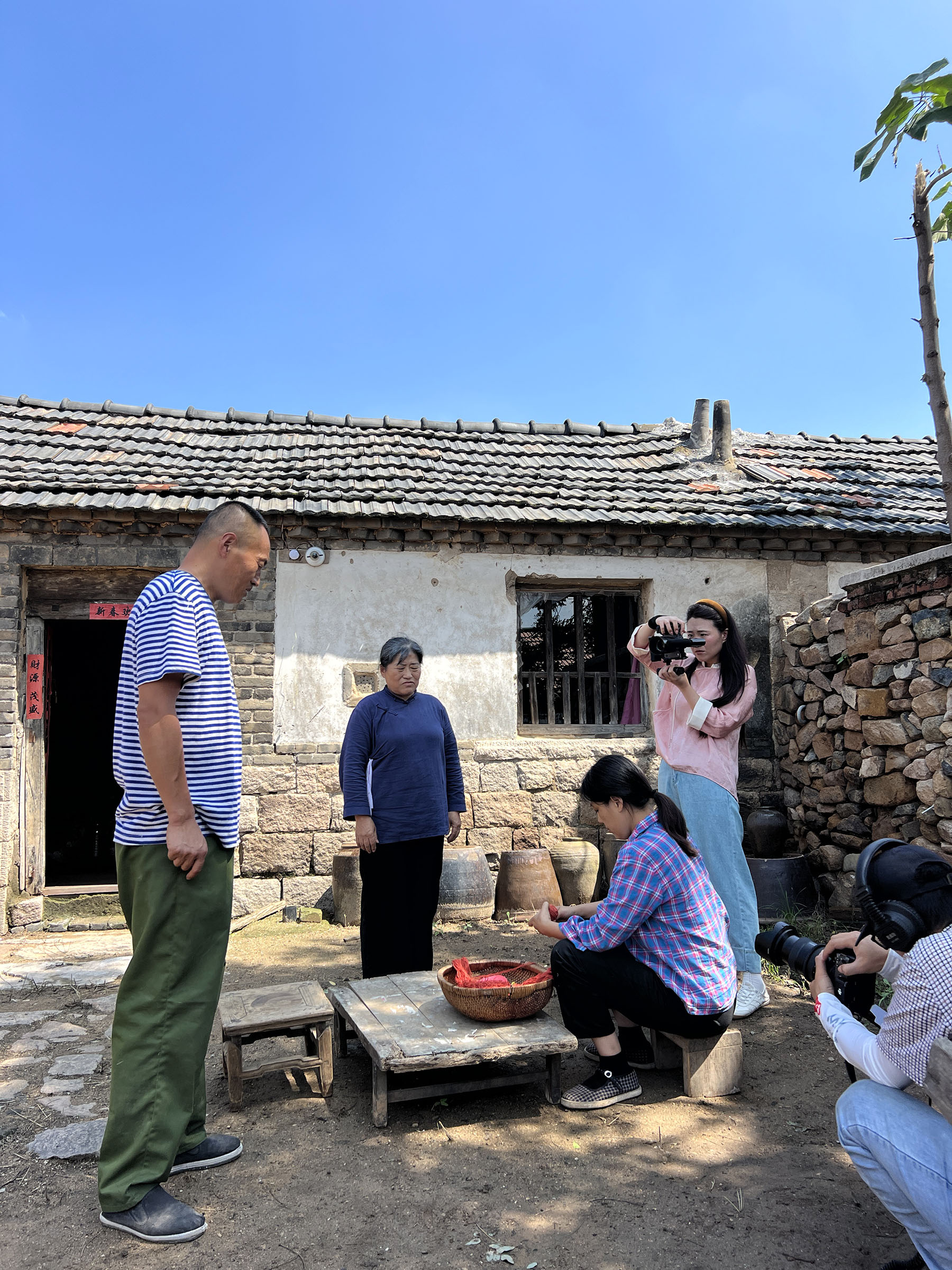
The places that best preserve the original feel of the period have also been used as film sets. Since 2007, over 500 film and television productions have been shot here, including Six Sisters in the War, Red Sorghum and This Thriving Land.
Liu was among the first villagers to join the film productions. "I've lost count of how many shows I've been in. Sometimes a crew member calls me directly and tells me that he needs 20 people for extras. I happily run from house to house, rounding up neighbors," she said.
Over the years, more than 30,000 villagers have performed as extras in film and television productions in the area. For many families, this part-time work has become a supplement to their farming income.
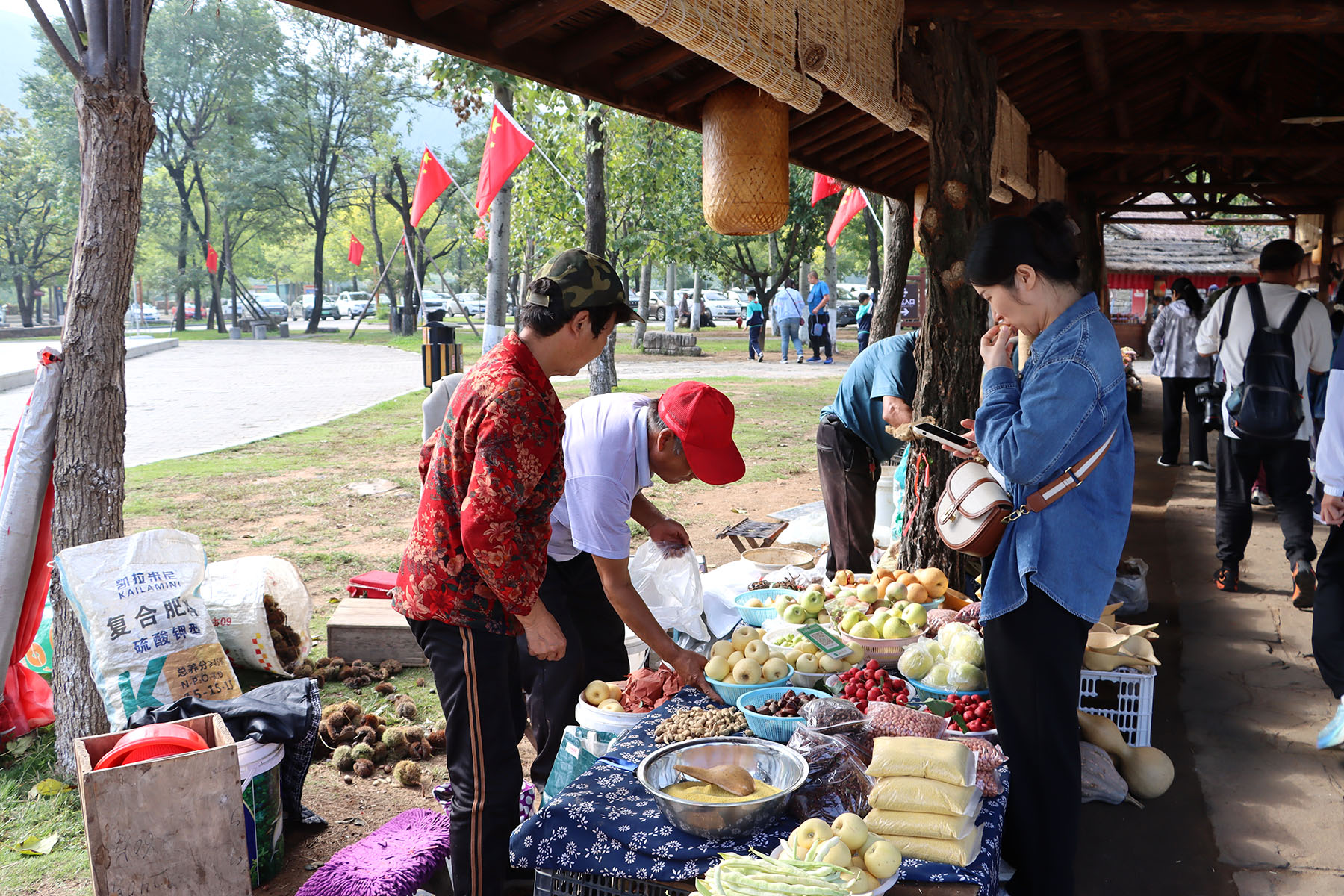
The rural cultural boom has brought economic ripple effects. More than 100 businesses have emerged around the scenic area, offering catering, farm stays, produce sales, and handcrafts.
"We used to worry about how to sell our produce," said a local farmer who grows vegetables and fruits on the hillside. "Now tourists come to us. They watch the shows, walk through the village, and buy local farm produce," he said.
The scenic area has partnered with villages around the area, integrating rural vitalization and tourism development. To date, more than 600 people from surrounding villages have worked in the scenic area.
"This is what it looks like when culture grows from the soil, not as something delivered from above, but as something that sprouts from the land itself," Li said.
Leave it to the prose
Not far away, in Mengyin county, another form of rural creativity is taking root in a farmer's notebook.
Lyu Yuxia, 54, is known online as Yimeng Second Sister, a name she uses because she is the second child in her family.
With calloused hands and a sun-weathered face, she has gained unexpected attention online for her poems. "I'm just an ordinary farmer, but words have always been with me," she said.
In the spring of 2023, Lyu walked up a mountain to pick Chinese toon sprouts. She looked out over a sea of blooming peach blossoms across the terraced hillsides.
The sight moved her deeply. She took out her phone, held up a bunch of toon sprouts, and recited a poem she had written in her notebook. That video, posted on Douyin, gained 100,000 followers in one week.
Several of her poems written, recited and recorded in the fields quickly gained widespread popularity online. In one of them, she compared the falling snow to icing sugar and salt sprinkled from the sky.
"I was a 50-something farm woman with wrinkles all over my face, feeling insecure at first," she recalled. "Now I am confident. Poetry gave me the courage to be myself."
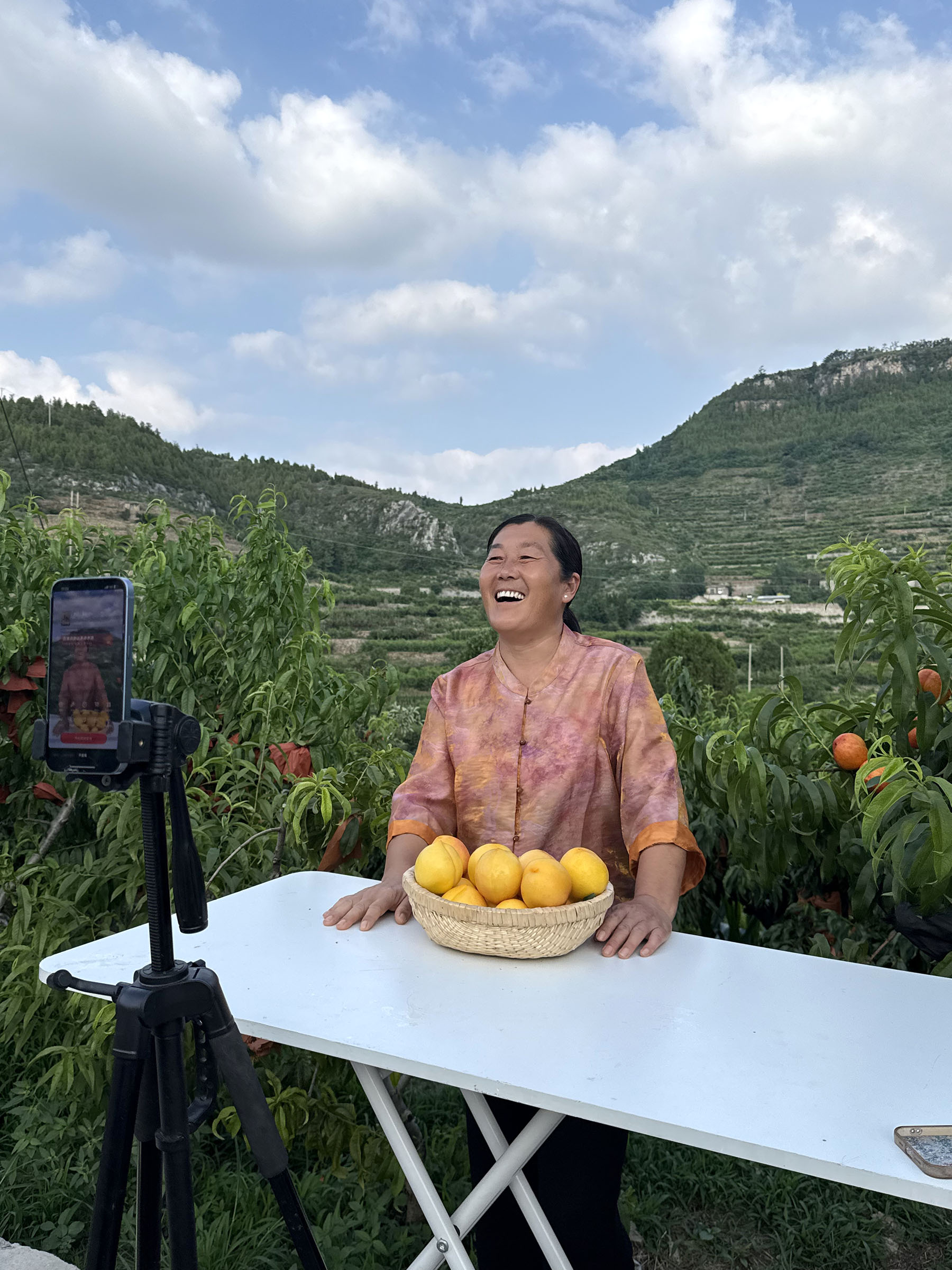
Some online commenters have questioned whether her poetic portrayal of rural life is too idyllic and doesn't show the hardship of farming.
"Doesn't the hardship show right here?" she said, pointing at her weathered face.
"Every farmer's face tells the story of sun and wind, of sweat and toil. That's a given. What I want to capture is the other side, the hope and the expectation," she added.
"Every spring, we plow the soil, we plant the seeds. We don't know if the weather will favor us. But the moment we put those seeds in the ground, we are hoping for a good harvest.
"This is the faith in tomorrow. I write to celebrate that achievement," she said.
Her connection to literature began early. When she was very young, her father often told her stories.
At 15, she went to work in a textile factory. To block out the drone of the machinery, she recalled poems she had memorized, including those written by Li Bai, Su Dongpo, and even the elegy from Dream of the Red Chamber.
She bought magazines and filled notebooks with excerpts and original verses. "My world was too small. But through sharing online, my world got wider and wider. The beautiful words that netizens leave in my comments are as joyful to me as reading a good book," she said.
Lyu has started livestreaming from her orchard, selling not only her peaches but also helping fellow villagers market their produce. On the busiest days, she livestreams for nine hours straight, sometimes skipping meals.
"When I see the orders pile up and help people sell their goods, there's nothing happier than that," she said.
Playing up sales
In Beiliangjia, a village of just 247 households in the Qingdao West Coast New Area, farmers with no acting experience are using their phones to make short dramas that have racked up over 1 billion views.
Before they changed tack, they struggled to sell their produce.
"The village is not short of good produce. We grow sweet chestnuts, sticky sweet potatoes and big juicy cherries," said Zhang Wei, the village Party secretary. "The problem has always been selling them."
In the summer of 2025, Zhang reached out to Ding Zhaoting, an influencer from a neighboring town. Ding had previously run a building materials business before pivoting to online content creation six years ago. He now manages several accounts with millions of followers.
Zhang said the villagers agreed to use short dramas to sell their produce. Ding became the director and recruited about a dozen villagers.
He taught them the basics of filming, editing, and livestreaming. The villagers threw themselves into the new challenge.
In September 2025, the village's first short drama was released. It told the story of a rural woman who joins a poor family and, through hard work and wisdom, gradually leads them to a happy life. In just over a month, the series had garnered 270 million views.
The momentum built. Subsequent dramas each attracted over 100 million views.
In the dramas, village produce is a feature, with corn hanging on walls, chestnuts piled by stoves, and unpicked cherries glistening with dew. Viewers see these products in attractive settings and want to buy them.
Zhang Zhixing, 75, was among the first to benefit. He had three mu (0.2 hectares) of hawthorn trees. But at his age, he could no longer harvest the fruit, and they were rotting on the branches.
A few cast members heard about his situation, went to his orchard, and filmed videos and livestreams. Within days, his hawthorns were sold out.
The online traffic also caught the attention of investors. Local Ding Xinqiang stumbled upon the village's short dramas online. "The people and the stories are so real and trustworthy," he said.
He contacted Zhang Wei and said he wanted to invest in the area. Within a week, a sweet potato starch noodle processing plant was up and running, receiving an initial order of 25 metric tons. More projects followed, including dried sweet potato snacks, pet food, and cultural tourism.
Yu Xiaofeng, an associate professor at Shandong University's journalism and communication school, who has studied the phenomenon, sees it as part of a broader trend.
"In the context of the rise of new mass culture, farmers have become creators. They are telling their own stories," Yu said.
"The entire creative process is intimately connected to their lives, which gives them a tremendous sense of pride. This is the core manifestation of farmer identity, and the best expression of cultural confidence," she said.
Yu visited villages and observed the transformation firsthand.
"When I first saw the villagers, they were nervous and shy in front of the camera. But then, seeing all the likes they received online and the growing number of visitors coming to their village, they became confident and outgoing. They actively participate in village construction, voluntarily shoot short videos to promote their hometown, and take pride in its natural beauty and intangible cultural heritage. Their cultural identity is growing stronger," she said.
Contact the writers at zhaoruixue@chinadaily.com.cn
