

Nation's retail sales of goods and services rise 2.6 percent y-o-y from January to July
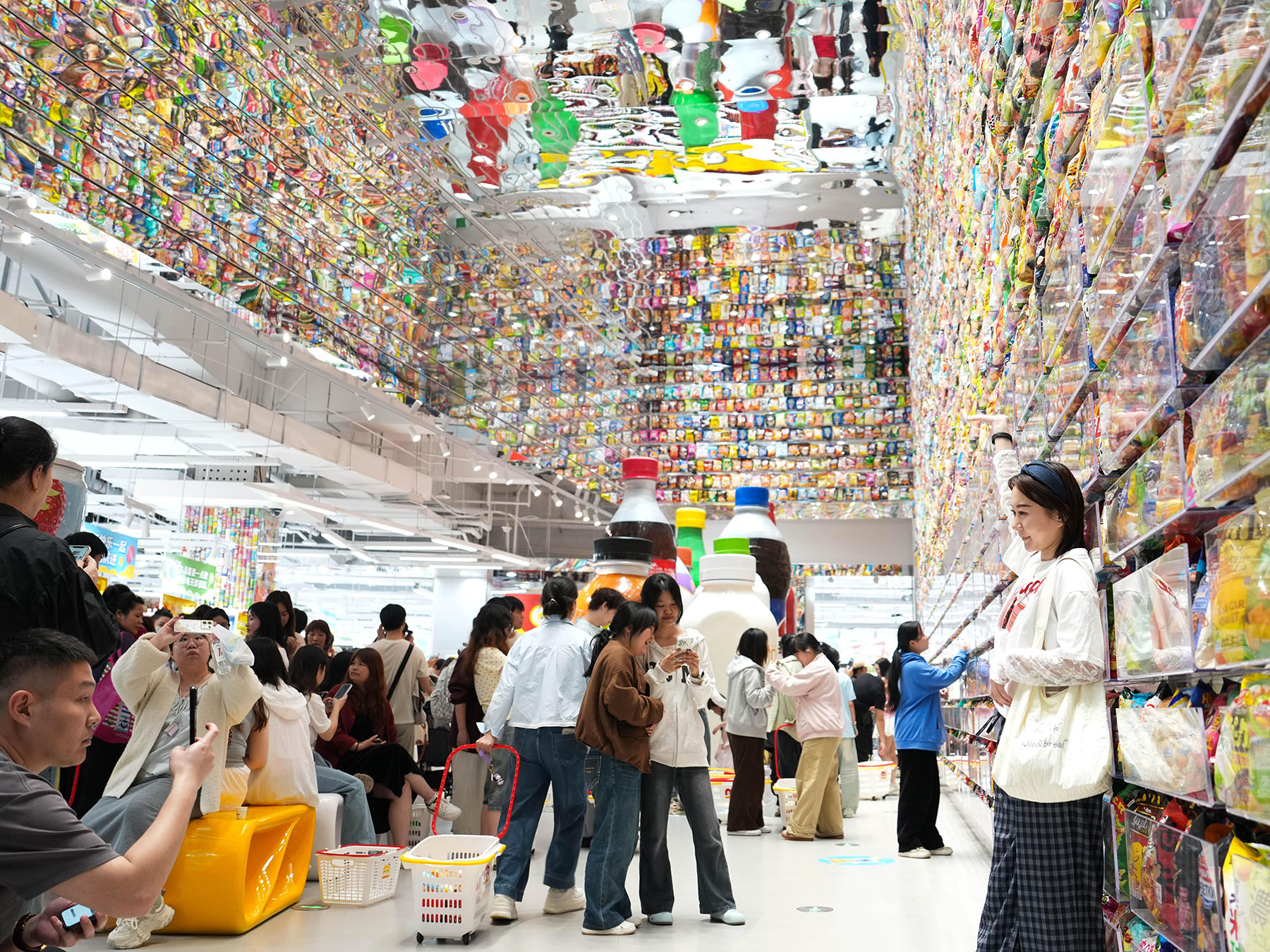
CHANGSHA — After an hour-long wait amid the neon-lit bustle and drifting aromas of snacks in Changsha, capital of Central China's Hunan province, 22-year-old Fang Tianyu finally stepped into the Snack Kingdom store in the city center.
He had no regrets about the wait. Inside, there was no need to settle for the usual favorites. Instead, Fang wandered aisle by aisle, pausing to examine snacks he'd never seen before and carefully deciding, one by one, which might be worth trying.
"It feels quite novel," Fang said. "Shopping here is like a treasure hunt."
That sense of discovery is part of what draws visitors to the sprawling supermarket, where snacks from across China and around the world fill more than 13,000 square meters of retail space. There are so many choices that even if you tried just one snack a day, it would take nearly a century to sample them all.
The store was designed with young consumers in mind, from colorful themed installations to photo-ready corners that turn a quick snack stop into something worth pausing for and sharing online.
"People want more than just a purchase. They want an enjoyable experience," said Liang Xiao from Busy Ming Group, which operates the supermarket.
This idea does not stop at the shop counter. In neighboring Xiangtan, about 50 kilometers from downtown Changsha, it takes on a different form at Wanlou Youth Wharf, where rows of shipping containers have been turned into a lively market for young people to eat, shop, play, hang out and stay.
The concept serves both a practical and cultural purpose. The containers echo the site's roots dating back to the Ming Dynasty (1368-1644) as a wharf.
"There are already many ancient towns and streets in China," said Duan Keke, general manager of Xiangtan Mango Cultural Tourism. "Instead of creating another one, we chose shipping containers to give young people a fresh way to experience the old wharf."
Together, Snack Kingdom and Wanlou illustrate a broader shift in China's consumer market, from simply buying products to paying for emotional value and unique experiences.
ALSO READ: Stinky tofu tycoon a Changsha success story
Official data show that China's total retail sales of goods and services rose 2.6 percent year-on-year from January to July of this year. Service retail sales increased 5 percent, with cultural, sports and leisure services posting particularly strong growth.
Final consumption expenditure contributed more to economic growth during the period than capital formation and net exports. Huang Hanquan, head of the Chinese Academy of Macroeconomic Research, said service consumption expanded relatively quickly, the consumption structure continued to upgrade, and new growth drivers gathered momentum.
Young consumers are helping propel this change, with creative markets, music festivals and artificial intelligence-powered products emerging as new areas of spending and gaining wider exposure through social media, travel and cultural exchanges.
Xiangtan is applying the same logic to large events. During the sixth Hunan Tourism Development Conference in May, cultural and tourism venues in the city received 276,500 visits, an increase of 44.84 percent year-on-year, according to local authorities.
Sports have opened another path. Xiangtan has combined football and basketball competitions, including the Xiang Super League, with food, leisure, product exhibitions and nighttime entertainment.
Across 13 match days of the 2025 Xiang Super League, the city established 16 nighttime viewing and consumption zones and nearly 200 additional viewing sites across commercial venues, schools and factories. The activities indirectly drove an estimated 1.45 billion yuan ($215 million) in consumption, local authorities said.
The pattern extends beyond Hunan. At the Longfusi Summer Fair in central Beijing, visitors can sample food from time-honored brands, enjoy beer, tea and other beverages, watch performances and explore displays of intangible cultural heritage. The fair, running from June to October 2026, is bringing new vitality to a nearly 600-year-old neighborhood that once hosted one of Beijing's most important temple fairs.
In Jiangsu province, grassroots football has also become an integral part of the tourism experience. During the 2026 May Day holiday, a Su Super League match drew 60,503 spectators, setting an attendance record for the competition's second season. The league, featuring teams representing 13 cities across Jiangsu, attracted more than 2.43 million spectators in 2025.
