

City’s resilience in the face of Typhoon Dolphin’s harsh assault offers the world lessons in tackling climate volatility
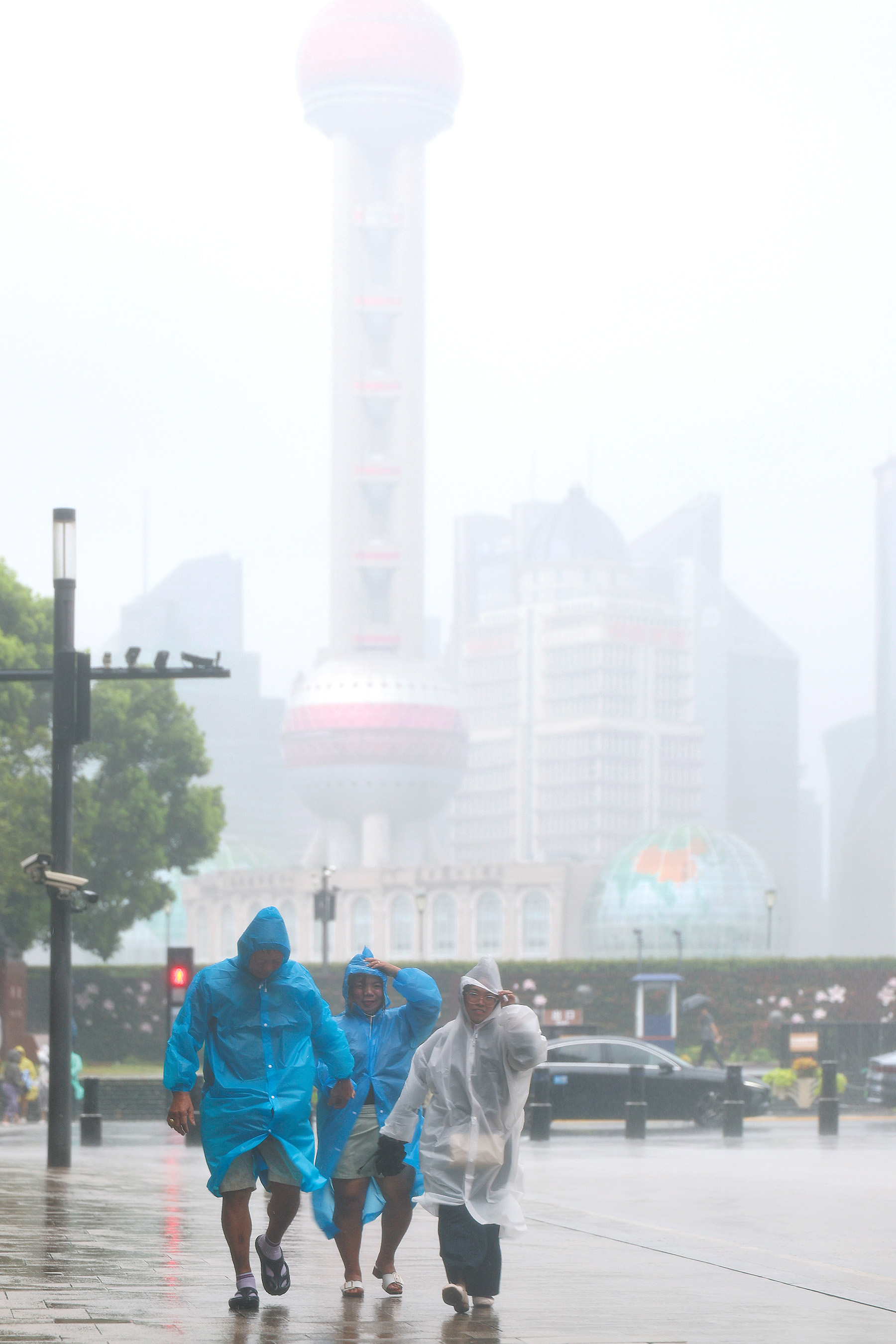
When Typhoon Dolphin hit Shanghai recently, the megacity was confronted with multiple weather extremes and a major test of its resilience.
The 13th typhoon of the year, Dolphin made two landfalls in Zhejiang province on Aug 9, bringing severe weather to China’s eastern seaboard.
Shanghai and its 25 million residents were subjected to record rainfall, gale-force winds and tornadoes, testing the effectiveness and preparedness of the city’s infrastructure and emergency services.
Dolphin’s assault — coming as the world deals with climate-related volatility — has answered some questions about how megacities can withstand increasingly unpredictable weather.
For the first time since Typhoon Fitow in 2013, Shanghai authorities issued the highest-level red alert for rainstorms across central urban districts on Aug 9. Gale-force winds above force 8 persisted for approximately 48 hours, while multiple districts reported small tornadoes.
Over a 72-hour period from 8 am on Aug 8, precipitation at Xietu Road subdistrict in Xuhui district reached 498.9 millimeters, the highest cumulative rainfall recorded by Shanghai’s automated weather stations in this century.
From 8 am on Aug 9, 24-hour rainfall of 316.1 mm was recorded at Xujiahui meteorological station. The amount was equivalent to two summer months of precipitation, shattering the station’s single-day precipitation record in its 154 years of operations.
Of Shanghai’s 45 representative hydrologic monitoring stations, 42 exceeded water warning levels, with 23 setting historical highs.
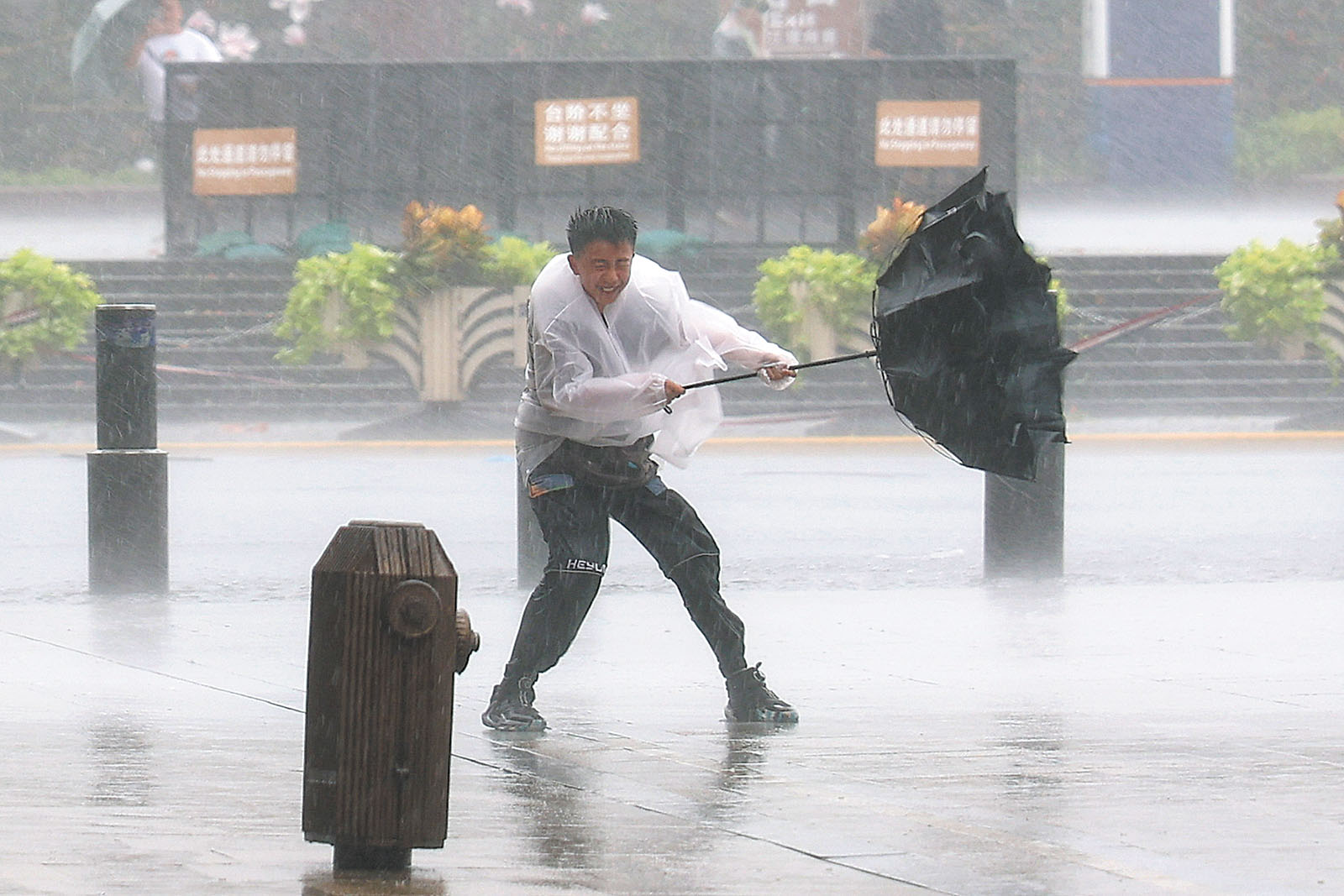
The full impact of Typhoon Dolphin was clear by Aug 15, authorities said, when it completely dissipated after hanging around for about eight days.
How did a single typhoon unleash such severe force upon East China’s coast?
Scientists pointed to a complex confluence of regional climate anomalies and large-scale atmospheric dynamics that transformed Dolphin into what they described as an “exceptional” threat.
Before Dolphin made landfall, Jiang Man, chief forecaster at the Shanghai Meteorological Observatory, described what made this typhoon different from previous ones.
She said it has had a very long active period, packed strong winds, and covered a massive area. Its level-7 wind circle stretched over 400 kilometers from the typhoon center.
The typhoon’s cloud and rain bands were extremely well-developed, carrying massive amounts of water vapor that brought prolonged strong winds that lasted for days. These were paired with extremely heavy, sharp downpours instead of a quick, short storm as usually happens, Jiang said.
Wu Liguang, a distinguished professor at the department of atmospheric and oceanic sciences at Fudan University, told Wenhui Daily that Dolphin’s destructive potential was built during the storm’s long transit across the ocean. Tracking across the Pacific Ocean for nearly two weeks, it spent a prolonged period over warm open water, accumulating energy continually.
The developing super El Nino’s expansion across the Western Pacific also played a role in warming the ocean. This shift fostered typhoon formation over ocean areas that have historically maintained lower sea surface temperatures, extending Dolphin’s energy-charging corridor before it made landfall.
Also, research published in the China Water Resources journal examining Shanghai’s precipitation trends from 2005 to 2024 revealed that the city is experiencing a century-high peak in annual precipitation, increasing at an average rate of 16.1 mm per year. Severe hourly rainfall is transitioning into a high-frequency incident, the report said.
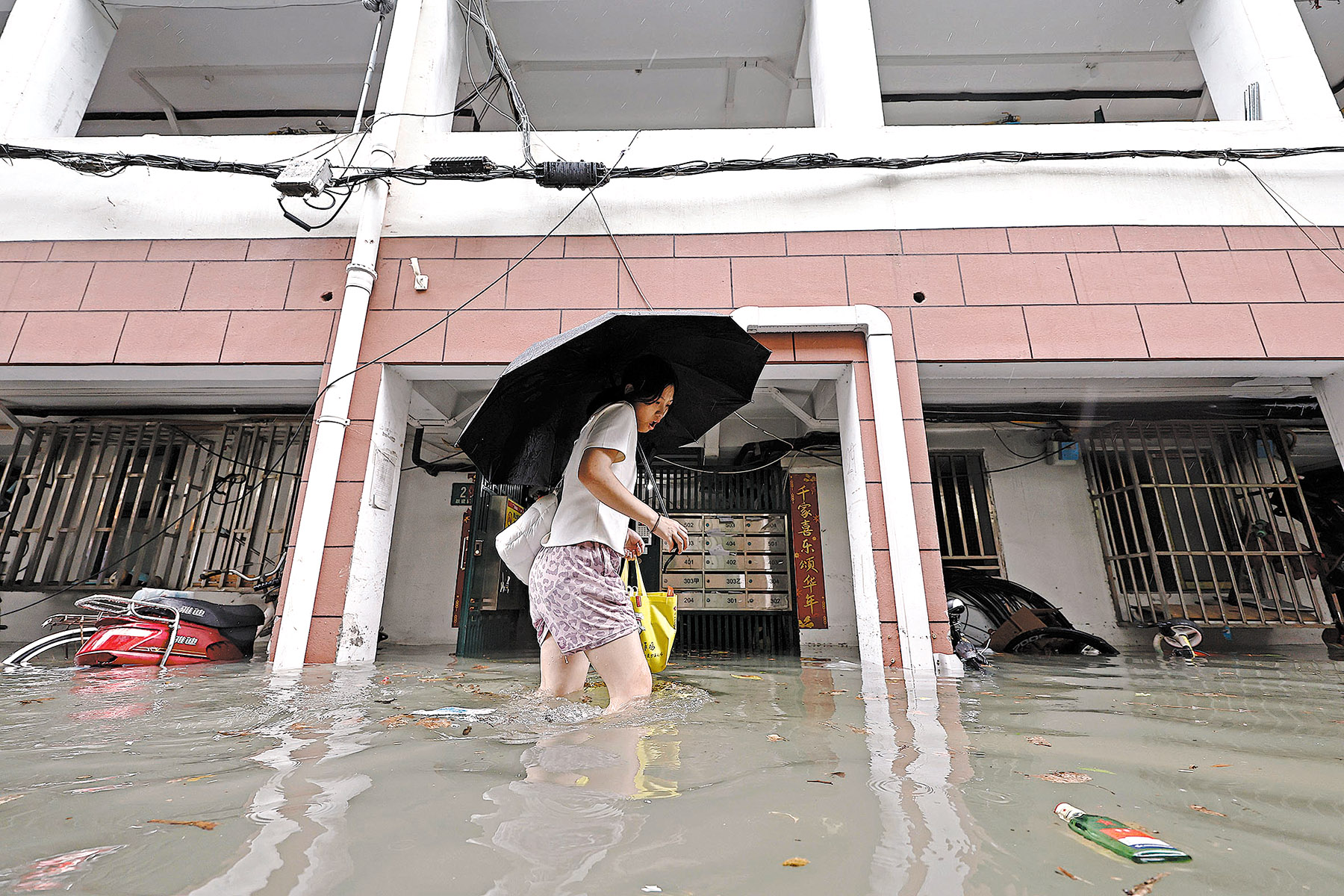
Following the torrential rain, floodwaters inundated streets, underpasses, and residential compounds across the city, particularly in central downtown districts, including the iconic, tree-lined Wukang Road area.
“The waterlogging in some areas during recent typhoons cannot be attributed to any single factor,” explained Wu Meng, deputy director of the circular economy and green development research office at the Shanghai Academy of Social Sciences’ Institute of Ecology and Sustainable Development.
Wu said the heavy rainstorms were the direct cause of the standing water. Shanghai sits on flat land right next to the sea and all its rivers are connected to the rise, and fall of tides, which hinders rainwater from draining out of the city easily.
“Contradictions between dense urban development and available water storage space are another reason,” Wu added. Water storage space refers to soil, rivers, lakes, drainage networks and sponge facilities that can hold rainwater before flooding occurs.
Shanghai uses a multi-tier system for urban flood control.
Standard underground pipe networks handle routine rainstorms, while surface river networks and pump-gate systems manage regional drainage.
In coastal areas and along riverbanks, sea walls and levees defend against storm surges. For extreme events that exceed standard engineering designs, the city relies on above-ground water storage, emergency pumping and adaptive risk management to mitigate damage.
Currently, about 70 percent of Shanghai’s central urban area is designed to withstand a storm recurrence, or return period, of every three to five years, equating to an hourly rainfall intensity between 51.2 and 58 mm.
Dolphin, however, far surpassed these capacities.
Sun Xiaofeng, deputy director of the comprehensive planning department of the Shanghai Water Authority, explained to Jiefang Daily that even infrastructure built to a 20-year return period standard cannot guarantee the complete absence of standing water under the intensity of a typhoon as strong as Dolphin.
Dense development in central districts has also left limited land for open water bodies and retention basins, forcing neighborhoods to rely largely on underground pipe networks.
“Expecting zero flooding anywhere at any time during extreme rainstorms is neither realistic nor economical,” Wu said.
“Modern urban drainage aims for minimal flooding within design standards. For extreme, record-breaking storms, it lets small, controlled puddles stay temporarily — but it must never cause deaths, flood underground spaces, or shut down the city’s key services.”
Faced with an unprecedented deluge, Shanghai’s emergency response was integrated, cross-departmental and an example of swift governance.
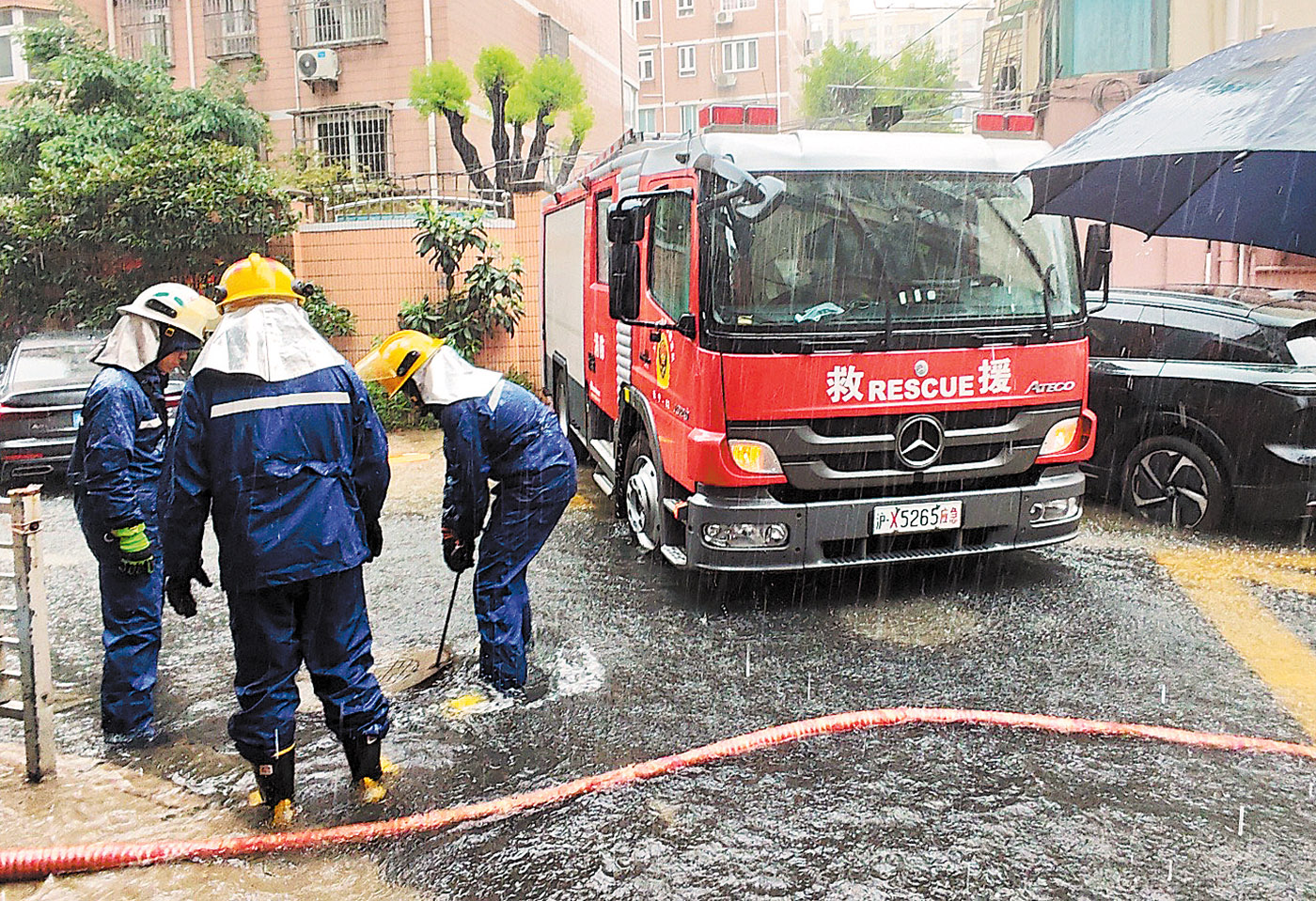
On Aug 3, the Shanghai Meteorological Bureau established a forecasting team to deliver step-by-step typhoon warnings aligned with flood prevention plans.
Municipal agencies conducted pre-storm risk audits across vulnerable residential compounds. Neighborhood work groups put sandbags and temporary barriers in place, and mobile crews were activated to deal with the coming stormwaters before the rain arrived.
Water gates were opened across the municipality to lower regional river levels to 2.2 meters, while sections of the underground networks were flushed out, freeing up 450 million cubic meters of storage capacity within the river system.
Regional water authorities also coordinated with neighboring provinces to close the upstream Taipu gate, stemming flood inflow from Taihu Lake.
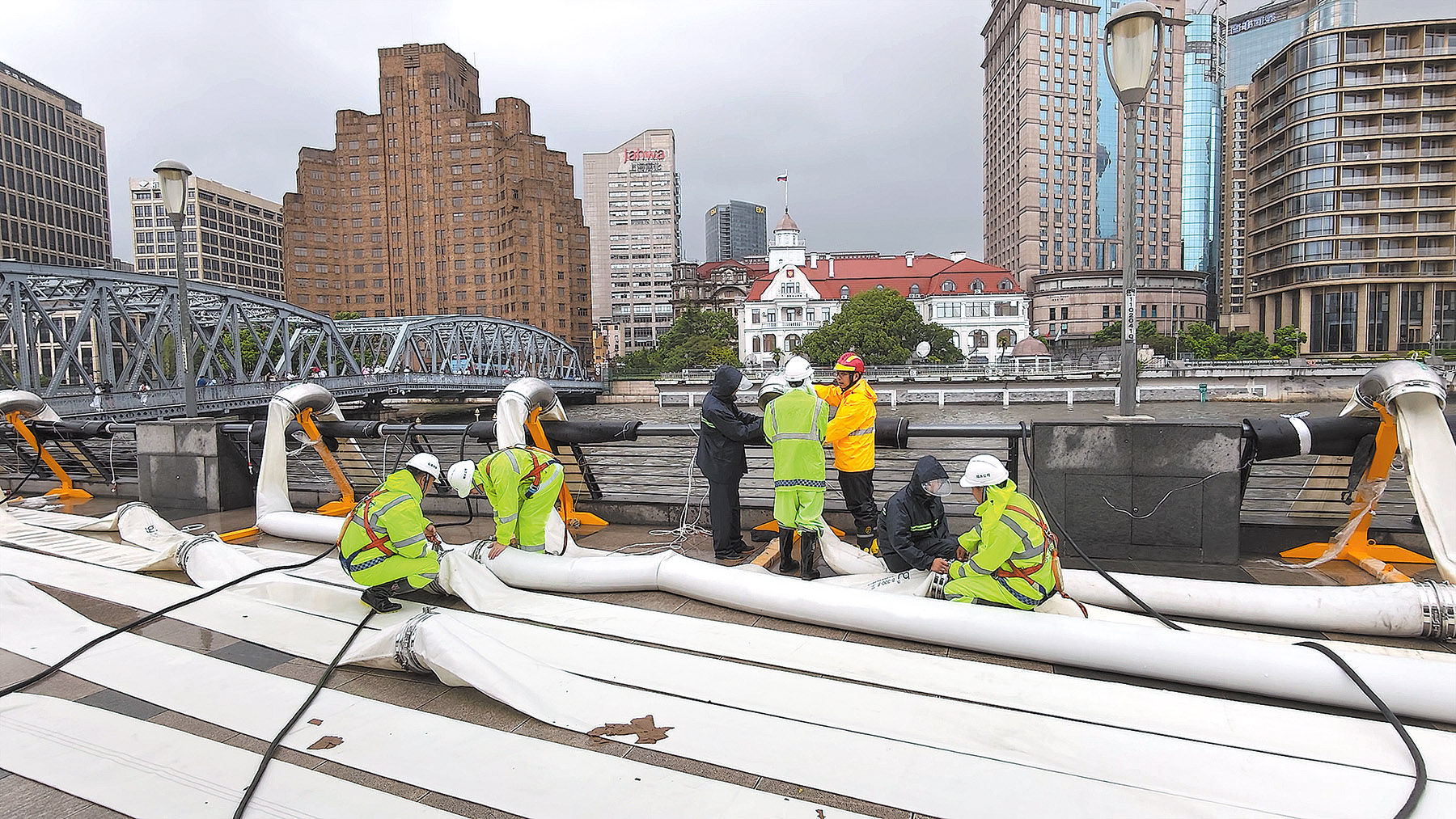
To address localized surges, the city deployed 118 high-capacity mobile pumping vehicles capable of discharging 200,000 cu m of water per hour in total.
In tight urban spaces where heavy vehicles could not maneuver, specialized drainage robots stepped in. In an inundated underpass in Minhang district, robots nicknamed “Big Buffalo” and “Little Hippo”, capable of discharging 980 cubic meters of floodwater per hour, operated efficiently in tight conditions.
On Aug 10, Shanghai activated an emergency water diversion system for the first time, pumping water from Suzhou Creek into the Huangpu River to prevent dangerous surges in water levels. A total of 15 portable high-capacity drainage units, capable of displacing 30,000 cu m of water per hour, were deployed to safeguard the city’s infrastructure.
Shanghai is far from alone in this struggle. Metropolises worldwide face similar climate pressures.
In July 2025, severe rain hit the United States’ east coast, with New York’s Central Park recording its second-highest hourly rainfall of 50 mm.
Across the United Kingdom in January 2024, Storm Henk triggered over 300 flood warnings, landslides and infrastructure submergence.
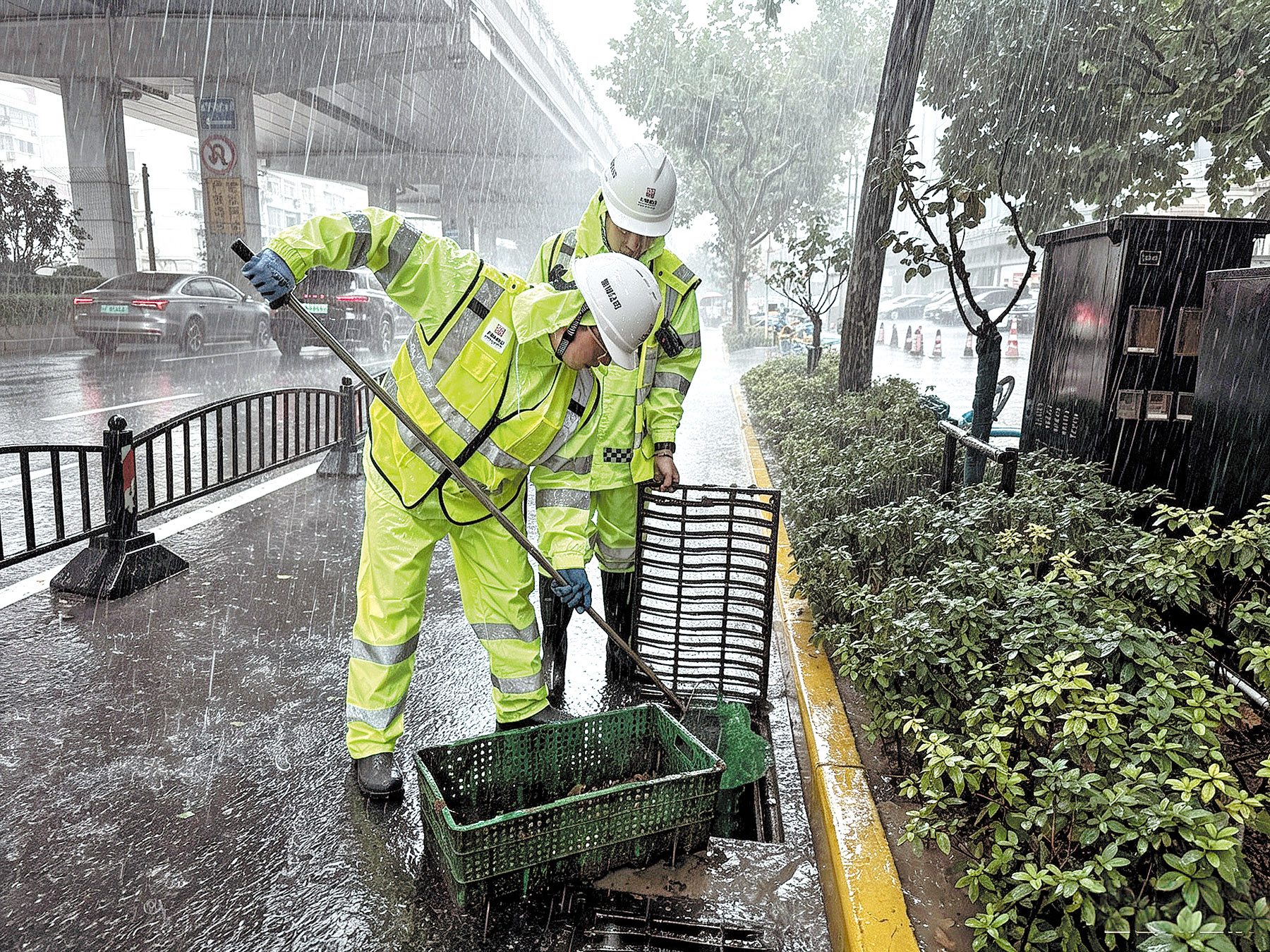
In August 2024, Super Typhoon Shanshan prompted top-level evacuation warnings for over 5 million people in Japan, leaving hundreds of thousands without power with widespread flight, train and factory shutdowns.
Recognizing these escalating threats, Shanghai is modernizing its architecture through digital and physical measures designed to make the city more able to adapt and be resilient.
Under Shanghai’s 15th five-year plan for water system governance, the city aims to equip 80 percent of its central urban area with three-to-five-year return period drainage capacity by 2030, while evaluating 10-year or higher design standards for some core zones.
“A 10-year return period doesn’t mean an event occurs once every 10 years, but rather that each year has approximately a 10 percent probability,” Wu explained.
Urban resilience requires targeted, long-term investment to keep casualties, urban disruption and irreversible losses to a minimum, he said. “Shanghai should adopt risk-based standards: higher for critical facilities like hospitals, transit, underground, utilities, data hubs, and lower for general areas,” he said.
The Wusong River project is a cornerstone of this structural defense. As the largest single water conservancy project in Shanghai’s history, it focuses on watershed flood discharge and regional drainage.
Once fully operational, it will improve regional flood control as well as ecological protection and inland navigation.
Shanghai is also using its digital intelligent water system to predict and prevent weather events.
The municipality has deployed over 4,300 smart liquid-level and rainfall sensors across 11 districts, creating digital archives for 30,500 kilometers of public drainage pipelines, 43 urban sewage treatment plants and over 1,000 drainage pumping stations.
Alongside digital tools, Shanghai is expanding its green infrastructure through its “sponge city” initiative, which seeks to restore the landscape’s natural capacity to absorb, retain and slowly release rainfall.
Over 40 percent of the city’s built-up area met sponge city standards by the end of 2025, with target coverage reaching 50 to 60 percent in suburban new towns, according to officials. By 2030, the figure is expected to reach 80 percent in the city’s built-up area.
Heping Park in Hongkou district is an example of this approach after its central lake was transformed into a retention basin. Pedestrian walkways were covered in permeable paving, while wet stretches of land were covered in vegetation to collect, filter and move surface water.
“Normally, our lake water level is maintained between 2.3 and 2.6 meters,” He Yizhi, director of Hongkou district greening management center, told the Shanghai Morning Post.
“During heavy rain, the storage level can rise to 2.8 meters, absorbing 8,787 cubic meters of runoff. When extreme weather requires park closure, the storage level can expand to 3.1 meters, providing 17,400 cubic meters of emergency retention capacity to protect surrounding residential blocks.”
Heping Park used its lake as a temporary flood basin to help nearby streets drain faster. While closed for safety reasons, park workers pumped excess rainwater from surrounding roads into the park’s central lake, relieving pressure on the city’s drainage system.
Wu said Shanghai’s priority is to create functional spatial pathways and ecological capacity for water management while safeguarding its core economic operations.
To forge true climate resilience, Wu said a strategy should take into account infrastructure, technology, ecology and emergency management.
This requires urban renewal to include localized sponge-city water retention, integrate local pipe networks with regional river systems for multi-scale drainage, utilize advanced technologies including artificial intelligence for predictive forecasting and dynamic scheduling, and establish designated surface runoff pathways to protect below-ground infrastructure during extreme downpours.
“Shanghai’s most urgent task is to genuinely organize urban renewal, sponge city construction, drainage networks, river system management, watershed flood control, and intelligent scheduling into a complete integrated system,” Wu said.
Contact the writers at zhengzheng@chinadaily.com.cn
