

Aligned with national blueprint, city aims to open a new chapter for growth
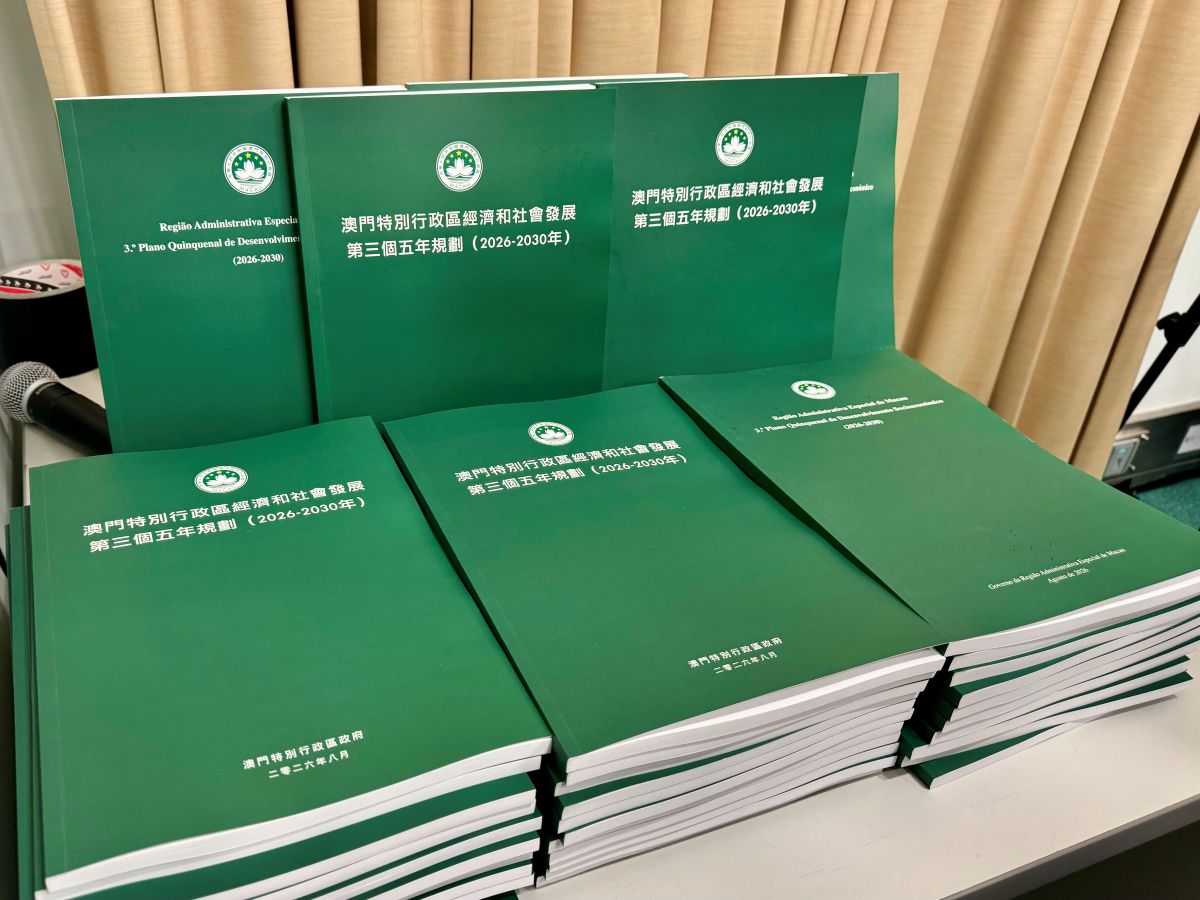
The Macao Special Administrative Region officially released its self-formulated Third Five-Year Plan for Economic and Social Development (2026-30) on Tuesday, covering key areas including the development of Hengqin, livelihood improvement and urban renewal, and aligning with the national 15th Five-Year Plan (2026-30).
Unveiling the 36-chapter, 86,000-character blueprint, Macao Chief Executive Sam Hou-fai described it as “scientific, forward-looking and feasible” and grounded in public consultations. He said that its implementation would open a new chapter in the practice of the “one country, two systems” principle with Macao characteristics.
Political and business figures welcomed the plan for outlining clear paths in terms of the economy, culture and education, and for translating grand strategies into actionable targets.
The document, issued in both Chinese and Portuguese, outlines 35 key indicators for Macao’s economic and social development, covering GDP, the local unemployment rate, public housing units and the growth of Macao-invested industries in the Guangdong-Macao In-Depth Cooperation Zone in Hengqin.
In the chapter on Hengqin, the Macao SAR government announced plans to introduce white lists and joint regulatory platforms to facilitate the flow of cross-border research materials and equipment sharing. It also aims to accelerate infrastructure connectivity by participating in the planning and construction of the Guangzhou-Zhuhai (Macao) high-speed rail link, thereby integrating the Macao SAR into the national network.
ALSO READ: Macao unveils 'scientific, forward-looking’ third five-year plan
To advance appropriate economic diversification, the blueprint details measures to make Macao a global tourism and leisure hub, including deepening the cross-sector integration of tourism with other sectors such as education, the cultural and creative industries, sports and big health.
The authorities also plan to roll out more niche tourism products, such as those related to pets, the low-altitude economy and weddings. Additionally, the city will work to tap into markets in more Portuguese- and Spanish-speaking countries, as well as in Europe, North America and to draw Muslim visitors.
To lay a scientific and public-opinion foundation for the blueprint, Sam said that the SAR government had set up a leading group and expert teams aligned with the national 15th Five-Year Plan, and conducted 40 preliminary studies and 36 thematic research projects. A 40-day public consultation, from May 20 to June 28, involved 14 sessions and 1,716 submissions with 8,230 comments — both more than double the number received for the previous five-year plan.
The SAR’s chief executive further revealed that the government will implement the plan through key projects and major reform initiatives, with detailed task breakdowns and clear accountability to ensure its smooth implementation.
He pledged that his administration would unite and lead all sectors of society to steadily implement the plan “year after year, step by step”, to open a new chapter in the practice of the “one country, two systems” principle with Macao characteristics.
READ MORE: Macao investment promotion institute receives 194 new projects in H1
In a statement, a spokesperson for the Hong Kong and Macao Affairs Office of the State Council said the plan marks a milestone in promoting Macao’s high-quality development, recognizing its forward-looking strategy and practical approach. The spokesperson also praised Sam and the SAR government for their sense of responsibility and initiative, adding that the involvement and support of other political organizations and the wider community demonstrate unity and provide a vivid example of high-quality democracy with Macao characteristics.
After the plan’s release, Grace Wong Kit-cheng, a Macao lawmaker and a Macao member of the National Committee of the Chinese People’s Political Consultative Conference, China’s top political advisory body, said that the blueprint was formulated with input solicited from all sectors of society while closely aligned with national development.
She said that it sets clear objectives, combining strategic direction in key economic areas with concrete measures to safeguard national security and social stability.
Another legislator, Kou Kam-fai, said the blueprint is designed for strong operational feasibility. He said that it refines mission deployments and reinforces core responsibilities through three primary action lists, while using four major priority projects and government guidance funds as key levers, transforming grand goals into specific policies, practical projects and measurable outcomes.
Economic diversification
Lam Fat-iam, a Macao legislator and dean of the Faculty of Humanities and Social Sciences at Macao Polytechnic University, said economic diversification requires specifying concrete projects and industrial platforms through a priority project list, while also clarifying departmental divisions of labor through a responsibility list, and overcoming bottlenecks in capital investment, administrative approval efficiency and talent policies through a reform list.
Henry Hong Wai-tong, a member of the Macao SAR government’s sports council, noted that the blueprint places great importance on sports for public benefit and national fitness, positioning the sector as a vital component of high-quality growth and community well-being.
Samuel Tong Kai-chung, president of the Macau Institute of Management, said he is glad to see that the third five-year plan leverages innovative thinking and actions, refines legal frameworks, and coordinates funds, resources and policy support to accelerate urban renewal.
In a statement to China Daily, the General Union of Neighbourhood Associations of Macau said the plan is closely connected with national strategies while also responding to social expectations.
The association added that it hopes the Macao government will leverage opportunities in Hengqin, promote economic diversification, and make concrete efforts to resolve key bottlenecks in areas such as employment, elderly care, healthcare, education and public transportation.
Contact the writer at amberwu@chinadailyhk.com
